Dallas-Fort Worth is one of the fastest-growing metropolitan areas in the United States, and with that growth comes an enormous, perpetual demand for fill dirt. New subdivisions are breaking ground in Frisco and McKinney. Industrial parks are rising along Loop 820 in Fort Worth. Residential developers are pushing into Prosper, Celina, and beyond. Every single one of those projects needs earthwork — and earthwork means fill dirt.
Yet sourcing quality fill dirt in the DFW area can be surprisingly complex. The region's expansive clay soils, the patchwork of municipal regulations, the sheer distances involved in hauling bulk material, and the challenge of matching available dirt with projects that need it all create friction in a market that moves fast. Getting it wrong — buying the wrong soil type, overpaying on trucking, or accepting contaminated material — can derail a project timeline and inflate costs dramatically.
This guide breaks down everything you need to know about finding fill dirt for sale near Dallas: what types of soil are available, what they cost, how to vet suppliers, where the material comes from, and how modern platforms like DirtMatch are changing the way contractors and landowners connect in the DFW market.
Understanding Dallas-Fort Worth's Unique Soil Landscape
Before you start calling suppliers, it helps to understand what's actually in the ground across North Texas — because the DFW region's geology directly affects what fill dirt is available, how it performs, and what you'll pay for it.
The Blackland Prairie Problem
Much of the Dallas metro sits atop what geologists call the Blackland Prairie — a band of dark, expansive clay soil derived from the Austin Chalk and Taylor Marl formations. These soils, technically classified as Vertisols, are notorious in the construction industry for one reason: they shrink and swell dramatically with moisture changes. When wet, they absorb water and expand with tremendous force. When dry, they contract and crack, sometimes creating fissures several inches wide.
For fill applications, this means that native Dallas clay — often called "black goo" on job sites — is rarely suitable as structural fill beneath slabs, foundations, or load-bearing surfaces. It can be used for grading, berms, and pond construction, but it must be carefully managed and is almost never the right choice where differential settlement is a concern.
What Lies Beneath: Rock and Sand Formations
As you move west of Dallas toward Fort Worth and beyond, the geology shifts. The Fort Worth Prairie introduces more limestone outcroppings and harder rock formations. In areas like the Red River corridor to the north, sandy loams and river-deposited materials become more prevalent. These regional variations mean that the fill dirt available in Denton County may look and behave very differently from material sourced in Dallas County or Ellis County.
The Trinity River watershed — including the West Fork, Elm Fork, and main stem — has deposited sandy alluvial soils across broad floodplains. This material, when screened and processed, often becomes the clean sandy fill that residential contractors prefer for general grading and utility backfill.
Soil Classification in Practice
For construction purposes, fill dirt in the DFW area is generally categorized by the USDA NRCS Soils classification system and cross-referenced with ASTM D2487 (the Unified Soil Classification System, or USCS). Common materials you'll encounter in DFW fill dirt transactions include:
- CH (Fat Clay): High-plasticity clay, common in Blackland Prairie areas — avoid for structural fill
- CL (Lean Clay): Lower plasticity, more workable, common in transition zones
- SM (Silty Sand): Good general-purpose fill, decent drainage, widely used
- SW/SP (Well-graded and Poorly-graded Sand): Excellent drainage, used for utility bedding and sub-base
- GW/GP (Gravel): Rarely found as native material in DFW; typically imported or processed
Understanding these classifications before you purchase bulk fill dirt can save you from costly mistakes — especially if your project involves engineered fill specifications from a geotechnical report.
Types of Fill Dirt Available in the Dallas Area
Not all fill dirt is created equal, and the DFW market offers a range of material types suited to different applications. Here's a breakdown of what you'll typically find from bulk dirt suppliers in the region.
Clean Fill Dirt
This is the most commonly requested material in the DFW market. "Clean fill" refers to uncontaminated soil — free of organic matter, debris, construction waste, and hazardous materials. It's the baseline requirement for most residential and commercial grading projects. The DirtMatch marketplace currently shows significant activity around clean fill dirt throughout the metro: for example, a 25,000-yard clean fill dirt listing in Melissa, TX illustrates the scale at which material moves in the outer suburbs, while a 5,000-yard availability listing in Irving shows that material is moving even within the core urban market.
Clean fill in DFW typically consists of mixed clay and loam material excavated from other construction sites — home pads, road cuts, utility trenches, and commercial excavations. The quality varies significantly between sources, so always ask for documentation and inspect material before accepting delivery.
Select Fill
Select fill is a step up in quality — material that meets specific compaction and plasticity requirements defined by a geotechnical engineer or a municipal specification. In Texas, TxDOT (Texas Department of Transportation) publishes detailed specifications for select fill used on state highway projects, and many private developers reference similar standards for their earthwork. Select fill typically has a Plasticity Index (PI) of 20 or less and must compact to 95% of standard Proctor density (ASTM D698) or better.
Select fill costs more than basic clean fill and is harder to source, but it's essential for any project where settlement or bearing capacity is a concern.
Topsoil
Topsoil is not the same as fill dirt — it's the nutrient-rich upper layer of soil used for lawns, landscaping, and agriculture. However, it's commonly confused with fill dirt by homeowners. True topsoil in the DFW area is often a sandy loam blend, and reputable suppliers will distinguish it clearly from structural fill products.
Sandy Loam and Sand
Sandy materials are in high demand across DFW for drainage applications, septic system drain fields, playground surfacing, and utility trench backfill. Much of the sandy material available in the region comes from river sand operations along the Trinity River system or from quarries in the Hill Country that ship by rail and truck.
Crusher Run and Base Materials
Though technically not "dirt," crusher run, caliche, and crushed limestone base are often sourced alongside fill dirt from the same bulk suppliers. These materials are used for driveways, road base, parking areas, and sub-base preparation. North Texas sits near abundant limestone deposits, making these materials relatively affordable compared to other parts of the country.
Where Fill Dirt Comes From in DFW: The Supply Chain
Understanding the supply side of the fill dirt market helps you find better deals and avoid common pitfalls.
Construction Site Excavations
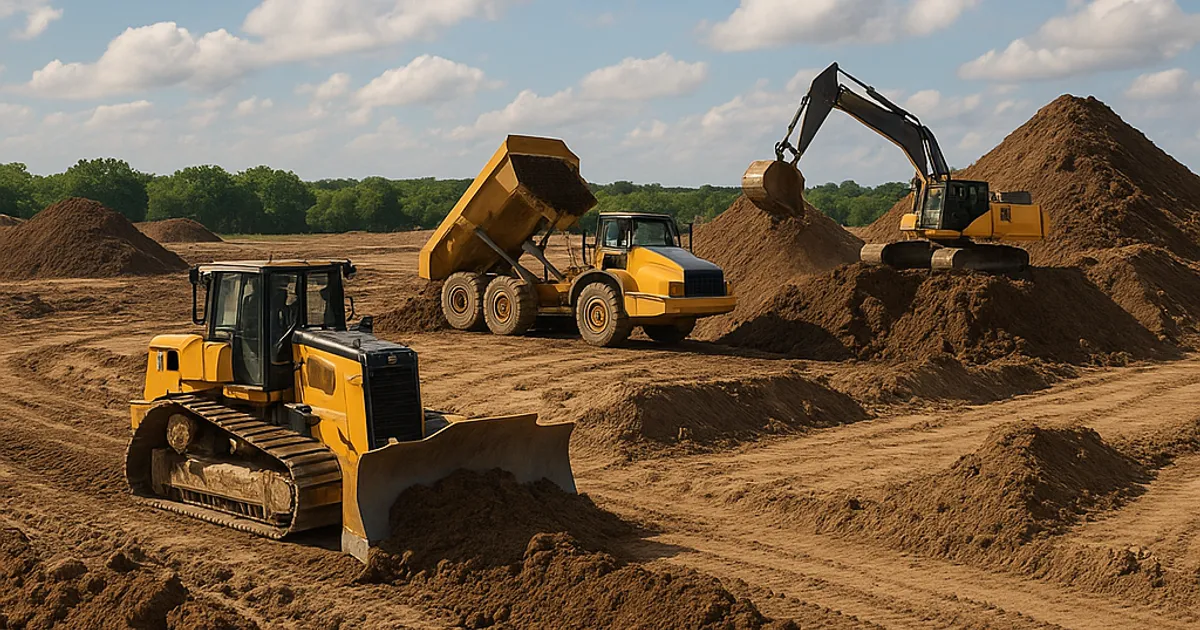
The largest and most consistent source of fill dirt in any growing metro is construction site excavation. When a builder pads a new home site, excavates a commercial foundation, or grades a subdivision, they generate enormous quantities of spoil material. This dirt needs to go somewhere — and if it's clean and usable, it has real value.
In a market as active as DFW, this creates a constant stream of available material. The challenge is connecting dirt that needs to be removed with projects that need fill — which is exactly the inefficiency that platforms like DirtMatch were built to solve. Instead of contractors paying to haul clean fill to a landfill while a developer across town pays to import the same material, a matching platform creates value on both sides of the transaction.
Quarries and Mining Operations
North Texas is home to several significant quarry operations, particularly in the limestone-rich areas southwest and west of Fort Worth. Martin Marietta, Vulcan Materials, and Texas Industries (TXI) all operate in the region, producing limestone aggregate, crusher run, and in some cases processed fill materials. These operations provide consistent, tested material but typically sell in large volumes and at commercially structured pricing.
Land Clearing Operations
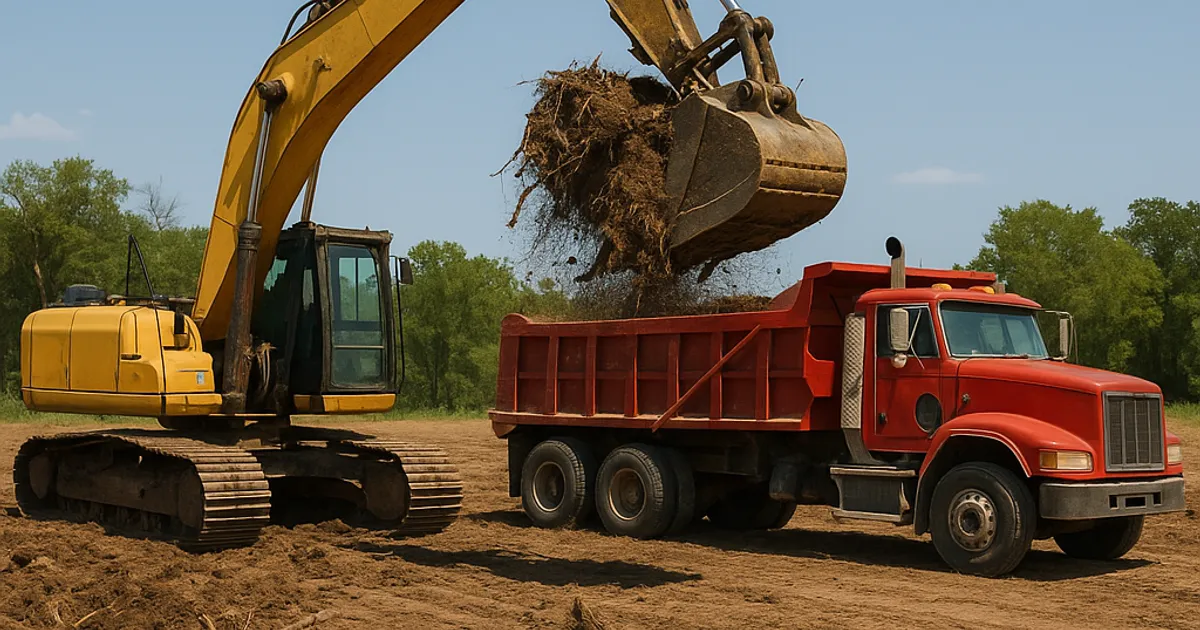
As rural land is converted to residential and commercial use across the outer suburbs — in Kaufman County, Johnson County, Parker County, and Collin County — land clearing generates significant quantities of fill material. This material tends to be of variable quality and often contains organic matter from cleared vegetation, so it requires more careful vetting.
Dredging and Flood Control Projects
The U.S. Army Corps of Engineers and the Trinity River Authority periodically undertake channel maintenance and flood control work throughout the DFW watershed. Material dredged from channels and reservoirs can sometimes be available as fill, though it must be tested for contamination and may have specific use restrictions.
What Does Fill Dirt Cost in Dallas?
Pricing for fill dirt in the Dallas-Fort Worth area depends on several variables: material type, volume, haul distance, delivery method, and market conditions. Here's a realistic breakdown of what you can expect to pay in 2025.
Fill Dirt Pricing by Material Type
| Material Type | Typical Price Range (per yard, delivered) | Notes |
|---|---|---|
| Basic Clean Fill (clay/loam) | Free to $8/yd | Often free if you haul it yourself from a surplus site |
| Select Fill (PI ≤ 20) | $12–$22/yd | Meets engineered specs; more consistent quality |
| Sandy Loam | $15–$28/yd | Higher demand; river sand operations |
| Topsoil (screened) | $25–$45/yd | Nutrient-rich; for landscaping |
| Caliche / Road Base | $18–$35/yd | Abundant in West Texas corridor |
| Crusher Run (¾" limestone) | $22–$40/yd | Widely available from DFW quarries |
Prices are estimates based on 2024–2025 DFW market conditions and will vary by supplier, volume, and location.
The Trucking Cost Factor
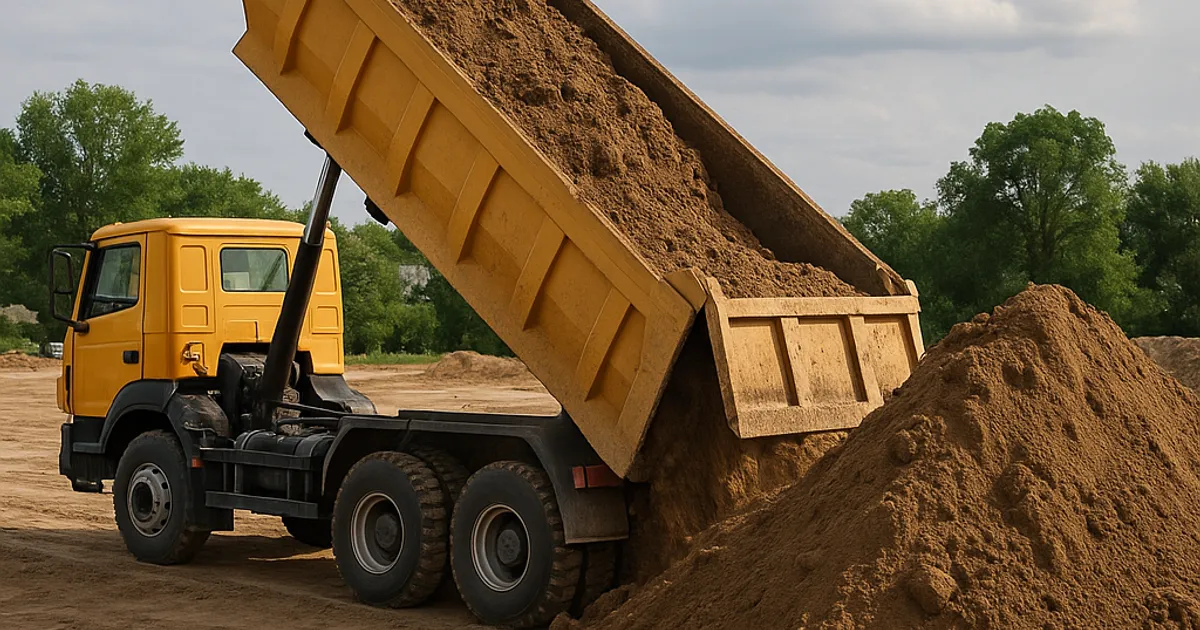
For bulk fill dirt, delivery cost is often as significant as the material cost itself. A standard end-dump truck in Texas carries roughly 14–16 cubic yards per load. With diesel prices and driver costs, typical trucking rates in the DFW area run $85–$150 per load for short hauls under 15 miles, scaling up significantly for longer distances.
This is why haul distance matters enormously in fill dirt economics. A project that sources fill from 5 miles away vs. 30 miles away might see a cost difference of $3–$8 per yard just on trucking — on a 5,000-yard project, that's $15,000–$40,000 in additional cost. Finding a nearby source is not just convenient; it's financially significant.
Volume Discounts and Negotiating
Bulk pricing typically kicks in at 500 yards and above. Most commercial suppliers will reduce their per-yard price by 15–30% for orders exceeding 1,000 yards. For very large projects (10,000+ yards), negotiating a fixed-price contract with a specific supplier — often tied to a quarry or land development operation generating surplus material — can lock in favorable rates.
For smaller residential projects under 200 yards, expect to pay closer to retail rates, and consider whether renting a small trailer and self-hauling from a nearby surplus site might be more economical.
How to Find Reputable Bulk Dirt Suppliers in DFW
Sourcing fill dirt in Dallas-Fort Worth involves navigating a market with many participants: quarry operations, independent trucking companies, land developers with surplus material, and online marketplaces. Here's how to approach the search systematically.
Start with the DirtMatch Marketplace
For contractors and developers working in the DFW metro, DirtMatch's fill dirt Dallas marketplace provides real-time visibility into available material across the region. The platform currently shows over 586,000 yards of material available in the Dallas area, with more than 1,576,000 yards needed — meaning active demand significantly outpaces listed supply, and connecting with available sources quickly matters. With over 1,035 matches completed in the last 30 days, the platform has real transaction velocity in this market.
Unlike simply Googling "fill dirt suppliers Dallas TX," a marketplace approach lets you filter by material type, proximity, and volume — and connect directly with the party offering or needing the material. If you want to understand how DirtMatch works before diving in, the platform's explainer walks through the matching process from listing to delivery coordination.
Traditional Supplier Research
Beyond marketplace platforms, the traditional approach to finding bulk dirt suppliers in DFW includes:
For projects that benefit from brokered sourcing and coordinated hauling, Soil Depot is an example of a quality dirt supplier serving Dallas-Fort Worth and other major Texas markets.
Quarry and Aggregate Suppliers Look for operations with TXDOT-approved aggregate sources and established delivery infrastructure. These suppliers are best for large-volume, spec-grade materials.
Excavation Contractors with Surplus Material Many grading and excavation companies generate surplus fill on their projects and are motivated sellers — sometimes offering material free or below market if you can arrange timely pickup. Building relationships with local excavation contractors is one of the best long-term sourcing strategies in this market.
Landscape and Garden Supply Centers For residential-scale needs (under 50 yards), landscape supply companies throughout DFW — in areas like Plano, Arlington, and Garland — stock screened fill and topsoil blends. Pricing is higher than bulk, but quality is more consistent and minimum order quantities are lower.
Municipal and County Sources Periodically, cities and counties in the DFW area make fill material available from road construction and utility projects. Check with the City of Dallas Public Works, Collin County, Tarrant County, or Denton County for any surplus material programs.
Vetting a Supplier: Red Flags and Green Lights
Before committing to a fill dirt purchase, especially for a construction project where material quality matters, take these steps:
Ask for a soil test or documentation. Reputable suppliers should be able to provide basic soil characterization — at minimum, a visual description of material type, Plasticity Index if it's select fill, and confirmation that material is free of contamination.
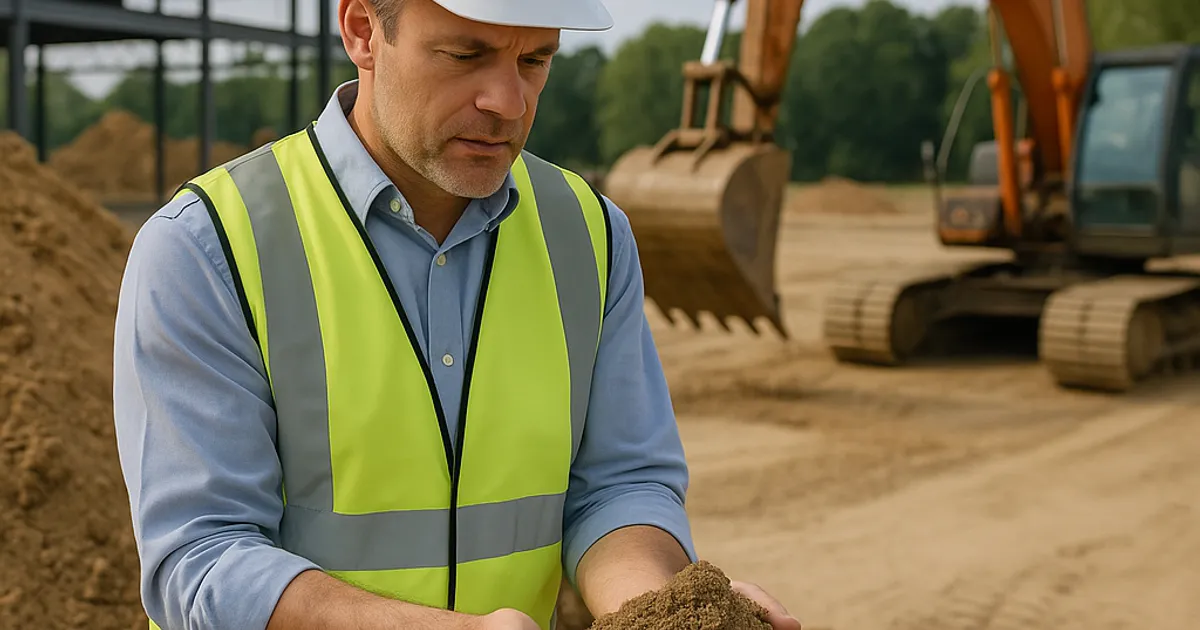
Visit the source site if possible. Clean fill should look like dirt — not a mix of gravel, debris, concrete chunks, roots, or other construction waste. If the material is coming from an excavation site, visit before accepting delivery.
Check for organic content. High organic content (topsoil mixed into fill) causes long-term settlement. Avoid material with visible plant matter, roots, or a strong earthy/composting smell.
Request references. Any established bulk dirt supplier should be able to point you to previous customers in similar projects.
Clarify pricing terms. Get a clear understanding of whether pricing is per yard or per load, whether it's pickup or delivered, and what the ticket process looks like for multi-load deliveries.
Soil Testing and Quality Assurance for Fill Projects
For any project involving engineered fill — foundations, retention structures, road subgrade, or commercial site work — soil quality assurance is not optional. It's a risk management requirement.
Geotechnical Investigation
Before specifying fill requirements, most commercial projects in DFW require a geotechnical investigation (geotech report) conducted by a licensed geotechnical engineer. This report characterizes existing subsoil conditions, establishes design bearing capacities, and specifies fill material requirements and compaction standards.
Common specifications you'll see in DFW geotech reports include:
- Plasticity Index ≤ 20 for structural fill under slabs
- Compaction to 95% or 98% of standard Proctor (ASTM D698)
- Maximum particle size of 3 inches
- Moisture content within 2–4% of optimum
Testing Fill Material Before Acceptance
For large fill operations, it's worth conducting independent testing on source material before delivery begins. Tests commonly run on fill dirt in Texas include:
- Atterberg Limits (ASTM D4318): Determines Liquid Limit (LL) and Plastic Limit (PL), from which Plasticity Index is calculated
- Grain Size Analysis (ASTM D422): Classifies material by particle size distribution
- Proctor Compaction Test (ASTM D698): Establishes optimum moisture content and maximum dry density for compaction
- Organic Content (ASTM D2974): Measures percentage of organic material that will decompose and cause settlement
These tests are typically run by a geotechnical or materials testing lab. In DFW, several firms specialize in construction materials testing and can turn around basic soil tests within 24–48 hours.
Compaction Testing During Fill Operations
Once fill operations begin, compaction testing — typically using a nuclear density gauge or sand cone method — verifies that each lift of fill is achieving specified density. For projects with a geotechnical engineer of record, field density tests are typically required at specified frequencies (e.g., one test per 500 square feet per lift).
Skipping compaction verification is one of the most common — and costly — mistakes on DFW fill projects. In expansive clay country, improperly compacted fill can lead to differential settlement, cracked slabs, failed retaining walls, and drainage problems that cost far more to remediate than the testing would have cost upfront.
Find or Post Dirt, Rock & Aggregate
Join thousands of contractors using DirtMatch to buy, sell, and exchange earthwork materials.
Try DirtMatch FreeNavigating Dallas-Area Regulations for Fill Dirt Operations
Fill dirt transactions in the DFW area exist within a regulatory framework that spans federal, state, and local requirements. Understanding the key rules helps you stay compliant and avoid costly surprises.
Texas Commission on Environmental Quality (TCEQ)
The TCEQ regulates fill material in Texas, particularly when it comes to potentially contaminated soil. Under TCEQ's solid waste rules, fill material that originates from a site with known or suspected contamination must be characterized and, if contaminated above certain thresholds, managed as solid waste rather than fill.
For clean fill from construction sites, TCEQ's rules are more straightforward, but the generator of the material is responsible for certifying it as uncontaminated. When accepting fill from third-party sites, it's good practice to request a written certification from the material generator.
City and County Grading Permits
Within the City of Dallas and surrounding municipalities, any fill operation involving significant earth movement typically requires a grading permit. Thresholds vary by jurisdiction — some cities trigger permits at 50 cubic yards, others at 500 or more. Check with the specific municipality where your project is located:
- City of Dallas: Development Services Department
- City of Fort Worth: Development Services
- Collin County / Denton County: County Engineering offices for unincorporated areas
- City of Frisco, McKinney, Allen, Plano: Each has its own development services department with specific grading ordinances
Stormwater and Erosion Control
Fill operations of one acre or more in Texas require a Construction General Permit (CGP) from TCEQ, which includes a Stormwater Pollution Prevention Plan (SWPPP). This plan must address erosion control measures during active fill operations, including silt fences, rock check dams, inlet protection, and stabilization requirements.
The EPA's NPDES stormwater construction program establishes the federal framework that Texas's CGP program implements at the state level. Compliance is not optional — violations can result in significant fines and stop-work orders.
Flood Zone Considerations
The DFW area has extensive FEMA-mapped floodplains along the Trinity River system and its tributaries. Placing fill in a regulated floodplain without proper permits — from FEMA, the City, and potentially the U.S. Army Corps of Engineers — is illegal and can expose you to significant liability. Always check flood zone status before specifying fill operations near waterways.
Hauling and Logistics: Getting Dirt Moved Efficiently in DFW
The operational side of a fill dirt project — getting material from source to destination — involves its own set of challenges in the DFW metro.
Trucking Options
End-Dump Trucks The workhorse of the fill dirt industry. Standard end-dumps carry 14–16 yards per load. Articulated end-dumps can carry up to 20–22 yards. In DFW, expect to coordinate with trucking companies that run dedicated routes — many are affiliated directly with quarry operations or larger grading contractors.
Bottom-Dump (Belly Dump) Trailers Better for high-volume, continuous operations. These trailers discharge material on the move, creating windrows that are then spread by a dozer. Less common for residential-scale work, but efficient for large commercial fills.
Live-Bottom Trailers Useful for sticky clay materials that don't discharge cleanly from standard end-dumps. More common in the Blackland Prairie areas where native clay fill is being moved.
Traffic and Scheduling Considerations
DFW traffic is notoriously difficult, and trucking fill dirt through the metro during peak hours can dramatically reduce the number of loads completed per day. On a large fill operation where you're paying for trucking by the load rather than by the day, this has real cost implications.
Experienced contractors in DFW often schedule trucking operations to start early (5–6 AM) and wrap before afternoon congestion builds. For projects within the inner loop — inside LBJ Freeway or Loop 12 — midday deliveries can be particularly problematic.
Weight Limits and Road Restrictions
Texas has seasonal weight restrictions on farm-to-market roads during winter and spring months when wet soil conditions make roads vulnerable to damage. The Texas Department of Transportation publishes these restrictions, and violating them can result in significant fines. Always verify current weight limits for the haul route before scheduling loads.
Matching Available Dirt with Projects That Need It: The DirtMatch Advantage
The traditional fill dirt market in DFW — like most metros — is fragmented and inefficient. Contractors with surplus material post flyers, make phone calls, and rely on word-of-mouth. Developers needing fill call quarries and grading contractors, often paying retail prices for material that's sitting free of charge a few miles away.
This inefficiency has real costs: excavation contractors pay to haul clean fill to landfills (tipping fees in DFW run $15–$40 per ton), while developers across town pay $10–$20 per yard for the same material plus trucking. The market clears, but it clears slowly and expensively.
DirtMatch addresses this problem directly by creating a transparent marketplace where both sides of the fill dirt equation — those with material and those needing material — can find each other quickly. The platform's matching algorithm accounts for material type, volume, proximity, and timing to surface the most relevant connections in real time.
For DFW contractors and developers specifically, this means access to a live feed of material availability and demand across the entire metro — from Weatherford in the west to Greenville in the east, and from Sherman in the north to Waxahachie in the south. If you're a developer in Frisco who needs 300 yards of clean fill (exactly the type of request currently active on the platform), you shouldn't have to call six different suppliers to find it. And if you're a grading contractor in Melissa sitting on 25,000 yards of surplus material from a subdivision pad, you shouldn't have to pay to haul it away.
If you're new to the platform and wondering where to start, get started with DirtMatch to create your first listing or browse available material in your area — the process takes minutes and can surface options you wouldn't find through any other channel.
Seasonal Considerations for Fill Dirt Projects in North Texas
Timing matters in DFW fill operations, and understanding seasonal patterns helps you plan more effectively.
Spring: The Critical Window
Spring is the busiest season for earthwork in North Texas, and for good reason. After winter rains, soils have adequate moisture for compaction, temperatures are moderate, and construction season is ramping up. However, spring also brings the heaviest rainfall and the risk of wet weather delays. Flash flooding along the Trinity and its tributaries is a real concern, and fill operations in low-lying areas may be interrupted repeatedly.
Spring is also when clay soils are at their most workable — near optimum moisture content naturally. If you're doing fill work with native clay material, spring placement and compaction will give you the best results.
Summer: Heat and Dry Conditions
North Texas summers are brutal — temperatures above 100°F are common from July through September, and extended droughts can bake the Blackland Prairie clay into a rock-hard surface that resists both excavation and compaction. For fill operations in summer, moisture conditioning of dry clay fill is often necessary: adding water and allowing it to soak in before compaction.
Summer also puts enormous strain on equipment and crews, and productivity typically drops 15–25% during peak heat. Budget accordingly.
Fall: The Second Best Window
September through November is generally favorable for fill work in DFW. Temperatures moderate, rain events are less intense than spring, and the construction push toward year-end creates high demand for fill material and trucking. Availability of surplus fill material is often highest in fall as summer construction projects near completion.
Winter: Challenging but Workable
North Texas winters are mild compared to northern states, and fill operations can typically continue through winter without major interruption. The primary concerns are periodic ice events (which shut down trucking operations for 1–3 days at a time), wet spells that soften clay fills, and the farm-to-market weight restrictions mentioned earlier. Winter is often when material prices are lowest, making it a good time to negotiate supply contracts for spring projects.
Cost Comparison: Sourcing Fill Dirt Through Different Channels
To put all the pricing information together, here's a comparison of what different sourcing approaches typically cost for a mid-size fill project in DFW (assume 2,000 yards needed, delivered within 20 miles):
| Sourcing Method | Estimated Cost per Yard | Total Estimated Cost | Notes |
|---|---|---|---|
| Quarry / Commercial Supplier | $18–$28 | $36,000–$56,000 | Consistent quality, easy logistics |
| Landscape Supply Yard | $25–$40 | $50,000–$80,000 | Best for small volumes; retail pricing |
| Excavation Contractor Surplus | $5–$15 | $10,000–$30,000 | Variable quality; requires vetting |
| Construction Site Pickup (self-haul) | Free–$5 | $0–$10,000 | You arrange trucks; labor intensive |
| DirtMatch Marketplace Match | $4–$18 | $8,000–$36,000 | Competitive; proximity-matched; transparent |
Estimates are for illustrative purposes. Actual costs depend on material specification, distance, volume, and market conditions at time of project.
The cost advantage of marketplace-matched fill dirt is most pronounced when proximity matching is effective — when a source within 5–10 miles is available, eliminating long haul costs. At scale, this can represent savings of $20,000–$60,000 on a large commercial fill project.
Practical Tips for a Successful Fill Dirt Project in DFW
Before we wrap up, here's a condensed set of actionable best practices for anyone sourcing fill dirt in the Dallas-Fort Worth area:
Do Your Homework Before You Buy
- Get your geotech report first — it defines what you need
- Know your soil classification requirements before contacting suppliers
- Calculate your volume needs carefully; add 15–20% for compaction shrinkage
- Verify flood zone status for your project site
Source Smarter
- Prioritize proximity to reduce trucking costs
- Check the DirtMatch marketplace before calling quarries — free material or below-market material may be available nearby
- Build relationships with local excavation contractors who regularly generate surplus fill
- For large volumes, negotiate a fixed price contract tied to a specific source
Protect Yourself Legally and Financially
- Get a written certification that material is clean and uncontaminated
- Require delivery tickets to track volume received
- Don't skip compaction testing — it's cheap insurance against expensive failures
- Confirm all permits are in place before fill operations begin
Manage Logistics Carefully
- Schedule trucking outside peak traffic hours
- Confirm weight limits on haul routes
- Have a plan for wet weather — where will trucks stage? How will you protect placed fill from erosion?
- Establish a clear process for material rejection if delivered fill doesn't meet spec
The Future of Fill Dirt Sourcing in Dallas-Fort Worth
The DFW construction market is not slowing down. Population projections show the metro adding 1–2 million residents per decade through 2040, driving continued demand for residential, commercial, and infrastructure earthwork. With that growth comes a growing need for efficient, transparent fill dirt sourcing.
The days of relying entirely on phone calls and relationships to move bulk dirt are giving way to data-driven marketplace approaches. Platforms that can match material surplus with project demand in real time — accounting for soil type, volume, location, and timing — deliver tangible cost savings and operational efficiency that traditional sourcing cannot match.
For contractors and developers operating in the DFW market, understanding how DirtMatch works and incorporating it into your sourcing workflow is increasingly a competitive advantage. In a market where margins are tight and logistics are complex, finding fill dirt faster and cheaper isn't just convenient — it's essential.
Whether you're grading a single residential lot in Burleson or moving 100,000 yards for a commercial development in Allen, the principles are the same: know your material requirements, source close to home, verify quality, and use every tool available to connect with the market efficiently. The fill dirt you need is out there — in most cases, closer than you think.