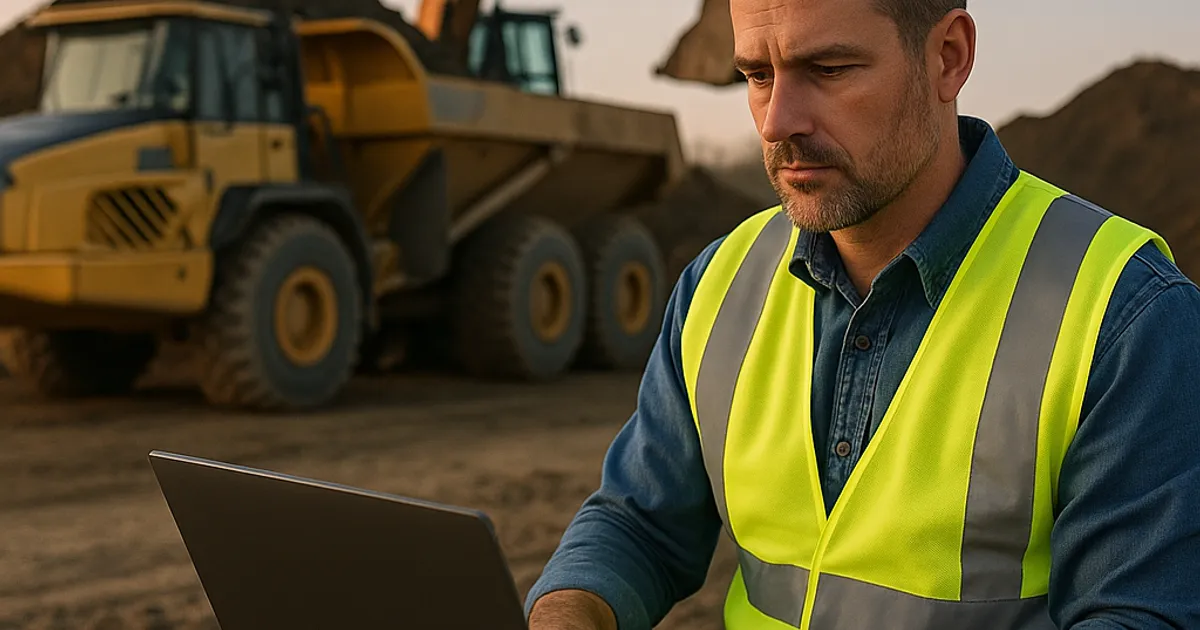

If you've priced a dirt haul lately in the Dallas-Fort Worth Metroplex, you already know the sticker shock is real. Trucking rates across Texas have shifted meaningfully over the past few years, driven by fuel price volatility, driver shortages, equipment costs, and relentless construction demand from one of the fastest-growing regions in the country. Whether you're grading a new subdivision in Prosper, filling a detention pond in Mansfield, or moving excess cut material off a highway corridor in Tarrant County, understanding the true cost of hauling dirt in DFW is the difference between a profitable project and a blown budget.
This guide digs into everything you need to know: average trucking rates, how haul distance changes your math, the hidden costs most contractors overlook, and how smart material sourcing — using platforms like DirtMatch — can dramatically reduce your per-yard cost before a single wheel turns.
Why Dirt Hauling Costs Are Especially Complex in DFW
The Dallas-Fort Worth Metroplex presents a uniquely complex hauling environment. Covering over 9,200 square miles with 13 core counties and more than 7.8 million residents, DFW is simultaneously one of the most active construction markets in North America and one of the most logistically challenging for earthwork contractors.
Several structural factors make DFW hauling economics different from most other major metro areas:
Explosive Growth Pressure: The North Texas region has consistently ranked among the top three metros in the country for new construction permits. That demand creates fierce competition for trucks, particularly during the spring and fall building seasons when everyone needs material moved at once.
Expansive Clay Soils: Much of the DFW basin sits atop the Austin Chalk and Eagle Ford Shale formations, producing heavy, expansive black clay soils — what locals call "black gumbo." These soils are notoriously difficult to haul because they're dense, sticky, and can bind to truck beds, reducing effective payload capacity and extending cycle times.
Sprawling Geography: DFW's development footprint continues expanding outward — north toward Celina and Sherman, east toward Rockwall and Terrell, south toward Midlothian and Waxahachie, and west toward Weatherford. Long haul distances between cut sites and fill sites are the norm, not the exception.
Traffic and Cycle Times: Loop 12, I-35, I-20, the LBJ Freeway, and US-287 corridors are perpetually congested during peak hours. When a truck that should complete four loads per day only completes two because of traffic, your effective hauling cost per yard doubles.
Tight Disposal Options: As DFW fills in, legitimate clean fill disposal sites become harder to find close to urban job sites, pushing haul distances — and costs — steadily upward.
Understanding these structural pressures is the starting point for accurately budgeting your next dirt haul.
Average Dirt Hauling Rates in the Dallas-Fort Worth Area (2026)
Directly quoting trucking rates is always tricky because they fluctuate with diesel prices, driver availability, and seasonal demand. That said, here are the realistic ranges contractors are working with across the DFW Metroplex in 2026:
Per-Hour Trucking Rates
Most local dirt hauling in DFW is billed on an hourly basis when the haul distance is short or when the job requires significant wait time at the loading or dump site.
| Truck Type | Typical Payload | Hourly Rate (DFW, 2026) |
|---|---|---|
| Single-axle dump truck | 8–12 tons | $85–$115/hr |
| Tandem-axle dump truck | 14–18 tons | $105–$145/hr |
| Semi end-dump (Super Dump) | 20–26 tons | $135–$185/hr |
| Transfer truck (transfer trailer) | 24–28 tons | $155–$200/hr |
| Side-dump trailer | 22–26 tons | $130–$175/hr |
| Bottom-dump trailer | 20–25 tons | $125–$170/hr |
Most DFW trucking contractors require a minimum of four hours per truck per day, and many require a day minimum on mobilization. Some operators add a fuel surcharge on top of hourly rates — typically 5–12% of the base rate depending on diesel prices at the time of invoicing.
Per-Ton and Per-Yard Rates
When haul distance is the primary cost driver, many contractors price by the ton or cubic yard instead of by the hour.
| Haul Distance | Per-Ton Rate (DFW) | Per-Yard Rate (DFW) |
|---|---|---|
| Under 5 miles | $4.50–$8.00/ton | $3.00–$5.50/yd |
| 5–15 miles | $7.00–$12.00/ton | $4.75–$8.00/yd |
| 15–30 miles | $10.00–$18.00/ton | $6.75–$12.00/yd |
| 30–50 miles | $15.00–$25.00/ton | $10.00–$17.00/yd |
| 50+ miles | $22.00–$35.00+/ton | $15.00–$23.00+/yd |
Note: These figures represent hauling costs only and do not include material purchase costs, loading, or tipping fees. Actual rates vary based on truck type, material weight, traffic conditions, and contractor overhead.
Full-Project Cost Benchmarks
For context, here are some rough total cost ranges for common DFW earthwork scenarios in 2026:
- Residential lot fill (500–2,000 yards): $4,000–$22,000 total depending on material source distance
- Commercial pad site (5,000–25,000 yards): $35,000–$250,000+ depending on haul distance and truck fleet
- Subdivision mass grading (50,000–500,000+ yards): Varies enormously; major projects often self-haul or negotiate fleet contracts
The 7 Biggest Factors Driving Your Dirt Hauling Cost in Texas
No two hauling invoices look the same, and for good reason. A dozen variables interact to determine your final cost per yard. Here are the seven that matter most:
1. Haul Distance and Cycle Time
This is the single biggest lever in your hauling budget. Haul distance determines how many loads a truck can complete in a day. A truck running a 3-mile round trip might complete 8–10 loads per shift. The same truck on a 25-mile round trip might complete only 3–4 loads. Since you're paying by the hour in most cases, fewer loads per day means a dramatically higher effective cost per yard.
Contractors often underestimate total cycle time by forgetting wait time at the loading and dump sites. If your excavator takes 8 minutes to load a truck and the dump site has a queue of 10 trucks, you're looking at 90 minutes or more of non-productive time per load.
2. Material Type and Density
Not all dirt hauls the same. Dense expansive clays common throughout Collin, Dallas, and Tarrant counties can weigh 115–135 pounds per cubic foot when wet — well above the 100 lbs/ft³ rule of thumb for average soil. Heavy material means trucks hit their legal weight limit before filling to volumetric capacity, effectively reducing payload per load and driving up cost per yard.
Sand, sandy loam, and decomposed granite — more common in the western portions of the Metroplex near Parker and Hood counties — are lighter and easier to haul, typically improving economics.
3. Truck Configuration and Fleet Size
The right truck for the job matters enormously. For short hauls on tight job sites, single-axle or tandem-axle dumps offer maneuverability. For long hauls on open roads, transfer trucks and semi end-dumps maximize payload per trip and improve cost efficiency. Matching truck type to haul conditions is a discipline that separates experienced operators from those burning money on the wrong equipment.
Fleet size also matters. If you're moving 50,000 yards in 30 days, running two trucks versus eight trucks has exponential schedule and cost implications. Larger fleets from established DFW trucking contractors often come with volume discounts.
4. Fuel Costs and Surcharges
Diesel prices have remained volatile. As of early 2026, diesel in Texas trades in the $3.50–$4.20/gallon range depending on market conditions. A standard tandem-axle dump truck gets roughly 5–7 miles per gallon fully loaded. On a 30-mile round trip, that's 4–6 gallons of diesel per load — a meaningful variable cost that most trucking contractors recover through fuel surcharges. Always clarify with your hauler whether the quoted rate is all-inclusive or subject to a fuel adjustment.
5. Tipping Fees and Disposal Costs
If you're hauling away spoil material that has no destination project to receive it, you'll pay tipping fees at an approved disposal or fill site. In the DFW area, these fees range from $5–$25 per load for clean fill at rural fill sites, up to $35–$80+ per load for marginal or borderline materials that require more scrutiny. Contaminated soils require licensed disposal and can run dramatically higher — sometimes hundreds of dollars per ton.
6. Permits and Overweight Fees
Texas allows overweight trucks on state highways with proper permits. The Texas Department of Motor Vehicles (TxDMV) issues oversize/overweight permits, and many earthwork contractors regularly run permitted loads to maximize payload per trip. Permit costs add $20–$100 per truck per day depending on route and load configuration, but the improved payload efficiency usually justifies the expense on longer hauls.
Violating weight limits without permits exposes contractors to fines and liability — and can lead to road damage claims that are far more expensive than the permit would have been.
7. Seasonal Demand and Market Timing
Spring (March–May) and early fall (September–October) are peak construction seasons in North Texas. During these windows, truck availability tightens and rates climb — sometimes 10–20% above off-peak pricing. If your project schedule gives you flexibility, moving major dirt hauls into summer (when heat slows some above-ground work) or winter (when demand softens) can produce meaningful savings.
Sourcing Dirt Smarter: How Material Matching Changes Your Economics
Here's a truth that experienced earthwork contractors know but newer entrants often learn the hard way: the biggest cost in dirt hauling isn't the truck — it's the haul distance. And haul distance is a function of where you source or dispose of your material.
Traditional approaches to finding fill dirt or disposing of excess cut material relied on word of mouth, broker relationships, and phone calls — a process that was slow, opaque, and often resulted in longer-than-necessary hauls because contractors didn't know what was available nearby.
That's precisely the problem that DirtMatch was built to solve. By connecting contractors who have excess dirt with those who need fill — and vice versa — DirtMatch can dramatically compress haul distances, turning a 25-mile haul into a 6-mile haul and cutting your trucking cost by more than half in some cases.
The platform's activity in the Dallas area speaks for itself. On DirtMatch's fill dirt listings for Dallas, there are currently over 624,000 yards of material available and more than 1.5 million yards needed — with over 1,100 matches completed in the last 30 days alone. That level of liquidity means that if you need fill dirt in DFW or you're sitting on excess spoil that needs a home, there's a very good chance a match exists nearby, waiting to be made.
For example, a recent listing showed 100,000 yards of clean fill dirt available in Haltom City — a prime inner-ring location that could serve dozens of projects across northern Tarrant County without a single load traveling more than 10–15 miles. That kind of proximity match is the difference between a $6/yard haul and a $14/yard haul.
Understanding Dirt Material Types and How They Affect Hauling Cost
Not all material is created equal when it comes to hauling economics. Here's a quick breakdown of the most common material types moved in DFW and how they affect your cost:
Clean Fill Dirt
Clean fill dirt is the workhorse of the DFW construction market — it's what goes under slabs, fills detention ponds, builds embankments, and raises finished floor elevations. In North Texas, clean fill typically consists of clay-dominant subsoil stripped from development sites. It's dense (requiring attention to legal payload limits), free of organics, and widely available from active construction sites.
Hauling cost for clean fill is primarily driven by distance and clay content. Wetter clay hauls slower and sticks to beds, adding cycle time.
Sandy Fill and Structural Fill
Sand and sandy materials — more common from sites in Hood County, Parker County, and along river corridors — are lighter and easier to haul but often harder to source near dense urban job sites. When sandy structural fill is needed and must be imported from distance, costs rise quickly.
A recent DirtMatch listing highlighted the scale of demand: 500,000 yards of sand or sandstone needed in Kennedale, TX — illustrating just how significant material sourcing can be for large-scale infrastructure and industrial projects in the southern DFW Metroplex.
Rock and Caliche
Rock, caliche, and limestone rubble haul differently from soil — they're extremely heavy, irregular in shape, and require specialized dump configurations. Caliche is common in southern Tarrant County and Johnson County. Rock hauls typically run at lower volumetric efficiency but hit weight limits quickly, making per-ton pricing more common than per-yard pricing for these materials.
Topsoil
Finished topsoil for landscaping, revegetation, and agricultural applications is lighter than subsoil and commands a higher market price per yard — often $15–$45/yard delivered in DFW depending on quality and organic content. Topsoil hauls are typically smaller volume but higher value, and they're often brokered separately from bulk earthwork contracts.
Breaking Down a Real Hauling Invoice: What You're Actually Paying For
Most contractors get a lump-sum price per load or per hour and don't think much about what's inside that number. Understanding the cost components of a trucking invoice helps you negotiate more effectively and identify where savings are achievable.
A typical DFW hauling invoice includes some or all of the following:
| Cost Component | Typical Range | Notes |
|---|---|---|
| Driver labor (with benefits/overhead) | $28–$45/hr | Largest single component |
| Equipment depreciation | $15–$30/hr | Varies by truck age and type |
| Fuel | $10–$22/hr | Based on diesel price and cycle |
| Insurance (liability + cargo) | $8–$18/hr | Trucking insurance remains elevated |
| Maintenance and tires | $7–$15/hr | Tires alone average $500–$800 each |
| Permits and fees | $2–$8/hr amortized | Overweight, access, road bonds |
| Dispatcher and overhead | $5–$12/hr | Company overhead allocation |
| Total (typical tandem dump) | $75–$150/hr | Before profit margin |
When a contractor quotes you $125/hour for a tandem dump, they're not getting rich — they're covering real costs with a modest margin on top. Understanding this helps set realistic expectations when negotiating price, especially for volume work where there's legitimate room for efficiency gains.
Legal Weight Limits and Their Impact on Texas Dirt Hauling
Texas has specific weight limit regulations that directly govern how much material can be moved per load. Operating within — or legally permitted above — these limits is critical for both compliance and cost efficiency.
Under standard Texas legal limits:
- Single-axle: 20,000 lbs
- Tandem-axle group: 34,000 lbs
- Gross vehicle weight (5-axle semi): 80,000 lbs
That means a standard 5-axle end-dump or transfer truck can legally haul approximately 48,000–52,000 lbs of payload, or roughly 24–26 tons, under standard permit. For DFW clay soils weighing 130 lbs/ft³ when wet, that translates to roughly 15–17 cubic yards per load — not 20+ yards as contractors sometimes assume when budgeting by volume.
The Federal Motor Carrier Safety Administration sets baseline federal trucking regulations, while TxDMV administers state-level overweight permitting for Texas highways. Contractors who run without proper permits face fines starting at several hundred dollars and escalating sharply for repeat violations — and they risk suspension of operating authority.
For large-scale earthwork projects in DFW, many contractors use Super Dumps — single-truck configurations with additional axles that can legally carry 26+ tons under Texas law — to maximize payload per trip without the need for a trailer. Super Dumps are particularly cost-effective on medium hauls of 5–20 miles.
Find or Post Dirt, Rock & Aggregate
Join thousands of contractors using DirtMatch to buy, sell, and exchange earthwork materials.
Try DirtMatch FreeStrategies to Reduce Dirt Hauling Costs on DFW Projects
Savvy contractors working in North Texas have developed a playbook of tactics for keeping hauling costs under control. Here are the most effective strategies:
Minimize Haul Distance Through Smart Sourcing
This is the highest-leverage move available to any project manager. Every mile you shave off a haul distance compounds across every load. On a 50-truck project running 100 loads per day, reducing average haul distance from 18 miles to 8 miles could save $5,000–$12,000 per day in trucking costs. Platforms like DirtMatch make this kind of proximity matching accessible to contractors at every scale — from a single homebuilder needing 500 yards to an infrastructure developer moving half a million yards.
Balance Cut and Fill Internally
The cheapest haul is the one you don't make. Work with your civil engineer to optimize cut-fill balance on grading plans so that material excavated from high points on the site can be used to fill low areas with minimal off-site hauling. This is standard practice on large subdivision and commercial pad grading, but it's often overlooked on smaller projects where the upfront engineering cost seems disproportionate to the savings — until you price the alternative hauls.
Negotiate Fleet Contracts Instead of Spot Rates
Spot-rate trucking in DFW's active market is expensive. Contractors who commit to weekly or monthly volume with a single trucking provider almost always secure better rates — often 10–20% below spot market. Trucking companies value predictable utilization and will price accordingly. Get your work scheduled far enough in advance to make volume commitments possible.
Maximize Payload Per Load
Work with your loading operator (excavator or loader) to fill trucks properly — not under-filled due to caution, and not over-filled in ways that create weight violations. A well-trained operator who consistently achieves 95% of legal payload versus one achieving 80% adds 15% more material per load without adding any truck cost. That's a meaningful efficiency gain over thousands of loads.
Time Major Hauls for Off-Peak Traffic Windows
In DFW, rush hour congestion on I-35, I-635, and US-75 can add 30–60 minutes to a round-trip cycle during peak windows. Coordinating start times to get trucks loaded and on the road by 6:00–6:30 AM — before the worst congestion hits — can add one to two productive loads per truck per day. Over a multi-week haul, that improvement is substantial.
Use the Right Truck for the Job
Don't over-truck or under-truck a project. Short intra-site hauls are often better served by scrapers or conveyor systems rather than road trucks. Medium hauls of 3–15 miles in open road conditions favor Super Dumps. Long hauls over 20 miles typically favor transfer trucks or bottom-dumps for maximum payload efficiency. Reviewing truck selection with an experienced earthwork superintendent before mobilization can prevent costly configuration mistakes.
How Fuel Price Volatility Affects DFW Trucking Rates
Diesel fuel is the lifeblood of the dirt hauling industry, and fuel price swings have a direct, immediate impact on what contractors pay. The relationship isn't always transparent in contracts, which is why understanding fuel surcharge mechanisms matters.
Most DFW trucking contractors use some form of fuel surcharge schedule tied to the weekly on-highway diesel price reported by the U.S. Energy Information Administration (EIA). When diesel climbs above a baseline threshold (often $3.00 or $3.50/gallon), a percentage surcharge is added to the base rate — commonly 1% for every $0.10 increment above the threshold.
In practice, this means that on a $120/hour base rate with diesel at $4.00/gallon and a $3.00 baseline, you might pay an additional 10% fuel surcharge — or $132/hour effective. On a large project running 20 trucks for 60 days, that fuel surcharge alone can represent $70,000–$100,000 in additional project cost versus the initial estimate.
Some owners and GCs push for fixed-price hauling contracts that eliminate fuel surcharge uncertainty. Trucking contractors who accept these terms typically build a fuel hedge into their fixed price — meaning you pay for price protection whether diesel spikes or not. Whether fixed-price or surcharge-indexed pricing is better for your project depends on contract duration, market outlook, and your risk tolerance.
Environmental and Compliance Considerations for DFW Dirt Hauling
Moving dirt across public roads in Texas isn't purely a logistics exercise — it has regulatory and environmental dimensions that can affect both cost and schedule.
Stormwater and Erosion Control: Any construction site disturbing more than one acre in Texas requires a Construction General Permit (CGP) from the Texas Commission on Environmental Quality (TCEQ), including a Stormwater Pollution Prevention Plan (SW3P). Loading and haul areas must be managed to prevent sediment tracking onto public roads — a requirement that often necessitates truck wash stations, gravel access pads, and additional sweeping. These controls add cost but prevent expensive stop-work orders and regulatory fines. The EPA's stormwater construction guidance provides federal context, with TCEQ administering the Texas-specific program.
Material Characterization: Before hauling soil off a site, particularly from commercial, industrial, or infill locations, contractors may be required to demonstrate that the material is clean and non-hazardous. Phase I and Phase II environmental site assessments, or simple analytical testing of soil samples, provide documentation that protects both the hauling contractor and the receiving site from liability. Hauling unknowingly contaminated soil can trigger Superfund liability — an outcome worth a few thousand dollars in testing to avoid.
Road Bond Requirements: Some DFW municipalities and counties require contractors to post a road bond before beginning large earthwork hauls on local roads. These bonds protect the jurisdiction against pavement damage from heavy truck traffic. Bond amounts vary but commonly range from $5,000 to $50,000 depending on estimated traffic volume and road condition.
Hiring a Dirt Hauling Contractor in DFW: What to Look For
With hundreds of trucking companies operating in the DFW Metroplex, not all of them are equally qualified, insured, or reliable. Here's what to evaluate before signing a hauling contract:
Verify Insurance Coverage: At minimum, require a Certificate of Insurance showing commercial auto liability ($1M+ per occurrence), general liability ($1M per occurrence, $2M aggregate), and workers' compensation coverage. High-volume earthwork haulers should carry $2M+ in auto liability given the exposure of heavy trucks on public roads.
Check DOT Authority and Safety Rating: Commercial trucking contractors are regulated by the FMCSA and must maintain active motor carrier authority. You can verify a carrier's status, safety rating, and inspection history through the FMCSA's online carrier search. Avoid carriers with unsatisfactory safety ratings or a pattern of out-of-service violations.
Assess Fleet Condition and Age: Older trucks have higher breakdown rates, which translates to project delays and schedule risk. Ask about average fleet age and maintenance practices. Well-maintained fleets with average truck ages under 8–10 years are generally more reliable on large projects.
Evaluate Dispatcher Responsiveness: On a fast-moving earthwork project, you need a trucking partner whose dispatcher returns calls immediately and can adjust truck counts on short notice. Poor communication from a dispatcher cascades into schedule problems faster than almost any other factor.
Get References from DFW Projects: A trucking contractor with a strong track record on projects in your specific part of the Metroplex knows the local roads, disposal sites, weigh stations, and permit requirements — reducing your learning curve and risk.
To find contractors moving material near your project, exploring the DirtMatch platform is a practical first step — it surfaces active projects and available material in your immediate area, giving you visibility into what's moving and where.
Comparing DIY vs. Contracted Hauling for Smaller DFW Projects
For residential projects — backyard fill, pool excavation spoil, driveway base — the question often arises: is it cheaper to rent a dump truck and haul yourself, or hire a contractor?
Here's a realistic comparison for a hypothetical 200-yard fill project within DFW:
| Approach | Estimated Cost | Considerations |
|---|---|---|
| Hire a hauling contractor (5-mile source) | $1,500–$3,500 | Includes driver, insurance, truck |
| Rent dump truck + driver yourself | $900–$2,200 | Requires CDL, insurance, familiarity with loading/dump |
| Flatbed delivery from supplier | $2,000–$4,500 | Convenient but higher per-yard cost |
| Skip hire (small projects) | $400–$900 | Limited volume; multiple skips needed for 200 yards |
For most residential homeowners and small builders, hiring a licensed hauling contractor is the practical choice — it eliminates CDL, insurance, and liability issues while delivering professional efficiency. For owner-operators and small grading companies with their own trucks, self-hauling small volumes makes financial sense when the haul distance is short.
The key is always sourcing the material close to your site. For Dallas-area projects, checking DirtMatch's fill dirt listings for Dallas before calling a material supplier is a smart first step — you may find clean fill available for free or at minimal cost from a nearby construction site, cutting your only real expense down to the haul itself.
What the DFW Market Looks Like Right Now
The Dallas earthwork market in 2026 remains intensely active. Industrial and logistics development along the I-20 and I-35W corridors continues at pace, with large distribution centers requiring significant cut-fill operations. The Celina-Prosper-McKinney triangle in Collin County remains one of the hottest residential development zones in the country, driving continuous demand for fill material. Along US-67 south of Fort Worth and in the Alliance Airport area to the north, large commercial and manufacturing projects add to the truck count on area roads daily.
The aggregate of all this activity means that both surplus material and fill demand are simultaneously high across the Metroplex — creating real opportunity for contractors who can navigate the matching problem efficiently. The DirtMatch FAQ is a useful resource for understanding how the matching process works and what types of projects and materials qualify.
For contractors not yet using technology tools to source and dispose of material, the competitive disadvantage is growing. Those who manually search for fill or disposal options are increasingly working with longer hauls and higher costs than those who systematically leverage matching platforms to compress haul distances.
Actionable Takeaways for DFW Contractors in 2026
Before wrapping up, here's a practical checklist for any North Texas contractor planning a dirt haul:
- Calculate cycle time, not just haul distance — Account for loading time, dump site wait, and traffic when estimating loads per day.
- Characterize your material before hauling — Know what you have (clay, sand, caliche, rock) and how it affects payload per load.
- Verify legal weight limits and permitting requirements — Don't assume your hauler knows what you don't.
- Clarify fuel surcharge terms in writing — Understand whether your rate is fixed or indexed before signing.
- Match material early — Use DirtMatch or direct outreach to find fill sources or receiving sites within 5–10 miles before defaulting to distant sources.
- Get references on your hauling contractor — Insurance, DOT authority, and local reputation all matter.
- Plan haul windows around traffic patterns — A 6:00 AM start can be worth $10,000 or more on a large project.
- Optimize your cut-fill balance on the design drawing — Every yard you don't have to haul is your cheapest yard.
Hauling dirt in the Dallas-Fort Worth area is never simple — but with the right information, the right partners, and the right tools, it's a cost center you can meaningfully control. Whether you're moving 500 yards on a residential lot or 500,000 yards on a master-planned community, the principles are the same: know your material, minimize your haul, match your source close, and work with contractors who have the credentials to perform. Get started with DirtMatch today to see what's available near your next North Texas project.