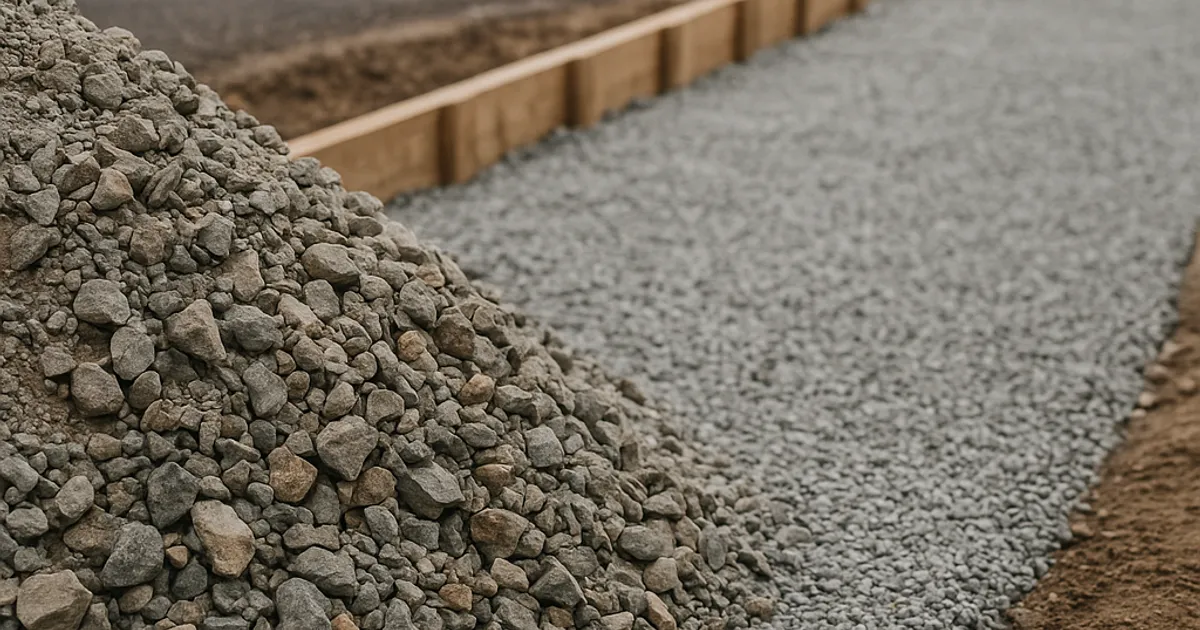

If you've ever driven through West Texas, Central Texas, or the Dallas–Fort Worth corridor and watched a road crew lay down a whitish-gray base layer before paving, you were almost certainly looking at caliche in action. This calcium carbonate-rich sedimentary material is one of the defining earthwork resources of the Texas landscape — plentiful, durable, and uniquely suited to the region's climate and geology.
For earthwork contractors, developers, and landowners, caliche occupies a sweet spot: it's cheaper than crushed limestone, more structural than sandy fill, and far more available in Texas than comparable base materials in other parts of the country. But like any natural material, its quality varies significantly by region, and finding a reliable, cost-effective source requires knowing the market.
This guide covers everything you need to know about caliche fill in Texas in 2026 — from its geological origins and engineering properties, to its most common applications, regional availability across DFW and beyond, cost benchmarks, and the fastest way to connect with suppliers near your jobsite.
What Is Caliche? Geology and Composition Explained
Caliche (pronounced kah-LEE-chee) is a naturally occurring sedimentary deposit formed when calcium carbonate leaches downward through soil and re-precipitates in a distinct layer, typically between six inches and several feet below the surface. In drier climates like much of Texas, evaporation pulls moisture upward before it can flush calcium deep into the earth, causing it to accumulate and bind surrounding soil particles — sand, gravel, clay, and silt — into a calcium-cemented conglomerate.
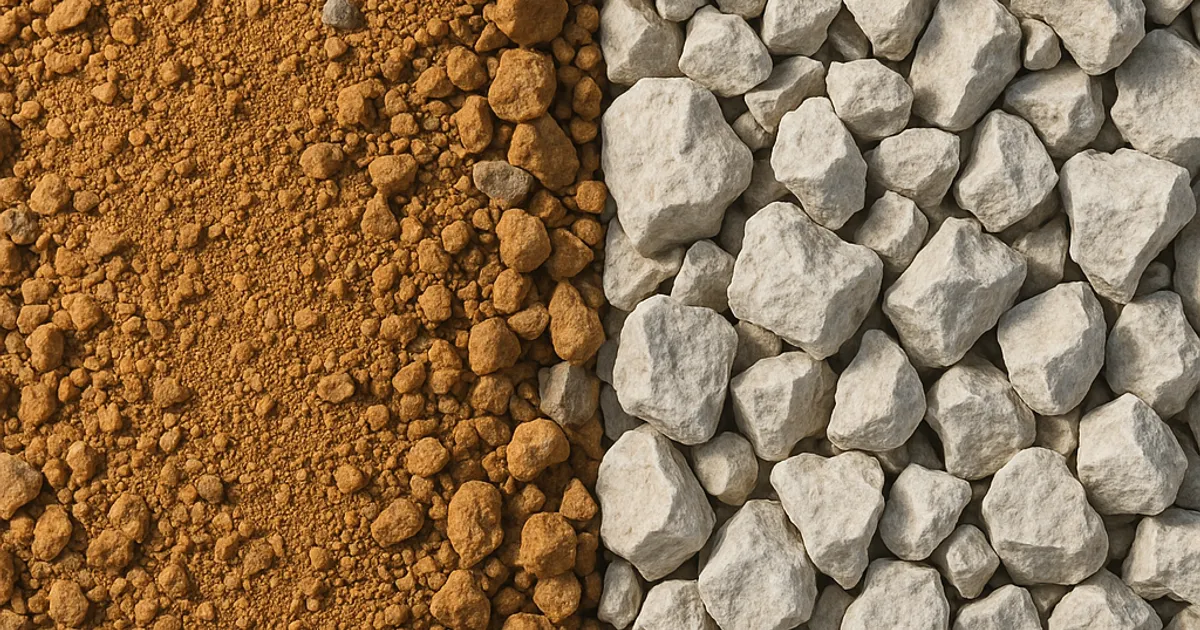
The result is a material that can range from a soft, chalky powder to a dense, rock-hard mass, depending on how long it has been forming and how much rainfall the area receives. In West Texas and the Trans-Pecos region, caliche layers can be several feet thick and require blasting or heavy ripping to break apart. In Central Texas and the DFW area, it tends to appear as a firm but workable subsoil layer that excavators and bulldozers can move with relative ease.
Chemically, caliche is predominantly calcium carbonate (CaCO₃), often mixed with magnesium carbonate, silica, clay minerals, and iron oxides. Its pH is typically between 7.5 and 8.5, making it naturally alkaline — a characteristic with significant implications for vegetation and certain construction applications.
From a soil classification standpoint, caliche can fall across several ASTM D2487 categories depending on its texture and gravel content, but it is most commonly classified in the A-2 to A-4 range under the AASHTO soil classification system used by TxDOT and most highway engineers in Texas. This classification reflects a material with good bearing capacity and limited plasticity — exactly what contractors want for base course and fill applications.
Why Texas Has So Much Caliche
Texas is one of the most caliche-rich states in the country, and the reason comes down to climate and geology. The combination of a semi-arid to arid climate across much of the state, calcium-rich parent rock formations, and shallow water tables in certain zones creates ideal conditions for caliche formation over geologic timescales.
The Permian Basin, the Edwards Plateau, the Rolling Plains, the Llano Uplift, and the Coastal Plains all have significant caliche deposits. In the DFW area specifically, the Blackland Prairie's expansive clay soils often overlie caliche layers, making it a common byproduct of site development — virtually every deep cut excavation in the region will encounter it.
This geological abundance translates to economic advantage. Unlike states where contractors must import crushed aggregate or rely on distant quarries, Texas earthwork professionals can often source caliche from pits within 30–60 miles of most major job sites, keeping trucking costs manageable and material costs well below national averages for comparable aggregate base products.
According to data from the USDA Web Soil Survey, caliche-forming conditions — specifically, the presence of calcic or petrocalcic horizons — are mapped across tens of millions of acres in Texas, confirming the scale of available deposits.
Common Uses of Caliche Fill Dirt in Texas
Caliche's combination of structural strength, drainage characteristics, and natural abundance makes it one of the most versatile fill materials in the Texas earthwork industry. Here are the primary applications contractors and developers rely on it for:
Road Base and Subbase Construction
This is caliche's most widespread use in Texas. TxDOT specifications allow caliche as a flexible base material in certain classifications, and county roads across rural Texas — from the Panhandle to South Texas — are built almost entirely on caliche base courses. The material's calcium carbonate cement gives it a natural self-binding quality: when compacted and wetted, caliche particles lock together and develop load-bearing strength comparable to processed aggregate base.
For county and ranch roads where full asphalt paving isn't warranted, a compacted caliche surface can support heavy agricultural and oilfield equipment loads for years with minimal maintenance. TxDOT's Item 247 (Flexible Base) specification covers caliche-type materials, with Grade requirements that define gradation, liquid limit, plasticity index, and wet ball mill values.
Pad and Building Site Preparation
In residential and commercial development, caliche is frequently used to build up elevation, stabilize soft subgrades, and create a working platform for construction equipment. When compacted to 95% of maximum dry density (per ASTM D698 Proctor testing), caliche provides excellent bearing capacity for slab-on-grade foundations, particularly in sites where native soils are too expansive or soft.
DFW developers consistently use caliche as a structural fill beneath commercial pad sites, parking lots, and industrial facilities. Its low plasticity means it won't swell and shrink with moisture changes the way black clay does — a critical advantage in the DFW market where expansive Blackland Prairie soils create enormous foundation movement problems.
Drainage Improvement and Grading
Caliche's relatively coarse texture and low clay content make it far more permeable than the native clay soils common in North Texas. When used as a fill layer beneath topsoil or as a subgrade amendment, it helps redirect surface water and improve percolation — reducing ponding and erosion on sloped sites.
For large grading projects — watershed management, detention pond construction, and site leveling — caliche provides a stable, easy-to-grade material that holds its profile after compaction.
Pipeline and Utility Trench Backfill
Many Texas utility contractors use caliche as trench backfill material around water, gas, and telecommunications lines. It compacts well in lifts, doesn't retain excessive moisture, and provides stable lateral support for buried infrastructure. Some specifications require additional bedding sand around the pipe itself, with caliche used for the upper backfill zone.
Embankment and Levee Fill
For agricultural levees, stock tank dams, retention berms, and highway embankments, compacted caliche provides excellent shear strength. Its calcium carbonate binding gives it cohesion properties that purely granular materials lack, making it more resistant to internal erosion than sand or gravel fills.
Oilfield Road Construction
Across the Permian Basin and Eagle Ford Shale plays, caliche is the go-to surface material for well pad access roads, lease roads, and temporary construction pads. It handles heavy truck traffic, dries quickly after rain, and can be reclaimed or regraded after oilfield operations conclude.
Caliche vs. Other Fill Materials: A Performance Comparison
Understanding how caliche stacks up against alternative fill options helps contractors make cost-effective material choices for specific project conditions.
| Material | Compaction Strength | Drainage | Expansion Risk | Typical Cost (DFW, 2026) | Best Use Case |
|---|---|---|---|---|---|
| Caliche | High | Moderate-Good | Low | $8–$18/ton | Road base, pad fill, grading |
| Crushed Limestone | Very High | Good | Very Low | $14–$24/ton | Structural base, driveways |
| Select Fill (Sandy Loam) | Moderate | Good | Low | $10–$20/ton | Landscape, general fill |
| Black Clay (Native) | Moderate | Poor | Very High | $0–$5/ton | Not recommended for fill |
| Recycled Concrete Base | High | Good | Very Low | $10–$18/ton | Road base, commercial pads |
| Engineered Fill (Processed) | Very High | Variable | Very Low | $20–$35/ton | Structural applications |
Note: Costs vary by haul distance, volume, and market conditions. Always get multiple quotes for large volume projects.
Caliche generally wins on the cost-to-performance ratio for most Texas applications, particularly where haul distances are short and the material doesn't need to meet premium structural specifications.
Caliche Availability Across Texas Regions
DFW and North Texas
The Dallas–Fort Worth metroplex sits at the intersection of several geological zones that produce abundant caliche. Tarrant, Denton, Parker, Wise, Johnson, and Hood counties all have active caliche pits, and excavation projects throughout the metroplex routinely generate excess caliche that needs to be moved. Finding a caliche supplier in DFW has historically been a matter of knowing the right pit operators or demolition contractors — but today, digital platforms are making that process dramatically faster.
For contractors sourcing caliche fill in Texas, the DirtMatch fill dirt platform for Texas currently shows over 2 million yards of fill materials available statewide, with active listings across DFW and surrounding regions. The platform's 2,096 matches in the last 30 days alone reflect just how active the Texas earthwork exchange market has become.
Central Texas (Austin–San Antonio Corridor)
The Edwards Plateau and surrounding Hill Country counties are among the most caliche-rich zones in the state. Williamson, Hays, Comal, Kendall, Bandera, and Kerr counties all have commercial caliche operations, and the rapid growth of the Austin–San Antonio corridor has driven significant demand. Caliche from this region tends to be harder and more rock-like, requiring ripping equipment but delivering very high compaction strength.
West Texas
The Permian Basin — Midland, Odessa, and surrounding counties — has historically produced caliche almost as a byproduct of oilfield development. With shale production continuing at high levels across the Wolfcamp and Spraberry formations in 2026, demand for lease road construction material remains strong, and commercial caliche pits are abundant. Haul distances can be significant due to the region's scale, making it especially important to source material close to the job.
South Texas
Laredo, Corpus Christi, and the Rio Grande Valley all have access to caliche deposits, though the material in South Texas tends to be softer and higher in fines content than Central or West Texas caliche. This makes it well-suited for road surfacing but requires closer attention to gradation specifications for structural applications.
The Panhandle
Amarillo and surrounding High Plains counties have caliche deposits typically found closer to the surface than in other regions, often making excavation straightforward. The Panhandle's agricultural economy creates consistent demand for ranch roads and pivot roads built on caliche base.
How to Evaluate Caliche Quality for Your Project
Not all caliche is equal — quality varies widely based on location, depth, and the nature of surrounding soil deposits. Before committing to a source, experienced contractors evaluate the following:
Gradation and Particle Size
Quality caliche for road base should have a well-graded particle distribution — a mix of coarse fragments, medium gravel, and fines — that allows it to compact tightly. Material that is too fine (high clay content) will behave poorly when wet; material that is too coarse may not compact adequately. Request a sieve analysis from any commercial supplier for structural applications.
Plasticity Index (PI)
TxDOT's Item 247 specification requires a maximum PI of 10 for most base course applications. High-PI caliche (typically from deposits with significant clay contamination) will soften when wet and pump under traffic loading. Always ask for PI test results before purchasing caliche for load-bearing applications.
Wet Ball Mill Value
This test measures caliche's resistance to degradation under simulated traffic loading. TxDOT's Grade 1 flexible base specification requires a maximum wet ball mill value of 40 (or 45 with a PI ≤ 4). Caliche from shallow, soft deposits may exceed this threshold, making it unsuitable for primary road base but still useful for secondary applications.
Moisture-Density Relationship
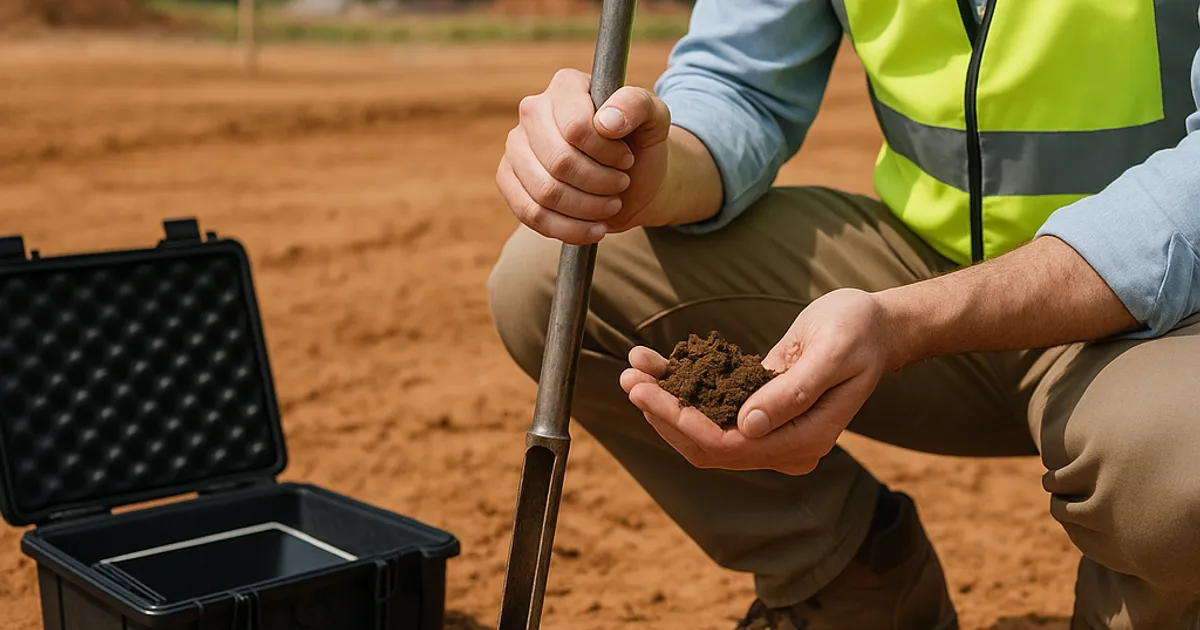
ASTM D698 (Standard Proctor) testing establishes the optimum moisture content for maximum compaction. For most Texas caliche, optimum moisture ranges from 8–14%. Compaction in the field should target 95% of maximum dry density for structural applications. Your geotechnical engineer or materials testing lab can run this test on samples from your source.
Visual Inspection
Experienced contractors can do a quick field assessment: caliche should be whitish to tan in color, with a firm texture that doesn't crumble excessively when dry. Significant dark discoloration, sticky texture when moist, or a strong clay smell are signs of contamination that may affect performance.
Caliche Pricing and Cost Factors in Texas in 2026
Caliche pricing in Texas in 2026 varies based on several factors:
Pit price (material only): In most Texas markets, raw caliche at the pit runs $4–$10 per ton for unprocessed run-of-pit material. Processed, screened caliche that meets specific gradation specs can run $8–$15 per ton at the source.
Hauling costs: This is often the dominant cost factor. Texas's scale means haul distances can vary from 5 miles to 60+ miles. At $6–$12 per loaded mile for a typical belly dump or end dump truck, transportation can easily double or triple the delivered cost. A 20-mile haul might add $15–$25 per ton to the base material price.
Volume: Large projects (10,000+ tons) typically command significant price breaks. Don't hesitate to negotiate — pit operators would rather move volume at a lower margin than let material sit.
Pit access fees and load-out costs: Some pits charge a loader fee or minimum load charge. Others include loading in the pit price. Clarify this before sending trucks.
Seasonal demand: Summer road construction season (May–September) drives peak demand and sometimes pushes prices up 10–15% compared to winter months.
The key to cost control is proximity. Platforms like DirtMatch, which connect contractors with nearby material sources, can dramatically reduce hauling costs by matching buyers with the closest available supply. When a project generates excess caliche within a few miles of a site that needs it, both parties benefit — the supplier avoids disposal costs and the buyer gets material at a fraction of the price of hauling from a distant commercial pit.
Find or Post Dirt, Rock & Aggregate
Join thousands of contractors using DirtMatch to buy, sell, and exchange earthwork materials.
Try DirtMatch FreeFinding Caliche Suppliers in DFW: Traditional vs. Digital Methods
Traditional Methods
Historically, finding caliche suppliers meant working your contact network — calling quarry operators, asking GCs who they use, checking with county road departments, or simply driving rural roads looking for active pits. This approach works, but it's slow, limited by your existing relationships, and often results in paying more because you're not comparing multiple sources.
DFW-area contractors have traditionally relied on a handful of established pit operators in Denton, Parker, Johnson, and Wise counties. These operators run reliable operations but may not always have material available when you need it, or may be at capacity during peak construction season.
Digital Marketplaces
The emergence of dirt-matching platforms has changed the game significantly. By aggregating available supply and active demand in one place, these platforms allow contractors to find caliche sources they would never have found through word of mouth — including construction sites that have excavated caliche as a byproduct and need to dispose of it, often at little or no material cost.
DirtMatch connects buyers and sellers of fill materials, including caliche, across Texas. The platform's real-time listings mean you can see what's available near your jobsite today, compare sources by distance and material type, and initiate contact with suppliers directly. For DFW contractors who need to move quickly on a project schedule, this kind of real-time market visibility is invaluable.
For contractors who frequently need caliche or other fill materials, DirtMatch Pro offers enhanced features including priority matching, expanded search radius, and dedicated support — tools that pay for themselves quickly when you're sourcing tens of thousands of tons per year.
Regulatory and Environmental Considerations
TxDOT Specifications
For any project involving TxDOT-funded roadwork, caliche must meet applicable material specifications — most commonly Item 247 (Flexible Base). This includes requirements for gradation, plasticity index, wet ball mill value, and sometimes triaxial class. Always confirm specification requirements with the project engineer before purchasing material.
Stormwater and Erosion Control
Caliche stockpiles and disturbed areas during caliche fill placement must comply with Texas Commission on Environmental Quality (TCEQ) Construction General Permit requirements for sites over one acre. Proper SWPPP implementation, silt fencing, and stabilization timelines apply. The EPA's stormwater construction guidance provides the federal framework underlying Texas's program.
Pit Mining Permits
Commercial caliche pits in Texas require permits from the Texas Railroad Commission (for aggregate mining in certain contexts) or county-level approvals. If you're developing your own caliche source on private land, check with your county and the Railroad Commission about applicable requirements before beginning extraction.
pH and Vegetation Concerns
Caliche's high pH (7.5–8.5) can be problematic if placed where vegetation establishment is required. Many plants, particularly acid-loving species, will struggle in caliche-heavy soils. For revegetation areas, covering caliche fill with a layer of topsoil or compost-amended native soil is standard practice.
Compaction Best Practices for Caliche Fill
Getting maximum performance from caliche fill comes down to proper compaction technique. Here's the standard approach:
1. Test before you compact. Run a Proctor test (ASTM D698) on a representative sample to establish maximum dry density and optimum moisture content. This is your target.
2. Place in controlled lifts. Standard practice is to place caliche in 6–8 inch loose lifts, then compact. Thicker lifts result in inadequate compaction at the bottom of the layer.
3. Moisture condition the material. If caliche is too dry, add water through a water truck and allow it to absorb before rolling. Too wet, and you'll need to let it dry or blend drier material.
4. Use appropriate equipment. Vibratory smooth drum rollers work well for caliche. Padfoot rollers are effective for the lower lifts when the material is more clay-like. Pneumatic rollers can finish the surface.
5. Test in place. Nuclear density gauge testing (ASTM D6938) or sand cone testing (ASTM D1556) should be performed at specified intervals. For structural applications, target 95% of maximum dry density.
6. Protect from saturation. Freshly compacted caliche is vulnerable to softening if saturated before it has fully cured. Time grading operations to avoid rain events where possible, and don't leave exposed caliche subgrade unprotected overnight during rainy periods.
The Earthwork Economy: Caliche as a Circular Resource
One of the most underappreciated aspects of caliche in the Texas construction economy is how much of it is generated as a byproduct of development — and how often it's wasted when it could be matched with projects that need it.
Every time a DFW developer cuts a new commercial pad or residential subdivision in the Denton, Parker, or Tarrant County areas, excavators encounter caliche layers that must be removed and hauled away. Without a buyer, this material goes to disposal — adding cost to the generating project and wasting a resource that another contractor might be willing to pay for.
Digital matching platforms address this inefficiency directly. On DirtMatch, recent Texas listings illustrate the scale of this market: thousands of yards of fill materials are listed for exchange across the state at any given time, connecting projects with surplus material to projects with active demand. This circular approach to fill materials reduces waste, lowers costs for both parties, and cuts truck miles — a meaningful environmental benefit in high-growth regions like DFW.
If you're a contractor managing a site with excess caliche, listing it on a platform like DirtMatch takes minutes and can turn a disposal cost into a recovered value. If you need caliche fill for an upcoming project, get started with DirtMatch to see what's available near your jobsite right now.
Tips for Contractors Sourcing Caliche in the DFW Market
Start your search early. Caliche from commercial pits can sell out during peak construction season. If you know you'll need 5,000+ tons for a summer project, start supplier conversations in Q1.
Check both commercial pits and byproduct sources. Commercial pits offer consistency and reliability; byproduct sources from construction sites often offer lower material costs but may require you to move quickly and handle your own haul coordination.
Negotiate trucking separately. Material cost and haul cost are often bundled, but separating them lets you shop each component independently. You may find that sourcing your own haulers beats the delivered price.
Request material certifications for spec work. Any project with TxDOT specifications or commercial geotechnical requirements will need test data. Get it before the trucks roll, not after.
Build relationships with pit operators. In the DFW market, established relationships with Denton, Parker, and Wise County pit operators pay dividends when you need fast access to material during busy periods.
Use the digital market as a price check. Even if you have an established supplier, a quick look at current listings on a platform like DirtMatch gives you market pricing context and may reveal closer, cheaper sources for specific jobs.
Caliche in the Context of Texas's Construction Boom
Texas's population and economic growth continues to drive one of the most active construction markets in the United States in 2026. The DFW metroplex alone adds hundreds of thousands of residents annually, fueling demand for new roads, subdivisions, commercial centers, industrial parks, and infrastructure. Each of these projects requires substantial quantities of fill material — and caliche sits at the center of that supply chain.
The Texas Department of Transportation's 10-year Unified Transportation Program (UTP) allocates tens of billions of dollars to highway construction and expansion across the state. Many of these projects, particularly in rural and suburban corridors, rely on locally sourced caliche base material. Regional economic growth and infrastructure investment are likely to keep caliche demand elevated for the foreseeable future.
For earthwork contractors positioned to efficiently source and place caliche, the market opportunity is significant. The key competitive advantage is supply chain efficiency — knowing where to find quality material close to the job, moving it at the lowest possible cost per ton, and consistently meeting compaction and quality specifications.
Frequently Asked Questions
See separate FAQ section below.
Summary: Making Caliche Work for Your Texas Project
Caliche is one of Texas's greatest earthwork assets — a naturally abundant, cost-effective, and highly capable fill material that has built roads, foundations, and infrastructure across the state for over a century. For DFW contractors and developers in particular, understanding how to source, evaluate, and place caliche efficiently is a core competency that directly impacts project profitability.
The keys are knowing your specification requirements before purchasing, evaluating material quality through proper testing, optimizing haul distances to control delivered cost, and using every available tool — including digital marketplaces — to find the closest, highest-quality source for each job.
With over 2 million yards of fill materials currently available through the Texas market on DirtMatch, there has never been a better time to leverage technology to source caliche and other fill materials more efficiently. Whether you need 500 yards for a residential pad or 50,000 tons for a commercial development, the right source is likely closer — and cheaper — than you think.