Before a single yard of fill dirt touches your Texas project site, soil testing is the critical step that separates successful builds from costly failures. From Dallas commercial developments to rural residential pads, understanding what tests are required, when they're mandated, and how to interpret results can save contractors tens of thousands of dollars in rework, regulatory fines, and structural liability.
Texas is one of the most geologically diverse states in the country. Its soils range from the notorious black expansive clays of the DFW Metroplex to the sandy loams of East Texas, the caliche-heavy soils of West Texas, and the gulf-coast sediments of Houston's coastal plain. That diversity makes soil testing not just a regulatory checkbox — it's an engineering necessity.
This guide walks Texas contractors, developers, and landowners through every layer of the soil testing process: what tests are legally required, which standards govern fill quality, how Dallas and other metro areas apply local overlays, and what practical steps you can take to streamline compliance without sacrificing project timelines.
Why Soil Testing Before Fill Is Non-Negotiable in Texas
The stakes around fill dirt placement in Texas have never been higher. With the Dallas-Fort Worth Metroplex consistently ranking as one of the fastest-growing regions in the United States — adding hundreds of thousands of residents and billions in construction annually — the pressure to move dirt quickly has sometimes outpaced the diligence required to move it safely.
Structural failures tied to improperly tested or placed fill are a documented problem across Texas. Expansive clay soils, when used as fill without proper testing, can exert uplift pressures exceeding 5,000 pounds per square foot — enough to crack foundations, buckle slabs, and destroy drainage infrastructure within just a few wet-dry cycles. In the DFW area alone, foundation repair is a multi-billion-dollar industry, and a substantial portion of those failures trace back to poor fill selection or inadequate compaction testing.
Beyond structural risk, there's an environmental dimension. Fill dirt sourced from industrial sites, old agricultural land, or demolition projects can introduce contaminants — heavy metals, petroleum hydrocarbons, pesticides, or even asbestos-containing materials — into previously clean ground. Texas regulations, enforced through the Texas Commission on Environmental Quality (TCEQ), draw hard lines around contaminated fill placement, particularly near waterways, wetlands, and residential developments.
Finally, there's the liability question. Texas courts have consistently held contractors, developers, and soil suppliers responsible when improper fill causes structural or environmental damage. Skipping soil testing isn't just a technical oversight — it's a legal exposure.
The Texas Regulatory Framework for Fill Dirt Testing
Texas operates a layered regulatory system for fill dirt, where state rules set the floor and local jurisdictions — municipalities, counties, and utility districts — can impose stricter requirements.
State-Level Oversight: TCEQ and TxDOT
The Texas Commission on Environmental Quality (TCEQ) is the primary state agency overseeing soil and fill-related environmental compliance. Under the Texas Risk Reduction Program (TRRP), TCEQ regulates the placement of fill at sites where contamination is a concern. Any fill dirt placed at or near a TCEQ-regulated cleanup site must meet specific chemical concentration limits — and documentation proving those limits are met must be on file before placement begins.
For highway and transportation projects, the Texas Department of Transportation (TxDOT) publishes its own fill and embankment specifications in the TxDOT Standard Specifications for Construction and Maintenance of Highways, Streets, and Bridges. Item 132 governs embankment construction and specifies:
- Liquid limit (LL) not exceeding 50 for embankment material
- Plasticity index (PI) not exceeding 35 for select fill used in upper embankment zones
- Compaction to a minimum of 95% of Standard Proctor density (ASTM D698) for most applications
- Lift thickness restrictions (typically 8 inches loose before compaction)
These TxDOT specs become the de facto standard for many large commercial and public projects in Texas, even when TxDOT isn't directly involved, because geotechnical engineers and project owners frequently reference them as the benchmark for acceptable fill quality.
Local Overlays: Dallas, Fort Worth, and the Metroplex
Within the DFW Metroplex, individual municipalities layer additional requirements on top of state standards. The City of Dallas, for instance, requires geotechnical investigation reports for virtually all commercial building permits that involve grade changes exceeding certain thresholds. Dallas's building code references the International Building Code (IBC) Chapter 18, which mandates site investigation reports covering soil bearing capacity, expansion potential, and fill compaction requirements before foundation permits are issued.
Fort Worth, Arlington, Frisco, McKinney, and Plano each have their own engineering review processes, but they share common themes: engineered fill plans must be submitted with grading permits, compaction testing must be performed by a licensed geotechnical laboratory, and results must be certified by a licensed Professional Engineer (PE) registered in Texas.
Core Soil Tests Required for Fill Placement in Texas
Whether you're working on a residential lot in Lewisville or a 50-acre industrial pad in Garland, a predictable set of soil tests forms the backbone of fill compliance in Texas.
1. Particle Size Analysis (Gradation Test) — ASTM D422 / D7928
This test determines the distribution of particle sizes in a soil sample — the percentages of gravel, sand, silt, and clay. It's foundational for classifying soil under the Unified Soil Classification System (USCS), per ASTM International standard D2487. Fill dirt intended for structural support must meet specific gradation requirements; excessive fines (silt and clay passing the #200 sieve) can indicate problematic moisture sensitivity and low bearing capacity.
Typical requirement: Fill used under building foundations in Texas generally targets less than 30–35% passing the #200 sieve for structural applications, though this varies by project specifications.
2. Atterberg Limits — ASTM D4318
The Atterberg limits test measures the liquid limit (LL), plastic limit (PL), and plasticity index (PI) of fine-grained soils. These values are critical in Texas, where expansive Blackland Prairie clays are endemic across the I-35 corridor and DFW Metroplex.
- Liquid Limit (LL): The moisture content at which soil transitions from plastic to liquid behavior
- Plastic Limit (PL): The moisture content at which soil transitions from semi-solid to plastic behavior
- Plasticity Index (PI): LL minus PL — a measure of the range of moisture over which soil behaves plastically
Texas fill standards commonly specify: PI ≤ 20 for general fill; PI ≤ 35 for lower embankment zones (TxDOT); PI < 50 for any accepted fill material in most Dallas-area commercial specs.
High-PI soils — particularly clays with PI > 40 — are typically prohibited as structural fill in Texas without special engineering design and mitigation measures such as lime stabilization.
3. Standard Proctor Compaction Test — ASTM D698
The Standard Proctor test establishes the relationship between moisture content and dry density for a given soil at a standard compactive effort. The peak of this moisture-density curve is the Optimum Moisture Content (OMC) and Maximum Dry Density (MDD).
During construction, field compaction is measured using a nuclear density gauge or sand cone test and expressed as a percentage of the lab-established MDD. Most Texas residential and commercial projects require:
- 95% of MDD for fill under building pads, driveways, and structural areas
- 90% of MDD for utility trench backfill in non-structural areas
- 98% of MDD for subgrade directly beneath pavement sections
4. Modified Proctor Compaction Test — ASTM D1557
The Modified Proctor test uses a higher compactive effort (4.5x that of the Standard Proctor), producing higher MDD values. It's typically specified for highway subgrade, airport pavements, and heavy industrial floors in Texas. TxDOT's Item 132 frequently references Modified Proctor criteria for select fill in upper embankment zones.
5. Moisture Content Test — ASTM D2216
Real-time moisture testing in the field ensures that fill is being placed within the acceptable moisture window relative to OMC. Texas's hot climate creates challenges here — fill placed in summer months can dry out rapidly between delivery and compaction, requiring moisture conditioning or haul scheduling adjustments.
6. Swell Test / Expansion Index — ASTM D4546
Given the prevalence of expansive clays throughout North Texas, swell testing is often required as part of geotechnical investigation for Dallas-area projects. This test measures how much a soil sample will expand when exposed to water from a given initial condition. Results inform foundation design decisions, including post-tension slab design, pier depth, and drainage system requirements.
7. pH and Corrosivity Testing
For projects involving buried utilities, concrete foundations, or metal structures, soil pH and sulfate content tests are required to assess corrosion potential. Texas soils in some areas — particularly along the Gulf Coast and in alkaline West Texas regions — exhibit sulfate concentrations that can cause concrete deterioration (sulfate attack) if not addressed in mix design.
Fill Dirt Quality Standards: What Makes Fill "Acceptable" in Texas?
Not all dirt qualifies as fill. Texas contractors and buyers sourcing material need to understand the quality thresholds that distinguish compliant, usable fill from material that will be rejected on-site or create problems down the road.
General Quality Requirements
Acceptable structural fill in Texas typically must be:
- Free of organics: Organic content greater than 2–3% (by ASTM D2974) is generally disqualifying for structural fill, as organic material decomposes and creates settlement
- Free of debris: No wood, concrete rubble, trash, demolition waste, or hazardous materials
- Chemically clean: No petroleum contamination, heavy metal exceedances, or TCEQ-regulated substances above action levels
- Properly graded: Meeting project-specific gradation requirements
- Within PI limits: As specified by the project engineer
The Contamination Problem
Fill dirt contamination is a growing concern across Texas. With decades of industrial, agricultural, and commercial land use, seemingly clean-looking dirt from excavation projects can carry hidden chemical loads. Before accepting imported fill, contractors should request:
- Chain of custody documentation — Where did this material come from?
- Phase I or Phase II Environmental Site Assessment results for the source site (if applicable)
- Laboratory analytical results for common contaminants if the source has any industrial history
The EPA's framework for contaminated site assessment under its Brownfields and CERCLA programs sets the national context, but TCEQ's Texas Risk Reduction Program (TRRP) provides state-specific screening levels that govern what's acceptable for Texas sites.
Comparison Table: Fill Quality Tiers in Texas
| Fill Quality Tier | PI Limit | Organics | Contamination Testing | Typical Use |
|---|---|---|---|---|
| Select Fill | ≤ 20 | < 1% | Required if source unknown | Under foundations, structural pads |
| General Embankment Fill | ≤ 35 | < 2% | Recommended | Road embankments, grading |
| Common Fill | ≤ 50 | < 3% | Site-dependent | Non-structural grading, landscaping |
| Unsuitable Material | > 50 | > 3% | N/A | Not accepted for any fill use |
The Soil Testing Process: Step-by-Step for Texas Projects
Understanding the workflow — from material sourcing to placement certification — helps contractors stay on schedule and avoid costly surprises.
Step 1: Pre-Construction Geotechnical Investigation
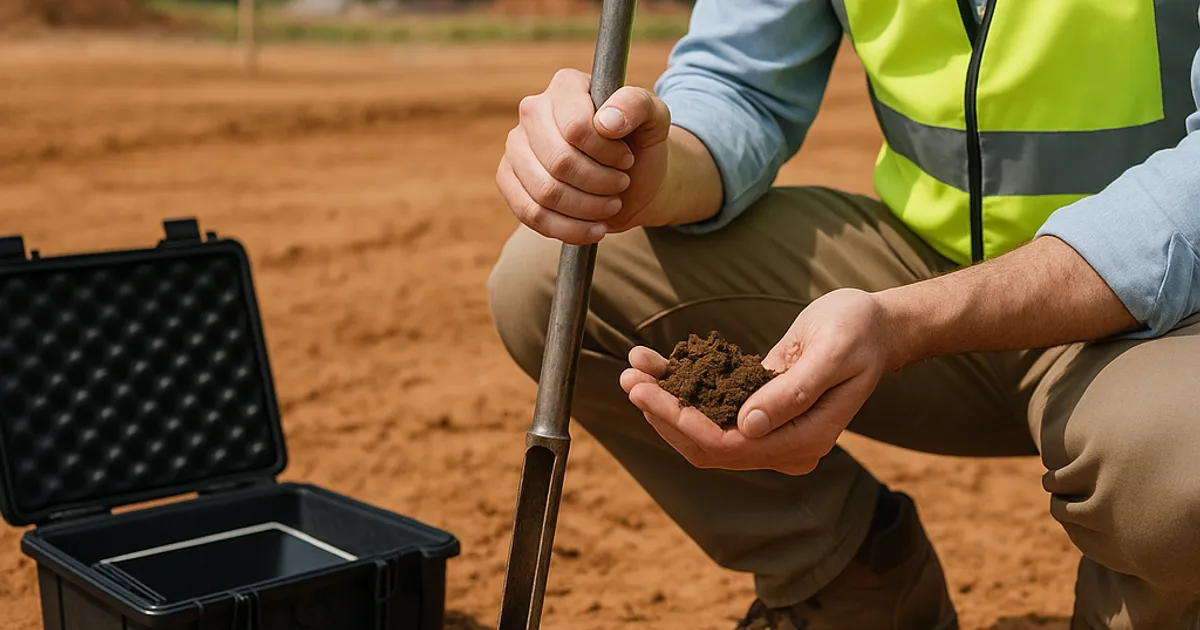
For most permitted projects in Texas, a geotechnical investigation of the receiving site is required before fill design begins. A licensed geotechnical engineer collects soil borings or test pit samples, performs lab testing, and produces a geotechnical report that:
- Characterizes existing site soils
- Identifies any existing fill or unsuitable material requiring removal
- Specifies fill material requirements (gradation, PI, compaction)
- Recommends lift thicknesses and compaction equipment
- Addresses groundwater conditions
In Dallas, this report is typically submitted with the grading permit application and reviewed by the city's engineering department or a third-party reviewer.
Step 2: Material Source Testing
Before fill is hauled to the site, samples from the proposed source should be tested to confirm compliance with project specifications. Standard source testing typically includes:
- Proctor compaction test (to establish MDD and OMC baseline)
- Atterberg limits
- Gradation/particle size analysis
- Visual inspection for organics and debris
If source material is from a site with any environmental concern, analytical chemistry testing for contaminants is required.
Step 3: Field Compaction Testing During Placement
This is where day-to-day compliance happens. A geotechnical technician performs nuclear density gauge tests (ASTM D6938) or sand cone tests (ASTM D1556) on each lift of fill, typically at a frequency of:
- 1 test per 2,500–5,000 SF of compacted area per lift (varies by project specs)
- Additional tests at suspect areas, near structures, or after rain events
Results are documented on field compaction reports, which are stamped and certified by the supervising PE at project completion.
Step 4: Documentation and Certification
At project closeout, the geotechnical engineer produces a final compaction certification letter confirming that all fill was placed and tested in conformance with the project specifications. This document is required for:
- Building permit final inspections in Dallas and most major Texas cities
- Lender/bank construction draw disbursements
- Owner acceptance and certificate of occupancy
Dallas-Specific Considerations for Fill Dirt Projects
Dallas sits squarely on the Blackland Prairie, an expanse of expansive montmorillonite clay that ranks among the most challenging foundation soils in North America. Conducting a thorough soil testing Dallas TX process isn't just about regulatory compliance here — it's about engineering survival.
The Expansive Clay Challenge
Blackland Prairie clay in Dallas has a documented potential vertical rise (PVR) ranging from 3 to 12 inches or more across a site, depending on depth to active zone, clay mineralogy, and drainage patterns. When contractors import fill that's similarly high-PI clay without proper testing and lime treatment, they compound the movement problem.
Dallas's building code and local geotechnical practice typically require:
- Lime stabilization of high-PI clay fill (usually 4–8% hydrated lime by dry weight, mixed and recompacted) to reduce PI below 20 and swell potential dramatically
- Moisture conditioning of fill within 2–3% of OMC before compaction
- Geotechnical special inspections — a licensed Special Inspector must be present during fill placement for Class 3 and Class 4 occupancies under the Dallas building code
Drainage and Stormwater Compliance
The City of Dallas requires a Stormwater Pollution Prevention Plan (SWPPP) for construction sites disturbing one acre or more — consistent with EPA NPDES requirements. Fill operations that alter drainage patterns, create sediment runoff, or impact stormwater flows must include appropriate BMPs (best management practices) such as silt fence, rock check dams, and inlet protection.
Fill placement in or near FEMA-mapped floodplain areas within Dallas requires additional approvals from Dallas's Floodplain Management office and may require a Conditional Letter of Map Revision (CLOMR) before work begins.
Cost of Soil Testing in Texas: What to Budget
Soil testing is an investment, not an expense — but contractors and owners need accurate cost expectations for budget planning.
Typical Testing Cost Ranges (Texas, 2026)
| Test | Typical Cost |
|---|---|
| Standard Proctor Compaction (ASTM D698) | $150–$250 per sample |
| Atterberg Limits | $75–$150 per sample |
| Particle Size Analysis (full sieve + hydrometer) | $100–$200 per sample |
| Moisture Content | $15–$30 per sample |
| Swell/Expansion Index (ASTM D4546) | $200–$350 per sample |
| pH and Sulfate Content | $50–$100 per sample |
| Nuclear Density Field Test | $25–$75 per test |
| Geotechnical Investigation Report (residential) | $1,500–$4,500 |
| Geotechnical Investigation Report (commercial) | $5,000–$25,000+ |
| Compaction Testing Service (per day) | $600–$1,200/day |
For a typical Dallas single-family home lot requiring imported fill, total soil testing costs typically range from $2,500 to $6,000 — a small fraction of the $15,000–$50,000 that foundation repair on an improperly filled lot can cost.
For large commercial projects, third-party geotechnical inspection services commonly run $30,000–$150,000 for the testing and documentation phase, but again, that's balanced against eight-figure construction investments.
Find or Post Dirt, Rock & Aggregate
Join thousands of contractors using DirtMatch to buy, sell, and exchange earthwork materials.
Try DirtMatch FreeFinding Compliant Fill Dirt in Texas: The Sourcing Challenge
Passing a fill dirt quality check starts with sourcing material that has a chance of meeting specifications before it ever reaches your lab. This is where the Texas fill dirt marketplace creates enormous value.
The DirtMatch fill dirt marketplace for Texas currently shows over 2 million yards of material available statewide, with nearly 1.9 million yards needed — and 1,904 successful matches made in just the past 30 days. That level of activity reflects the scale of Texas earthwork and the constant movement of material between excavation sites and fill projects.
For example, a listing showing 20,000 yards of clean fill dirt needed in Lampasas, TX, or smaller projects like the 4–6 yard residential fill needs appearing in Killeen and Wichita Falls, illustrate the range of demand across the state. When contractors can match with local sources that already have testing documentation from their excavation projects, the compliance process becomes significantly more efficient.
Platforms like DirtMatch, which connect Texas earthwork contractors with nearby fill sources, reduce hauling distances and costs while giving both parties access to material documentation they need for quality verification. When you're sourcing fill locally rather than from an unknown distant supplier, the chain of custody is shorter and the testing history is easier to obtain.
Working with Geotechnical Engineers and Testing Laboratories
The backbone of Texas soil testing compliance is the licensed geotechnical engineering community. Understanding how to work effectively with these professionals accelerates your project and reduces friction.
Selecting a Geotechnical Lab
Not all soil testing labs in Texas are created equal. Look for:
- AASHTO Accredited laboratory (the gold standard for soil testing lab accreditation)
- Licensed Professional Engineer (PE) on staff to certify results
- Familiarity with local conditions — DFW labs with Blackland Prairie experience are invaluable
- Turnaround time commitments — for active construction, you need results in 24–72 hours for compaction tests, 5–10 business days for full index property suites
Communication Best Practices
- Provide the geotechnical engineer with your project specifications upfront — don't wait until material is on site to ask what tests are needed
- Share the proposed fill material source information early so source testing can be planned before hauling begins
- Request a pre-construction meeting to align on testing frequency, documentation requirements, and failure protocols
- Establish a clear chain of communication between the contractor, lab, engineer, and building official
Red Flags: When Fill Dirt Should Be Rejected
Every Texas contractor managing a fill dirt quality check needs to know the warning signs that material should be turned away before it's placed.
Visual Inspection Red Flags
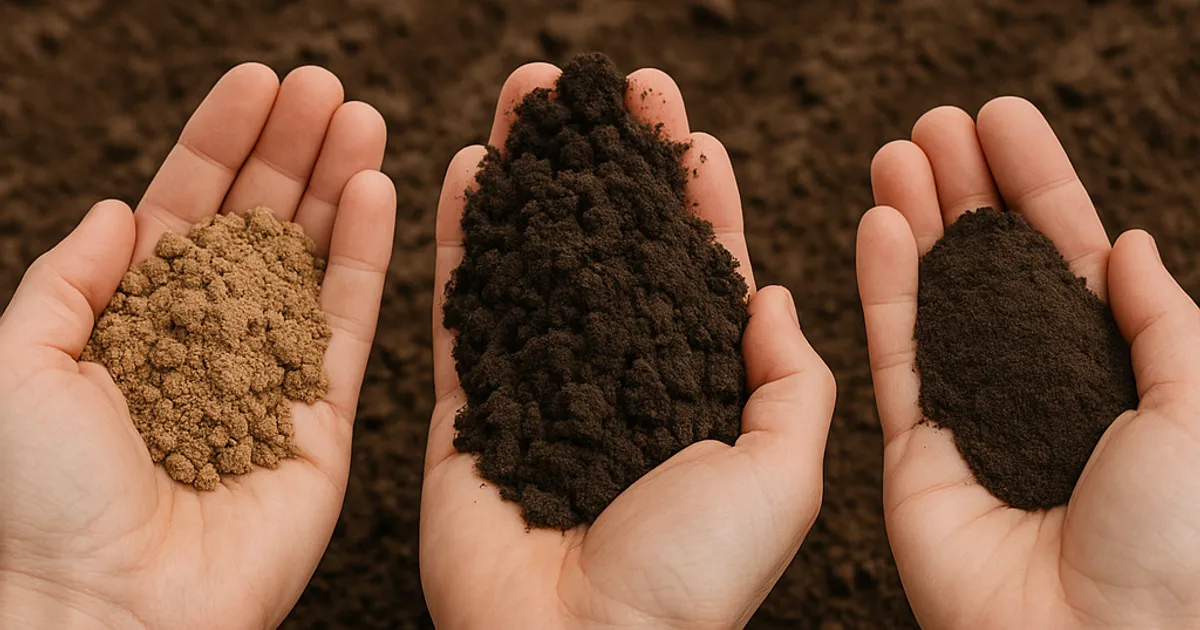
- Dark, organic material: Black or very dark brown soil with earthy odor suggests high organic content
- Visible debris: Wood chips, concrete fragments, brick, glass, plastic, or any man-made material mixed into dirt
- Unusual discoloration: Rainbow sheen, staining, or unexpected color variation that could indicate contamination
- Strong odor: Petroleum, chemical, or sewage smells are immediate disqualifiers
- Excessive fines: Powdery, dusty material that forms large clods when wet and cracks severely when dry often indicates high-PI clay
Documentation Red Flags
- Supplier cannot provide source site information
- No Proctor test results available or results are from a different material batch
- Chain of custody is broken or documentation is inconsistent
- Source site has known environmental history with no cleanup documentation
If any of these flags appear, stop the haul and consult your geotechnical engineer before proceeding. The cost of returning an unacceptable load is a fraction of the cost of removing placed fill that fails testing.
Lime Stabilization and Soil Improvement: Texas's Most Common Solution
When available fill material doesn't meet specification requirements straight from the source — which is common in North Texas given the prevalence of expansive clays — lime stabilization is the most widely used soil improvement technique in the state.
How Lime Stabilization Works
Quicklime or hydrated lime is mixed into high-PI clay at rates typically ranging from 4–8% by dry weight of soil. The lime reacts with clay minerals (pozzolanic reaction) to:
- Reduce plasticity index (PI) — often from 40+ down to below 15
- Decrease swell potential dramatically
- Increase bearing capacity
- Improve workability and compactability
Lime Stabilization Process
- Pulverize existing soil or spread fill material to specified loose lift thickness
- Apply lime at design rate using a spreader truck
- Mix to specified depth using a reclaimer/pulvimixer or disc harrows
- Mellow period: Allow 24–72 hours for initial lime-clay reaction
- Final mix to achieve uniform distribution
- Compact to specified density (typically 95–98% of Modified Proctor)
- Cure for minimum of 7 days before loading
Testing during and after lime stabilization includes Atterberg limits on treated samples (to verify PI reduction), compaction testing of each lift, and unconfined compressive strength testing per ASTM D5102 for high-confidence projects.
Environmental Considerations and TCEQ Compliance
Beyond geotechnical requirements, Texas contractors need to understand the environmental compliance layer of fill dirt placement.
TCEQ Regulated Fill Sites
If your project is located on or adjacent to a TCEQ-regulated site (former gas station, dry cleaner, industrial facility, agricultural chemical storage), fill placement may require:
- Written notification to TCEQ before importing fill
- Analytical testing of imported fill against TCEQ TRRP Tier 1 or Tier 2 concentration limits
- Post-placement documentation filed with TCEQ's records
Failing to comply with TCEQ fill requirements can result in enforcement actions, fines, and mandatory remediation — with cleanup costs potentially reaching six or seven figures.
Wetlands and Waters of the U.S.
Fill placement in or near wetlands or waters regulated under Section 404 of the Clean Water Act requires permits from the U.S. Army Corps of Engineers. Texas has significant acreage of jurisdictional wetlands, particularly in East Texas, the Gulf Coast region, and along river corridors. Placing fill in these areas without authorization can result in federal enforcement, stop-work orders, and mandatory restoration.
Contractors working anywhere near drainage features, intermittent streams, or vegetated wet areas in Texas should consult a wetland specialist or environmental attorney before any fill placement to confirm jurisdictional status.
Streamlining Compliance: How Technology and Marketplace Platforms Help
The combination of regulatory complexity, material quality requirements, and logistics challenges in Texas fill dirt projects makes efficiency tools increasingly valuable. Knowing how DirtMatch works to connect excavation projects with fill needs can dramatically simplify the sourcing and documentation side of compliance.
When a Dallas contractor sources fill through a matched excavation project with documented testing history — rather than purchasing from an unknown bulk supplier — the chain of custody is cleaner, testing documentation is often already partially complete, and turnaround time from sourcing to placement shrinks significantly. For projects under time pressure, this kind of streamlined sourcing can be the difference between meeting a schedule and blowing it.
For contractors who regularly manage fill dirt sourcing and placement across multiple Texas projects, DirtMatch Pro offers advanced tools for tracking material sources, documenting transactions, and managing the logistics of fill matching at scale. With over 1,900 matches made across Texas in a single month, the platform has established itself as a genuine operational resource for earthwork contractors throughout the state.
Summary: Your Soil Testing Checklist for Texas Fill Projects
Pulling it all together, here's the practical checklist every Texas contractor and developer should work through before and during fill placement:
Before Fill Arrives on Site:
- Geotechnical investigation of receiving site complete and PE-signed report in hand
- Fill specifications defined (PI limit, MDD target, gradation requirements, organics limit)
- Fill material source identified and documented (chain of custody)
- Source testing complete (Proctor, Atterberg limits, gradation)
- Contamination concerns evaluated (site history, analytical testing if needed)
- TCEQ compliance confirmed (if applicable)
- Wetland/404 permits obtained (if applicable)
- SWPPP in place for sites ≥1 acre
- Building department grading/fill permit issued
During Fill Placement:
- Lift thickness within specification (typically 6–12 inches loose)
- Moisture conditioning verified before compaction
- Compaction testing at specified frequency (nuclear gauge or sand cone)
- Field test results reviewed in real time — failures addressed before next lift
- Special Inspector present if required by building code occupancy class
- Material that fails visual inspection rejected before placement
At Project Completion:
- All lab reports and field test results compiled
- PE compaction certification letter issued
- Documentation submitted to building department / lender as required
- Records retained for project file (minimum 3–7 years, per project requirements)
For contractors ready to simplify the material sourcing side of this process, get started with DirtMatch to connect with Texas fill dirt sources that have documented material histories and are located close enough to your project to keep costs competitive.
Conclusion
Soil testing before fill placement in Texas isn't a bureaucratic hurdle — it's the engineering and legal foundation that makes every project above the fill sustainable. The Dallas market, with its notorious expansive clays and explosive growth, demands more rigorous soil testing diligence than almost any other metro in the country. From TCEQ environmental compliance to TxDOT compaction specifications to city-level geotechnical special inspection requirements, the layers of compliance are real and consequential.
The good news is that with the right geotechnical team, the right material sources, and the right platform tools, compliance doesn't have to mean delays. Texas's active fill dirt marketplace — with millions of yards moving across the state each month — gives contractors real options for finding tested, documented, specification-compliant fill that moves projects forward rather than backward.
Invest in the testing. Document everything. Source material wisely. Build something that lasts.