Why Soil Compaction Matters
Proper soil compaction is the foundation of any construction project. Inadequately compacted soil can lead to settling, foundation cracks, and structural failures that cost thousands to repair.
Compaction Standards
Standard Proctor Test (ASTM D698)
The Standard Proctor test determines the maximum dry density and optimum moisture content of a soil. It uses a specific hammer weight and drop height to simulate compaction energy.
Modified Proctor Test (ASTM D1557)
The Modified Proctor test uses higher compaction energy than the Standard Proctor, resulting in higher maximum dry densities. It's typically used for highway and airport runway subgrades.
Find or Post Dirt, Rock & Aggregate
Join thousands of contractors using DirtMatch to buy, sell, and exchange earthwork materials.
Try DirtMatch FreeField Testing Methods
Nuclear Density Gauge
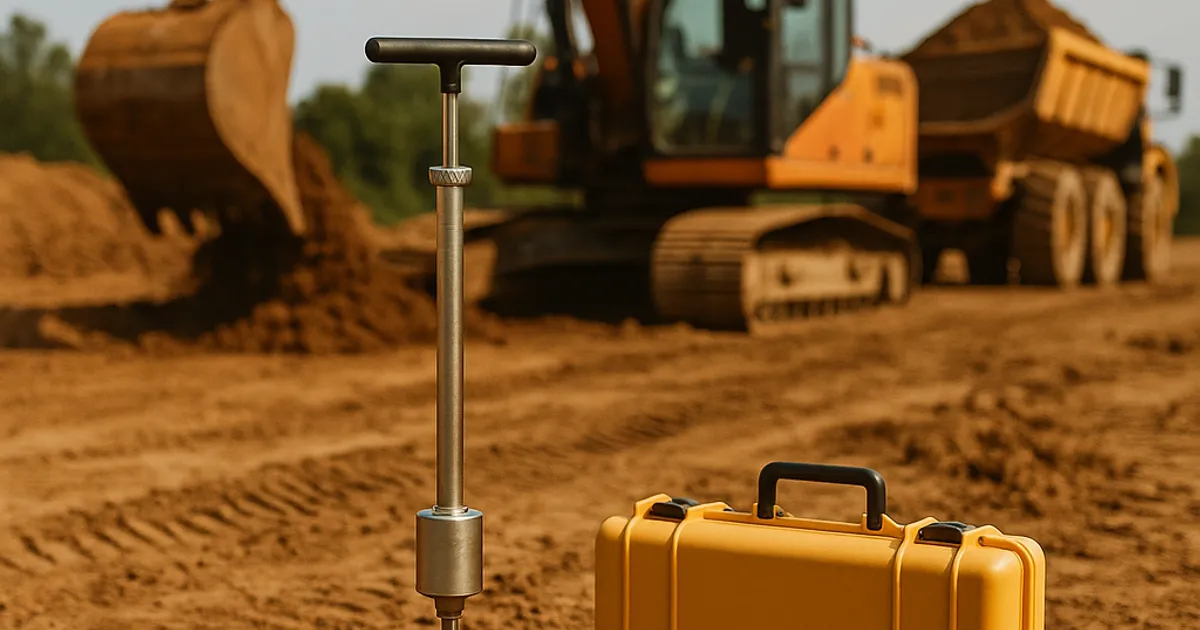
The nuclear density gauge is the most common field testing method. It uses gamma radiation to measure soil density and moisture content in real-time, providing results in minutes.
Sand Cone Test
A traditional method that involves excavating a small hole, weighing the removed soil, and determining the volume using calibrated sand. It's reliable but time-consuming.
Achieving Proper Compaction
Success depends on using the right equipment for the soil type, maintaining optimal moisture content, and applying the correct number of passes. Over-compaction can be as problematic as under-compaction.