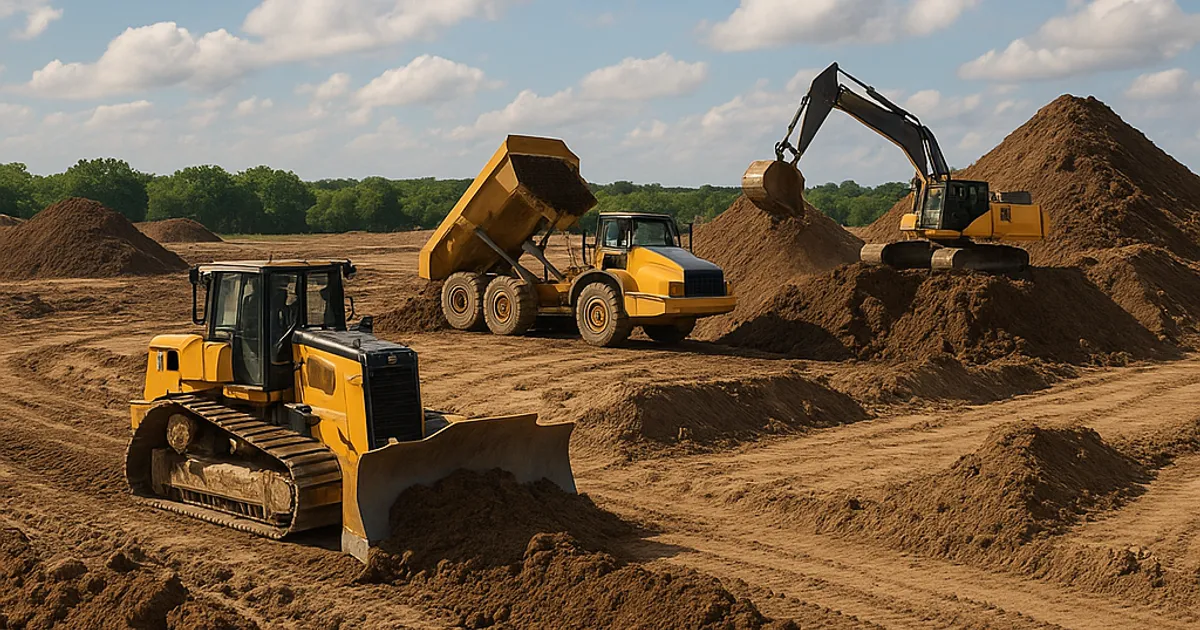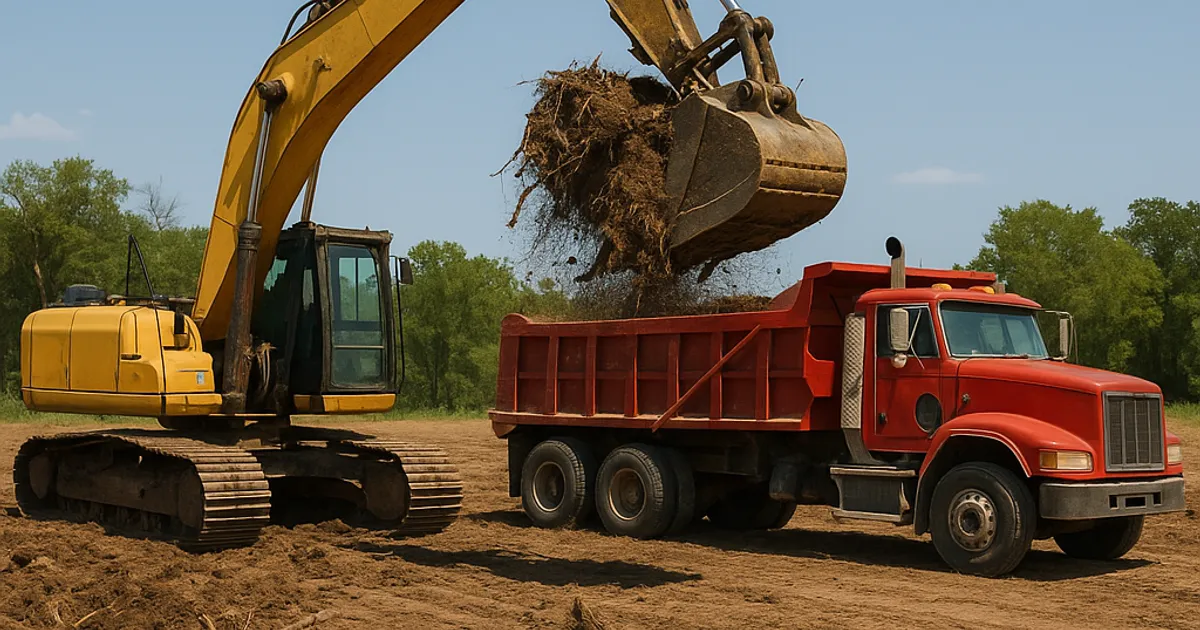
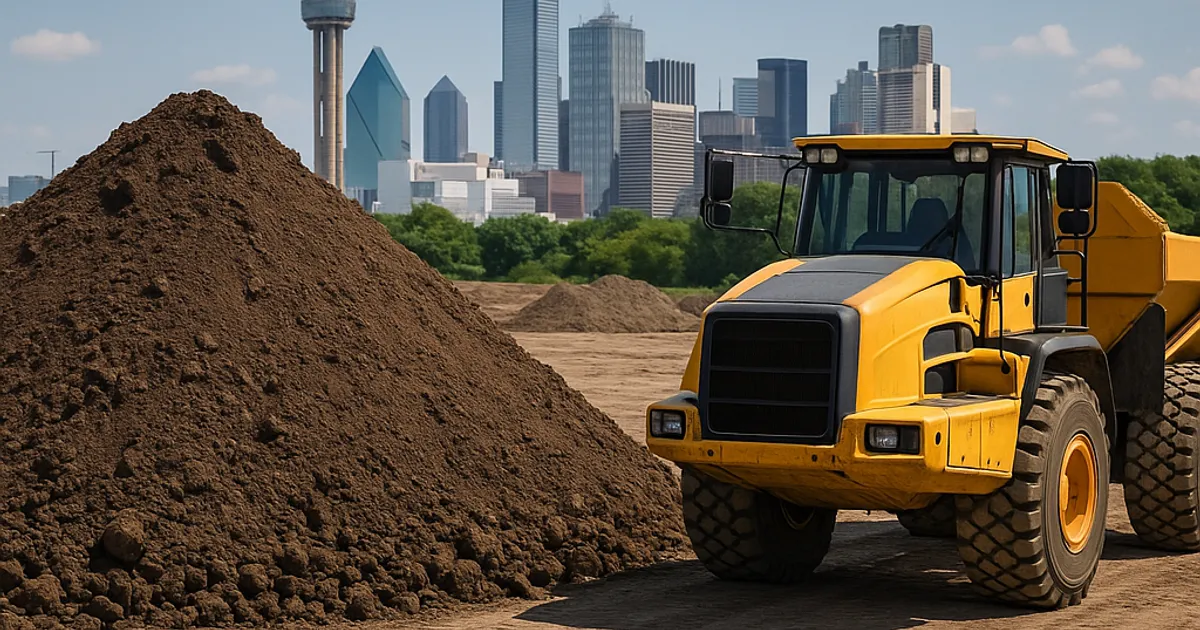
The Dallas-Fort Worth Metroplex isn't just big — it's booming. With a population surpassing 8 million and consistently ranking among the top three fastest-growing metro areas in the United States, DFW is generating an extraordinary volume of construction activity. Residential subdivisions are pushing into Collin, Denton, and Ellis counties. Commercial development is reshaping Frisco, Prosper, and Grand Prairie. Highway expansions and infrastructure projects run nearly year-round across the region.
All of that construction requires one thing in massive quantities: fill dirt.
Yet sourcing quality bulk fill dirt in DFW isn't as simple as calling the first number that shows up in a Google search. The quality of fill varies dramatically across the Metroplex depending on the source geology, the specific project requirements, and the supplier's screening and grading practices. Prices fluctuate based on fuel costs, haul distance, material availability, and market demand. And delivery logistics in a metro area that spans nearly 9,300 square miles can add hundreds or thousands of dollars to your total material costs if you're not strategic.
This guide is designed to give contractors, developers, and project managers a comprehensive, no-fluff roadmap to finding the best fill dirt suppliers in DFW — including what to look for, what questions to ask, how to compare costs, and how technology is making the sourcing process faster and more cost-effective than ever.
Understanding Fill Dirt: What It Is and Why Quality Matters in DFW
Fill dirt is subsoil — material excavated from below the topsoil layer — used to raise grade, fill voids, support foundations, and shape the landscape of a construction site. Unlike topsoil, which is rich in organic matter and nutrients, quality fill dirt is prized for its structural integrity, its ability to compact properly, and its low organic content.
In the DFW Metroplex, the geology creates a unique set of considerations for fill dirt sourcing.
The DFW Soil Landscape
Much of Dallas County and the eastern portions of the Metroplex sit atop expansive clay soils — primarily black and gray Vertisols from the Austin Chalk and Eagle Ford Shale formations. These soils are notorious for their high shrink-swell potential, which can wreak havoc on foundations, pavement, and drainage structures when used as structural fill without proper treatment.
Tarrant County and the Fort Worth side of the Metroplex transition into more limestone-dominant terrain, offering a mix of sandy loams, silty clays, and crushed limestone fines that behave quite differently under load.
Collin and Denton counties to the north feature sandier soils in many areas, making them a popular source for cleaner fill material used in residential pad construction.
Understanding where your fill is coming from geologically isn't academic — it's essential for project success. Fill dirt that contains excessive clay and organic matter can fail compaction testing, settle unevenly under structural loads, and create drainage problems that cost tens of thousands of dollars to remediate after the fact.
Key Fill Dirt Quality Standards
For most structural applications in DFW, contractors and project engineers reference ASTM International standards for soil classification and compaction. Specifically:
- ASTM D2487 — the Unified Soil Classification System (USCS), which categorizes soils by grain size, plasticity, and compaction characteristics
- ASTM D698 — Standard Proctor test for determining optimum moisture-density relationships (commonly required for residential and light commercial fill)
- ASTM D1557 — Modified Proctor test used for heavier structural applications where greater compaction density is specified
Most reputable DFW fill dirt suppliers can provide material test reports on request, or at minimum disclose the general soil classification of the material they're delivering. Any supplier unwilling to provide basic material information should be treated with caution.
Types of Fill Dirt Available in the DFW Market
Not all fill is the same, and DFW suppliers typically offer several distinct material categories at different price points.
Clean Fill Dirt
Clean fill is free of debris, organics, and contamination. It's the standard specification for most residential and commercial structural fill applications. In DFW, clean fill typically consists of sandy clay, sandy loam, or silty clay material sourced from excavation projects or dedicated quarry operations. Prices for clean fill in the Metroplex generally range from $8 to $18 per cubic yard depending on material quality, proximity to the project, and current market conditions.
Screened Fill Dirt
Screened fill has been processed through a screen to remove oversized rocks, debris, and clods above a specified size (commonly 1.5" or 3" minus). Screened fill is preferred for fine grading, backfill around utilities, and applications where uniform compaction is critical. Expect to pay a 15–30% premium over unscreened material.
Sandy Fill / Select Fill
Sandy fill or "select fill" contains a higher proportion of sand and is easier to compact and drain than heavy clay fills. TxDOT highway projects and commercial developments with engineered fill specifications often require select fill material meeting specific gradation and plasticity index (PI) requirements. This material commands a higher price — often $15 to $25 per cubic yard delivered — but is essential for many structural applications.
Crushed Limestone Base / Caliche
While not technically "fill dirt," crushed limestone and caliche are widely used in DFW for base course under roads and pads, and are often sourced from the same suppliers offering fill dirt. West Fort Worth and the Parker County area are particularly rich in caliche deposits.
Recycled Concrete Aggregate (RCA)
Some projects, particularly commercial and industrial, accept recycled concrete aggregate as structural fill or base. This material is increasingly available in DFW as demolition activity generates large volumes of recyclable concrete.
Major Fill Dirt Supplier Categories in the DFW Metroplex
DFW's fill dirt supply ecosystem is diverse, drawing from several distinct supplier types. Understanding the landscape helps you choose the right source for your specific project needs.
Quarry and Mining Operations
Large quarry operations — primarily in the limestone-rich areas of Tarrant, Parker, Hood, and Johnson counties — are a foundational source of fill material in DFW. These operations produce consistent, well-documented material and can supply virtually unlimited volumes for large infrastructure and commercial projects. However, they typically sell in large quantities, may have minimum order requirements, and haul distances can be significant for projects on the eastern side of the Metroplex.
Operations along the I-20 corridor west of Fort Worth, the Granbury area, and the Cleburne vicinity are well-established sources of limestone-based materials.
Sand and Gravel Pits
The Trinity River and its tributaries have historically supported a network of sand and gravel extraction operations across the Metroplex. These pits produce sandy fill, concrete sand, and various aggregate grades. Operations are concentrated in areas like Irving, Grand Prairie, Arlington, and along the Elm Fork corridor through Denton County. The USDA Web Soil Survey can help identify areas with naturally occurring sand and gravel deposits when evaluating supplier locations.
Excavation Contractors Offering Fill as a Byproduct
One of the most cost-effective — and increasingly popular — sources of fill dirt in DFW is the material generated by large excavation projects. When a major commercial development, detention pond, or highway project is being cut, the excavated material needs somewhere to go. Contractors often sell this material at significant discounts, or in some cases offer it free to buyers who can haul it away.
This is precisely the model that platforms like DirtMatch are built to facilitate — connecting contractors who need fill with those who have surplus excavation material, turning a disposal cost into a sourcing opportunity for both parties.
Material Brokers and Hauling Companies
DFW has a robust network of material brokers and hauling companies that source fill from multiple origins and coordinate delivery. These intermediaries add convenience and can source material from multiple locations to meet project-specific specifications, but their margins mean you'll typically pay more per yard than dealing directly with a quarry or excavation contractor.
Landscape and Retail Material Yards
For smaller projects — residential grading, backyard leveling, garden bed preparation — landscape and retail material yards across the Metroplex offer fill dirt in smaller quantities. Companies like Texas Soil & Stone, Lowe's bulk material programs, and local nursery supply operations can accommodate orders ranging from a single cubic yard to truckloads. Expect to pay retail premiums: $35 to $75 per yard delivered for small residential quantities.
Fill Dirt Pricing in DFW: What to Expect in 2025
Fill dirt pricing in the Metroplex reflects a confluence of factors including fuel costs, driver availability, demand cycles, and material type. Here's a comprehensive price reference table based on current market conditions:
| Material Type | Pickup (per CY) | Delivered (per CY, 10-mile radius) | Notes |
|---|---|---|---|
| Unscreened Clay Fill | $2 – $6 | $10 – $16 | Variable quality; may include clay lumps |
| Clean Fill Dirt | $5 – $10 | $12 – $20 | Most common residential spec |
| Screened Fill Dirt | $8 – $14 | $15 – $25 | Uniform material; better compaction |
| Sandy / Select Fill | $10 – $18 | $18 – $30 | Required for many engineered fills |
| Caliche / Limestone Base | $12 – $22 | $20 – $35 | Common for road base and pad prep |
| Free Excavation Spoil | $0 | Haul cost only ($5–$12/CY) | Availability varies; quality less certain |
Prices are market estimates for 2025 DFW conditions and are subject to change based on fuel, availability, and haul distance.
Understanding Haul Cost Dynamics
Delivery costs are often the dominant variable in fill dirt economics. A standard tandem-axle dump truck carries approximately 12 to 14 cubic yards of fill. A tri-axle or "belly dump" trailer hauls 16 to 22 cubic yards. Large bottom-dump trailer trains can move 24+ cubic yards per load.
At typical DFW trucking rates of $90 to $140 per hour, every additional mile of haul distance adds real cost. A 10-mile haul might cost $45 to $65 per load; a 30-mile haul can add $120 to $180 per load to your material costs. On a project requiring 500 loads, the difference between a nearby source and one 20 miles further away can easily exceed $50,000 in haul cost alone.
This is why proximity matters so much in fill dirt sourcing — and why platforms like DirtMatch are increasingly used by DFW contractors to identify nearby surplus material sources and dramatically cut haul distances.
How to Evaluate a Fill Dirt Supplier in DFW
With dozens of potential suppliers across the Metroplex, knowing how to evaluate your options separates experienced earthwork professionals from those who learn expensive lessons on the job.
Step 1: Verify Material Specifications
Before accepting any fill delivery, request documentation of material origin and classification. At minimum, a reputable supplier should be able to tell you:
- The general soil type (sandy loam, silty clay, etc.)
- Whether the material is screened or unscreened
- Whether any testing has been performed (Proctor, gradation, Atterberg limits)
- Whether the material is free of organics, debris, and contamination
For structural fill applications, your project engineer may require certified material testing from an approved geotechnical lab. Build this requirement into your supplier agreements.
Step 2: Confirm Trucking and Delivery Logistics
Ask your supplier:
- What truck types do they run, and what is the typical load size?
- Can they accommodate your site access requirements (narrow gates, weight-restricted roads, soft ground)?
- What is their typical turnaround time from order to delivery?
- Do they have GPS tracking on their trucks, and can they provide load tickets?
Load tickets documenting cubic yardage or tonnage per delivery are essential for quantity verification and project cost control.
Step 3: Check Insurance and Licensing
Verify that your supplier carries appropriate commercial general liability insurance, and that their trucks are properly licensed for commercial hauling under FMCSA regulations. Texas requires commercial vehicles over 26,001 GVWR to carry appropriate DOT numbers and comply with federal hours-of-service rules.
Step 4: Visit the Source (When Possible)
For large projects requiring thousands of yards of fill, a site visit to the material source is worth the investment. Seeing the stockpile or extraction operation firsthand allows you to assess material consistency, confirm there are no visible organics or debris, and evaluate the operation's professionalism.
Step 5: Get Multiple Quotes
The DFW fill dirt market is competitive, and prices can vary significantly between suppliers for comparable material. Get at minimum three competitive quotes for any project requiring more than 200 cubic yards of fill, and compare both material cost and delivery cost as a combined figure.
Regional Supplier Hotspots Across the DFW Metroplex
The Metroplex's geography creates distinct supplier concentrations that affect your best sourcing options depending on your project location.
Fort Worth and Tarrant County
Fort Worth and western Tarrant County are particularly well-served by quarry and limestone operations. The I-20 and US-377 corridors heading west into Parker County offer access to multiple limestone quarry operations. For fill dirt specifically, the rapidly developing southern Tarrant County cities — Mansfield, Burleson, Crowley, and Kennedale — generate significant excavation spoil from residential and commercial development that enters the local fill market regularly.
For contractors sourcing bulk fill dirt Fort Worth projects, the western supply corridor generally offers better pricing than hauling material from east of I-35.
Dallas and Dallas County
Dallas County's dense urban development means quarry operations are limited, but excavation-generated fill is abundant. Major infrastructure projects — DART extensions, highway reconstructions, large commercial developments — regularly generate thousands of yards of excavated material that suppliers and brokers route into the fill market. Pricing tends to run slightly higher than the Fort Worth side due to tighter supply and higher trucking costs in urban corridors.
Collin County (Frisco, McKinney, Allen, Prosper)
Collin County is perhaps the hottest residential construction market in the entire country, with Frisco and Prosper consistently ranking among the fastest-growing cities in the U.S. This creates both enormous demand for fill dirt and a continuous stream of excavation activity generating surplus material. Local fill dirt suppliers have proliferated to serve the market, and savvy contractors are using digital platforms to match surplus material from one subdivision with demand from another just miles away.
Denton County (Denton, Lewisville, Flower Mound)
Denton County's mix of sandy loams and silty soils along the Elm Fork corridor makes it a source of some of the better-draining fill material in the Metroplex. Several sand and gravel operations along Lake Lewisville and the surrounding area supply both aggregate and sandy fill to the broader market.
Southern Dallas and Ellis County
The southern expansion corridor — DeSoto, Cedar Hill, Midlothian, and Waxahachie — is seeing significant growth and is served by a combination of quarry operations in the Cedar Hill area and import fill from projects across the region.
Find or Post Dirt, Rock & Aggregate
Join thousands of contractors using DirtMatch to buy, sell, and exchange earthwork materials.
Try DirtMatch FreeEnvironmental and Compliance Considerations for Fill Dirt in DFW
Fill dirt transactions in Texas are subject to a range of environmental regulations that both suppliers and buyers need to understand.
Texas Commission on Environmental Quality (TCEQ) Regulations
In Texas, the use of "clean fill" is regulated under TCEQ rules. Clean fill is defined as uncontaminated soil, rock, sand, gravel, concrete, asphalt pavement, brick, tile, or similar inert solid waste. Importantly, even material that appears clean can be subject to TCEQ scrutiny if it originates from a site with known contamination history.
Before accepting fill from an unknown source, ask the supplier to confirm the material's origin. If the fill came from a commercial or industrial property, request documentation confirming the site's environmental clean status. Importing contaminated fill — even unknowingly — can trigger liability under Texas solid waste regulations and potentially federal Superfund law.
Stormwater and Erosion Control
Any construction site in DFW that disturbs one acre or more of land must obtain a Construction General Permit (CGP) from TCEQ and implement a Storm Water Pollution Prevention Plan (SWPPP). Fill dirt operations are a significant contributor to stormwater sediment discharge if not properly managed. Best practices include installing silt fences at fill delivery areas, maintaining stable haul roads, and covering stockpiled fill material during rain events.
TxDOT and City Right-of-Way Considerations
Fill operations that impact TxDOT right-of-way, drainage features, or public streets require permits from the appropriate authority. Overloaded trucks exceeding Texas legal weight limits (80,000 lbs GVW standard; up to 84,000–88,000 lbs under certain conditions) require overweight permits for travel on Texas highways.
Using Technology to Source Fill Dirt More Efficiently in DFW
The traditional method of sourcing fill dirt — making a round of phone calls, waiting for callbacks, and relying on supplier relationships built over years — is giving way to more efficient, technology-driven approaches.
Digital platforms have fundamentally changed how earthwork contractors source and dispose of fill material. Rather than relying on a limited network of known suppliers, contractors can now access a broader marketplace of material sources — including excavation contractors with surplus fill, quarry operations, and material brokers — all in one place.
DirtMatch operates exactly this way: the platform connects DFW contractors who need fill dirt with nearby projects and suppliers that have surplus material available, often reducing haul distances and total material costs significantly. For a contractor managing a tight budget on a Collin County residential development, finding a surplus fill source from a commercial excavation five miles away rather than hauling from a quarry 25 miles out can save thousands of dollars per project.
The platform is particularly valuable for:
- Contractors with surplus excavation material who need to move it efficiently without absorbing full disposal costs
- Developers needing large volumes of fill who want competitive pricing from multiple sources
- Smaller earthwork contractors who lack established supplier relationships in new geographic markets
If you're new to the platform, getting started with DirtMatch takes minutes and immediately connects you with the DFW fill dirt marketplace.
Questions to Ask Any Fill Dirt Supplier Before Signing a Contract
Protecting your project and your budget starts with asking the right questions. Here's a practical checklist for supplier vetting:
Material Quality Questions
- What is the soil classification of the material (USCS or AASHTO)?
- Is the material screened? If so, what is the maximum particle size?
- Does the material contain any organics, debris, or construction waste?
- Can you provide material test reports (Proctor, gradation, Atterberg limits)?
- What is the origin of the material — excavation project, quarry, pit?
- Has the source site been assessed for environmental contamination?
Logistics and Delivery Questions
- What is your minimum order quantity?
- What truck types do you use, and what is the payload per load?
- Do you provide load tickets with each delivery?
- Can you accommodate our delivery schedule (days, hours, rate per day)?
- What is your policy if material delivered doesn't meet specifications?
- Can you coordinate with our project manager for sequencing of deliveries?
Pricing and Contract Questions
- Is pricing per cubic yard or per ton? (Important — clay-heavy material is denser and may cost more per yard when priced by ton)
- What is included in the quoted price — material only, or material plus delivery?
- Are there fuel surcharges or other variable fees?
- What is your cancellation policy if our project schedule changes?
- Do you offer volume discounts for large orders?
Red Flags to Watch for When Buying Fill Dirt in DFW
Not every fill dirt supplier in the Metroplex operates with the same standards. Watch for these warning signs:
Vague material descriptions. If a supplier can't tell you where the material came from or characterize its general soil type, walk away. "It's just dirt" is not an acceptable answer for structural fill.
Prices that seem too good to be true. Significantly below-market pricing often indicates material of questionable quality, or material that the seller desperately needs to dispose of — potentially because it has contamination or excessive organics that make it unsuitable for standard fill applications.
No load tickets. Reputable suppliers provide documentation with every load. Without load tickets, you have no way to verify you received the quantity you paid for.
Unlicensed or uninsured trucking. Ask for a certificate of insurance. Trucks operating without appropriate commercial insurance on your job site create liability exposure for your operation.
Pressure to accept delivery without inspection. A legitimate supplier won't object to you inspecting material before it's spread and compacted. If a driver is eager to dump and go before you can look at the load, that's a red flag.
Inconsistent material between loads. Even from a consistent source, material should be reasonably uniform. Dramatic changes in color, texture, or content between loads may indicate the supplier is pulling from mixed or unknown sources.
Estimating Your Fill Dirt Needs: A Practical Guide
Accurate quantity estimation is the foundation of effective fill dirt procurement. Overbuy, and you've wasted money and created a spoil disposal problem. Underbuy, and your project timeline stalls.
Basic Volume Calculation
For rectangular areas, fill volume in cubic yards = (Length × Width × Depth) ÷ 27
For example, a 100-foot × 50-foot pad requiring 2 feet of fill = (100 × 50 × 2) ÷ 27 = 370 cubic yards of compacted fill.
The Swell and Shrinkage Factor
This is where many contractors make costly estimation errors. Soil in its natural state has a certain bank density. When excavated and loaded, it "swells" — typically 15–25% for clay soils and 10–15% for sandy soils. When compacted in place, it "shrinks" back — but typically not all the way to bank density.
For DFW clay-dominant fills, a practical rule of thumb is to apply a 1.2–1.3 swell factor to your compacted volume requirement when ordering. That means a project needing 370 compacted cubic yards might require ordering 444–481 cubic yards of loose material.
Compaction Lift Requirements
Most structural fill specifications in DFW call for fill to be placed and compacted in 6- to 8-inch loose lifts to achieve required compaction density (typically 95% Standard Proctor or 98% Modified Proctor for structural applications). Deeper fills require more passes, more time, and careful moisture management — especially in DFW's variable climate.
How DirtMatch Is Changing Fill Dirt Sourcing Across North Texas
The DFW construction market is too large, too diverse, and too fast-moving for the old way of doing business to keep up. Contractors who rely solely on a short list of known suppliers are leaving money on the table — and sometimes scrambling to find material when their primary source runs dry.
Platforms like DirtMatch are building the infrastructure for a smarter fill dirt marketplace — one where a framing contractor in Prosper can find clean fill from a commercial excavation in Frisco before it ever goes to a disposal site, where a developer in Mansfield can source caliche base from a nearby quarry bypass project at a fraction of broker pricing, and where haulers can optimize their routes to maximize loads per day.
For suppliers, listing on DirtMatch opens access to a broader base of buyers without the overhead of traditional sales and marketing. For buyers, the platform provides transparency, competitive pricing, and access to material sources they'd never find through traditional channels.
Whether you're a seasoned earthwork contractor or a developer entering the DFW market for the first time, DirtMatch Pro offers tools specifically designed to streamline bulk material sourcing at the project level — including real-time availability, direct contractor contact, and project-level material tracking.
Key Takeaways for Finding the Best Fill Dirt Suppliers in DFW
Navigating the DFW fill dirt market successfully comes down to a handful of core principles:
Know your material specification before you shop. Whether your project requires clean fill, screened fill, or engineered select fill determines your supplier options and budget.
Factor haul distance into your total cost. The cheapest material per yard can easily become the most expensive when haul distance is accounted for. Minimize haul miles wherever possible.
Vet every supplier for material quality and compliance. Request documentation, ask about material origin, and insist on load tickets with every delivery.
Leverage technology to access more of the market. Digital platforms like DirtMatch give you access to surplus material sources that never appear in traditional directories — often at significantly lower cost.
Plan for swell and shrinkage. Add an appropriate swell factor to your compacted volume estimate, and never assume that what you ordered is exactly what you'll need after compaction.
Build relationships with multiple suppliers. The DFW market moves fast. Having two or three vetted fill suppliers you can call keeps your project moving when your primary source has delays or runs short.
The Metroplex's growth shows no signs of slowing. Contractors and developers who build efficient, reliable fill dirt supply chains — combining proven supplier relationships with smart use of platforms like DirtMatch — will consistently outperform competitors still doing things the old way.