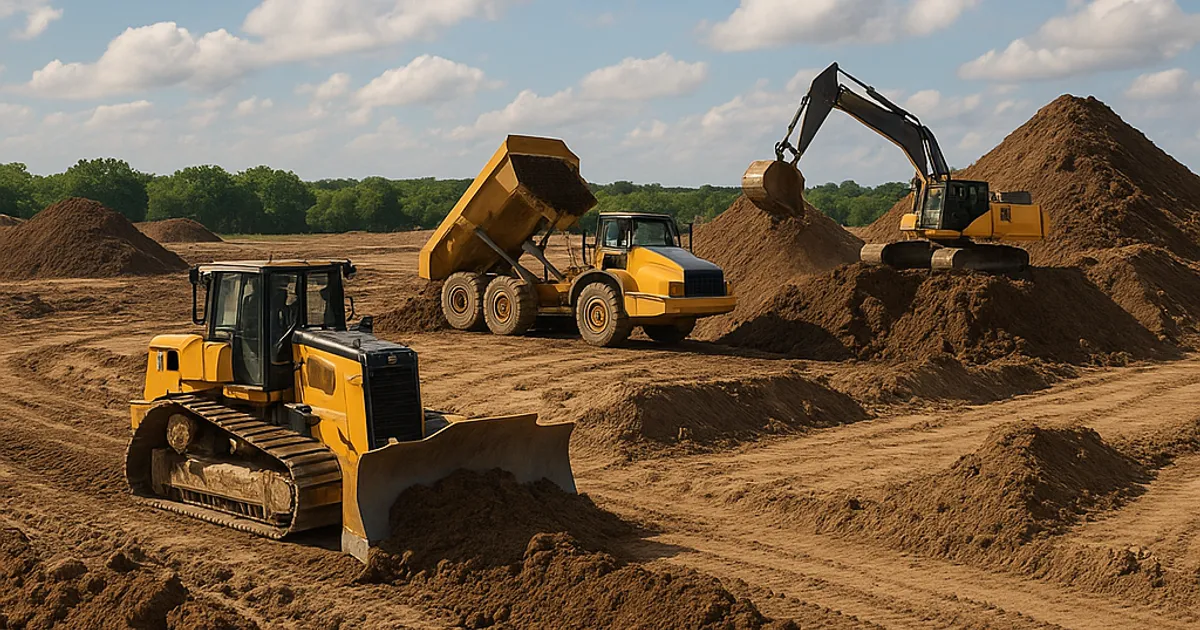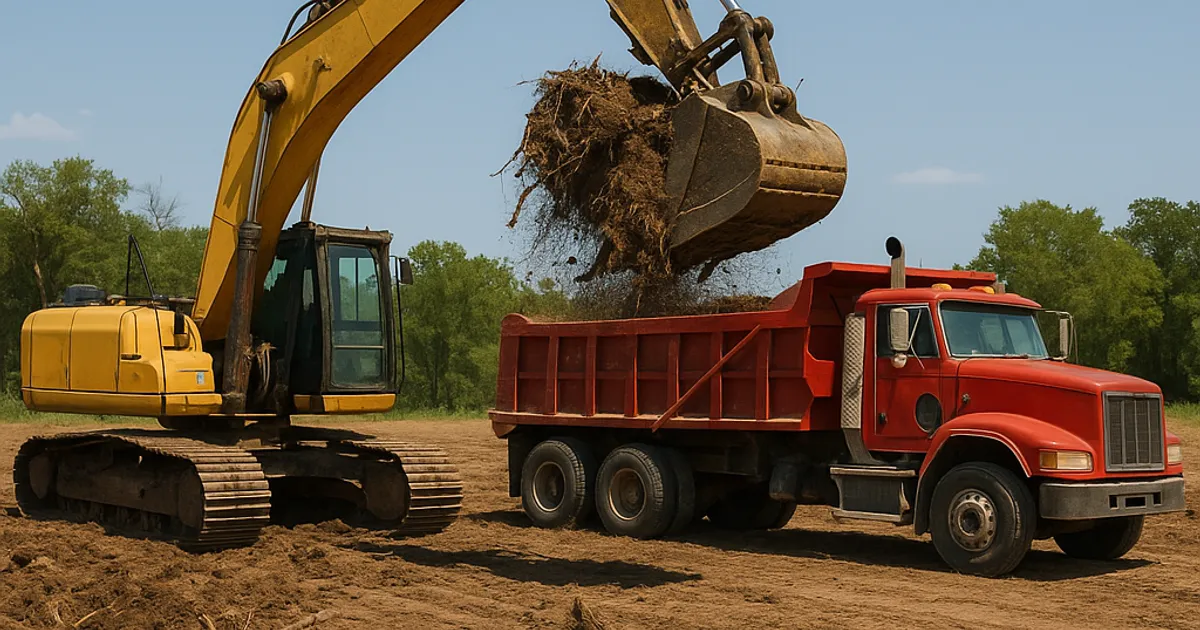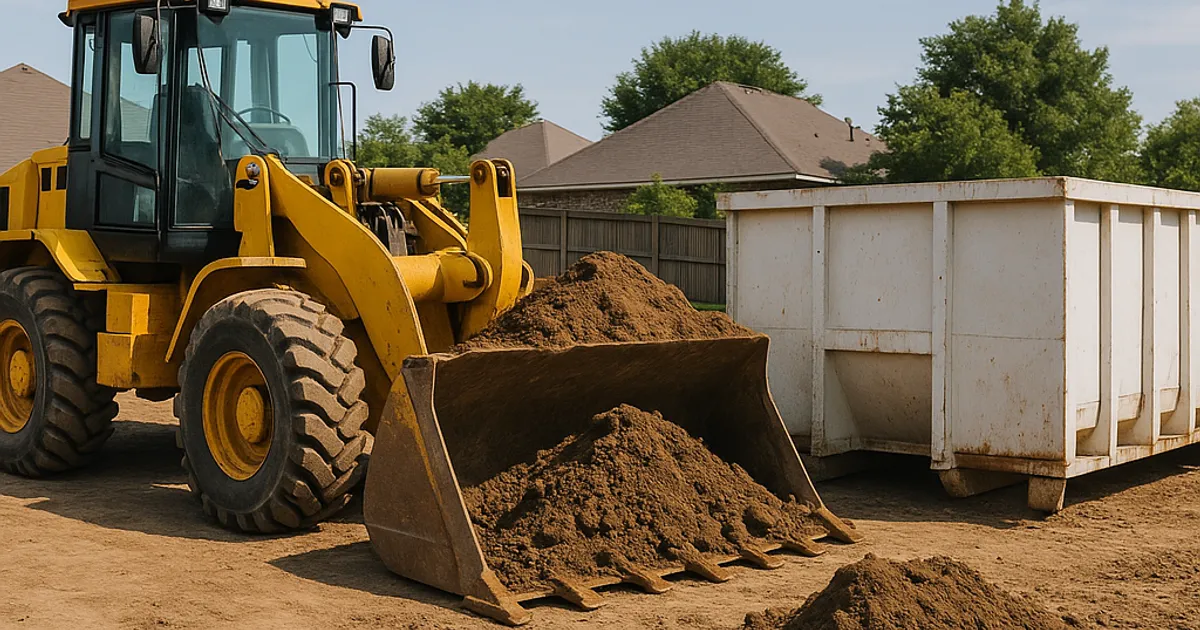
The Dallas-Fort Worth metroplex is not just one of the fastest-growing regions in the United States — it is one of the most active earthwork markets on the planet. With over 7.8 million residents spread across more than 9,000 square miles, and with major developments constantly pushing outward into Collin, Denton, Tarrant, and Johnson counties, the demand for dirt, fill, and aggregate materials is relentless. Billions of cubic yards of soil are moved, bought, sold, and disposed of every year across this region.
For earthwork contractors, developers, and excavators operating in this environment, connecting with a trusted dirt broker in Dallas is not a luxury — it is a business necessity. A good broker can find a home for excess cut material, source affordable fill for low-lying sites, and keep your trucks moving instead of idling at overcrowded landfills. A bad broker, however, can leave you stranded with a mountain of spoils, facing tipping fees and schedule overruns that eat directly into your margin.
This guide is designed to help contractors, developers, and site managers in the DFW area understand what dirt brokers actually do, how to evaluate them, what to pay, and how modern platforms are replacing the old-school phone-and-handshake model with something far more efficient.
What Is a Dirt Broker and What Do They Do?
A dirt broker acts as an intermediary between parties who have excess soil or fill material and parties who need it. In practice, this means connecting excavators who are generating cut material on one job site with developers or grading contractors who need fill on another. The broker facilitates the transaction, coordinates logistics, and typically earns a fee based on volume moved, a per-load rate, or a negotiated flat arrangement.
In a market as large and active as DFW, dirt brokers serve a critical function. Without them, a contractor in Frisco who is cutting 10,000 cubic yards of clay-heavy soil might have no efficient way to find a taker in McKinney who needs exactly that material for a pad site. The alternative — hauling to a landfill or soil recycling facility — costs money and time. In 2026, tipping fees at permitted disposal facilities in the greater Dallas area range from $8 to $22 per cubic yard, depending on soil classification, contamination status, and facility proximity. A competent broker can eliminate that cost entirely by routing the material to a buyer who will accept it for free or even pay for delivery.
Brokers also handle nuanced logistics: coordinating trucking schedules, verifying material acceptability, managing permits for overweight or oversize loads, and confirming that receiving sites are properly prepared for incoming fill. The best brokers in DFW maintain active lists of both supply and demand across dozens of active projects at any given time, giving them the matching power that individual contractors simply cannot replicate on their own.
Understanding this role is the first step in evaluating whether a broker is genuinely adding value — or just collecting a middleman fee without real market intelligence.
Why DFW Is One of the Most Complex Dirt Markets in the U.S.
Dallas-Fort Worth is not a uniform dirt market. Soil conditions vary dramatically across the region, and what is desirable fill in one submarket may be completely unusable in another. This geological complexity is one of the defining challenges for anyone trying to broker material in North Texas.
The western portions of the metroplex — areas like Weatherford, Burleson, and the western edge of Fort Worth — tend to feature sandy loam and gravel-laden soils common to the Western Cross Timbers formation. These materials are often in high demand for drainage applications, horse arenas, and road base. Moving east toward downtown Dallas and out into Rockwall and Kaufman counties, the geology shifts toward the infamous Blackland Prairie — expansive, high-plasticity clay soils known locally as "black gumbo." These soils shrink significantly during dry weather and swell dramatically when wet, making them problematic for most structural fill applications without expensive treatment.
In between, the DFW Metroplex sits atop the Woodbine, Austin Chalk, and Eagle Ford Shale formations, each producing distinct material characteristics that affect how soil can be used, priced, and transported.
This variation means that a competent dirt broker must understand soil classification at a basic engineering level. The USDA Web Soil Survey is a free tool that geotechnical professionals and experienced brokers use to quickly assess the soil types associated with a given parcel of land — a critical step before committing to accept or source material from any site.
Beyond geology, DFW's size creates transportation complexity. Hauling from Plano to Grand Prairie might be a 45-minute drive under ideal conditions and a two-hour crawl during peak hours. Fuel costs, driver hours, and permit requirements for heavy loads all factor into whether a brokered deal is actually profitable after logistics are calculated. Experienced brokers understand the real landed cost of dirt — not just the material value, but the fully loaded trucking expense.
Red Flags: How to Spot an Unreliable Dirt Broker
In a booming construction market like DFW, the dirt brokerage space attracts both legitimate professionals and opportunists who have little more than a cell phone and a contact list. Knowing the warning signs of an unreliable broker can save you significant time, money, and regulatory headaches.
No Verified Track Record
Any reputable broker operating in the DFW market should be able to provide verifiable references from completed projects — ideally from both sides of transactions (suppliers and receivers). Ask for the names of specific job sites, approximate volumes moved, and contact names at the companies involved. Vague answers or an unwillingness to share references are immediate red flags.
No Knowledge of Material Specifications
A broker who cannot speak intelligently about soil plasticity index (PI), compaction requirements, or TXDOT fill specifications is operating without the technical knowledge the job demands. In Texas, fill material placed under structures or roadways must meet specific standards, and accepting off-spec material can result in costly remediation. Legitimate brokers know the difference between select fill, common fill, and flowable fill — and they know which receiving sites will accept what.
Unverified Receiving Sites
One of the most dangerous situations in the DFW dirt market is being directed to dump material on a receiving site that has not been properly permitted or approved by the landowner. In Texas, unauthorized disposal of soil can trigger liability under state environmental regulations. Always ask a broker to confirm that the receiving site has written landowner authorization, appropriate zoning, and — if applicable — storm water management plans compliant with EPA stormwater construction permit requirements.
No Written Agreement
Every legitimate dirt broker transaction should be documented in writing, even if it is a simple letter of intent or email chain confirming volumes, material type, delivery schedule, and pricing. Brokers who resist written documentation are problematic. Always insist on a paper trail.
Pressure to Move Quickly Without Due Diligence
Urgency is sometimes legitimate in construction, but high-pressure tactics designed to skip material testing or site verification are not. If a broker is pushing you to commit immediately without allowing time to verify the receiving site or test the material, walk away.
What to Look for in a Trusted DFW Dirt Broker
Once you know what to avoid, the next step is understanding what separates the best brokers in the Dallas-Fort Worth market from the average ones.
Deep Local Market Knowledge
The best dirt brokers in DFW are essentially walking databases of active projects. They know which subdivisions in Celina are grading this month, which commercial sites in Mansfield need select fill in Q3, and which highway expansion corridors are generating massive quantities of cut material. This intelligence takes years to develop and cannot be faked. Ask a prospective broker specific questions about current supply and demand in a specific submarket — their answers will quickly reveal how plugged-in they actually are.
Established Relationships with Trucking Companies
Brokering dirt without reliable trucking relationships is like being a restaurant without a kitchen. The top brokers in DFW maintain working relationships with multiple owner-operator trucking networks, ensuring they can actually move the volumes they commit to. Ask how they handle trucking — do they coordinate it directly, or do they leave that to you? The answer matters significantly for your logistics planning.
Transparent Pricing Models
Dirt brokerage fees in North Texas are not standardized, but the most transparent brokers will clearly explain how they are compensated. Common models include a per-load fee (typically $25–$75 per truck load depending on volume and complexity), a per-cubic-yard fee ($1.50–$4.00/CY is a common range), or a flat project fee for large engagements. Brokers who are evasive about how they make money may be double-dipping on both sides of the transaction without disclosure.
Insurance and Licensing
While Texas does not have a formal "dirt broker" license, brokers who coordinate trucking operations should be familiar with FMCSA regulations governing commercial freight arrangements. Ask whether they carry general liability insurance and, if they are arranging trucking, whether their driver network is compliant with federal hours-of-service rules.
The DFW Dirt Market in Numbers: 2026 Snapshot
Understanding the scale of the DFW dirt market helps contextualize why brokerage services are so valuable — and why the stakes are high when things go wrong.
- New home permits in DFW: Approximately 48,000–55,000 permits annually in recent years, making DFW the top residential construction market in the United States
- Average fill needed per residential lot: 300–800 cubic yards depending on site conditions and finished floor elevation requirements
- Commercial development: The Metroplex adds an estimated 15–25 million square feet of commercial and industrial space annually, much of it requiring significant site work
- Infrastructure: TXDOT's 2026 construction program includes over $9 billion in active projects statewide, with a disproportionate share concentrated in the DFW corridor — each highway project can generate or consume hundreds of thousands of cubic yards of material
- Average haul rate: $8–$14 per loaded mile for a standard tri-axle or quad-axle dump truck, making proximity between supply and demand sites critically important to deal economics
These numbers underscore why the matching problem is so significant. The volume of material moving through the DFW market every day is staggering, and inefficient matching — or no matching at all — costs the industry millions of dollars in unnecessary disposal and hauling expenses.
| Material Type | Typical Value (as fill) | Common DFW Sources | Typical Receivers |
|---|---|---|---|
| Sandy Loam / Select Fill | $4–$12/CY delivered | West Fort Worth, Parker County | Homebuilders, pad sites |
| Blackland Clay | $0 (often cost to remove) | East DFW, Dallas County | Limited; drainage basins, berms |
| Crushed Limestone | $12–$22/CY | Quarries in Tarrant/Parker Co. | Road base, driveways |
| Native Common Fill | $0–$4/CY | Active excavation sites | General grading |
| Flowable Fill | $35–$55/CY | Ready-mix suppliers | Utility trenches |
How Technology Is Changing Dirt Brokerage in North Texas
For decades, dirt brokerage in DFW was almost entirely relationship-driven. If you knew the right people — the superintendents, the foremen, the grading contractors who had been in the market for 20 years — you had access to deals. If you were new to the market, you were largely shut out.
That model is changing rapidly in 2026. Digital platforms designed specifically for earthwork material matching are replacing the phone-tree approach with data-driven, searchable marketplaces that give every contractor — regardless of how long they have been in business — visibility into available supply and demand.
DirtMatch is one of the leading platforms connecting contractors, developers, and excavators who need to move or source bulk earthwork materials. Rather than relying on a single broker's network, DirtMatch aggregates supply and demand across active projects in real time, allowing users to find nearby material sources and receiving sites without paying a traditional brokerage middleman. For DFW contractors dealing with the complexity of matching materials across a 9,000-square-mile metro area, this kind of marketplace intelligence is transformative.
The platform is particularly valuable for contractors who are new to the DFW market or who are working in submarkets outside their usual geographic footprint. Instead of cold-calling hoping to find a taker for 5,000 cubic yards of clay-heavy spoils, contractors can post available material on DirtMatch and let interested receivers come to them — dramatically reducing the time spent on phone calls and broker coordination.
Learn more about how DirtMatch works to see how the matching process functions from both the supply and demand side.
Vetting a Dirt Broker: A Step-by-Step Process
If you decide to work with a traditional dirt broker rather than — or in addition to — a digital platform, here is a practical vetting process tailored to the DFW market.
Step 1: Define Your Needs Precisely
Before approaching any broker, document exactly what you have or need: estimated volume (in cubic yards), material classification, current site location, desired delivery or pickup timeline, and any material quality requirements. The more specific you are, the easier it is to evaluate whether a broker is giving you real answers or vague assurances.
Step 2: Request a Portfolio of Recent Transactions
Ask the broker to walk you through three to five completed transactions in the past 12 months. What were the volumes? Where were the supply and receiving sites? What material types were involved? Were there any complications, and how were they resolved?
Step 3: Verify Receiving Site Legitimacy
For any receiving site the broker proposes, request written confirmation of landowner authorization. If the project is large enough to trigger stormwater permitting thresholds (typically one acre or more of land disturbance), confirm that the site has an active permit and Storm Water Pollution Prevention Plan in compliance with applicable regulations.
Step 4: Confirm Trucking Capability
Ask the broker to name the trucking companies they work with regularly. Follow up by confirming that at least one or two of those carriers are known quantities in the market — look for USDOT numbers and verify active operating authority through the FMCSA.
Step 5: Get It in Writing
Before any material moves, have a written agreement in place that covers: material type and volume estimates, pricing or fee structure, delivery schedule, who bears responsibility if material is rejected at the receiving site, and dispute resolution language.
Step 6: Start Small
If you are working with a new broker for the first time, start with a small volume — say, 500 to 1,000 cubic yards — before committing to a larger engagement. A successful small transaction builds trust and reveals how the broker handles logistics, communication, and any unexpected complications.
Find or Post Dirt, Rock & Aggregate
Join thousands of contractors using DirtMatch to buy, sell, and exchange earthwork materials.
Try DirtMatch FreeUnderstanding Material Quality and Soil Classification in DFW Deals
One of the most common sources of conflict in dirt brokerage transactions is disagreement over material quality. What one party describes as "select fill" may not meet the receiving site's specifications, leading to rejected loads, additional haul costs, and damaged relationships.
In the DFW market, most structural fill applications reference the Texas Department of Transportation (TXDOT) Standard Specifications for Construction and Maintenance of Highways, Streets, and Bridges, particularly Item 132 (Embankment) and Item 247 (Flexible Base), which define material quality parameters for road and structural applications. For commercial development, soils are often evaluated against ASTM D2487 (the Unified Soil Classification System) and compaction requirements per ASTM D698 or D1557 (Standard and Modified Proctor tests).
Key parameters that affect material acceptability in most DFW fill applications include:
- Plasticity Index (PI): High-PI soils (above 35–40) are generally unsuitable for structural fill without lime or cement stabilization
- Liquid Limit (LL): Soils with LL above 50 are considered high plasticity and require special handling
- Compaction characteristics: Most receiving sites specify a minimum density relative to Modified Proctor (typically 95–98%)
- Organic content: Soils with visible organics are typically rejected for structural applications
- Moisture content: Material that is too wet cannot be compacted efficiently, and some receiving sites will reject loads that are excessively saturated
A competent broker should be able to ask the right questions about material quality upfront — or recommend basic soil testing if the material type is uncertain. Proctor testing and Atterberg Limit testing through a geotechnical lab in the DFW area typically costs $150–$350 per sample, a small investment relative to the cost of a rejected load.
Pricing Benchmarks: What Does Dirt Brokerage Cost in DFW?
Pricing in the DFW dirt market is dynamic and influenced by construction activity levels, fuel costs, trucking availability, and the balance of supply versus demand in any given submarket at any given time. With that said, the following benchmarks represent typical ranges as of 2026.
For contractors with excess material (looking to dispose):
- Free haul: The broker finds a receiver who accepts the material at no cost to either party — the contractor pays only their own trucking costs
- Credit deal: The receiving project pays $1–$6 per cubic yard for quality fill delivered to their site — the contractor earns revenue on material they would otherwise pay to dispose
- Tipping fee avoided: At $8–$22/CY tipping fee rates in DFW, even a free-haul deal that eliminates disposal costs delivers substantial value
For contractors needing fill (looking to source):
- Free fill from nearby excavation: $0 for material, contractor pays trucking ($8–$14/loaded mile)
- Purchased select fill: $4–$12/CY delivered for quality sandy loam or similar
- Stabilized fill: $12–$18/CY for lime-treated or cement-stabilized material meeting structural requirements
Broker fees (when applicable):
- Per-load fee: $25–$75 per truck load
- Per-CY fee: $1.50–$4.00 per cubic yard brokered
- Project flat fee: Negotiated for large-volume, long-duration engagements
Understanding these benchmarks helps you evaluate whether a broker's proposed deal actually makes economic sense — and whether their fee is reasonable relative to the value they are delivering.
The Role of Digital Marketplaces in Modern Dirt Brokerage
As the DFW market has grown in scale and complexity, traditional dirt brokerage — with its reliance on personal networks, phone calls, and informal handshakes — has struggled to keep pace. The result is a significant efficiency gap: material that could be beneficially reused ends up in landfills, while developers pay premium prices for fill that is sitting idle miles away.
Digital platforms are closing this gap. DirtMatch functions as a real-time marketplace where contractors can list available material, search for nearby fill sources, and connect with counterparties who have already been vetted through the platform's onboarding process. For active DFW contractors managing multiple projects simultaneously, this kind of structured marketplace eliminates the friction of traditional broker relationships.
For contractors who want even greater market access and project visibility, DirtMatch Pro offers enhanced listing features, priority matching, and direct access to a broader network of buyers and sellers across the region. Whether you are a grading contractor dealing with excess spoils from a highway project in Allen or a developer sourcing select fill for a master-planned community in Prosper, a structured digital marketplace dramatically reduces the time and cost of finding the right match.
The contrast with the traditional model is stark: instead of waiting days or weeks for a broker to work their phone list, contractors on digital platforms can often identify potential matches within hours of posting material — a critical advantage in a market where project schedules and material availability windows are narrow.
Legal and Environmental Considerations for DFW Dirt Transactions
Earth materials are not a commodity free from regulatory oversight. Contractors and brokers operating in DFW need to be aware of several legal and environmental considerations that can affect how material is classified, where it can be placed, and what documentation is required.
Texas Commission on Environmental Quality (TCEQ) Requirements
The TCEQ regulates certain types of soil management and disposal in Texas. Fill material placed in quantities and configurations that could affect drainage or downstream water quality may trigger review requirements. Large-scale fill operations — particularly those involving placing material in or near creek corridors, wetlands, or floodplain areas — may require permits from the TCEQ and potentially from the U.S. Army Corps of Engineers under Section 404 of the Clean Water Act.
Stormwater Pollution Prevention Plans (SWPPPs)
Any earth-disturbing activity that disturbs one or more acres of land in Texas requires a Construction General Permit (CGP) from the TCEQ and an associated SWPPP. Receiving sites that are accepting fill material and disturbing land in the process are subject to this requirement. A broker who directs material to a receiving site that lacks proper stormwater coverage is creating liability for both parties.
Material Contamination
In a built-out metropolitan area like DFW, soil from redevelopment sites, former industrial properties, or sites adjacent to underground storage tanks (USTs) may be contaminated. Accepting contaminated material at a receiving site — even unknowingly — can create significant environmental and financial liability. When dealing with material from brownfield sites or older urban areas, request documentation of Phase I or Phase II Environmental Site Assessment results before accepting any material.
Floodplain Considerations
Significant portions of the DFW area fall within FEMA-designated floodplains. Placing fill in a floodplain can alter flood dynamics and typically requires a Floodplain Development Permit from the relevant municipality. Brokers should be familiar enough with local geography to flag potential floodplain issues before committing to a receiving site.
Building Long-Term Broker Relationships vs. Using a Marketplace
For established DFW contractors, the question is often not whether to use a dirt broker but how to structure that relationship for maximum efficiency. There are genuine advantages to both the traditional relationship model and the newer digital marketplace approach.
Traditional Broker Relationship — Pros:
- Deep local knowledge and informal market intelligence
- Established trucking relationships that can be activated quickly
- Ability to handle non-standard situations (unusual materials, tight timelines)
- Personal accountability and relationship-based trust
Traditional Broker Relationship — Cons:
- Limited to the broker's personal network
- Opacity around pricing and deal terms
- Slow to respond when broker is managing multiple clients
- No standardized documentation or tracking
Digital Marketplace (e.g., DirtMatch) — Pros:
- Broad market visibility beyond any single broker's network
- Transparent, searchable listings with real-time updates
- Built-in vetting and documentation tools
- Access to supply and demand data across the entire metro area
- Often lower transaction costs by eliminating broker middleman fees
Digital Marketplace — Cons:
- Less relationship-driven for complex or non-standard deals
- Still dependent on user participation and listing accuracy
- May not handle logistics (trucking coordination) directly
For most DFW contractors in 2026, the optimal approach is a hybrid: maintain one or two trusted broker relationships for complex deals that require hands-on coordination, while using a digital platform like DirtMatch for routine material matching that does not require broker-level intervention. This approach maximizes both coverage and cost efficiency.
Tips for Getting Started as a Bulk Soil Buyer in Texas
If you are a developer, grading contractor, or property owner looking to source bulk soil for the first time in the DFW area, the following practical tips will help you enter the market efficiently.
1. Define your material specification first. Before you approach any broker or marketplace, get your geotechnical engineer or site engineer to specify exactly what fill material is acceptable for your project — PI limits, compaction requirements, gradation, and acceptable moisture range. Without this, you cannot evaluate whether offered material will work.
2. Estimate your volume carefully. Dirt is measured in bank cubic yards (BCY) — in the ground — and compacted cubic yards (CCY) at the receiving site. These numbers differ because material swells when excavated and shrinks when compacted. Work with your engineer to establish a realistic volume estimate with a reasonable contingency.
3. Understand your receiving window. Most fill operations cannot accept material year-round or at any time of day. Know your site's working hours, weight restrictions during wet weather, and any HOA or municipal restrictions on truck traffic before committing to a delivery schedule.
4. Budget for trucking separately. Material cost and trucking cost are separate line items. A "free" source of fill 40 miles away may cost more in trucking than a modestly priced source 10 miles away. Always calculate total landed cost before accepting a deal.
5. Use the USDA Web Soil Survey to pre-screen potential sources. If you are considering accepting material from a specific site, the Web Soil Survey can give you a preliminary read on what soil types are likely present — helping you decide whether a more formal soil test is warranted before committing.
6. Register on a digital marketplace. Whether you use DirtMatch or another platform, having an active presence on a dirt marketplace dramatically increases your access to available material and ensures that contractors with matching material can find you. Get started with DirtMatch to list your project and begin receiving match notifications from suppliers in the DFW area.
Conclusion: Choosing the Right Approach for DFW Earthwork Success
The Dallas-Fort Worth dirt market is one of the most dynamic and complex in the country — a function of its sheer scale, its geological diversity, its explosive growth, and the enormous volume of infrastructure and commercial construction activity that shows no signs of slowing. In this environment, the ability to efficiently move, source, and broker earthwork materials is a genuine competitive advantage.
Finding a trusted dirt broker in Dallas starts with understanding what brokers actually do, knowing the warning signs of unreliable operators, and having a clear process for vetting those you choose to work with. It also means staying current with market pricing, material quality standards, and the regulatory landscape that governs how soil can be handled and placed in North Texas.
At the same time, the emergence of digital marketplaces is changing the calculus for how contractors engage with this market. Platforms like DirtMatch are giving DFW contractors tools that were previously available only to those with decades of relationship capital — real-time visibility into supply and demand, structured vetting of counterparties, and efficient matching across a massive geographic market.
Whether you choose to work with a traditional broker, a digital platform, or a combination of both, the fundamentals remain the same: know your material, know your site, verify your counterparties, and get everything in writing. Do those things consistently, and you will be well-positioned to navigate the DFW dirt market successfully in 2026 and beyond.