Why Fill Dirt Selection Matters More Than Most Contractors Realize
Fill dirt is one of the most underestimated variables in construction. It moves quietly beneath the surface — literally — and yet the decisions made about what material goes where, at what compaction rate, and to what depth can determine whether a building stands firm for decades or begins settling within its first year. According to the Federal Highway Administration, embankment and subgrade failures related to improper fill material selection and compaction are among the leading causes of pavement distress on roadways across the country.
For residential contractors, the stakes are equally high. A poorly chosen fill under a slab-on-grade foundation can cause differential settlement, leading to cracked floors, misaligned doorframes, and in severe cases, structural compromise. For commercial developers, an incorrect fill selection that fails a compaction test midway through a project can halt construction, trigger engineering reviews, and burn through contingency budgets fast.
Yet for all its importance, fill dirt is still commonly treated as an afterthought — something you just order by the truckload and dump in the hole. This guide is designed to change that mindset. Whether you are managing a small residential grading job, a large commercial site development, or an infrastructure project, understanding the specific characteristics, appropriate uses, and sourcing strategies for each fill dirt type will make you a better, more efficient contractor.
What Exactly Is Fill Dirt?
At its most basic, fill dirt is any earth material used to raise grade, fill voids, level terrain, or provide a base layer for construction. It differs from native soil in that it is deliberately placed and, in most cases, mechanically compacted to achieve a specified density.
Fill dirt is broadly characterized by what it lacks as much as what it contains. The ideal fill — for most structural applications — is low in organic content, free of debris and contaminants, and capable of being compacted to a consistent density. Organic material like roots, wood, and decomposing plant matter breaks down over time, creating voids that lead to settlement. Contaminated material can create environmental liability that follows a property for decades.
The term "fill dirt" is often used interchangeably with "fill material," but in practice, fill material can include engineered mixes, recycled aggregate, crushed concrete, and other processed materials beyond raw earth. For the purposes of this guide, we'll cover the full spectrum.
The Major Categories of Fill Dirt
Fill dirt does not come in one-size-fits-all form. There are several distinct types, each with its own composition, performance characteristics, regulatory considerations, and appropriate applications. Let's walk through each in detail.
Clean Fill Dirt
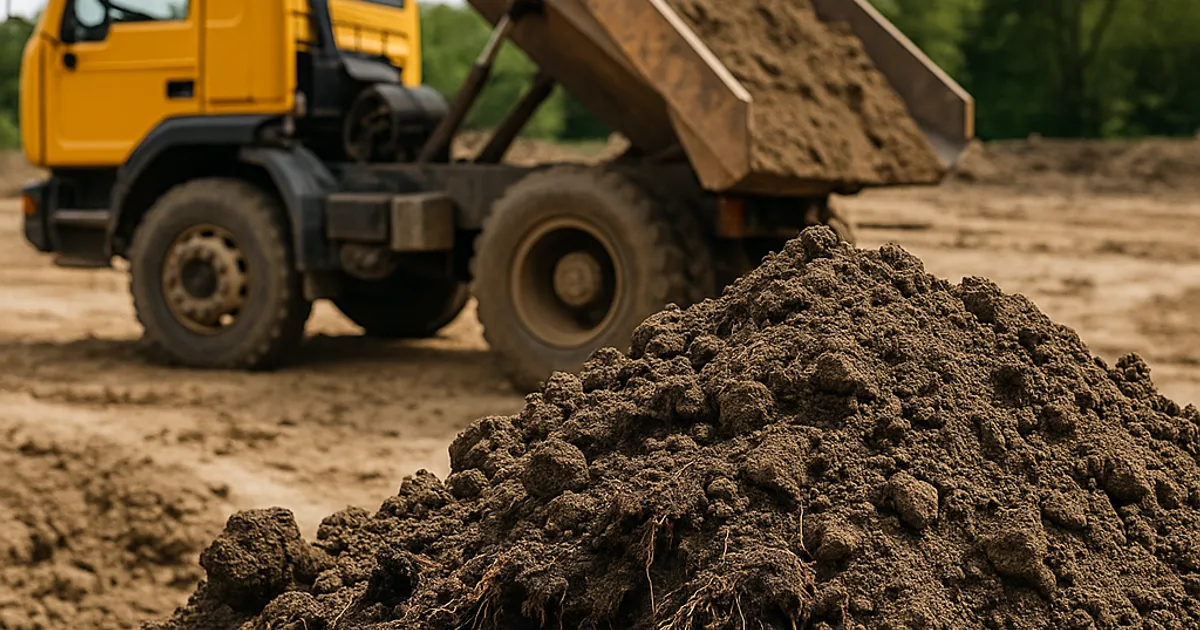
Clean fill is the workhorse of the earthwork industry. The term refers to uncontaminated soil, sand, gravel, or a mixture of these materials that is free of organic matter, garbage, debris, hazardous chemicals, and biological contaminants. It is the most commonly traded fill material on the market, and for good reason — it is versatile, relatively affordable, and widely available as a byproduct of excavation projects.
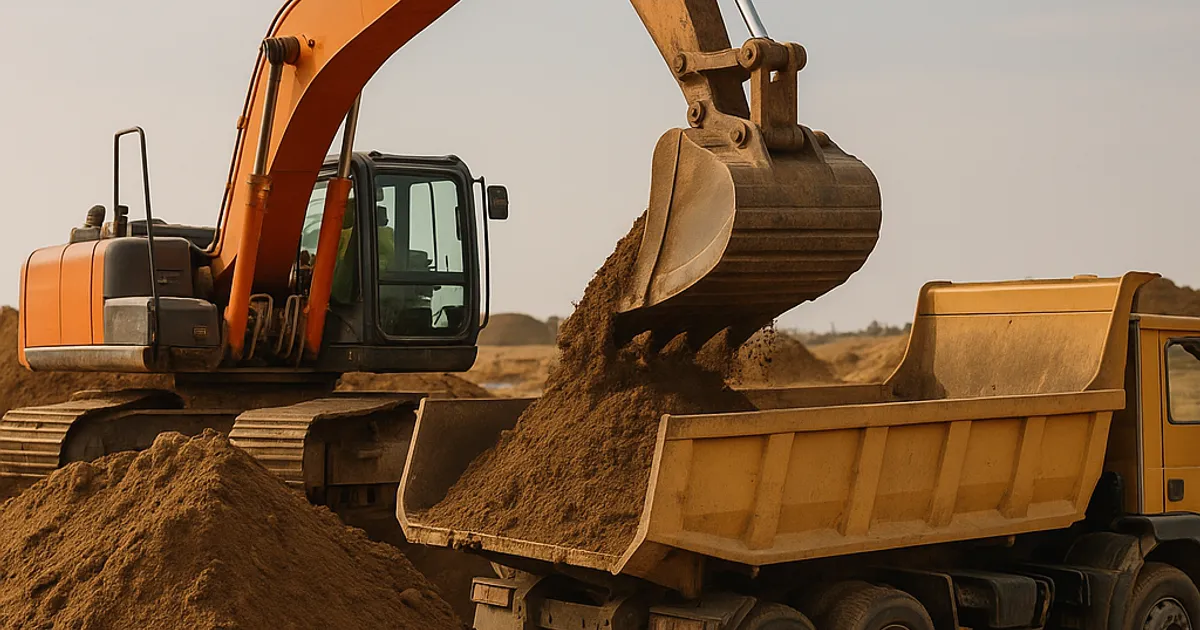
When a developer excavates a basement, they generate clean fill if the native soil meets purity standards. When a utility company bores a trench for underground conduit, the spoils may qualify as clean fill. This material has to go somewhere, and on the other end of the equation, there are always contractors who need it.
What makes fill "clean"?
The definition of clean fill varies slightly by jurisdiction, but the core standard is consistent: the material must be free of pollutants, hazardous substances, and organic material in concentrations that would affect stability or environmental integrity. Some states and municipalities require clean fill to pass a soil test before it can be legally deposited on a site. In states like California and Washington, environmental regulations around fill placement are particularly stringent.
For contractors in the Pacific Northwest, understanding what qualifies as acceptable clean fill before accepting a load is critical. If you're sourcing or placing fill material in the region, dirt exchange in Seattle is a resource worth exploring to connect with verified sources of locally appropriate fill.
Typical applications for clean fill:
- Raising site grade prior to construction
- Filling low-lying areas and depressions
- Backfilling around utility trenches
- Creating berms and embankments
- General site leveling for landscaping
Compaction potential: Moderate to good, depending on soil type and moisture content. Sandy fills compact easily; silty or clay-heavy fills require more attention to moisture control.
Structural Fill
Structural fill is a step above clean fill in terms of engineering specification and quality control. While clean fill simply needs to be free of contaminants, structural fill must meet defined performance benchmarks — typically expressed as a minimum compaction percentage relative to a Proctor test standard.
The two most referenced compaction test standards come from ASTM International: ASTM D698 (Standard Proctor) and ASTM D1557 (Modified Proctor). Structural fill is typically specified to reach 95% or greater of maximum dry density as determined by one of these tests, depending on the application.
What goes into structural fill?
Structural fill is usually a well-graded granular material — crushed stone, gravel, sand, or a carefully blended mix — with minimal fines (particles passing the No. 200 sieve). The ASTM D2487 Unified Soil Classification System provides a standardized way to classify soils by grain size and plasticity, and specifications for structural fill will often reference acceptable soil groups under this system. Materials classified as GW (well-graded gravels), GP (poorly-graded gravels), SW (well-graded sands), or SP (poorly-graded sands) are common choices for structural applications.
High clay content is typically undesirable in structural fill because clay is expansive — it swells when wet and shrinks when dry, creating cyclical movement that can damage foundations and pavements over time.
Why structural fill requires oversight:
Structural fill is not just about the material — it's about the placement. It must be placed in lifts (layers) of specified thickness, typically 6 to 12 inches, and each lift must be compacted before the next is placed. Field testing using nuclear density gauges or sand cone tests confirms that each lift has achieved the required compaction. A geotechnical engineer typically specifies these requirements in a soils report and may conduct periodic observation and testing during placement.
Typical applications for structural fill:
- Foundation subgrade preparation
- Building pads for commercial and industrial structures
- Road subbase and base course
- Bridge approach embankments
- Retaining wall backfill
- Areas beneath concrete slabs and pavements
Topsoil
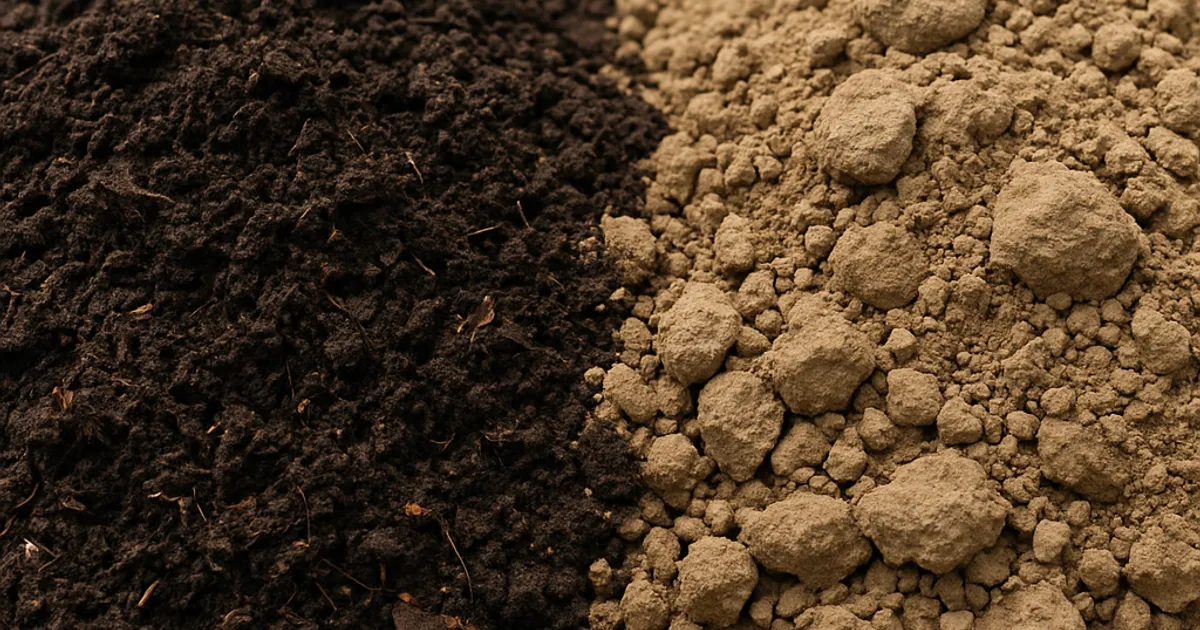
Topsoil occupies the opposite end of the structural spectrum from engineered fill. It is the uppermost layer of earth — typically the top 4 to 12 inches of native soil — and it is prized precisely for what makes it unsuitable for structural use: organic matter.
A good quality topsoil contains a rich mix of minerals, decomposed organic material, microorganisms, and nutrients that support plant life. It has excellent moisture retention, good drainage in balanced mixes, and a soil structure that allows root penetration. The USDA Natural Resources Conservation Service provides extensive soil survey data that contractors and landscapers can use to understand the native topsoil characteristics in a given area.
What topsoil is NOT:
Topsoil is not a structural material. Never use topsoil beneath a foundation, slab, or pavement. The organic content that makes it ideal for lawns and gardens is exactly what causes settlement and instability under load. Even a modest 6-inch layer of topsoil beneath a concrete slab will compress and decompose over time, creating voids that allow the slab to crack and sink.
On construction sites, topsoil is typically stripped from the surface before earthwork begins and stockpiled for later reuse in final grading and landscaping. This practice protects a valuable resource and avoids the cost of importing topsoil at project closeout.
Premium vs. bulk topsoil:
Not all topsoil is equal. Screened topsoil has been processed through a mesh to remove rocks, roots, and debris, producing a fine, consistent material ideal for lawn seeding and fine grading. Unscreened bulk topsoil is cheaper and works fine for rough grading and planting beds. Amended topsoil has compost, fertilizer, or other organic material blended in for even higher fertility.
Typical applications for topsoil:
- Final grade establishment for turf and landscaping
- Garden beds and planting areas
- Restoration of disturbed areas after construction
- Athletic fields and park installations
- Residential lawn establishment
Sandy Fill
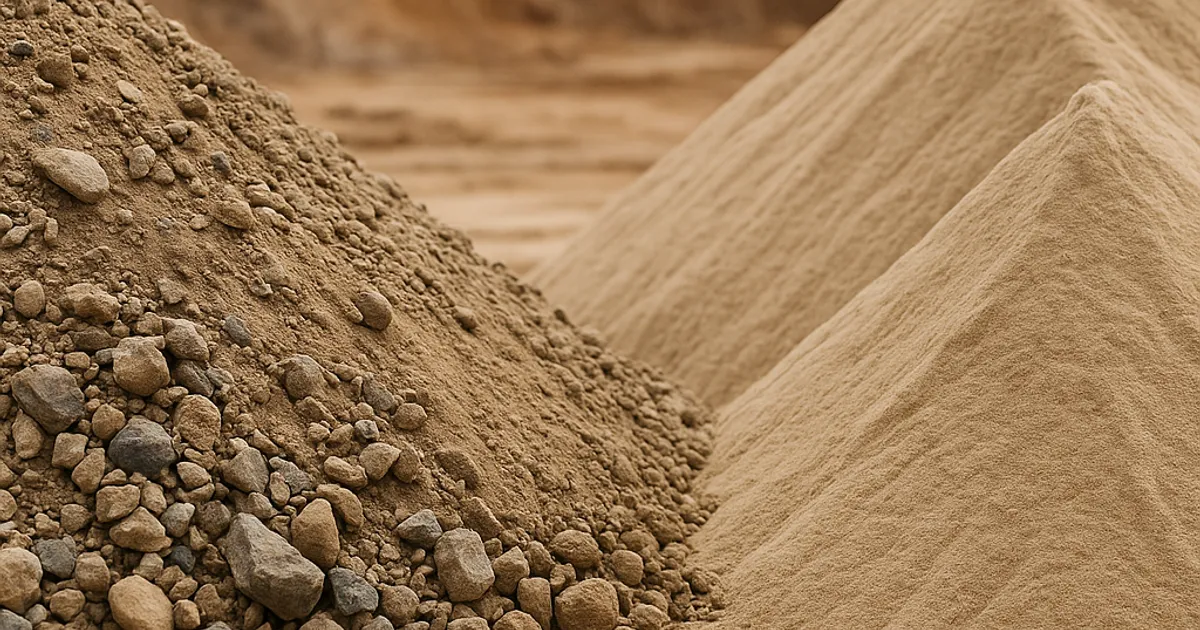
Sandy fill refers to fill material with a high sand content — typically material classified as SP (poorly graded sand) or SW (well-graded sand) under the Unified Soil Classification System. While it technically falls under the broader clean fill umbrella, sandy fill deserves its own discussion because of its distinctive drainage and compaction behavior.
Sand drains freely, which makes it excellent for applications where water management is a priority. However, it does not hold moisture, which means it can be difficult to compact properly if it's too dry or too wet. The sweet spot for compacting sand is narrower than for other fill types.
Where sandy fill excels:
- Beneath concrete flatwork where drainage is critical
- Pipe bedding and trench backfill
- Drainage-sensitive areas near structures
- Playground and recreational surface applications
- Beach volleyball courts and athletic infields (specialty applications)
Limitations of sandy fill:
Sand is susceptible to liquefaction in seismic zones when saturated, which is a significant concern in earthquake-prone regions like California. It also erodes easily if exposed to concentrated water flow, making erosion control measures essential on sandy fill slopes.
Clay Fill
Clay fill is often available in abundance as excavation spoils, but it comes with significant challenges that limit its usefulness in most construction applications. Clay particles are extremely fine, and they carry a strong negative electrical charge that causes them to attract and hold water molecules. This gives clay its characteristic plasticity when wet and its tendency to crack when dry.
The swelling and shrinkage behavior of expansive clays is one of the most destructive forces in residential construction. In Texas, Oklahoma, and other regions with highly plastic clay soils, foundation problems related to expansive clay cost homeowners billions of dollars annually.
When clay fill is acceptable:
Despite its challenges, clay fill does have legitimate uses. Compacted clay is nearly impermeable, making it valuable for liner applications in ponds, retention basins, and landfills. Low-plasticity clay can be used as structural fill when properly engineered and compacted at controlled moisture content. It's also used in earthen dam cores and levee construction for its impermeability.
When to avoid clay fill:
- Beneath foundations and slabs (unless heavily engineered)
- Areas with poor drainage where saturation is likely
- Backfill against basement walls (lateral pressure from wet clay can damage walls)
- Any application where volume stability is required
Recycled Concrete Aggregate (RCA) and Crushed Stone
Recycled concrete aggregate — sometimes called crushed concrete or RCA — is produced by crushing demolished concrete structures. It is increasingly popular as a fill and base material because it is cost-effective, widely available in urban areas, and diverts construction waste from landfills.
RCA behaves similarly to crushed stone in most applications, offering good compaction characteristics and load-bearing capacity. However, it can leach calcium and slightly raise soil pH over time, which matters for certain environmental and landscaping applications.
Crushed stone (limestone, granite, traprock) is a premium fill material for structural applications, particularly as base course under pavements and slabs. Its angular shape creates mechanical interlock when compacted, providing excellent load distribution.
Typical applications:
- Road base and subbase
- Parking lot base course
- Structural fill beneath slabs
- Drainage aggregate
- Temporary access roads on construction sites
How to Match Fill Dirt Type to Your Project
Choosing the right fill material is a function of answering four key questions:
What load will the fill need to support? — Structural loads from buildings, pavements, or heavy equipment require engineered structural fill with verified compaction. Landscaping and aesthetic applications can use clean fill or topsoil.
What are the drainage requirements? — Areas prone to saturation benefit from granular, free-draining fill. Areas where impermeability is needed (ponds, retention features) may call for clay.
What does the geotechnical report say? — For any project with a structural element, a soils report from a licensed geotechnical engineer is the authoritative source. Follow its recommendations.
What are the local regulatory requirements? — Fill placement is regulated differently by jurisdiction. Some areas require permits for fill over a certain volume or in sensitive areas near wetlands or waterways.
Fill Dirt Compaction: The Science Behind the Spec
You can source the perfect fill material and still get a bad outcome if it isn't compacted correctly. Compaction is the process of mechanically densifying fill material to reduce air voids and increase its load-bearing capacity and resistance to settlement.
Lift thickness matters:
Fill should never be placed in a single massive lift and then compacted on top. The compactive effort from equipment only penetrates so deep — typically 8 to 12 inches for vibratory rollers, less for plate compactors. Placing fill in controlled lifts and testing each one before adding the next is the correct method.
Moisture content is critical:
Every soil has an "optimum moisture content" at which it compacts most efficiently. Too dry, and the particles can't rearrange properly. Too wet, and the pore water pressure prevents densification. Lab Proctor tests determine the optimum moisture content, and field crews should have this target and adjust material moisture accordingly — adding water or aerating as needed.
Equipment selection:
Different fill materials require different compaction equipment. Vibratory smooth drum rollers work well on granular materials like sand and gravel. Padfoot (sheepsfoot) rollers work better on cohesive clay soils. Plate compactors and jumping jacks are used in confined spaces like trench backfill.
Testing and documentation:
Compaction testing should be performed frequently — typically one test per lift per specified area — and records should be maintained throughout the project. These records are often required for permit closeout and may be requested by owners, lenders, or insurers.
Sourcing Fill Dirt: The Hidden Challenge
Knowing what type of fill you need is only half the equation. Finding a reliable, cost-effective source of that material — and ensuring it meets your quality requirements — is where many contractors spend significant time and energy.
Traditionally, sourcing fill dirt meant calling around to local excavators, quarries, and gravel pits, or relying on personal relationships built up over years in a market. This works reasonably well if you're an established contractor with deep local networks. But for contractors entering new markets, newer firms, or project managers dealing with urgent sourcing needs, the traditional approach can be slow and expensive.
This is precisely the problem that DirtMatch was built to solve. DirtMatch is a platform that connects contractors who have excess fill material with those who need it — creating efficient matches that reduce hauling costs, minimize waste, and streamline the sourcing process. Instead of spending hours on the phone tracking down a truckload of clean fill, contractors can find verified sources quickly through the platform.
For contractors working in competitive markets like Denver, where earthwork activity is intense and fill material can move fast, dirt exchange in Denver through DirtMatch puts you in contact with the right sources at the right time.
Fill Dirt Cost Breakdown: What to Budget
Fill dirt pricing is driven by several interrelated factors: material type and quality, local availability, volume, haul distance, and whether delivery is included. Here's a general framework for understanding fill dirt costs:
| Fill Type | Typical Cost Range (Material Only) | Notes |
|---|---|---|
| Clean Fill (bulk) | $0–$15/cubic yard | May be free from excavation surplus projects |
| Clean Fill (delivered) | $15–$50/cubic yard | Varies heavily by delivery distance |
| Sandy Fill | $20–$55/cubic yard delivered | Price reflects quarry/pit pricing |
| Structural Fill (crushed stone/gravel) | $30–$75/cubic yard delivered | Higher due to material quality and processing |
| Certified Structural Fill | $45–$100+ /cubic yard | Includes testing, certification, and documentation |
| Topsoil (screened) | $25–$60/cubic yard delivered | Premium for screened, amended material |
| Topsoil (bulk, unscreened) | $10–$30/cubic yard delivered | Lower quality, higher volume pricing |
| Recycled Concrete Aggregate | $15–$40/cubic yard delivered | Cost-effective alternative for base applications |
Note: Prices are general benchmarks and vary significantly by region, season, and market conditions. Always get multiple quotes.
Hidden costs to account for:
- Testing and inspection fees: Geotechnical testing for structural fill can add $500–$3,000+ to a project depending on scope.
- Compaction equipment rental or contractor cost: If you don't own the right compaction equipment, factor in rental or subcontractor costs.
- Import permits: Some jurisdictions require permits for importing fill above a certain volume.
- Disposal costs for unsuitable material: If native soil is unsuitable and must be exported, disposal fees can be significant — especially for material that doesn't qualify as clean fill.
Finding cost-effective fill:
One of the most effective ways to reduce fill costs is to find nearby excavation projects generating surplus material. A developer excavating a basement 2 miles away might be glad to deliver clean fill for free or near-free just to reduce their own disposal costs. Platforms like DirtMatch make these connections easy — learn how DirtMatch works to see how the matching process connects fill providers with fill receivers efficiently.
Find or Post Dirt, Rock & Aggregate
Join thousands of contractors using DirtMatch to buy, sell, and exchange earthwork materials.
Try DirtMatch FreeEnvironmental and Regulatory Considerations
Fill dirt placement is subject to a range of environmental regulations that vary by project location, fill volume, proximity to waterways, and material type. Ignoring these requirements can result in fines, project shutdowns, and long-term liability.
Wetlands and waterways:
Placing fill material in or adjacent to jurisdictional wetlands or waterways requires permits under Section 404 of the Clean Water Act, administered by the U.S. Army Corps of Engineers. Violations can trigger restoration orders and significant penalties. Always conduct a wetland delineation before placing fill near any potential wetland.
Stormwater management:
Construction sites that disturb one or more acres are typically required to obtain a stormwater permit and implement a Stormwater Pollution Prevention Plan (SWPPP). Fill placement and grading operations are primary sources of sediment runoff, which must be controlled through erosion and sediment control best management practices.
Contamination screening:
Importing fill from an unknown source without screening for contamination is a significant risk. If contaminated fill is discovered on a property, the property owner may bear cleanup liability under environmental law regardless of whether they knowingly accepted contaminated material. Requesting a material certification or conducting basic testing on unknown fill sources before acceptance is prudent practice.
The EPA Brownfields Program provides resources for properties dealing with contamination history and can be a useful reference when working on redevelopment sites where fill history is uncertain.
Special Applications and Engineered Fill Solutions
Beyond the standard fill categories, certain projects call for specialized fill approaches.
Controlled Low-Strength Material (CLSM)
Also called flowable fill, CLSM is a self-compacting, cementitious material used as a backfill in situations where conventional compaction is impractical — such as narrow utility trenches in congested urban areas. It flows like a liquid, filling voids completely, and then sets to a low-strength solid. It's more expensive than conventional fill but eliminates the need for mechanical compaction and reduces trench settlement.
Lightweight Fill
In situations where excessive load on underlying soils is a concern — such as on soft clays or near existing structures — lightweight fill materials may be specified. Expanded polystyrene (EPS) geofoam blocks, lightweight expanded clay aggregate (LECA), and wood chip fill are all used in specific applications to reduce surcharge loads while achieving desired grade.
Geosynthetic-Reinforced Fill
Retaining walls and steep embankments often use geosynthetic reinforcement — layers of geogrid or geotextile woven into compacted fill — to create mechanically stabilized earth (MSE) structures. This approach allows steeper slopes than unreinforced fill would support and is common in road and bridge construction.
Working With a Geotechnical Engineer
For any project where fill will support a structure, pavement, or other engineered system, partnering with a licensed geotechnical engineer is not optional — it is essential. The geotechnical engineer performs or oversees:
- Subsurface investigation (borings, test pits) to characterize native soils
- Laboratory testing to determine engineering properties of both native and import fill
- Fill specification development defining acceptable material types, gradation, and compaction requirements
- Construction observation and testing to verify that fill is being placed correctly
- Report preparation documenting findings and recommendations
Geotechnical reports are frequently required by building departments as part of the permit submittal for larger projects. Even when not required, having one provides a strong defense against future claims of improper fill placement.
Common Fill Dirt Mistakes and How to Avoid Them
Even experienced contractors make costly fill-related mistakes. Here are the most common and how to prevent them:
Mistake 1: Accepting fill without verifying quality Always request documentation of fill source and, for structural applications, require lab test results. Visual inspection alone is not sufficient to confirm fill quality.
Mistake 2: Placing fill over organic material Stumps, roots, topsoil, and organic debris beneath fill will decompose and settle. Strip and remove all organic material from areas receiving structural fill before placement begins.
Mistake 3: Placing fill in excessively thick lifts Rushing the job by placing too-thick lifts results in poor compaction at depth. Stick to specified lift thicknesses — typically 8 to 12 inches for most granular fill.
Mistake 4: Ignoring moisture content Compacting fill that is too dry or too wet produces poor results. Monitor and adjust moisture content, especially during hot/dry or wet weather conditions.
Mistake 5: Skipping compaction testing This is a documentation and quality control issue as much as a technical one. Without test records, you have no proof that fill was placed correctly if questions arise later.
Mistake 6: Using fill in regulated areas without permits Fill placement near wetlands, floodplains, or waterways without proper permits can result in stop-work orders and restoration requirements. Always confirm regulatory status before placing fill in sensitive areas.
Connecting Fill Supply with Fill Demand
One of the most persistent inefficiencies in the earthwork industry is the disconnect between contractors with surplus fill and those who desperately need it. Every day, thousands of cubic yards of perfectly usable clean fill are hauled to landfills simply because no one could find a taker in time — while across town, another contractor is paying premium prices to import fill from a quarry.
This waste is both economic and environmental. Unnecessary haul cycles burn fuel, generate emissions, increase truck traffic, and drive up project costs for everyone. The solution is better information flow and more efficient matching between parties.
DirtMatch addresses this directly by creating a marketplace where contractors can post surplus fill material or post fill needs, and the platform surfaces relevant matches based on material type, volume, location, and timing. For contractors who deal with fill material regularly, upgrading to DirtMatch Pro unlocks priority matching, expanded reach, and tools designed for high-volume earthwork operations.
Whether you're a site developer in Los Angeles managing the logistics of a major excavation or a small grading contractor in Boulder looking for a nearby clean fill source, the platform brings supply and demand together. Contractors in Los Angeles and Boulder can browse available fill material and projects in their area, reducing the time and cost of sourcing.
A Practical Fill Dirt Decision Framework
Use this quick-reference checklist when selecting fill for your next project:
Step 1: Define the application
- Load-bearing (foundation, slab, pavement, embankment) → Structural fill required
- Non-load-bearing grade raise, drainage, or general fill → Clean fill acceptable
- Landscaping, lawn, or planting areas → Topsoil or clean fill with topsoil cap
Step 2: Review the geotechnical report (if applicable)
- Note specified material types, gradation limits, and compaction requirements
- Identify any restrictions on clay content or maximum fines percentage
Step 3: Source material
- Request material certifications or test results
- Verify proximity to project site to control haul cost
- Consider surplus fill from nearby excavation projects for cost savings
- Use DirtMatch to find verified nearby sources
Step 4: Verify regulatory requirements
- Check local permit requirements for fill volume
- Confirm no wetland or floodplain restrictions apply
- Ensure fill meets state clean fill standards
Step 5: Plan placement and compaction
- Establish lift thickness plan based on equipment and specification
- Schedule testing at appropriate intervals
- Document compaction test results throughout placement
Step 6: Close out
- Compile test records for permit closeout
- Confirm final grades with survey or GPS verification
- Restore surface as specified (topsoil, seeding, paving, etc.)
Conclusion: Getting Fill Dirt Right the First Time
Fill dirt is foundational — in every sense of the word. The right material, sourced from a verified supplier, placed in controlled lifts, and compacted to specification is the invisible backbone of every successful construction project. Getting it wrong can mean months of remediation, engineering reviews, and strained client relationships. Getting it right means a solid foundation that the rest of the project can build upon.
As the earthwork industry continues to evolve, platforms that improve transparency and efficiency in material sourcing are becoming essential tools for competitive contractors. Getting started with DirtMatch takes minutes and can immediately connect you with a network of fill material sources and receivers in your region — saving time, reducing waste, and improving your project economics.
Whether you're sourcing clean fill for a residential grade correction, specifying structural fill for a commercial foundation, or managing topsoil stockpiles on a large land development, the principles in this guide give you the foundation to make informed, confident decisions every time.