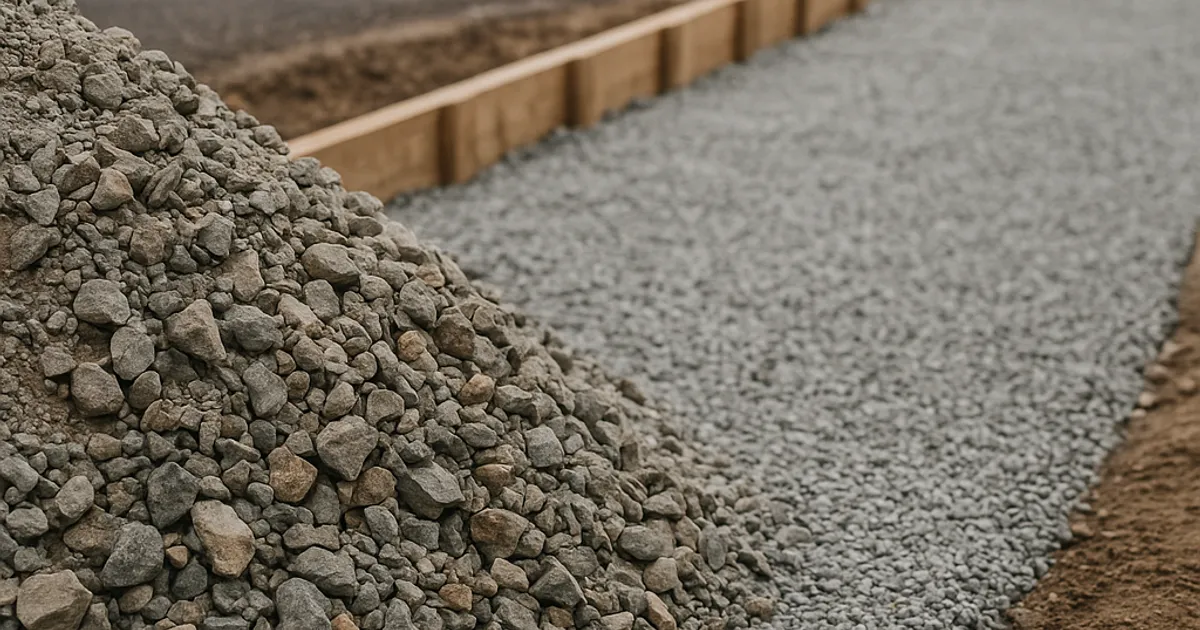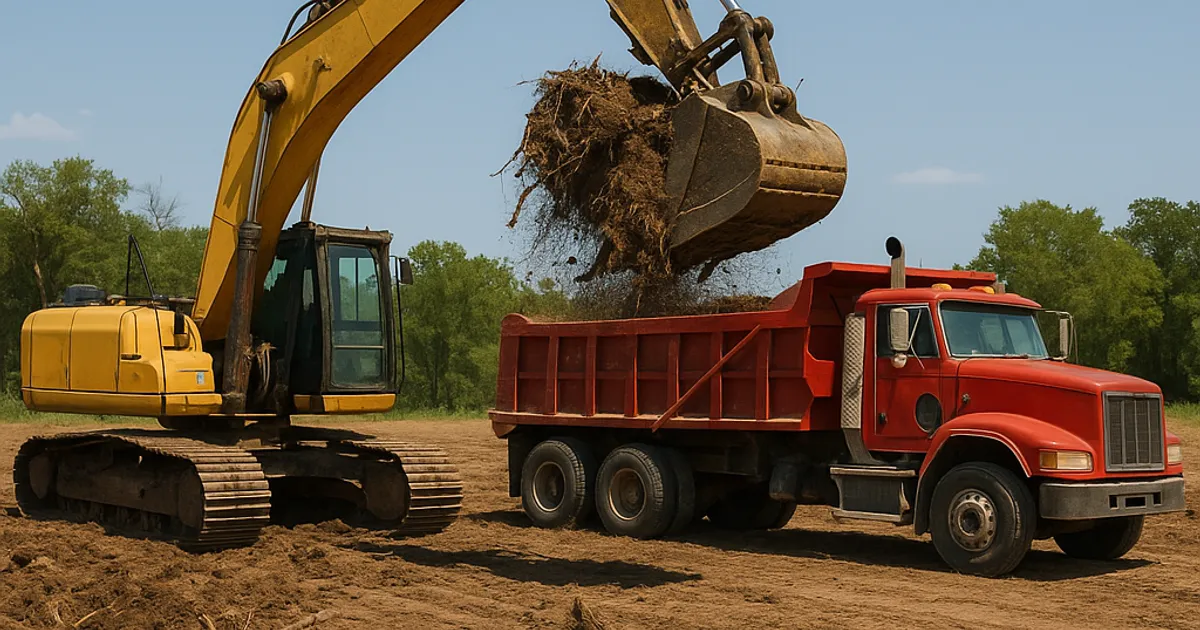
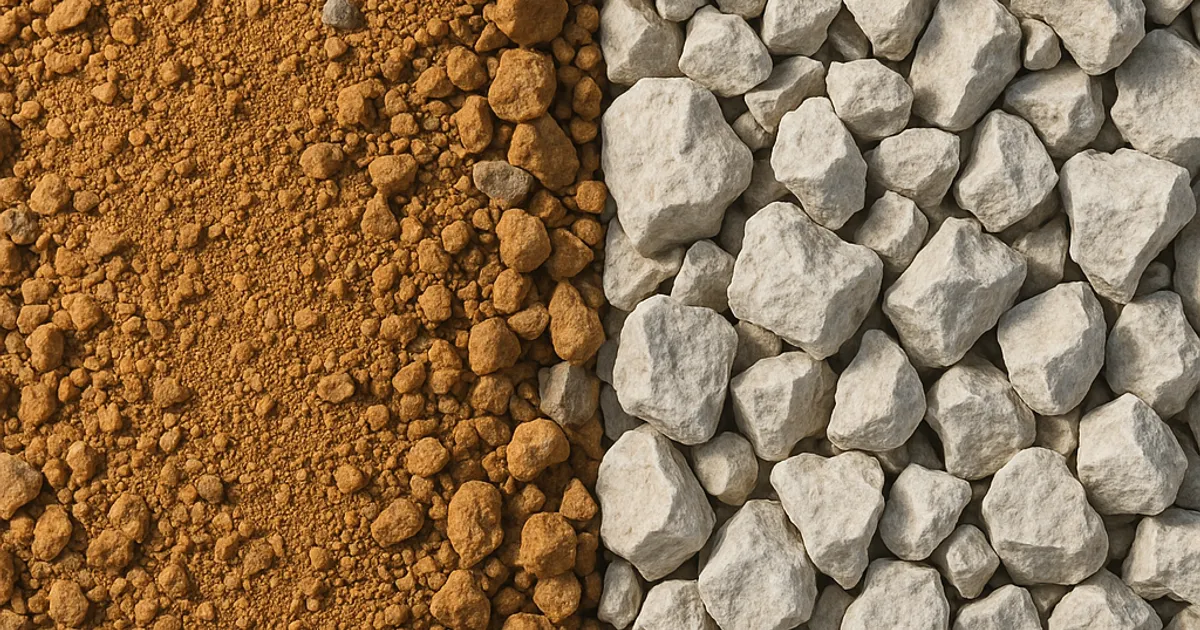
Choosing the right base material in Texas is not a trivial decision. With construction activity booming across the DFW Metroplex, the Hill Country, the Gulf Coast, and West Texas, contractors are placing millions of tons of decomposed granite and crushed limestone every year. These two materials look similar at a glance, but they behave very differently under load, in rain, and over time. Getting the selection wrong can mean premature road failure, drainage problems, and expensive remediation.
This comprehensive guide examines both materials in depth: their physical properties, cost structures, regulatory considerations, ideal applications, regional sourcing dynamics, and how modern platforms are changing the way Texas earthwork contractors connect supply with demand.
What Is Decomposed Granite and Where Does It Come From in Texas?
Decomposed granite (commonly abbreviated DG) is exactly what the name suggests: granite that has weathered and broken down over geological time into a mixture of small gravel particles, coarse sand, and fine silt. The parent material is igneous rock, and DG retains much of the mineral hardness and drainage characteristics of its source. In Texas, the primary source region is the Llano Uplift in the central Hill Country, particularly around Mason, Llano, and Fredericksburg. This region sits atop one of the oldest exposed granite formations in North America, and it produces commercially valuable DG that is shipped across central and south Texas.
Typically, DG particles range from 3/8 inch down to fine dust, giving it a distinctive gritty texture. When properly compacted, the fines bind together and create a surface that is firm yet permeable. The permeability is one of DG's defining traits: water moves through it rather than pooling on top, which makes it highly attractive for landscaping, permeable pathways, and drainage applications.
In terms of mineralogy, Texas DG is predominantly composed of quartz, feldspar, and mica. The quartz content gives it durability, while the mica flakes can sometimes cause issues with compaction consistency if the material is too weathered. Contractors should request gradation reports and verify that fines content does not exceed roughly 15 to 20 percent by weight for structural applications, as excess fines increase plasticity and reduce load-bearing capacity.
From a supply standpoint, DG quarries in the Hill Country ship product primarily to San Antonio, Austin, and surrounding counties. Hauling DG into the DFW Metroplex adds significant cost, which is one reason crushed limestone tends to dominate North Texas projects.
What Is Crushed Limestone and Why Is It So Common in Texas?
Crushed limestone is sedimentary rock that has been quarried and mechanically crushed to specified gradations. Texas sits atop one of the world's most extensive limestone formations. The Balcones Escarpment, the Edwards Plateau, the Barnett Shale transition zones, and the North Texas Prairie all overlie thick limestone deposits. This geological reality makes crushed limestone the single most widely used aggregate material in the state.
Texas quarries produce crushed limestone in a wide range of sizes, from 1.5-inch base rock all the way down to limestone screenings (sometimes called limestone dust or fines). The most common specification for road base and structural fill is the Texas Department of Transportation (TxDOT) Item 247 flexible base, which is a broadly graded crushed limestone meeting specific gradation, plasticity index, and wet ball mill requirements. TxDOT specifications require that flexible base material pass gradation requirements for 1.75-inch, No. 4, No. 40, and No. 200 sieves, with the minus No. 200 fraction (fines) limited to maintain a low plasticity index.
The abundance of limestone quarries within 30 to 50 miles of virtually every major Texas metro area keeps material costs competitive. Quarries operated by companies such as Martin Marietta, Vulcan Materials, and Texas Industries supply the majority of commercial and municipal projects. Crushed limestone is the backbone of Texas road construction, pad site development, utility corridor preparation, and commercial foundation work.
Unlike DG, crushed limestone is mechanically angular rather than naturally rounded or gradational. This angularity causes the particles to interlock under compaction, producing a tight, stable matrix that resists lateral movement. That interlocking behavior is why TxDOT and county road engineers have relied on crushed limestone flexible base for well over a century.
Physical Properties Compared: A Side-by-Side Analysis
Understanding the engineering differences between these two materials is essential before specifying either on a project. The table below summarizes the key physical and performance characteristics.
| Property | Decomposed Granite (DG) | Crushed Limestone | |---|---|---|n| Rock Type | Igneous (granite) | Sedimentary (limestone) | | Particle Shape | Sub-angular to rounded | Angular, mechanically fractured | | Typical Gradation | 3/8" minus to fines | 1.75" minus to fines (varies by spec) | | Compacted Density | 95-105 lbs/cu ft | 105-120 lbs/cu ft | | Permeability | Moderate to high | Low to moderate | | Plasticity Index | Typically non-plastic | Varies; TxDOT spec requires PI under 6 for base | | Hardness (Mohs) | 6-7 (quartz dominant) | 3-4 (calcite dominant) | | Typical Compaction | 90-95% Proctor | 95-100% Proctor | | Freeze-Thaw Sensitivity | Low | Moderate (calcite can dissolve) | | Drainage | Good (permeable surface) | Poor surface drainage (dense base) | | Color | Pink, gray, tan (varies) | Gray to white | | Typical delivered cost (Texas, 2026) | $28-$45 per ton | $14-$26 per ton |
The cost differential is significant. Crushed limestone consistently comes in at roughly half the delivered cost of DG in most Texas markets, primarily because limestone quarries are so widely distributed across the state. For large-volume projects such as road base placement or pad site preparation, that cost gap compounds quickly.
Best Uses for Decomposed Granite in Texas Projects
Landscaping and Permeable Pathways
DG's most celebrated application in Texas is landscaping. Across the Hill Country, San Antonio, and Austin, DG pathways and garden borders are almost universal. The natural pink and gray tones of Hill Country granite complement native plant landscaping, and the material's permeability supports healthy soil biology beneath ornamental beds. Many municipalities in the Austin-San Antonio corridor have updated their stormwater management guidelines to encourage permeable surfaces, and DG qualifies as a permeable paving alternative in many jurisdictions.
For landscaping paths, a 3-to-4-inch compacted layer over a weed barrier fabric is the standard installation. Stabilized DG, which is DG mixed with a polymer or resin binder, is increasingly specified for high-traffic pedestrian areas such as park trails and commercial courtyard hardscaping. The binder reduces surface erosion and dust while maintaining permeability.
Private Ranch and Rural Road Base
On private ranch roads and low-volume rural drives, DG performs well in central and west Texas, particularly where the native soil is clayey or expansive. DG's angular fines compact into a reasonably stable surface that sheds water better than bare clay or caliche. Many Hill Country landowners prefer DG for aesthetics and because local material is readily available at relatively low cost when sourced directly from nearby quarries.
However, DG rural roads require more frequent maintenance than crushed limestone roads. The surface tends to rut under heavy equipment traffic and will erode on slopes without proper drainage structures. Annual top-dressing and blading is typical.
Drainage Applications and Backfill
Because DG is more permeable than crushed limestone, it is sometimes specified as drainage fill around French drain systems, retaining wall backfill, and septic system leach field borders. In areas where caliche soils restrict natural infiltration, DG backfill around drainage structures can dramatically improve performance.
Decorative Aggregate and Erosion Control
In commercial landscaping across Texas, DG is used as a decorative surface mulch alternative. It suppresses weeds, resists wind erosion better than bark mulch, and does not float away in heavy rain the way organic mulch can. TxDOT and county engineers also use coarser DG for slope stabilization in some Hill Country applications.
Best Uses for Crushed Limestone in Texas Projects
Road Base and Flexible Base Construction
This is where crushed limestone is unrivaled in Texas. TxDOT Item 247 flexible base is specified on virtually every public road project in the state. The material is placed in lifts, typically 6 to 8 inches per compacted lift, and compacted to a minimum of 95 percent of maximum dry density per AASHTO T 180 (Modified Proctor). For higher-traffic roads, 100 percent compaction is targeted.
The angular interlocking of crushed limestone particles makes it extremely resistant to rutting under truck and vehicle traffic. This is critical on Texas construction sites where heavy haul trucks, concrete trucks, and equipment transport vehicles are constantly cycling. A properly placed and compacted crushed limestone road base will support years of heavy use before requiring significant rehabilitation.
For DFW Metroplex projects specifically, crushed limestone is nearly universal on commercial and industrial pad sites. With dozens of active quarries within 50 miles of Fort Worth and Dallas, material is readily available and competitively priced. Contractors working on gravel fill in DFW projects rely almost exclusively on crushed limestone for structural base work.
Pad Site and Commercial Foundation Preparation
New commercial construction in Texas routinely requires 12 to 24 inches of compacted base material beneath concrete slabs and parking lots. Crushed limestone is the preferred material for this application because of its high compacted density, low plasticity, and consistent gradation. Geotechnical engineers in Texas routinely specify crushed limestone fill to replace expansive black clay (locally called "black gumbo") that dominates much of North Texas and the Blackland Prairie.
When clay soils are removed and replaced with compacted crushed limestone, slab movement due to moisture-related soil expansion is dramatically reduced. This soil replacement strategy is so common in North Texas that it is practically standard practice for commercial builders.
Utility Corridor Bedding and Backfill
Crushed limestone is widely used as bedding and backfill material for water lines, sewer lines, and gas pipelines. Limestone screenings (the minus 3/8-inch fraction) provide excellent uniform bedding support around pipe barrels without sharp angular edges that could damage flexible pipe coatings. For rigid pipe, coarser crushed limestone provides the drainage and support characteristics specified in most municipal utility standards.
Caliche Supplement and Subgrade Stabilization
In South Texas and West Texas where native caliche exists as a natural subgrade, crushed limestone is often blended with native material or used as a cap layer to improve surface quality. Caliche, which is naturally occurring calcium carbonate hardpan, has similar mineralogy to crushed limestone but inconsistent gradation. Adding processed crushed limestone improves gradation and compactability.
Regional Considerations Across Texas
DFW Metroplex
The Dallas-Fort Worth area is one of the most active construction markets in North America. Crushed limestone from quarries in Tarrant, Hood, Erath, and Somervell counties dominates the base material market. Delivered costs for TxDOT Item 247 flexible base in DFW typically range from $16 to $24 per ton as of mid-2026, depending on haul distance and market conditions. DG is rarely specified for structural applications in DFW due to limited local supply and higher cost. For contractors working on gravel fill in DFW projects, crushed limestone is the practical default.
Austin and the Hill Country
The Austin metro sits at the geological transition between the limestone-dominated Edwards Plateau and the granite-rich Llano Uplift. This gives central Texas contractors access to both materials at competitive prices. DG from Llano and Mason county quarries is genuinely cost-competitive for landscaping and low-volume road applications in Austin. Crushed limestone from Cedar Park, Georgetown, and Buda quarries handles the heavy structural base market.
San Antonio and South Texas
San Antonio mirrors Austin in many respects. Limestone is dominant for structural work, but DG from Hill Country sources reaches the market competitively. South Texas, including the Rio Grande Valley, relies almost entirely on crushed limestone and caliche due to the absence of nearby granite sources. Hauling DG to the Valley adds $8 to $15 per ton compared to limestone, making DG uncompetitive for anything but specialty applications.
Houston and the Gulf Coast
Houston sits on flat coastal plain with deep clay and sand deposits. Neither DG nor crushed limestone is locally quarried; both must be trucked in, making material costs higher than in central Texas. Crushed limestone still dominates structural applications. Crushed concrete recycled aggregate is also widely used in Houston as a cost-competitive alternative to virgin limestone.
Find or Post Dirt, Rock & Aggregate
Join thousands of contractors using DirtMatch to buy, sell, and exchange earthwork materials.
Try DirtMatch FreeCost Analysis: Decomposed Granite vs. Crushed Limestone in 2026
Understanding total project cost requires looking beyond the raw material price. Delivery, compaction effort, and long-term maintenance all factor into the true cost comparison.
| Cost Factor | Decomposed Granite | Crushed Limestone |
|---|---|---|
| Material cost (at quarry, 2026) | $18-$32/ton | $9-$16/ton |
| Typical delivered cost (Austin) | $28-$40/ton | $14-$22/ton |
| Typical delivered cost (DFW) | $35-$48/ton | $16-$24/ton |
| Typical delivered cost (San Antonio) | $26-$38/ton | $14-$21/ton |
| Compaction equipment required | Standard roller/plate compactor | Heavy vibratory roller recommended |
| Lifts required for 12" depth | 2 lifts at 6" | 2 lifts at 6" |
| Annual maintenance (road surface) | Moderate to high | Low to moderate |
| Longevity under heavy traffic | 3-5 years before resurfacing | 8-15 years before major rehab |
For a 10,000-square-foot commercial pad site requiring 18 inches of compacted base material in Austin, the material cost difference between DG and crushed limestone can exceed $15,000 to $25,000 in favor of limestone. For most structural applications, the economic case for crushed limestone is overwhelming.
Decomposed granite only becomes cost-competitive when local Hill Country quarry access reduces haul distance significantly, or when project specifications explicitly require permeable, natural-aesthetic materials.
Compaction Standards and Testing Requirements
Proper compaction is non-negotiable for both materials. Under-compacted base layers are the leading cause of premature road and pavement failure in Texas. Both TxDOT and county road standards reference AASHTO standards for compaction testing and acceptance.
For crushed limestone road base under TxDOT specifications, the standard is 95 percent of maximum density as determined by AASHTO T 180 (Modified Proctor). On higher-classification roads, 100 percent is required. Nuclear density gauges are the standard field testing method, though drive-core methods are also acceptable.
For DG, compaction specifications vary by application. For structural road base, most engineers specify 90 to 95 percent of Modified Proctor. For permeable landscape applications, compaction is intentionally limited to preserve permeability, typically targeting 85 to 90 percent.
Contractors should always obtain a proctor curve from an accredited geotechnical lab before beginning placement operations. The optimum moisture content for crushed limestone typically falls between 7 and 12 percent, while DG often compacts best at 8 to 14 percent moisture depending on fines content. Placing either material too dry or too wet results in inadequate density and future settlement.
For contractors navigating base material specifications across multiple Texas project types, staying current with TxDOT Item 247 updates and county engineer requirements is essential. The specifications have been refined over decades and represent hard-won knowledge about what actually performs in Texas soil and climate conditions.
Environmental and Stormwater Considerations
Texas construction sites disturbing one or more acres must obtain coverage under the Texas Commission on Environmental Quality (TCEQ) Construction General Permit (TXR150000) and implement a Storm Water Pollution Prevention Plan (SWPPP). The choice of base material has real implications for stormwater management.
Crushed limestone base layers are nearly impermeable when properly compacted, which means stormwater from paved or compacted surfaces must be managed through traditional inlet-pipe-detention systems. DG surfaces, by contrast, can contribute to on-site infiltration, potentially reducing runoff volume and peak flow rates. In some jurisdictions, DG permeable paving qualifies as a Low Impact Development (LID) technique that can reduce required detention pond capacity.
However, DG surfaces can also contribute fine sediment to runoff during rain events if not properly stabilized, particularly during and after installation before the surface has settled. Silt fence and inlet protection measures are standard practice around fresh DG installations on construction sites.
For large Texas earthwork projects with complex stormwater management requirements, the EPA Stormwater Construction program provides federal framework guidance that overlays TCEQ requirements.
Sourcing Base Materials Efficiently in Texas
One of the biggest operational challenges for Texas earthwork contractors is efficiently sourcing and coordinating delivery of base materials, particularly on short-notice projects or when managing multiple simultaneous sites. Traditional sourcing relies on relationships with a handful of local quarries and broker networks, which limits options and price visibility.
The Texas fill dirt and aggregate market is enormous. According to data from the Fill Dirt in Texas marketplace on DirtMatch, there are currently over 717,000 cubic yards of material available across the state, with more than 1.8 million cubic yards needed, reflecting the intense demand side of the Texas construction economy. With over 2,100 matches made in the past 30 days alone, the platform is actively connecting contractors with nearby material sources across the state. For example, there is an active listing for 20,000 yards of clean fill dirt needed in Lorena, TX, which illustrates the scale of earthwork demand even in smaller Central Texas communities.
Contractors looking to source decomposed granite or crushed limestone for Texas projects can use DirtMatch to identify nearby surplus material, match with haulers, and reduce the idle time and deadhead trucking costs that eat into project margins. Rather than calling quarries one by one or relying on a single broker, the platform aggregates supply and demand across the state, giving contractors a real-time picture of what materials are available within economical hauling distance.
Selecting the Right Material: A Decision Framework
Given the complexity of the choice, a practical decision framework helps contractors, engineers, and project owners quickly narrow down the right material for their situation.
Step 1: Define the Load Requirement
If the application involves heavy vehicle traffic, structural slab support, or public road construction, crushed limestone is almost always the right answer. Its higher compacted density and angular interlocking make it the superior structural material. DG simply does not perform as well under sustained heavy loading.
Step 2: Evaluate Drainage and Permeability Needs
If the application requires surface permeability, natural aesthetics, or qualifies for LID credit under local stormwater ordinances, DG is worth evaluating. Permeable pathways, courtyard hardscaping, landscaping, and drainage backfill are legitimate DG applications.
Step 3: Check Local Availability and Delivered Cost
In Central Texas, DG is genuinely competitive for non-structural applications. In DFW, Houston, or South Texas, the delivered cost premium for DG often makes crushed limestone the only practical choice. Always get current delivered pricing from multiple sources before finalizing material specifications.
Step 4: Confirm Specification Compliance
Public road and utility projects will have formal material specifications from TxDOT, the county engineer, or the municipal engineer. Confirm that your chosen material meets the applicable gradation, plasticity, and strength requirements before procurement. Substituting a non-compliant material creates inspection, acceptance, and liability risk.
Step 5: Coordinate Logistics Early
Base material logistics, including truck scheduling, laydown area preparation, and compaction equipment availability, should be coordinated at least two to three weeks before placement is needed on large projects. Getting started with DirtMatch gives contractors a head start on identifying nearby material sources and available hauling capacity before the project mobilization deadline.
Common Mistakes Contractors Make with These Materials
Even experienced Texas contractors occasionally make avoidable errors with DG and crushed limestone. Here are the most common issues encountered in practice.
Placing DG in a structural application without geotechnical sign-off. DG's compressive strength is adequate for light-duty applications, but it lacks the density and interlocking angularity to perform under sustained truck traffic without geotechnical verification. Skipping this step leads to premature failure.
Ordering crushed limestone without specifying the correct gradation. "Crushed limestone" is a generic term covering many different gradations and specifications. Ordering base rock when you needed limestone screenings, or vice versa, creates placement and compaction problems. Always reference the specific TxDOT item number or gradation table.
Ignoring moisture content during placement. Both DG and crushed limestone must be placed at or near optimum moisture content for proper compaction. Placing dry material during a hot Texas summer without moisture conditioning results in low density and future settlement. Keep water trucks on site.
Neglecting fines content in DG. Decomposed granite from different quarries varies substantially in fines content. High-fines DG (more than 20 percent passing the No. 200 sieve) behaves more like a silty material, is susceptible to erosion, and compacts poorly. Always request a gradation analysis from the quarry.
Assuming all limestone is the same hardness. Texas limestones vary in hardness and durability depending on their geological formation and depth. Material from some quarries is softer and more susceptible to degradation under heavy traffic. The wet ball mill value, which measures aggregate durability, should be requested for any high-traffic application.
The Bottom Line for Texas Earthwork Contractors
Decomposed granite and crushed limestone are both outstanding materials within their respective domains. Crushed limestone is the workhorse of Texas construction: abundant, affordable, strong, and proven across millions of lane miles of public roads and thousands of commercial pad sites. Decomposed granite earns its place in permeable landscape applications, low-volume rural roads in Central Texas, and specialty drainage situations where permeability and natural aesthetics matter.
For most structural base material decisions in Texas, crushed limestone is the default answer and the economically superior choice. DG shines when the project calls for something crushed limestone cannot provide: permeability, a natural granite aesthetic, or compatibility with Hill Country landscape design standards.
The key to running efficient earthwork operations in Texas is not just selecting the right material but sourcing it quickly and cost-effectively. With demand for fill and base materials consistently outpacing documented supply across the state, contractors who build strong sourcing networks and leverage modern matching technology have a significant competitive advantage. DirtMatch was built specifically to address this challenge, connecting Texas earthwork contractors with verified nearby material sources, reducing haul costs, and eliminating the hours spent calling quarries and brokers to find what you need.
Whether you are placing road base material on a DFW commercial development, building a Hill Country ranch road with local DG, or managing a complex multi-site earthwork program across Central Texas, understanding the true performance differences between these two materials is the foundation of better project decisions. Pair that knowledge with smart sourcing tools, and you are positioned to deliver base material work that holds up for years under Texas conditions.