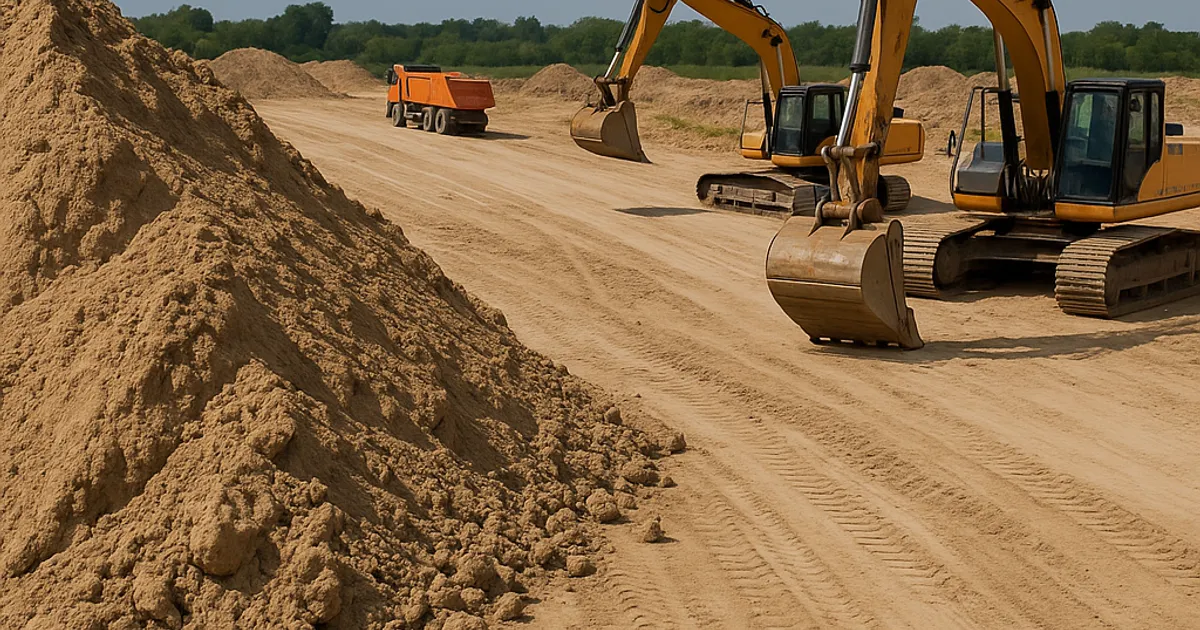
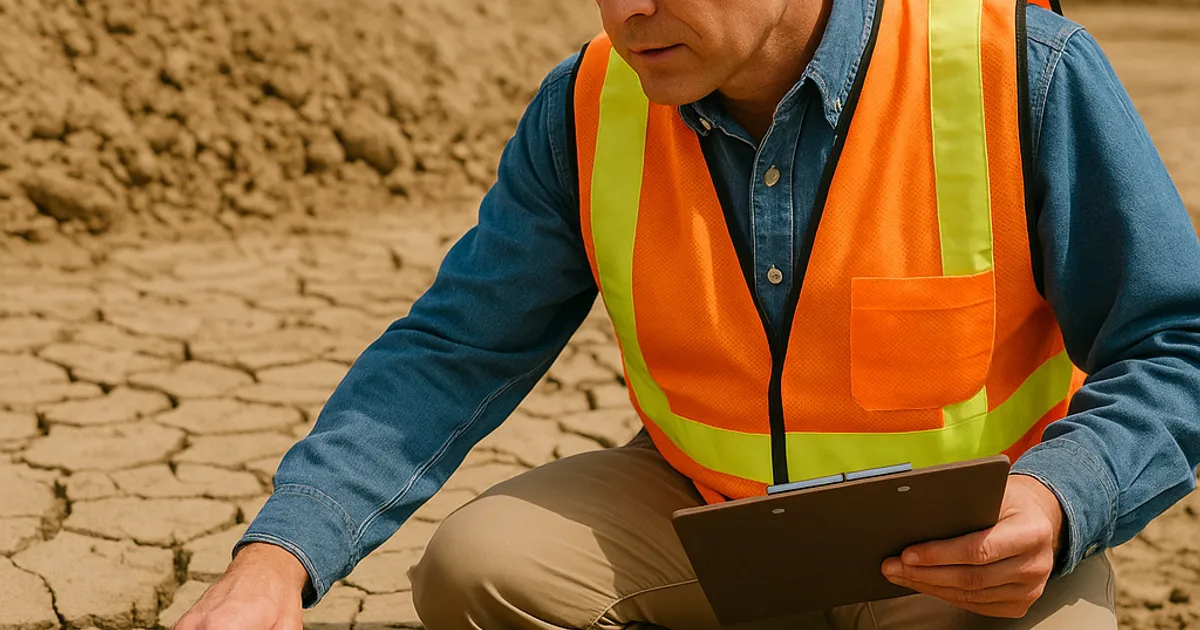
Texas sits on some of the most geologically active soil in the United States, and not because of earthquakes. The real culprit is far more subtle and far more expensive: expansive clay soil. Every year, foundation movement, cracked slabs, buckled pavements, and compromised utility lines cost Texas property owners an estimated $13 billion in damages. That figure makes Texas the single most clay-damaged state in the nation, and it puts every earthwork contractor operating here on the front lines of one of construction's most persistent challenges.
Whether you are grading a subdivision in the Dallas-Fort Worth Metroplex, laying a commercial pad site in San Antonio, or managing fill operations across Central Texas's limestone and clay transition zones, understanding expansive clay is not optional. It is the foundation, quite literally, of doing profitable and defensible work in this state. This guide covers the science, the risk zones, the regulations, the material decisions, and the practical strategies you need to protect your projects and your bottom line.
What Is Expansive Clay Soil and Why Does Texas Have So Much of It
Expansive clay soil is any soil that undergoes significant volume changes in response to changes in moisture content. When the soil absorbs water, it swells. When it dries out, it shrinks. This cycle of expansion and contraction is what causes cracked foundations, heaving driveways, and failed retaining walls. The technical term for the clay minerals responsible is smectite, with montmorillonite being the most problematic variety.
Texas has an outsized share of these soils for two primary reasons: geology and climate. The state's geology reflects millions of years of ancient seabeds, marine deposits, and weathered shale formations, all of which produce clay-rich soils. The Cretaceous-age rock that underlies much of Central and North Texas weathers directly into montmorillonite-rich clay. Meanwhile, Texas's climate swings between wet and dry seasons in ways that maximize shrink-swell activity, which is the very cycle that destroys infrastructure.
The USDA Natural Resources Conservation Service publishes detailed soil surveys that document these conditions across the state. Using the USDA Web Soil Survey, contractors can look up any parcel in Texas and identify the dominant soil series, shrink-swell potential ratings, and engineering limitations before a single blade touches the ground. This tool is free, regularly updated, and one of the most underused resources in the Texas earthwork industry.
Key clay minerals found in Texas expansive soils include:
- Montmorillonite: The most expansive mineral, capable of absorbing up to 10 times its dry volume in water
- Illite: Moderately expansive, common in North Texas shale-derived soils
- Kaolinite: Least expansive, more common in East Texas's sandy loam transition zones
- Mixed-layer clays: Found throughout the Blackland Prairie and Gulf Coast regions
The Plasticity Index (PI), measured through ASTM D4318 Atterberg limits testing, is the standard numerical indicator of expansive potential. A PI above 20 signals moderate expansion risk; a PI above 35 indicates high risk. In the Dallas-Fort Worth area, PI values routinely range from 40 to 60 or higher. Some soils in the Austin Chalk formation have tested above 70.
The Geography of Texas Expansive Clay: Where Risk Is Highest
Not all of Texas deals with expansive clay equally. The state breaks into several distinct geologic zones that contractors should understand when bidding and planning projects.
The Blackland Prairie Belt
This is the epicenter of Texas clay problems. Stretching in a broad arc from the Red River near the Oklahoma border through Dallas, Waco, Austin, and down toward San Antonio, the Blackland Prairie is defined by its Houston and Austin series soils. These are dark, sticky, montmorillonite-dominant clays that give the region its nickname: "black clay Texas."
The Houston Black soil series is among the most studied expansive soils in North America. It features a Plasticity Index that commonly exceeds 50, a liquid limit above 70, and a shrink-swell coefficient that makes seasonal volume changes of 3 to 6 inches possible in the upper 10 feet of the soil profile. In dry summers, the surface of an undisturbed Blackland Prairie site can crack open with fissures 2 to 4 inches wide and 18 to 24 inches deep.
Cities in this belt, including Dallas, Fort Worth, Austin, Waco, Temple, and Killeen, have building codes and engineering standards specifically written around clay behavior. Any contractor working here without a clear clay management plan is operating at significant risk.
The Gulf Coast Prairies
From Houston west through Corpus Christi, the Gulf Coast region overlays younger marine sediments that also contain highly plastic clays. Houston's famous "gumbo" clay is notorious among contractors for its tendency to become nearly impossible to work with when wet and to crack like ceramic when dry. The additional challenge here is the high water table, which creates a combination of clay expansion and hydrostatic pressure that complicates foundation design and utility installation.
The Trans-Pecos and West Texas
West of the Balcones Escarpment, clay soils become less prevalent but do not disappear. Caliche and calcium carbonate deposits complicate matters differently, and isolated clay lenses can still cause localized expansion problems. Contractors should not assume that West Texas projects are clay-free without site-specific testing.
East Texas Transition Zone
East Texas features more sandy, lateritic soils that are less expansive overall, though pockets of clay exist. The pine belt region's soils typically have lower PI values, making them more suitable for fill applications than the black clay found further west.
How Expansive Clay Damages Construction Projects
Understanding the mechanisms of damage helps contractors make smarter decisions at every project phase.
Foundation Failure
This is the most visible and costly consequence of unmanaged clay. When moisture conditions under a slab or pier-and-beam foundation vary, the soil either pushes up on the structure or pulls away from it. Corner lift, center heave, and differential settlement are the three main failure patterns. A slab on grade that heaves uniformly is less dangerous than one that heaves in one corner while another corner settles. The differential movement is what cracks beams, frames doors open permanently, and splits brick veneer.
The Texas Department of Insurance estimates that foundation repair claims average $8,000 to $30,000 per residential structure, with severe cases running well over $100,000. Commercial and industrial foundation failures can dwarf those figures.
Pavement and Infrastructure Damage
Roads, parking lots, utility trenches, and buried pipelines are all vulnerable. Expansive clay beneath a pavement section can cause longitudinal cracking, edge cracking, and surface heave that dramatically shortens pavement life. Gas, water, and sewer lines buried in clay zones experience joint separation and pipe cracking as the surrounding soil moves. The Texas Department of Transportation spends hundreds of millions annually managing pavement distress on state roads underlain by expansive soils.
Earthwork and Grading Complications
From a pure earthwork perspective, expansive clay is difficult to compact properly, difficult to transport without drying out or becoming oversaturated, and highly sensitive to moisture content during placement. Clay that is too wet becomes plastic and unworkable. Clay that is too dry during compaction will fail to bind properly and will later absorb moisture and swell. Hitting the optimum moisture window for compaction is a precision task that requires frequent field testing.
Testing Expansive Clay Soil: The Contractor's Protocol
No Texas contractor should begin significant earthwork without a proper soil investigation. The minimum testing protocol for a project involving expansive clay should include:
Phase 1: Preliminary Assessment
- Review USDA Web Soil Survey maps for the site
- Check Texas Commission on Environmental Quality (TCEQ) records for any prior site investigations
- Conduct visual inspection for shrinkage cracks, vegetation stress, and surface indicators
Phase 2: Laboratory Testing
- Atterberg Limits (ASTM D4318): Determines Liquid Limit, Plastic Limit, and Plasticity Index
- Grain size analysis (ASTM D7928 and D6913): Determines percent clay, silt, and sand
- Proctor Compaction Test (ASTM D698 or D1557): Determines optimum moisture content and maximum dry density
- Swell potential testing (ASTM D4546): Directly measures how much the soil will expand under load when wetted
- Free swell test: Quick screening tool for highly plastic soils
Phase 3: In-situ Assessment
- Standard Penetration Test (SPT) borings to document soil stratification
- Cone Penetration Tests (CPT) for more continuous soil profiling
- Moisture content profiles at depth
Most geotechnical firms in major Texas markets charge between $3,500 and $12,000 for a standard soil investigation on a residential or small commercial site. For larger projects, budgeting $15,000 to $50,000 for comprehensive geotechnical services is reasonable and almost always worth the investment.
Texas Black Clay as Fill Dirt: What You Need to Know
One of the most common and most misunderstood issues in Texas earthwork is using native black clay as fill dirt. Contractors often have large quantities of clay spoil from excavation and the temptation to use it as fill on the same or nearby projects is economically understandable. However, using expansive clay as structural fill creates significant long-term liability.
When Clay Fill Is Problematic
Expansive clay fill placed beneath slabs, footings, or in utility backfill zones creates a built-in failure mechanism. The moment moisture conditions change after construction, which they always do, the fill moves. Even compacted clay fill that meets density requirements will expand if its moisture content increases after placement. This is why the Texas Engineering Practice Act and virtually all geotechnical recommendations from licensed engineers in Texas discourage using high-PI clay as structural fill in critical zones.
When Clay Fill May Be Acceptable
There are legitimate uses for clay fill in Texas projects. Clay works well as:
- Pond and dam embankment liner material: High clay content reduces permeability, which is exactly what pond applications require
- Cap material on landfill closures: Clay barriers slow leachate migration
- Rough grading fill in non-structural areas: Filling low spots in open space or landscaped areas away from foundations
- Sub-base stabilization zones when lime-treated: See section on lime stabilization below
Sourcing Better Fill Dirt for Texas Projects
When structural fill is needed in a Texas clay zone, most engineers will specify a non-expansive material with a PI below 20, often a sandy loam, crushed limestone, or gravel product. Finding these materials in the Blackland Prairie belt is not always straightforward, because the native soil itself is the problem. That is where efficient sourcing becomes critical.
The fill dirt marketplace in Texas on DirtMatch currently shows over 1.2 million yards of material available and nearly 4.4 million yards needed across the state, reflecting the persistent demand-supply tension that contractors navigate on every Texas project. The platform logged 2,465 matches in the last 30 days alone, connecting contractors who need compliant fill material with those who have excavation spoils or aggregate products to move. If you are looking for non-expansive fill to replace clay in a structural zone, DirtMatch gives you a searchable marketplace of available materials by location, reducing the time and transportation cost of sourcing compliant fill.
Lime Stabilization: The Most Common Clay Treatment in Texas
Lime treatment of expansive clay is the most widely used and most cost-effective method for managing Texas black clay in road bases, building pads, and utility corridors. The chemistry works on a straightforward principle: calcium ions from hydrated lime (calcium hydroxide) react with the silica and alumina in clay particles in a process called pozzolanic reaction. This permanently alters the clay's mineral structure, reducing plasticity and expansion potential.
How Lime Stabilization Works in Practice
Typical lime treatment involves:
- Scarification: The existing clay subgrade is ripped and loosened to the treatment depth, typically 6 to 12 inches for building pads and 8 to 18 inches for roadway subgrades
- Lime application: Hydrated lime is spread at rates of 3 to 8 percent by dry weight of soil, typically 25 to 40 pounds per square yard for a 6-inch treatment
- Mixing: A reclaimer or pulvimixer blends the lime thoroughly into the loosened soil
- Hydration and mellowing: The treated material is allowed to rest for 24 to 72 hours, during which initial ion exchange reactions occur and large clods break down
- Final mixing and compaction: A second pass with the mixer, then compaction to specified density
- Curing: The treated layer is kept moist and protected for a minimum of 7 days while long-term pozzolanic strength gain occurs
Lime treatment typically reduces the PI of a 50-PI clay to below 20, drops the swell potential by 70 to 90 percent, and increases bearing capacity by a factor of 3 to 5 compared to untreated clay. Texas DOT standard specifications (TxDOT Item 260) govern lime treatment on state highway projects, and those specifications are commonly adopted for commercial and residential pad sites as well.
Cost for lime stabilization in Texas typically ranges from $2.50 to $5.00 per square yard for a 6-inch treatment, including material and labor. That cost is almost always less than the cost of removing native clay and importing non-expansive fill, especially in areas where haul distances for quality fill material are significant.
Alternatives to Lime Treatment
| Treatment Method | Best Use Case | Typical PI Reduction | Relative Cost |
|---|---|---|---|
| Hydrated Lime | Building pads, road subgrades | 40-70% | Low to Moderate |
| Portland Cement | Faster strength gain, utility backfill | 30-50% | Moderate |
| Lime-Fly Ash (LFA) | Road bases, cost-sensitive projects | 35-60% | Low |
| Cement-Lime Blend | High-PI soils, aggressive treatment | 50-75% | Moderate to High |
| Geosynthetic Reinforcement | Weak subgrades, not a PI fix | Structural improvement only | Moderate |
| Full Depth Reclamation | Road rehabilitation | Variable | Moderate |
Moisture Management: The Key Variable Contractors Control
The single biggest lever a Texas earthwork contractor has over expansive clay performance is moisture control. Clay behaves very differently at 15 percent moisture content versus 25 percent moisture content, and the difference between a successful project and a failure often comes down to how aggressively the moisture regime was managed during and after construction.
Pre-Construction Moisture Conditioning
For building pad sites in the Blackland Prairie, pre-wetting the native clay subgrade before construction is an increasingly common practice in Texas. By bringing the soil to a moisture content near or slightly above optimum before construction begins, contractors reduce the differential between post-construction equilibrium moisture and initial conditions. This reduces post-construction swell. The process involves flooding or irrigation of the site weeks to months before grading begins, which requires planning well ahead of the construction schedule.
Compaction Moisture Windows
For any clay fill or treated clay layer, compaction must occur within the optimum moisture range established by Proctor testing. Texas DOT typically specifies compaction at optimum moisture plus or minus 2 percent for subgrades, though some specifications for expansive clay allow compaction on the wet side of optimum (optimum to optimum plus 4 percent) to pre-saturate the material and minimize post-construction swell. Discuss the target moisture specification with your project geotechnical engineer before placing any clay fill.
Maintaining Moisture After Completion
One of the most effective long-term strategies for managing clay near structures is maintaining consistent soil moisture. Landscaping irrigation systems, positive drainage away from foundations, and tree root management all play roles in keeping the soil moisture level stable year-round. Contractors should communicate these requirements clearly to owners at project close-out.
Find or Post Dirt, Rock & Aggregate
Join thousands of contractors using DirtMatch to buy, sell, and exchange earthwork materials.
Try DirtMatch FreeDrainage Design in Texas Clay Zones
Grading and drainage design in Texas expansive clay areas requires more attention than in sandy or gravelly soil environments. Ponded water is the enemy: it drives up soil moisture rapidly, triggering expansion cycles that damage structures and pavements. Effective drainage design includes:
- Positive surface grades: Minimum 2 percent slope away from all structures for at least 10 feet, with steeper grades preferred in heavy clay zones
- Interceptor drains: French drains or edge drains placed around building perimeters to intercept lateral moisture migration
- Sub-slab drainage: Granular drainage blankets beneath slab-on-grade construction to create a moisture buffer between the slab and the clay subgrade
- Roof drainage: Gutters and downspouts that discharge well away from the foundation perimeter
- Impervious surfaces: Concrete or pavement aprons around structures to prevent direct rainfall infiltration adjacent to the foundation
EPA stormwater regulations under the National Pollutant Discharge Elimination System (NPDES) also govern how contractors manage runoff from disturbed clay sites. According to EPA stormwater construction guidelines, sites disturbing one or more acres must have a Stormwater Pollution Prevention Plan (SWPPP) in place. In Texas, the TCEQ administers the Construction General Permit under this framework. Clay-heavy sites create particular sediment runoff challenges because fine clay particles stay suspended in water longer than sand or silt, making turbidity control a significant compliance issue.
Excavation Safety in Clay Soils: OSHA Requirements
Expansive clay presents specific excavation safety challenges that contractors must address under federal OSHA standards. Clay soils can appear stable in dry conditions while being prone to sloughing or sudden failure when moisture increases. Contractors who underestimate this risk put workers at serious risk.
OSHA classifies soils for excavation purposes under 29 CFR 1926 Subpart P. Clay soils can fall into Type A (firm, intact clay with unconfined compressive strength above 1.5 tons per square foot), Type B (cracked or fissured clay, or clay with PI above certain thresholds), or Type C (soft, saturated, or unstable clay). The classification determines the required trench side slope or shoring system.
Key points for Texas clay excavations:
- Fissured black clay, even when apparently dry, must often be classified as Type B or Type C due to the visible shrinkage cracks that indicate pre-existing failure planes
- A competent person must visually and manually test all excavations before workers enter
- Sudden rainstorms can transform a stable Type A clay trench into a Type C collapse hazard within hours
- Excavated clay spoil placed adjacent to a trench increases surcharge load and collapse risk
All Texas contractors performing excavation work should be current on federal excavation safety requirements and ensure that at least one competent person per crew holds current OSHA trenching and excavation training.
Sourcing Non-Expansive Fill Dirt for Texas Projects: A Practical Guide
When your project requires non-expansive fill to replace or cap native clay, the sourcing process involves several steps that experienced Texas contractors know well.
Step 1: Define Your Material Specification
Work with your geotechnical engineer to establish written material acceptance criteria. Common specifications for non-expansive fill in Texas include:
- Plasticity Index less than 20 (many engineers specify less than 15 for critical applications)
- Liquid Limit less than 40
- Maximum percent passing the No. 200 sieve: 35 percent or less
- Free of organic material, debris, or contamination
- Capable of achieving 95 percent standard Proctor density
Step 2: Identify Local Sources
Non-expansive fill in clay country is a commodity. Potential sources include:
- Limestone quarry fines and crusher run from operations throughout Central Texas
- Sandy loam from East Texas or Gulf Coast sand deposits
- Imported caliche from West Texas
- Clean concrete demolition aggregate (verify acceptance with your engineer)
- Screened fill from excavation projects in sandy formations
Step 3: Verify Material Quality Before Acceptance
Request a recent laboratory test report from any fill supplier and conduct your own verification testing on delivered material. Reject loads that do not meet specification, documenting the rejection in writing. Do not let schedule pressure push you into accepting non-compliant fill.
Step 4: Track Material Availability in Real Time
Finding qualified fill dirt at reasonable cost is one of the most frustrating parts of working in Texas clay country. Recent listings on DirtMatch show active demand across the state: a contractor in Liberty, TX recently posted a need for clean fill dirt, reflecting the ongoing search for compliant material even at smaller project scales. Using DirtMatch to connect with verified fill dirt suppliers in your project area can dramatically reduce the time and cost of material procurement, particularly when you need a material that does not naturally occur near the job site.
Cost Comparison: Clay Management Strategies in Texas
Understanding the economics of different clay management approaches helps contractors bid more accurately and advise clients more effectively.
| Strategy | Typical Cost Range | Best For | Risk Level |
|---|---|---|---|
| Leave native clay, no treatment | Near zero | Non-structural areas only | High |
| Lime stabilization in place | $2.50 to $5.00/sq yd | Pads, roadways, utilities | Low to Moderate |
| Full clay removal and replacement | $15 to $40/cu yd all-in | Critical structural zones | Low |
| Pre-wetting and moisture conditioning | $0.50 to $2.00/sq yd | Pads in dry climates | Moderate |
| Pier-and-beam or deep pier foundation | $10,000 to $40,000+ per structure | Sites with extreme clay | Low |
| Geosynthetic reinforcement | $1.50 to $4.00/sq yd | Weak subgrades, pavements | Moderate |
Note: Costs reflect Texas market conditions in 2026 and will vary by region, project size, and material availability.
The cheapest option upfront is almost never the cheapest option over the project lifecycle. A lime stabilization program that adds $30,000 to a commercial pad project budget can prevent $500,000 in foundation repair costs ten years later. Contractors who help clients understand this math build the kind of trust that generates repeat business and referrals.
Regulatory Considerations for Texas Earthwork Contractors
Beyond OSHA safety standards, Texas earthwork contractors dealing with expansive clay face several regulatory frameworks:
Texas Engineering Practice Act
Foundation designs for structures on expansive clay in Texas must be prepared by a licensed Professional Engineer. Contractors who perform earthwork based on verbal instructions or unverified specifications risk serious liability exposure. Always have a geotechnical report and stamped foundation plan before beginning soil preparation work on commercial or multi-family projects.
Texas Commission on Environmental Quality (TCEQ)
Soil disturbing activities require Construction General Permit compliance when site disturbance exceeds one acre. Clay-heavy sites require particularly robust erosion and sediment control measures, because clay's fine particle size makes it highly susceptible to transport by stormwater runoff.
Local Building Codes
Major Texas municipalities have adopted specific requirements for construction on expansive soils. The City of Dallas, Fort Worth, Austin, and San Antonio all reference geotechnical investigation requirements in their commercial building permit processes. Some jurisdictions require specific foundation design approaches or soil treatment protocols as a condition of permit issuance.
Utility Trenching Requirements
Backfill specifications in clay zones are increasingly tight. Many municipalities and utility districts now specify non-expansive backfill within 18 to 24 inches of buried pipes in clay soils, recognizing that native clay backfill causes pipe joint separation and structural damage over time.
Future Trends: Climate Change and Expanding Clay Risk in Texas
The climate trajectory for Texas points toward more extreme wet-dry cycles in the coming decades. Climate researchers tracking Texas precipitation patterns note that the state is experiencing more intense rainfall events followed by longer drought periods. For expansive clay, this means more extreme shrink-swell cycles, which translates to accelerating infrastructure damage.
Several trends are reshaping how the industry responds:
Bio-enzyme and polymer soil stabilizers are gaining traction as alternatives to lime for smaller-scale or environmentally sensitive applications. These products work by modifying the clay's affinity for water rather than chemically altering its mineral structure.
Machine control technology from providers like Trimble allows contractors to monitor compaction passes and moisture readings in real time across a grading site, reducing the risk of under-compaction or improper moisture conditioning in critical zones.
Geotechnical risk insurance products are becoming more widely available and more relevant for Texas contractors managing clay-related liability exposures on large commercial projects.
Pre-construction geotechnical data sharing platforms are emerging to give contractors access to prior site investigation data, reducing duplicative testing costs when multiple projects develop in the same clay formation.
For contractors who want to stay ahead of these trends, connecting with other earthwork professionals and material suppliers through a marketplace like DirtMatch provides both a sourcing advantage and a professional network benefit. The platform's growing presence in the Texas market reflects how the industry is moving toward more efficient, data-connected project delivery.
Key Takeaways for Texas Earthwork Contractors
Expansive clay soil is not a problem you can build around in Texas. It is woven into the geology of the most economically active construction markets in the state. The contractors who succeed are those who treat clay management as a core competency, not an afterthought.
Actionable summary:
- Always investigate soil conditions with laboratory testing before bidding structural earthwork in the Blackland Prairie or Gulf Coast regions
- Use the USDA Web Soil Survey as a free starting point for any Texas site assessment
- Budget for lime stabilization on virtually every commercial pad site in high-PI clay zones; it is almost always the best value option
- Source non-expansive fill for structural applications and document material acceptance testing
- Design drainage systems that keep clay moisture levels as stable as possible year-round
- Know your OSHA classification obligations for clay trenching and ensure competent persons are on every crew
- Partner with your geotechnical engineer early, not after problems emerge
- Use digital sourcing tools to find and vet fill material suppliers before schedule pressure forces a bad decision
Texas clay will keep challenging contractors for as long as the state keeps building, which by all accounts is a very long time. The professionals who understand this soil, respect it, and manage it systematically will build better projects, face fewer callbacks, and earn stronger reputations in one of the most competitive construction markets in the country.