Soil selection is one of the most consequential decisions made on any earthwork project, yet it is routinely treated as an afterthought. The wrong fill material can cause differential settlement, drainage failures, slope instability, and regulatory violations that cost far more to remediate than they would have cost to prevent. Whether you are grading a residential lot in Denver, filling a commercial pad in Los Angeles, or stabilizing a slope in Seattle, understanding the fundamental differences between sandy soil, loam, and silt is not optional knowledge. It is professional currency.
This guide delivers an in-depth comparison of the three most commonly sourced fill materials, covering their physical properties, engineering behavior, cost ranges, compaction requirements, and the specific project scenarios where each one shines or creates serious problems.
Understanding Soil Classification: The Science Behind the Label
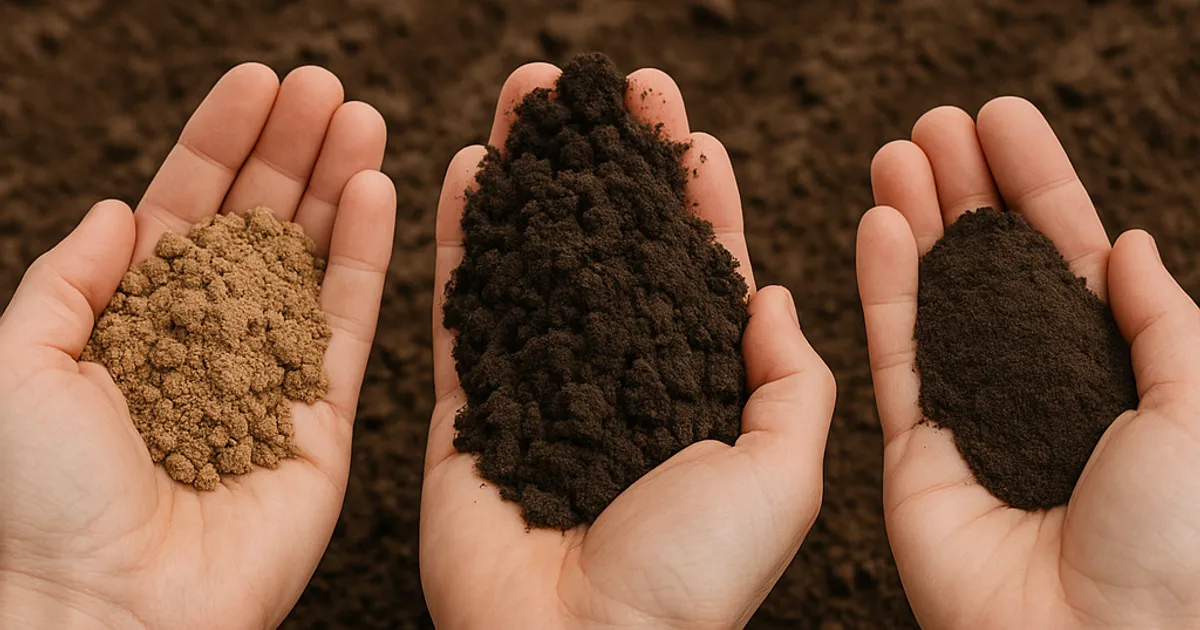
Before comparing fill types, it helps to understand how soils are actually classified. The USDA Natural Resources Conservation Service defines soil texture based on the relative proportions of sand, silt, and clay particles. Sand particles measure 0.05 to 2.0 millimeters in diameter. Silt particles fall between 0.002 and 0.05 millimeters. Clay particles are the finest, measuring less than 0.002 millimeters.
In the engineering world, soils are classified under the ASTM International Unified Soil Classification System, standardized as ASTM D2487. This system groups soils into coarse-grained (sands and gravels) and fine-grained (silts and clays) categories, with each group carrying specific behavioral expectations for construction use. AASHTO also maintains a parallel classification system used extensively by state departments of transportation for highway and infrastructure fill specs.
Loam is not a single particle size but a balanced mixture, typically defined as roughly 40 percent sand, 40 percent silt, and 20 percent clay by volume. This composition makes it the Swiss Army knife of soil types in agricultural contexts, but its behavior in construction fill applications depends heavily on its specific mixture ratios and the moisture conditions on site.
Understanding these classifications matters because specifications written into project contracts, municipal grading permits, and state DOT requirements will reference these standards directly. Submitting the wrong soil type and misrepresenting it on a project can expose contractors to liability, project delays, and costly remediation work.
Sandy Soil: The Workhorse of Structural Fill
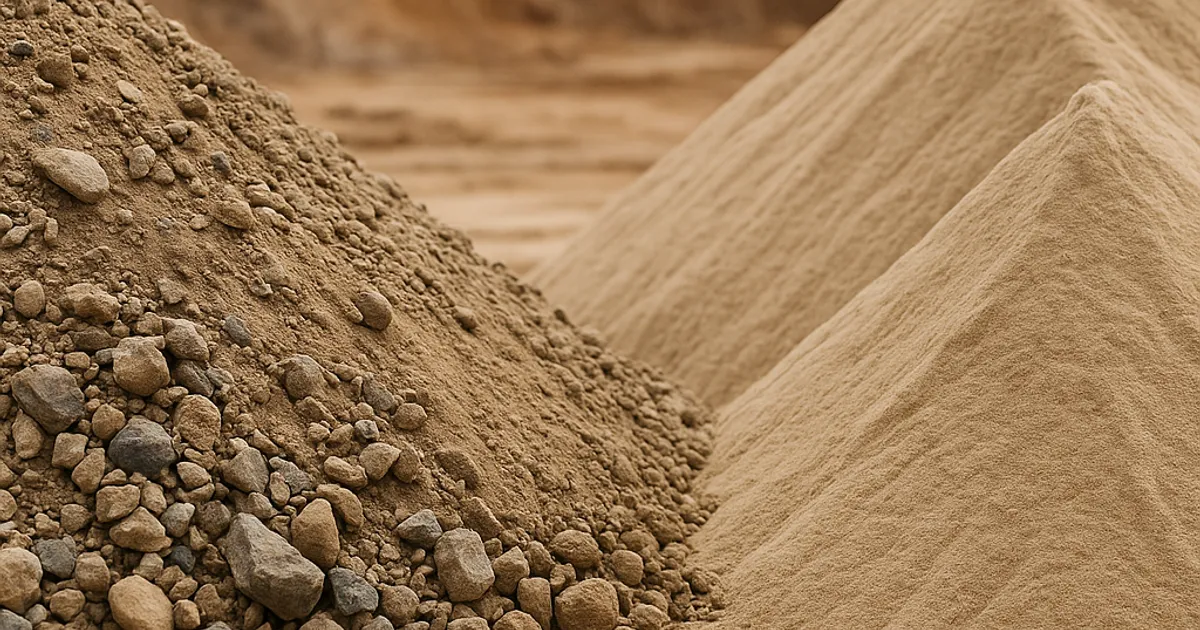
Sandy soil is the dominant choice for structural fill applications in commercial and residential construction for good reasons. Its large, angular or rounded particles create a stable matrix that drains freely, compacts predictably, and achieves high load-bearing capacity when properly moisture-conditioned and compacted.
Physical Properties of Sandy Fill
Sand particles do not hold water between them the way silt or clay particles do. This low plasticity means sand does not expand when wet or shrink when dry to any meaningful degree. The result is minimal differential movement over time, which is exactly what structural engineers want under footings, slabs, and road subgrades.
Typical properties of well-graded sandy fill include:
- Permeability: 1 x 10^-3 to 1 x 10^-1 cm/sec (highly permeable)
- Internal friction angle: 30 to 40 degrees for compacted specimens
- Dry unit weight: 95 to 115 pounds per cubic foot when well compacted
- Compaction standard: ASTM D698 (Standard Proctor) or D1557 (Modified Proctor)
- Plasticity Index: Non-plastic to very low (less than 4)
Best Applications for Sandy Soil Fill
Sandy fill performs best in the following scenarios:
- Building pad preparation: Sandy fill under residential and commercial slabs provides stable, well-draining support that resists frost heave and moisture-related settlement.
- Trench backfill: In utility corridors where pipe bedding and backfill must drain freely and not transmit hydrostatic pressure, sand is the go-to specification.
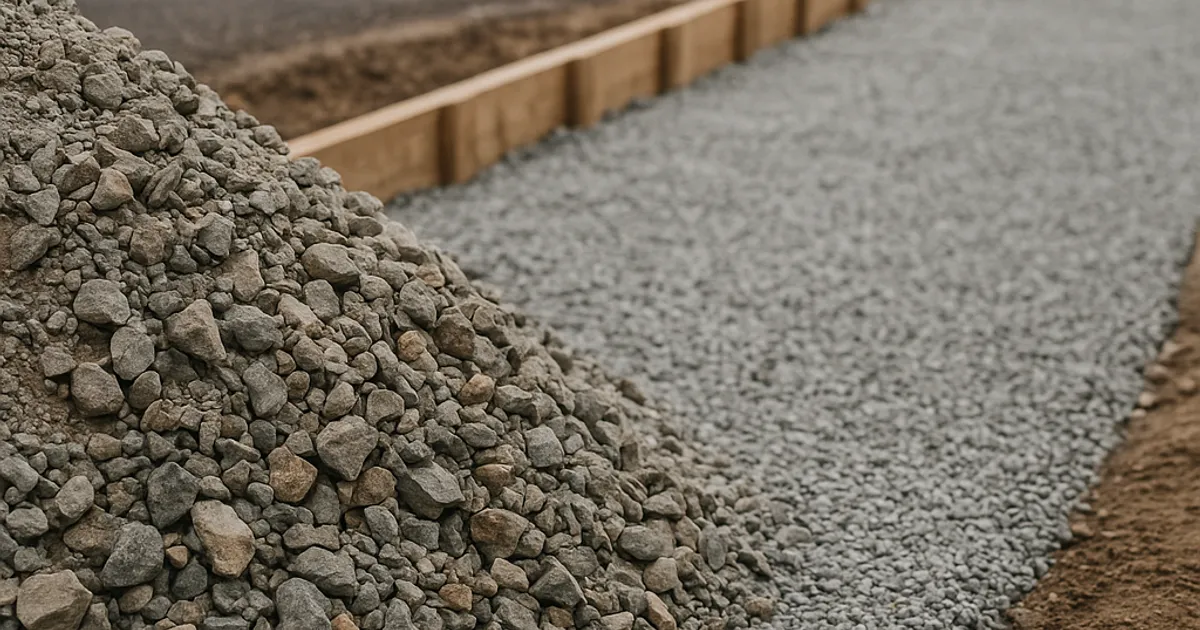
- Road base and subgrade improvement: State DOTs frequently specify clean sand or sand-gravel blends as select fill beneath pavement structures.
- Retaining wall backfill: Sandy fill reduces lateral hydrostatic pressure on retaining walls, extending structure life and reducing the need for drainage systems.
- Septic system drain fields: Sand's permeability makes it the required material in most county health department specifications for leach field fill.
Limitations of Sandy Soil Fill
Sand is not without its weaknesses. Uniformly graded or "poorly graded" sand (classified as SP in the Unified System) lacks the interlocking structure of well-graded sand, making it prone to liquefaction under vibration or seismic loading. In coastal and low-lying areas of cities like Los Angeles and San Francisco, liquefaction risk zones are mapped by local geology agencies, and contractors working in those areas must verify that sandy fill meets specific gradation requirements to minimize risk.
Sand also migrates. Without geotextile separation fabrics or sufficient fines content to bind particles, sandy fill can pirate into adjacent gravel layers or be washed away by subsurface water flow, creating voids that lead to settlement.
Cost of Sandy Fill in 2026
Clean fill sand ranges from $12 to $28 per cubic yard for material cost alone, with regional variation driven by local supply. Coastal markets and urban centers tend to run higher. Trucking adds $8 to $18 per cubic yard for hauls under 20 miles, with cost escalating sharply beyond that radius. Compaction equipment and labor typically add another $4 to $9 per compacted cubic yard for standard lift sequences.
Loam: The Balanced Performer with Important Caveats
Loam occupies a curious middle ground in construction fill discussions. Gardeners and landscapers prize it as the ideal growing medium. Civil engineers view it with more measured enthusiasm, recognizing that its performance depends heavily on the clay content within the mixture.
Physical Properties of Loam Fill
Loam's balanced particle size distribution gives it moderate drainage, decent cohesion, and workable compaction characteristics. However, the clay fraction in loam introduces plasticity, meaning the soil will expand with moisture gain and contract with drying. In climates with significant seasonal moisture swings, this behavior can create heave and settlement cycles that damage structures.
Typical properties of loam fill:
- Permeability: 1 x 10^-4 to 1 x 10^-3 cm/sec (moderately permeable)
- Plasticity Index: 5 to 15, depending on clay content
- Dry unit weight: 85 to 105 pounds per cubic foot compacted
- Cohesion: Low to moderate (5 to 15 kPa)
- Optimum moisture content: 12 to 18 percent by weight
Best Applications for Loam Fill
Loam fill is genuinely well-suited for specific applications where its properties are assets rather than liabilities:
- Finish grading and landscaping: Loam's organic content and balanced texture make it the premier choice for the top 6 to 12 inches of a graded lot intended for turf establishment or planting.
- Berm and embankment construction: Low to moderate embankments that will be vegetated benefit from loam's ability to support root systems that stabilize the slope.
- Golf course and athletic field grading: Topdress and subgrade applications in sports turf frequently specify loam or engineered loam blends.
- Erosion control blanket fill: Loam holds moisture better than sand, supporting faster vegetation establishment on disturbed slopes.
- Low-traffic unpaved road shoulders: Where drainage is managed and loads are minimal, loam provides adequate support while resisting wind erosion better than pure sand.
Why Loam Creates Problems in Structural Fill Roles
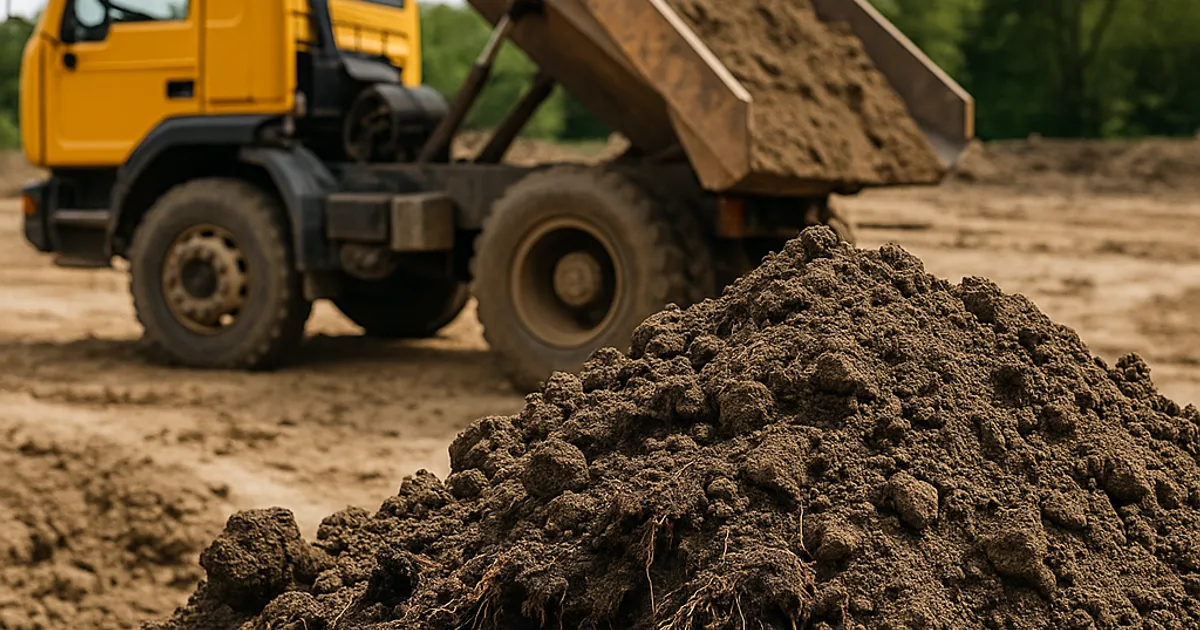
The biggest mistake contractors make is using screened topsoil or loam as structural fill under buildings or pavements. Loam's organic content, even if low, continues to decompose after placement, causing volume loss and settlement. Its clay fraction swells under moisture, exerting upward pressure on slabs and foundations. Most residential building codes and commercial specifications explicitly prohibit topsoil or high-organic fill in structural fill zones.
If you are sourcing loam from a third-party site and are unsure of its organic content, request laboratory testing per ASTM D2974 (organic content by ignition) before accepting the material. Organic content above 3 to 5 percent is typically grounds for rejection in structural fill applications.
Cost of Loam Fill in 2026
Screened loam or topsoil mix runs $18 to $40 per cubic yard depending on quality and region. Premium blended loam with tested organic content and particle gradation can reach $45 to $60 per yard in competitive urban markets. The cost premium over sandy fill is often justified for finish grading scopes but rarely makes sense for bulk structural fill.
Silt: The Problem Child of Fill Materials
Silt is the fill type that most experienced earthwork contractors approach with caution. Its fine particle size gives it properties that create engineering challenges across almost every construction application. Understanding why silt behaves as it does is essential for any contractor who encounters it as an existing in-situ material or as a proposed fill source.
Physical Properties of Silt Fill
Silt particles are small enough to hold water in capillary tension between particles but lack the charged surfaces of clay that create true plasticity. This gives silt a deceptive quality: it can appear firm and workable at low moisture content but loses strength rapidly when wetted. Silt is also the soil most susceptible to frost heave, as its pore size is ideal for the capillary rise of water that feeds ice lens formation in freezing temperatures.
Typical properties of silt fill:
- Permeability: 1 x 10^-6 to 1 x 10^-4 cm/sec (low to very low)
- Plasticity Index: 0 to 10 (non-plastic silt to low plasticity)
- Dry unit weight: 75 to 100 pounds per cubic foot compacted
- Cohesion: Very low when saturated
- Frost susceptibility: High to very high
- Compressibility: Moderate to high
Silt Fill Problems in Construction
The construction industry's wariness of silt fill is well-earned. The following failure modes are frequently associated with silt in fill applications:
Settlement: Silt compresses under load, particularly when saturated. Building pads and road bases constructed over or with silty fill frequently exhibit long-term settlement that cracks pavements and damages structures.
Bearing capacity loss: When silt becomes saturated, its internal friction drops sharply, reducing load-bearing capacity to levels that can cause foundation failure or pavement rutting under traffic.
Frost heave: In cold climates like Boston, Denver, and Seattle, silty fills beneath pavements and shallow foundations are responsible for significant heave damage annually. State DOTs in frost-prone regions impose strict limits on silt content in subgrade materials for this reason.
Erosion: Silt particles are easily entrained by water flow. Silty fills on slopes or near drainage channels can erode rapidly, creating sediment loads that trigger EPA stormwater violations under NPDES construction permits.
Pumping under load: In pavement applications, saturated silt can liquefy under dynamic traffic loads and pump through pavement joints, undermining the slab from below.
When Silt Fill Is Acceptable
Silt fill is not entirely without legitimate use cases. Low-level landscaping applications away from structures, pond construction (where its low permeability is a benefit), and wetland restoration grading can all appropriately use silty materials. In some river delta regions, silt is the primary available material and must be used with appropriate stabilization techniques such as lime treatment or geosynthetic reinforcement.
If in-situ silt must be used as structural fill, lime stabilization is the most common remediation approach. Adding 3 to 6 percent hydrated lime by dry weight of soil can dramatically reduce plasticity, increase compressive strength, and improve workability.
Cost of Silt Fill in 2026
Silt-heavy fill dirt is often free or near-free as a waste material from excavation projects. However, the true cost calculus must include the engineering measures required to make it perform adequately. Lime stabilization adds $8 to $20 per treated cubic yard. Geosynthetic reinforcement layers add $2 to $6 per square yard. When these mitigation costs are factored in, silt is frequently more expensive in practice than cleaner fill alternatives.
Head-to-Head Comparison: Sandy Soil vs. Loam vs. Silt
The table below summarizes the key performance characteristics of the three fill types across the most common construction evaluation criteria.
| Characteristic | Sandy Soil | Loam | Silt |
|---|---|---|---|
| Drainage | Excellent | Moderate | Poor |
| Compaction Ease | Good | Moderate | Difficult |
| Load-Bearing Capacity | High | Moderate | Low to Moderate |
| Frost Susceptibility | Low | Moderate | High |
| Erosion Resistance | Moderate | Good (vegetated) | Poor |
| Settlement Risk | Low | Moderate | High |
| Structural Fill Use | Excellent | Limited | Not Recommended |
| Landscaping Use | Poor | Excellent | Poor |
| Cost (material/CY) | $12 to $28 | $18 to $40 | $0 to $15 |
| Mitigation Needed | Rarely | Sometimes | Often |
| Availability | High | Moderate | Variable |
Compaction Requirements by Soil Type
Compaction is where the engineering rubber meets the road. Regardless of fill type, achieving specified compaction density is what transforms loose fill into structural material capable of supporting loads without settlement. The requirements differ significantly by soil type.
Compaction Specifications for Sandy Fill
Sandy fills are tested using ASTM D698 (Standard Proctor) or D1557 (Modified Proctor) to establish maximum dry density and optimum moisture content. Structural fill under buildings typically requires 95 to 98 percent of Modified Proctor maximum dry density. Road subgrades often specify 95 percent of Standard Proctor.
Sand compacts most efficiently at or near optimum moisture content, which for clean sands typically runs 8 to 14 percent. Vibratory equipment (plate compactors, vibratory rollers) is significantly more effective than static compaction for granular soils. Lift thickness should not exceed 12 inches for most granular fill compaction operations.
Compaction Specifications for Loam Fill
Loam's mixed particle composition means it responds to both static and vibratory compaction. Optimum moisture content is critical and harder to hit in the field because loam's broader gradation means the optimum curve is wider but also more sensitive to clay content variation from load to load.
For landscaping fill, compaction is intentionally limited to 85 to 90 percent of Standard Proctor to preserve porosity for plant root penetration and rainfall infiltration. For structural loam fill zones, achieving 95 percent of Standard Proctor is typical, but achieving this consistently is more difficult than with sandy fill due to moisture sensitivity.
Compaction Specifications for Silt Fill
Silt is the most difficult of the three to compact properly. Its narrow optimum moisture window means that silt slightly above or below optimum moisture behaves very differently. Wet silt pumps and deforms under equipment weight. Dry silt is hard to work but achieves little structural density without adding moisture. Rain events during silt fill placement frequently require the top layer to be scarified, re-dried, and re-compacted before resuming.
State DOT specifications in many northern and Pacific Northwest states limit the ML (silt) and MH (elastic silt) classifications to specific placement conditions or prohibit their use as structural fill entirely. Contractors working on public infrastructure projects in cities like Seattle should verify local fill specifications before accepting silty material from excavation spoil sources.
Find or Post Dirt, Rock & Aggregate
Join thousands of contractors using DirtMatch to buy, sell, and exchange earthwork materials.
Try DirtMatch FreeSourcing the Right Fill: Where to Find Quality Material
Knowing what you need is only half the equation. Finding a reliable, competitively priced source for the right soil type at the right time is where many projects struggle. The fill material market is fragmented: material is generated at excavation sites across every metro area, but connecting producers with consumers historically required phone calls, broker relationships, and significant lead time.
This is where platforms like DirtMatch fundamentally change the equation. DirtMatch connects earthwork contractors, developers, and site owners who have excess fill material with contractors who need it, matching soil types, quantities, and delivery logistics across regional markets. For a project requiring 500 cubic yards of clean sandy fill in the Denver metro, dirt exchange in Denver through DirtMatch can surface nearby sources that would otherwise require days of outreach to locate. The reduction in hauling distance alone can cut material costs by 30 to 45 percent on mid-size projects.
If you are managing fill procurement for the first time or exploring DirtMatch as a sourcing tool, the frequently asked questions section covers how material matching, pricing, and logistics coordination work in practice.
Regional Soil Availability and What It Means for Your Budget
Soil availability is not uniform across the country, and understanding your regional geology helps set realistic expectations before budgeting.
Pacific Northwest
The Puget Sound basin in Washington state is dominated by glacially derived soils, including significant deposits of glacial silt and silty sand (SM classification). Clean structural-grade sandy fill is available but commands a premium because native material is often too silty for direct use. Seattle-area contractors frequently import granular fill from gravel pits in the Cascade foothills, adding $15 to $25 per yard in additional hauling cost.
Colorado Front Range
Denver and the Front Range sit on alluvial and colluvial soils that range from sandy gravels in river terraces to expansive clays in the upland plateaus. Clean fill sand and loam are both available in reasonable quantity from aggregate producers and landscaping operations. However, fill material crossing into mountain jurisdiction zones requires verification against local grading ordinances, which can be more stringent than state standards.
California Coastal Markets
San Francisco Bay Area and Los Angeles Basin projects face some of the most complex fill sourcing environments in the country. Bay mud, expansive clays, and liquefaction-prone sandy fills create stringent geotechnical review requirements. Material imported from inland sources is common. Dirt exchange in San Francisco and dirt exchange in Los Angeles are active markets precisely because the demand for quality fill exceeds local supply in most urban infill scenarios.
Northeast
Boston and the broader New England region have abundant glacial till, which is a mixed sandy gravel material that performs well as structural fill. However, coastal Boston neighborhoods sit on fill and marine clay deposits that complicate structural fill work significantly. Material testing and geotechnical review are standard practice for any significant fill scope in this market.
Testing Requirements Before You Place Any Fill
No responsible fill placement operation should proceed without material testing. The type and extent of testing depends on project scale, regulatory requirements, and the risk profile of the fill application.
Standard Fill Testing Protocol
For any structural fill application, the following tests represent the minimum responsible baseline:
- Grain size analysis (ASTM D422 or D6913): Confirms particle size distribution and classification.
- Atterberg Limits (ASTM D4318): Determines liquid limit, plastic limit, and plasticity index for fine-grained fractions.
- Proctor compaction test (ASTM D698 or D1557): Establishes optimum moisture content and maximum dry density for field compaction control.
- Organic content (ASTM D2974): Screens for organic material that disqualifies material from structural fill use.
- Field density testing (ASTM D6938 nuclear gauge or ASTM D1556 sand cone): Verifies that placed fill achieves specified compaction.
For projects near former industrial sites, a Phase I Environmental Site Assessment and possibly chemical testing of fill material may be required to prevent introducing contaminated fill, which carries significant liability under EPA cleanup regulations.
Cost-Benefit Analysis: Choosing the Right Fill for Your Specific Scope
Fill selection should always begin with a cost-benefit analysis that accounts for more than just the material price per yard. The true cost of fill includes material, hauling, testing, placement labor, compaction equipment, and the risk-adjusted cost of failure.
Scenario 1: Single-Family Residential Lot Grade
A 10,000-square-foot lot requiring 200 cubic yards of fill to achieve finish grade for a slab-on-grade home is a common residential earthwork scope. In this scenario, the fill under the building footprint must meet structural fill specifications (clean sandy fill or select structural fill per local code), while the exterior grading areas can use screened loam for landscape establishment.
Approximate costs for this scope in a mid-tier market:
- 120 CY structural sandy fill: $2,400 to $3,360 material cost
- 80 CY screened loam for landscape areas: $1,440 to $3,200 material cost
- Compaction and placement: $1,400 to $2,200
- Testing: $600 to $1,200
- Total: $5,840 to $9,960
Scenario 2: Commercial Parking Lot Subgrade
A 1-acre commercial parking lot requiring 18 inches of select fill subgrade preparation (approximately 2,420 CY) demands consistent, compactable granular fill. Sandy fill or sandy gravel is the appropriate specification. Using loam or silt in this application without stabilization would result in pavement rutting within one to two seasons under commercial traffic.
Scenario 3: Residential Backyard Landscaping
For a simple 50-cubic-yard backyard topsoil project aimed at establishing lawn, loam is the clear winner. Sandy fill would drain too aggressively and require heavy amendment to support turf. Silt-heavy fill would compact under foot traffic and rainfall, creating drainage problems. Screened, blended loam at $18 to $35 per yard is the appropriate and cost-effective choice.
Matching Your Fill Type to Your Project: A Decision Framework
With all the technical detail covered above, a practical decision framework helps translate knowledge into action on the job.
Step 1: Define the fill zone. Determine whether fill will be placed in a structural zone (under footings, slabs, or pavement), a grading zone (final grade, berms, embankments), or a landscaping zone (finish topsoil layer). Each zone has different material requirements.
Step 2: Check local specifications. Review the project geotechnical report, local grading ordinance, and any applicable state DOT fill specifications. These documents define the acceptable material classification, gradation limits, and compaction requirements by zone.
Step 3: Identify available sources. Use regional soil surveys and market knowledge to understand what fill types are available locally. Platforms like DirtMatch make this step significantly faster by aggregating available fill inventory across a region. Contractors can get started with DirtMatch to post a fill need and receive matches from nearby sources in real time.
Step 4: Test before you place. Never accept fill material on the basis of visual inspection alone, especially for structural fill applications. Require test reports or conduct sampling and testing before accepting delivery.
Step 5: Plan for moisture management. Whichever fill type you select, develop a moisture management plan for the placement operation. Sandy fills dry out quickly in hot weather. Loam and silt can become unworkable in wet conditions. Having a plan for wetting sandy fill or protecting loamy and silty fills from rain reduces placement delays and re-work.
Step 6: Verify as you go. Schedule field density testing at the frequencies specified in the project geotechnical report or building department requirements. Catching compaction deficiencies early is far less costly than discovering them during foundation inspection.
Environmental and Regulatory Considerations for Fill Placement
Fill placement is not solely a geotechnical issue. Environmental regulations govern where fill can be placed, what materials qualify, and how placement must be managed to control runoff.
Fill placed in or adjacent to wetlands requires Section 404 permits from the Army Corps of Engineers before work begins. Violations carry significant civil penalties. Stormwater management during fill placement on sites larger than one acre requires a Stormwater Pollution Prevention Plan under the EPA's NPDES Construction General Permit program. Silty fill is particularly problematic from a stormwater standpoint because fine particles become easily suspended in runoff and can trigger permit violations at the site boundary.
Some jurisdictions require that fill materials come with documentation of origin, confirming they are not derived from contaminated sites. This is increasingly common in urban infill markets where excavation spoil from unknown sources carries environmental risk. Always request documentation of fill origin for large structural fill projects.
Conclusion: The Right Fill Is the One Engineered for the Job
The comparison of sandy soil, loam, and silt ultimately comes down to matching material properties to project requirements. Sandy fill dominates structural fill applications because of its drainage, compaction performance, and load-bearing consistency. Loam holds a legitimate place in landscaping, finish grading, and vegetated embankment work. Silt demands caution in any structural context but has niche applications where its low permeability or availability makes it workable with proper engineering support.
The cost of getting fill selection right is modest. The cost of getting it wrong, measured in settlement claims, pavement failures, drainage problems, and remediation work, can easily run 10 to 20 times the original fill material cost. Investing in proper soil testing, working with reputable material sources, and verifying compaction through the placement process is the difference between projects that perform and projects that come back to haunt.
For contractors and developers looking to streamline fill sourcing, understand how DirtMatch works to connect buyers and sellers of fill material across regional markets, reducing procurement time and transportation costs significantly. Getting access to verified, nearby fill sources with the right soil classification is no longer a matter of luck or long-standing relationships. It is a platform search away.