Fill dirt is one of the most fundamental materials in construction, yet sourcing it efficiently remains one of the most frustrating challenges contractors face on a daily basis. Whether you are raising a building pad, backfilling a foundation, grading a new subdivision, or restoring a slope after excavation, you need a reliable, nearby source of clean fill dirt that meets your project specifications and your budget.
The cost difference between a well-sourced fill program and a poorly planned one can be staggering. Industry data from the Associated General Contractors of America consistently shows that hauling costs represent 40 to 60 percent of total earthwork budgets on mid-size projects. Every mile of additional haul distance adds real money. A ten-mile haul versus a two-mile haul can double or even triple your dirt acquisition cost once you factor in fuel, driver time, truck wear, and scheduling delays.
This guide breaks down everything you need to know about finding clean fill dirt near your construction site, from understanding what "clean" actually means in a regulatory and engineering context, to identifying local sources, evaluating quality, navigating permitting, and using modern digital tools to connect with nearby suppliers faster than ever before.
What Is Clean Fill Dirt and Why Does It Matter
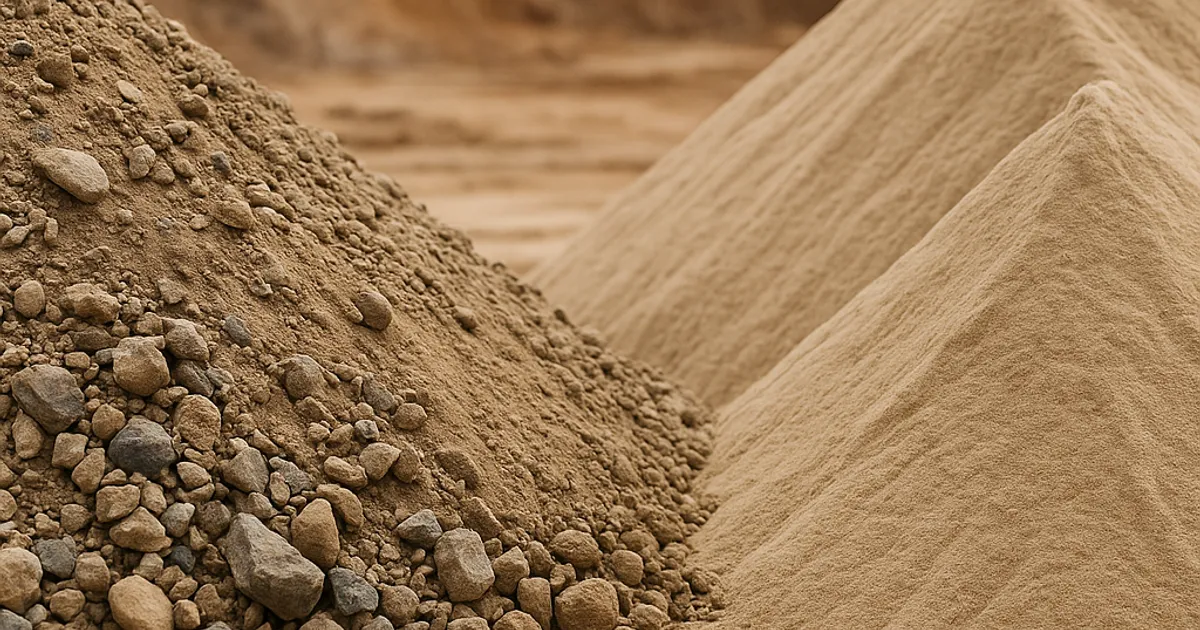
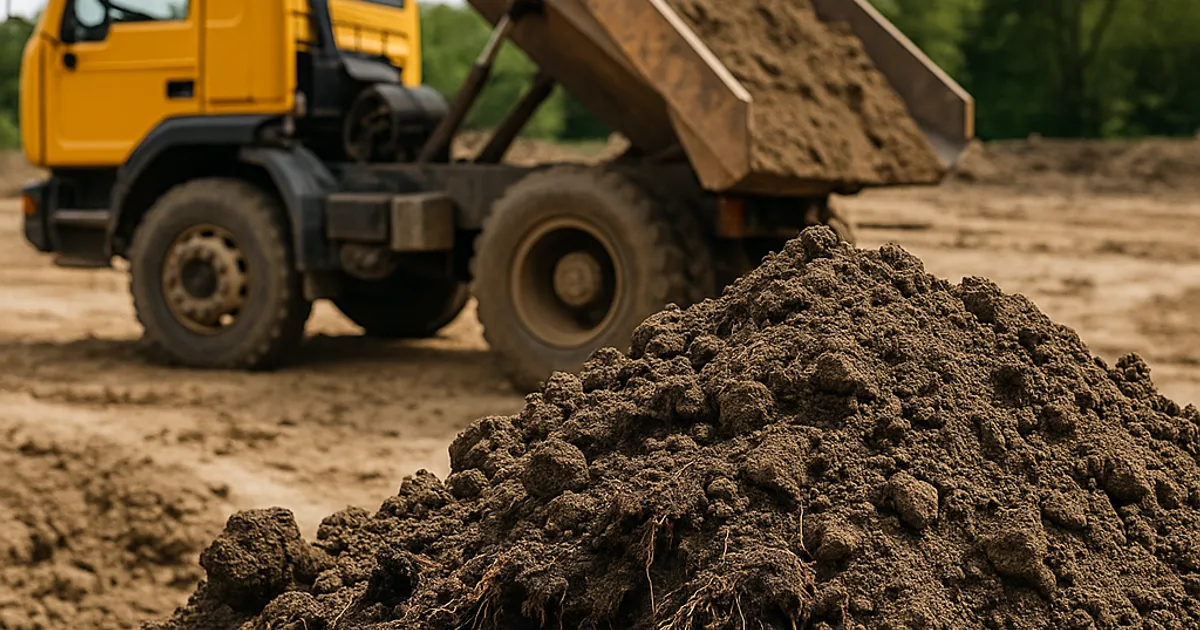
The term "clean fill dirt" is used constantly in the construction industry, but its precise meaning is worth unpacking. Clean fill dirt refers to soil that is free from organic matter, debris, chemical contaminants, and construction waste. It is typically a mixture of subsoil, clay, silt, and sand that has been removed from an excavation site where no contamination has occurred.
What clean fill dirt is NOT:
- Topsoil with high organic content
- Soil containing roots, stumps, or vegetation
- Material with trash, concrete rubble, or construction debris mixed in
- Soil from sites with known or suspected chemical contamination
- Fill containing expansive clays in high concentrations without engineering approval
Why Cleanliness Standards Exist
Regulatory agencies at the federal, state, and local level have established standards around what qualifies as acceptable fill material because contaminated fill can create serious long-term problems. Contaminated soil placed beneath a structure can leach harmful compounds into groundwater, create liability exposure for property owners and contractors, and cause structural failure over time as organic matter decomposes and creates voids.
Most jurisdictions follow guidelines that align with the USDA Natural Resources Conservation Service soil classification system, which categorizes soils by their composition, drainage characteristics, and load-bearing potential. Engineers and project specifications will typically call for fill that meets specific gradation requirements under ASTM D2487, which is the standard classification system for soils used in civil engineering applications.
Engineering Properties That Matter
Beyond cleanliness, your fill material needs to meet certain engineering performance standards depending on the application. Key properties include:
Compaction characteristics: Fill dirt must be compactable to a specified density, often 90 to 95 percent of maximum dry density as determined by ASTM D698 (Standard Proctor) or ASTM D1557 (Modified Proctor).
Plasticity index: Highly plastic clays expand and contract significantly with moisture changes, which can damage foundations and pavements. Most structural fill specifications limit plasticity index to below 15 or 20.
Liquid limit: Related to plasticity, the liquid limit defines the moisture content at which soil transitions from a plastic to a liquid state. Structural fill typically requires a liquid limit below 50.
Grain size distribution: Certain applications require well-graded material, while others can tolerate uniform sands or silts.
Understanding these properties before you go looking for fill dirt will help you communicate clearly with suppliers and avoid accepting material that fails inspection once it arrives on site.
The True Cost of Fill Dirt in 2026
Fill dirt pricing varies enormously by region, season, and market conditions. In many markets, fill dirt itself is free or nearly free because excavators generating it need to dispose of it somewhere. However, delivery costs, testing fees, and site preparation can add up quickly.
Typical Price Ranges by Region
| Region | Fill Dirt Cost (per cubic yard) | Delivery Cost (per mile) | Typical Minimum Load |
|---|---|---|---|
| Pacific Northwest | Free to $8 | $3.50 to $6.00 | 10 CY |
| California (Bay Area/LA) | $5 to $20 | $4.00 to $8.00 | 14 CY |
| Rocky Mountain Region | Free to $10 | $3.00 to $5.50 | 10 CY |
| Northeast (Boston/NY) | Free to $15 | $4.50 to $7.50 | 10 CY |
| Southeast | Free to $6 | $2.50 to $4.50 | 14 CY |
| Midwest | Free to $5 | $2.00 to $4.00 | 14 CY |
| Texas/Southwest | Free to $8 | $2.50 to $5.00 | 14 CY |
Note: Prices reflect 2026 market conditions and are approximate. Certified or tested fill material commands a premium of $3 to $10 per cubic yard above standard rates.
Hidden Costs Contractors Overlook
Beyond the sticker price, experienced project managers account for several costs that can sneak up on a budget:
Soil testing: Pre-placement and post-placement testing typically runs $200 to $800 per sample depending on the test suite. Structural projects may require testing every 500 to 1,000 cubic yards placed.
Import permits: Some municipalities charge permit fees for importing fill material, ranging from nominal administrative fees to $500 or more.
Compaction equipment: If fill arrives at the wrong moisture content, you may need water trucks to bring it into compaction range, adding equipment and labor costs.
Rejection and re-hauling: If a load fails testing or visual inspection, you pay to remove it and bring in replacement material. This scenario is expensive and schedule-killing.
The most effective way to reduce total fill cost is to minimize haul distance and carefully vet material quality before it arrives on site. Platforms like DirtMatch exist specifically to help contractors accomplish both of those goals by connecting them with clean fill sources within their region.
How to Identify and Evaluate Potential Fill Dirt Sources
Locating clean fill dirt requires some detective work. The best sources are often hiding in plain sight once you know where to look.
Active Excavation Projects
The single best source of clean fill is another active construction project nearby. When developers excavate for basements, parking garages, utility trenches, or road cuts, they generate significant volumes of soil that must go somewhere. Most contractors with excess spoil are actively trying to find a place to send it, often at no cost beyond trucking.
Identifying these projects used to require driving around looking for excavation activity or relying on word-of-mouth networks. Today, digital matching platforms have transformed this process. DirtMatch aggregates active dirt supply and demand across regions, so contractors looking for clean fill can instantly see what projects nearby are generating excess material and make direct connections without cold calls or guesswork.
Quarries and Aggregate Suppliers
Quarries and sand and gravel operations often sell processed fill material that has been screened and graded to specific specifications. This material is almost always cleaner and better documented than spoil from an excavation site, and it comes with gradation data. The tradeoff is cost: quarry-sourced fill typically runs $8 to $25 per cubic yard before delivery, compared to potentially free material from an excavation surplus.
Land Clearing Operations
Tree clearing and land preparation contractors frequently strip topsoil and subsoil as part of their work. The subsoil beneath the organic layer is often excellent fill material. Contact local land clearing companies and ask whether they have excess subsoil available. Many will provide it free of charge or for a nominal fee if you can arrange trucking.
Government and DOT Projects
State Department of Transportation projects, water and sewer infrastructure upgrades, and municipal road reconstruction generate enormous volumes of excavated soil. While government agencies have specific protocols for disposing of surplus material, many have programs that allow contractors to request spoil material from public projects. Contact your state DOT regional office or local public works department to ask about surplus soil availability.
How to Evaluate a Potential Source
Before committing to any fill dirt source, go through this evaluation checklist:
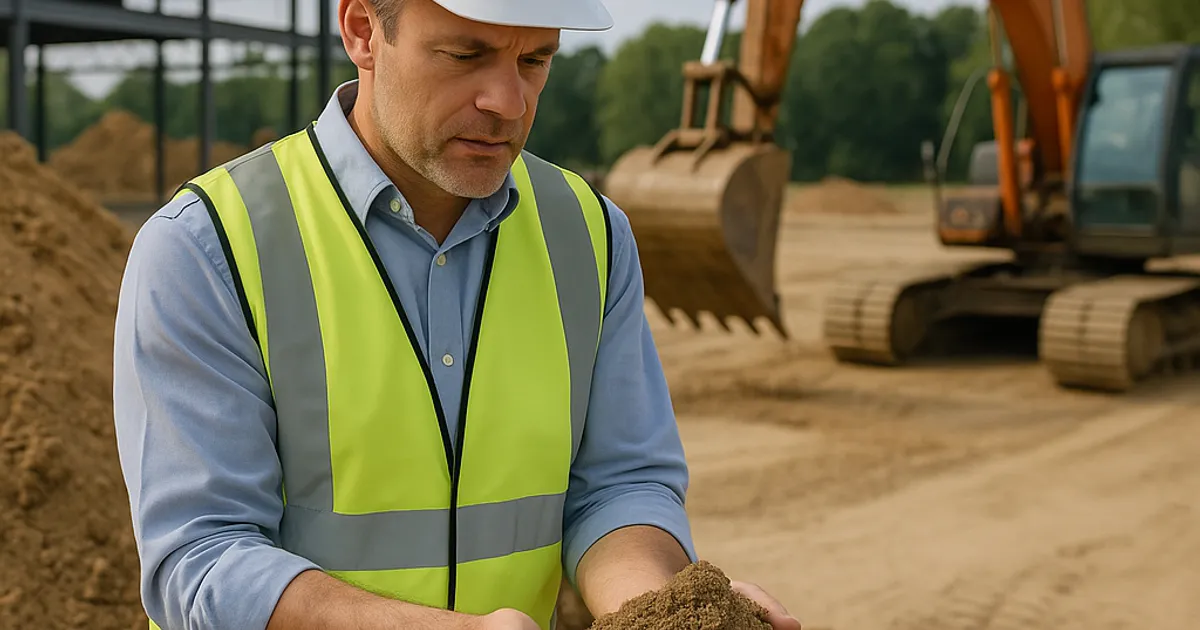
- Visit the source site in person. Visual inspection is your first line of defense. Look for obvious debris, discoloration, unusual odors, or signs of former industrial use.
- Request documentation. Ask for Phase I Environmental Site Assessment records if available, or at minimum the site's land use history.
- Take a sample for testing. Send a representative sample to a certified geotechnical laboratory before placing any material.
- Confirm moisture content. Overly wet fill can be impossible to compact properly and may turn a project into a muddy nightmare.
- Check organics content. A loss-on-ignition test will quantify organic content. Most structural fill specifications require less than 3 to 5 percent organics by weight.
Regulatory Requirements for Importing Fill Dirt
Importing fill dirt is not simply a matter of logistics and price. A web of federal, state, and local regulations governs what material can be accepted, where it can be placed, and what documentation must accompany it.
Federal Environmental Considerations
The primary federal environmental framework relevant to fill dirt is administered by the EPA under the Comprehensive Environmental Response, Compensation, and Liability Act (CERCLA). If you accept contaminated fill and place it on your property, you can be held liable for cleanup costs even if you did not generate the contamination. This is not a theoretical risk; contaminated fill cases are one of the more common sources of environmental liability for construction firms.
Projects near wetlands or waterways must also consider permitting requirements under Section 404 of the Clean Water Act, administered by the U.S. Army Corps of Engineers. Placing fill in jurisdictional wetlands without a permit can result in severe penalties and mandatory removal of the placed material.
State and Local Requirements
Most states have their own soil reuse and fill import regulations that sit on top of federal requirements. Common state-level requirements include:
- Fill manifests or soil tracking forms: Documentation that travels with each truckload, identifying the source site, material type, and volume.
- Acceptance limits for chemical analytes: Numerical cleanup standards that fill material must meet before it can be placed on certain property types.
- Notification requirements: Some states require notification to environmental agencies before importing fill above a certain volume threshold.
- Third-party verification: Certain high-sensitivity applications (near drinking water wellheads, in floodplains, adjacent to sensitive habitats) require independent environmental consultant sign-off on fill acceptance.
Always consult your state environmental agency's soil reuse guidance before finalizing your fill procurement plan. Regulatory requirements vary substantially by state, and the cost of non-compliance including stop-work orders and required excavation and disposal of rejected fill far exceeds the cost of proper vetting upfront.
Local Zoning and Import Permits
Many municipalities require a grading or import permit before fill material can be brought onto a site. These permits may specify the volume of imported fill, require a haul route approval to prevent heavy truck damage to local roads, and mandate dust and erosion controls during the fill operation. Budget time for permit processing, which can range from a few days to several weeks depending on the jurisdiction.
Soil Testing: What to Test For and When
Soil testing is not optional on any serious construction project. It protects you legally, ensures your fill will perform as designed, and satisfies the requirements of engineers, lenders, and regulatory agencies.
Pre-Acceptance Testing
Before you accept any fill material, you should run at minimum:
- Standard penetration or visual soil classification to identify soil type
- Grain size analysis (ASTM D422 or D7928) to verify gradation
- Atterberg limits (ASTM D4318) to assess plasticity
- Organic content determination (ASTM D2974)
- For sites with any environmental concern: A basic chemistry screen covering total petroleum hydrocarbons (TPH), volatile organic compounds (VOCs), and metals
During Placement Testing
As fill is placed and compacted, your geotechnical engineer or testing firm should be running:
- Nuclear density gauge tests or sand cone tests (ASTM D1556) to verify compaction
- Moisture content checks to ensure fill is at or near optimum moisture for compaction
- Field observation by a qualified technician or engineer
Frequency of testing is project-specific and should be defined in your geotechnical report. Skipping in-place testing is a common cost-cutting mistake that leads to differential settlement, cracking, and expensive remediation later.
Reducing Haul Distance: The Key to Earthwork Profitability
Among all the variables in a fill procurement plan, haul distance has the single greatest impact on total cost. Cutting haul distance in half often cuts total dirt cost by 40 percent or more, since trucking dominates the budget once material is sourced at low or no cost.
Calculating Your Ideal Search Radius
As a rule of thumb, earthwork contractors aim for fill sources within a 15-mile radius for small projects and within a 25-mile radius for large-volume projects. Beyond 25 miles, trucking costs almost always justify paying more for material closer to the site.
For projects in dense urban areas like dirt exchange in Los Angeles or dirt exchange in Boston, finding sources within even five miles can dramatically reduce both cost and scheduling complexity. Urban markets typically have high volumes of excavation activity, which means fill surplus is available, but competition for nearby sources is also higher. Having access to a platform that shows real-time supply availability gives contractors in these markets a significant edge.
Coordinating Bidirectional Hauls
One advanced strategy is the bidirectional haul: trucks that haul fill in one direction ideally carry material out on the return trip, dramatically improving efficiency. If you are excavating on one part of a site while importing fill to another, or if you can coordinate with a nearby project that needs the material you are generating, you can essentially eliminate empty miles.
Organizing bidirectional hauls manually is complex. Digital matching platforms designed for the earthwork industry, like DirtMatch, make this type of coordination practical by showing contractors what projects nearby need what material, enabling efficient two-way logistics planning.
Working With Trucking and Logistics for Fill Delivery
Once you have identified a fill source, getting the material from there to your site efficiently requires solid logistics planning.
Truck Type Selection
| Truck Type | Typical Capacity | Best Use Case |
|---|---|---|
| Standard Dump Truck | 10 to 14 CY | Small to medium projects, tight access |
| Super Dump / Side Dump | 18 to 26 CY | High-volume earthwork, good site access |
| End Dump Semi | 20 to 24 CY | Long haul, highway access required |
| Bottom Dump (Belly Dump) | 20 to 30 CY | Large open sites, fast cycle times |
| Off-Highway Haul Truck | 30 to 100+ tons | On-site haul only, not road legal |
Scheduling and Cycle Time Management
For large fill operations, getting trucks out of the queue quickly is critical. Establish a clear traffic management plan that moves trucks from the entry gate to the dump location and back out without creating backups. Each truck sitting idle on your site is money lost.
Communicate clearly with the supplier about your required delivery rate. If you need 500 cubic yards per day to stay on schedule, work backward from that to determine how many truck trips per day you need and whether the supply site can load at that rate.
Using Technology to Find Fill Dirt Faster
The earthwork industry has historically relied on phone calls, industry relationships, and luck to connect fill suppliers with fill buyers. That is changing rapidly. Digital matching platforms have emerged as a far more efficient alternative, and their adoption has accelerated significantly in recent years.
How Earthwork Matching Platforms Work
Platforms designed for dirt and aggregate exchange allow contractors on both sides of the transaction to post their needs and availability. A contractor excavating excess soil from a site can post the volume, soil type, location, and available dates. A contractor needing fill can search for matching supply within their target radius and reach out directly.
This approach eliminates the cold-call phase of dirt sourcing, compresses the time from need to connection from days to hours, and creates a transparent marketplace where pricing and availability are visible. If you are new to this approach, get started with DirtMatch to see how the platform connects contractors in your region with the clean fill sources they need.
Regional Market Intelligence
Beyond individual matches, digital platforms generate aggregate data about earthwork supply and demand patterns in a region. Knowing that there is heavy excavation activity driving fill surplus in a particular corridor, or that demand for fill is outpacing supply in a specific submarket, helps project managers and estimators make better sourcing decisions at the planning stage rather than scrambling once construction is underway.
For contractors working in competitive markets like dirt exchange in Denver or dirt exchange in San Francisco, having that regional intelligence advantage translates directly into more competitive bids and better project margins.
Find or Post Dirt, Rock & Aggregate
Join thousands of contractors using DirtMatch to buy, sell, and exchange earthwork materials.
Try DirtMatch FreeEvaluating Supplier Reliability and Red Flags
Not every contractor offering surplus fill dirt is offering material you want on your site. Evaluating supplier reliability before you commit to accepting a load protects both your project and your company's liability exposure.
Green Flags in a Fill Supplier
- They can provide documentation of the source site's land use history
- They welcome pre-acceptance soil sampling
- They have experience with commercial or industrial projects and understand specification requirements
- They can provide compaction data or soil classification from prior testing
- Their material has been used on other projects you can verify
Red Flags to Watch For
- Reluctance to disclose the source site location or history
- Urgency pressure to accept material immediately without inspection
- Pricing that seems too good to be true (sometimes contaminated material is being disposed of at no cost for a reason)
- No documentation whatsoever
- Material that has unusual odors, dark staining, oily sheen, or visible debris mixed in
- Source site was formerly industrial, dryclean, gas station, auto repair, or other high-risk land use without environmental clearance
Trust your instincts and do not let schedule pressure push you into accepting fill that has not been properly vetted. One contaminated load can create liability that dwarfs any savings from a cheap fill source.
Comparing Clean Fill Sources: A Decision Framework
When evaluating multiple potential fill sources, use a structured comparison to make the best decision for your specific project needs.
| Evaluation Criterion | Weight | Quarry Fill | Excavation Surplus | Land Clearing Spoil |
|---|---|---|---|---|
| Material quality documentation | High | Excellent | Variable | Limited |
| Contamination risk | High | Very Low | Low to Moderate | Low |
| Cost per CY (material) | Medium | $8 to $25 | Free to $8 | Free to $5 |
| Haul distance flexibility | Medium | Fixed (quarry location) | Variable | Variable |
| Volume availability | High | High | Project-dependent | Moderate |
| Scheduling reliability | High | High | Moderate | Moderate |
| Specification compliance | High | Engineered | Needs testing | Needs testing |
For structural applications under buildings or pavements, quarry-sourced material or well-documented excavation surplus from a known clean site is preferable. For general grading, embankment, or non-structural backfill, clean excavation surplus and land clearing spoil are usually entirely appropriate and far more cost-effective.
Best Practices for Placing and Compacting Fill Dirt
Finding and acquiring the right fill is only half the job. Placing and compacting it correctly determines whether your fill performs as designed over the life of the project.
Lift Thickness and Compaction
Fill should be placed in lifts (layers) and compacted before the next lift is added. Standard lift thickness is 6 to 12 inches for fine-grained soils and 12 to 18 inches for coarser materials, depending on the compaction equipment being used. Thicker lifts may not compact uniformly through their full depth, leaving weak zones that can cause settlement.
Moisture Management
Compaction is most effective when soil is at or near its optimum moisture content, a property determined in the laboratory during Proctor testing. Soil that is too dry will not compact properly regardless of how many passes you make with a compactor. Soil that is too wet will pump and squish rather than densifying. Water trucks and aeration (disking or scarifying and allowing to dry) are the standard tools for moisture management in the field.
Compaction Equipment Selection
Different soils compact best with different equipment types:
- Cohesive soils (clays): Sheepsfoot or padfoot rollers
- Granular soils (sands, gravels): Smooth drum vibratory rollers
- Mixed soils: Padfoot vibratory rollers offer good performance across a range of soil types
- Confined areas (trenches, around structures): Plate compactors or jumping jack compactors
Proper equipment selection and operation is critical to achieving specified compaction levels. Manufacturers like Caterpillar offer compaction analysis systems on modern equipment that track pass count, speed, and amplitude to help operators achieve consistent results.
Sustainability and the Circular Economy in Earthwork
The earthwork industry is increasingly recognizing that clean fill dirt is not just a construction input but a resource that can be matched efficiently between projects to reduce waste, truck miles, and environmental impact.
Every truckload of fill dirt that travels an unnecessary 30 miles when a source existed 5 miles away represents fuel burned, emissions generated, and infrastructure wear that serves no productive purpose. The construction industry accounts for a substantial share of heavy truck traffic, and unnecessary earthwork hauling is a significant contributor.
By connecting fill supply with fill demand more efficiently, platforms like DirtMatch support a more circular approach to earthwork materials. Soil that is excavated from one site becomes a resource for the next site, reducing the need for quarried material, lowering total truck miles, and helping projects meet sustainability goals that are increasingly required by clients and regulators.
For projects pursuing green building certifications, demonstrating that fill material was sourced locally and that material exchange was optimized rather than defaulting to landfill disposal can contribute to certification credits.
Special Considerations for High-Profile Markets
Different regional markets have distinct characteristics that affect fill dirt sourcing strategy.
High-Cost Urban Markets
In dense urban markets, fill dirt is simultaneously abundant (from constant excavation activity) and difficult to access (due to limited staging areas, strict trucking regulations, and high competition for nearby sources). In cities like San Francisco and Los Angeles, contractors who have established networks and platform access consistently outcompete those relying on traditional sourcing methods.
For contractors active in the Pacific Northwest, exploring the dirt exchange in Seattle market through DirtMatch can surface surplus fill from the region's active infrastructure and residential development pipeline.
Suburban Growth Markets
Suburban markets experiencing rapid residential development, such as the outer rings of Denver, Boulder, and Austin, typically have abundant fill supply from land clearing and site preparation but may have less sophisticated tracking of where that material goes. Organized matching platforms provide particular value in these markets by bringing order to what is otherwise a chaotic surplus disposal situation.
Rural and Remote Projects
For projects in rural areas, haul distance is almost always the primary constraint. The nearest fill source may be 30 to 50 miles away, making trucking costs dominant. In these situations, it pays to invest significant time in identifying the closest possible source, even if it requires more pre-acceptance testing than a well-documented quarry source. Consider whether on-site soil can be improved (through lime or cement stabilization) rather than importing fill from long distances.
Building a Long-Term Fill Sourcing Network
The most effective earthwork contractors do not scramble to find fill dirt project by project. They build and maintain a network of fill sources that they can call on when needs arise.
Key Relationships to Cultivate
- Excavation contractors who regularly generate surplus soil from foundation and utility projects
- Land developers whose projects involve significant earthmoving across multiple phases
- Geotechnical testing labs who see material quality data from dozens of projects and can often point you to good sources
- Civil engineers and land surveyors who know what projects are in the pipeline before they break ground
- Quarry operators who may offer preferred pricing for repeat customers
Using Technology to Maintain Network Visibility
Even the best personal network has gaps. Maintaining a presence on earthwork matching platforms ensures you always have a backup when your regular sources are tapped out or when a project requires more volume than your network can supply on short notice.
With DirtMatch Pro, contractors can set up persistent project listings and receive notifications when matching fill supply becomes available in their area, so they are always first in line when a new source comes online.
Actionable Checklist: Sourcing Clean Fill Dirt for Your Next Project
Use this checklist to systematically approach fill sourcing on your next construction project:
Pre-Project Planning
- Determine total fill volume needed (bank measure vs. compacted measure, accounting for shrink/swell factor)
- Identify specification requirements from project engineer (gradation, plasticity, compaction standard)
- Establish maximum acceptable haul distance based on budget
- Identify required import permits and timeline for approvals
Source Identification
- Search digital platforms for nearby surplus fill supply
- Contact local excavation contractors and developers for surplus availability
- Check with state DOT and local public works for project surplus programs
- Identify quarry sources as backup for spec-grade material
Source Evaluation
- Conduct site visit to visually inspect material
- Request source site history and environmental documentation
- Collect representative sample for laboratory testing
- Confirm moisture content and workability
- Verify volume availability matches project needs and schedule
Logistics and Compliance
- Confirm trucking capacity and scheduling
- Prepare fill acceptance documentation (manifests, tracking forms)
- Coordinate traffic management plan for deliveries
- Schedule geotechnical testing firm for placement oversight
During Placement
- Inspect each load visually upon arrival
- Reject any loads showing signs of contamination or non-conformance
- Maintain lift thickness and compaction requirements
- Document compaction test results throughout fill operation
Conclusion
Finding clean fill dirt near your construction site is as much a strategic and logistical challenge as it is a materials procurement task. The contractors who do it well build systematic processes around quality verification, regulatory compliance, logistics planning, and network development. Those who approach it casually end up paying premium prices for long-haul material, accepting loads that fail inspection, or creating liability exposure that haunts them long after the project is complete.
The good news is that the tools and information available in 2026 make this job easier than ever. Digital platforms have transformed what used to be a phone-and-luck exercise into a data-driven, network-powered process. Whether you are managing a small residential project or a large commercial earthwork scope, having access to real-time supply and demand information in your region gives you a meaningful competitive advantage.
If you are ready to start connecting with clean fill sources near your next project, explore how DirtMatch works and see how quickly you can find the material you need within your ideal haul radius.