Choosing between organic topsoil and fill dirt sounds straightforward until you are standing on a job site, facing a deadline, and trying to explain to a client why the landscaping failed or why the graded pad is settling unevenly. The difference between these two materials is not just academic. It has real consequences for structural integrity, plant health, drainage performance, project cost, and long-term maintenance.
In 2026, earthwork contractors, landscape professionals, and developers collectively move hundreds of millions of cubic yards of soil across the United States each year. Yet industry data consistently shows that soil selection errors rank among the top five causes of rework on residential and light commercial projects. Understanding the composition, behavior, and correct application of each material type is foundational knowledge for anyone working in the dirt business.
This guide covers everything you need to know: what each material actually contains, how they behave under different conditions, comparative costs, regulatory considerations, and practical decision frameworks to help you choose the right dirt for every job.
What Is Organic Topsoil? A Precise Definition
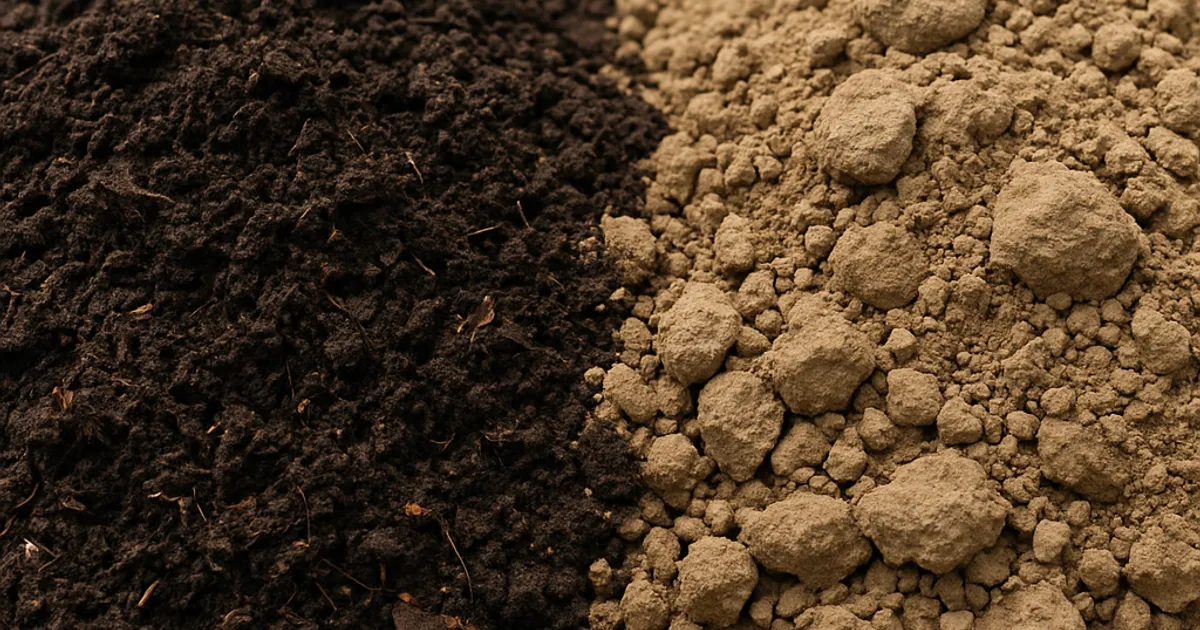
Topsoil is the uppermost layer of the earth's surface, typically occupying the first 2 to 12 inches of ground depth depending on location and native soil type. What makes topsoil distinct is its organic matter content. True organic topsoil contains a living ecosystem of decomposed plant material, microorganisms, fungi, earthworms, and other biological components that make it fertile and biologically active.
According to the USDA Natural Resources Conservation Service, topsoil is classified as the "A horizon" in soil science terminology. It is characterized by higher concentrations of organic matter (typically 1 to 6 percent by weight in agricultural soils), darker coloration, and superior water retention compared to subsoil layers below.
Key Characteristics of Quality Topsoil
When evaluating topsoil for purchase or use, professionals look for several measurable characteristics:
- Organic matter content: Quality screened topsoil typically contains 3 to 8 percent organic matter by dry weight. Premium blended topsoil mixes can reach 10 to 15 percent when compost is incorporated.
- Texture: A loamy texture (roughly 20 to 30 percent clay, 30 to 50 percent silt, and 25 to 50 percent sand) is considered ideal for most planting applications because it balances drainage, aeration, and moisture retention.
- pH range: Most topsoil sold commercially targets a pH of 6.0 to 7.0, which supports the widest range of plant growth.
- Biological activity: Healthy topsoil contains millions of microorganisms per gram of soil. This biological activity drives nutrient cycling, which is what makes topsoil fertile.
- Screening: Commercial topsoil is typically screened to remove rocks, debris, and clods larger than three-quarters of an inch, creating a uniform, workable product.
What Topsoil Is NOT
A common misconception is that any dark-colored dirt is topsoil. Many contractors have received loads of dark material that turned out to be poorly composted organic waste, peat-heavy mixes with poor structural properties, or subsoil with high clay content that simply appeared dark when wet. When sourcing topsoil, always request a soil test or a certificate of composition from the supplier.
What Is Fill Dirt? Composition and Properties
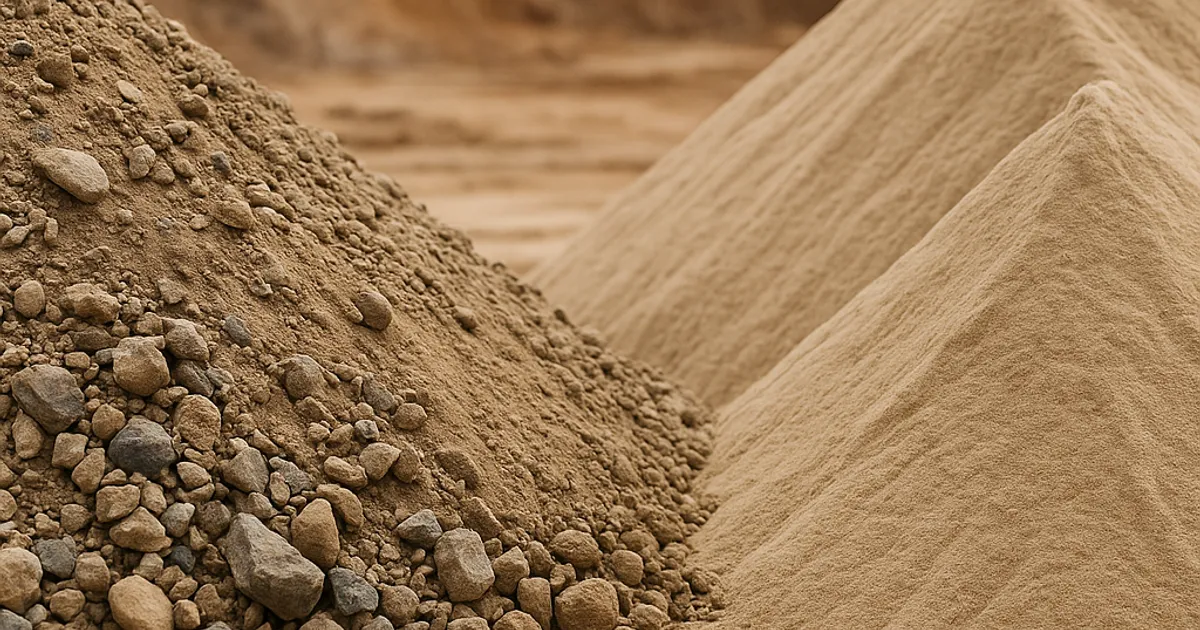
Fill dirt is the material used beneath the surface to change elevation, add volume, or provide a stable structural base. Unlike topsoil, fill dirt is intentionally low in organic matter. This is not a deficiency. It is a feature that makes fill dirt suitable for its primary purpose.
Fill dirt is typically sourced from the subsoil layer, which sits below the A horizon (topsoil) and above bedrock. It is characterized by:
- Low organic matter content: Typically less than 1 percent, often much lower. High organic content would cause decomposition and settling over time, which is catastrophic beneath structures.
- Higher clay and mineral content: Fill dirt is often clay-heavy or silty, which supports compaction and load-bearing capacity when properly installed.
- Neutral to slightly alkaline pH: Fill dirt tends to run pH 7.0 to 8.5, which limits plant growth but is irrelevant for structural applications.
- Consistent particle structure: Good fill dirt has enough fines to compact well but not so much clay that it becomes expansive when wet.
Types of Fill Dirt in Common Use
Not all fill dirt is the same, and experienced earthwork contractors distinguish between several subtypes:
Clean fill dirt refers to uncontaminated subsoil free of debris, organics, and hazardous materials. It is the standard material for most residential and commercial grading projects.
Structural fill is a more precisely engineered product, often with specified gradations and compaction requirements per project engineering documents. Road subbase layers and building pad fills typically require structural fill that meets ASTM D698 or ASTM D1557 compaction standards.
Clay fill is dense, moisture-retentive fill used in applications like pond liner construction or embankment cores where impermeability is desired.
Sandy fill or granular fill offers excellent drainage and compaction characteristics and is preferred in areas with high water tables or where rapid drainage beneath structures is needed.
The Core Differences: A Side-by-Side Comparison
The following table summarizes the fundamental differences between organic topsoil and fill dirt across the most important project criteria:
| Characteristic | Organic Topsoil | Fill Dirt |
|---|---|---|
| Primary purpose | Plant growth, surface finish | Volume, elevation change, structural base |
| Organic matter | 3 to 8 percent (or higher) | Less than 1 percent |
| Typical depth of use | Top 4 to 12 inches | Below grade, any depth |
| Compaction behavior | Settles and compresses; not suitable for load-bearing | Compacts well; supports structures |
| Drainage | Moderate; retains moisture | Varies by type; generally drains well |
| Biological activity | High (living soil ecosystem) | Very low |
| Cost per cubic yard (2026) | Dollar 45 to Dollar 85 delivered | Dollar 8 to Dollar 35 delivered |
| Plant support | Excellent | Poor to none |
| Load-bearing suitability | No | Yes (when properly compacted) |
| Environmental sensitivity | Can be high-value resource | Generally lower value; regulated if contaminated |
These cost ranges reflect national averages in 2026 and will vary significantly by region, haul distance, and local market conditions. In dense urban markets like dirt exchange in San Francisco or dirt exchange in Boston, both materials can run 20 to 40 percent higher than rural market rates due to trucking costs and limited local supply.
When to Use Organic Topsoil: Applications and Best Practices
Organic topsoil belongs at the surface of your project. Its biological richness, moisture retention, and fine texture serve specific purposes that fill dirt simply cannot replicate. Here are the primary applications where topsoil is the correct choice:
Lawn Establishment and Turf Installation
Whether seeding new turf or laying sod, grass requires a minimum of 4 to 6 inches of quality topsoil to develop a healthy root system. Many agronomists recommend 8 inches for premium turf performance. Without adequate topsoil depth, grass roots cannot access sufficient nutrients and moisture, leading to patchy growth, heat stress, and high irrigation demand.
For sod installation specifically, the topsoil layer also needs proper grading to direct surface water away from structures at a minimum 2 percent slope, a standard referenced in most residential grading codes.
Garden Beds, Landscaping, and Planting Areas
All ornamental planting, vegetable gardens, and landscape beds require topsoil as the growing medium. The organic matter in topsoil fuels the microbial activity that makes nutrients bioavailable to plants. Without it, even heavily fertilized soil will underperform because the biological machinery to process nutrients is absent.
For raised beds and intensive horticulture, many landscape contractors use a blended mix of screened topsoil and compost, targeting 5 to 10 percent organic matter for maximum productivity.
Topdressing Existing Lawns
Applying a thin layer (one-quarter to one-half inch) of screened topsoil over existing lawn is a proven technique for improving soil structure, leveling minor surface irregularities, and introducing organic matter to compacted turf. This practice is especially common in sports field renovation and high-end residential lawn care.
Erosion Control and Revegetation
On disturbed slopes and cut banks, topsoil is applied to support vegetation establishment that stabilizes the soil against erosion. The EPA stormwater construction program requires construction sites over one acre to implement erosion and sediment controls, and topsoil-seeded revegetation is one of the primary accepted methods for stabilizing disturbed areas under a Stormwater Pollution Prevention Plan (SWPPP).
Final Grade Layer on Construction Projects
On nearly all residential and commercial construction projects, the sequence ends with a topsoil layer placed over compacted fill. Typically 4 to 6 inches of topsoil is specified for residential lots, placed after final grading of the fill base to allow landscaping establishment.
When to Use Fill Dirt: Applications and Best Practices
Fill dirt is the workhorse of earthwork. It does the heavy lifting of changing grade, filling voids, and creating stable platforms for construction. Understanding where and how to use it correctly is essential for project success.
Raising Grade and Changing Elevation
The most fundamental use of fill dirt is changing the elevation of a site. Whether filling a low area in a yard, raising a building pad above the floodplain, or creating positive drainage away from a foundation, fill dirt provides the mass and stability needed to permanently alter grade.
For large fills, engineers typically specify lift thickness (usually 6 to 12 inches per compacted lift) and minimum compaction percentages (often 90 to 95 percent of maximum dry density per ASTM D698 Proctor testing). Skipping these compaction requirements is one of the most common and costly mistakes on residential fill projects, leading to differential settlement that can crack foundations and flatwork.
Foundation and Building Pad Preparation
Before any foundation is poured, the subgrade must be properly prepared and compacted. Fill dirt provides the substrate on which building pads are constructed. This application is strictly the domain of fill dirt, not topsoil. Topsoil placed beneath a foundation will decompose, compress, and cause the structure above it to settle unevenly.
Building officials and structural engineers routinely require compaction testing reports (often called density tests or nuclear gauge tests) before approving foundations on filled ground.
Road and Driveway Subbase
Fill dirt forms the lower layers of road subbase construction. Beneath gravel base courses and asphalt or concrete wearing surfaces, compacted fill dirt provides a stable platform that distributes load to the native subgrade. Road subbase specifications often reference AASHTO standards for material gradation and compaction.
Utility Trench Backfill
When buried utilities (water, sewer, gas, electrical conduit) are installed, the trench must be backfilled with suitable material compacted in lifts. Fill dirt is commonly used for the upper portions of trench backfill, though the immediate zone around the pipe often calls for select bedding material like washed sand or crushed stone to protect the pipe and ensure proper support.
Pond Construction and Earthen Berms
Clay-heavy fill dirt is the material of choice for constructing pond liners, earthen dams, and retention berms because its low permeability retains water. Properly selected and compacted clay fill can achieve hydraulic conductivity low enough to hold water with minimal seepage.
Filling Low Spots and Drainage Corrections
Fill dirt is used to eliminate standing water areas, fill sinkholes, and correct negative grades that direct water toward structures. In these applications, the fill must be compacted and properly transitioned to surface drainage solutions.
Contractors managing large fill projects across multiple sites often find that DirtMatch provides a significant logistical advantage by connecting them with nearby sources of clean fill dirt, reducing haul distances and material costs substantially.
The Layering Principle: How Topsoil and Fill Dirt Work Together
On most construction projects, topsoil and fill dirt are not competing choices. They are complementary materials used at different layers of the same project. Understanding the correct sequence is critical.
The standard construction sequence for a residential building lot works as follows:
- Strip existing topsoil from the work area and stockpile it separately for later reuse. This is both a best practice and a requirement on many projects, as topsoil is a valuable resource worth preserving.
- Import or regrade fill dirt to achieve the desired sub-grade elevation, placing it in compacted lifts as specified.
- Compact the fill to specified density, verified by testing.
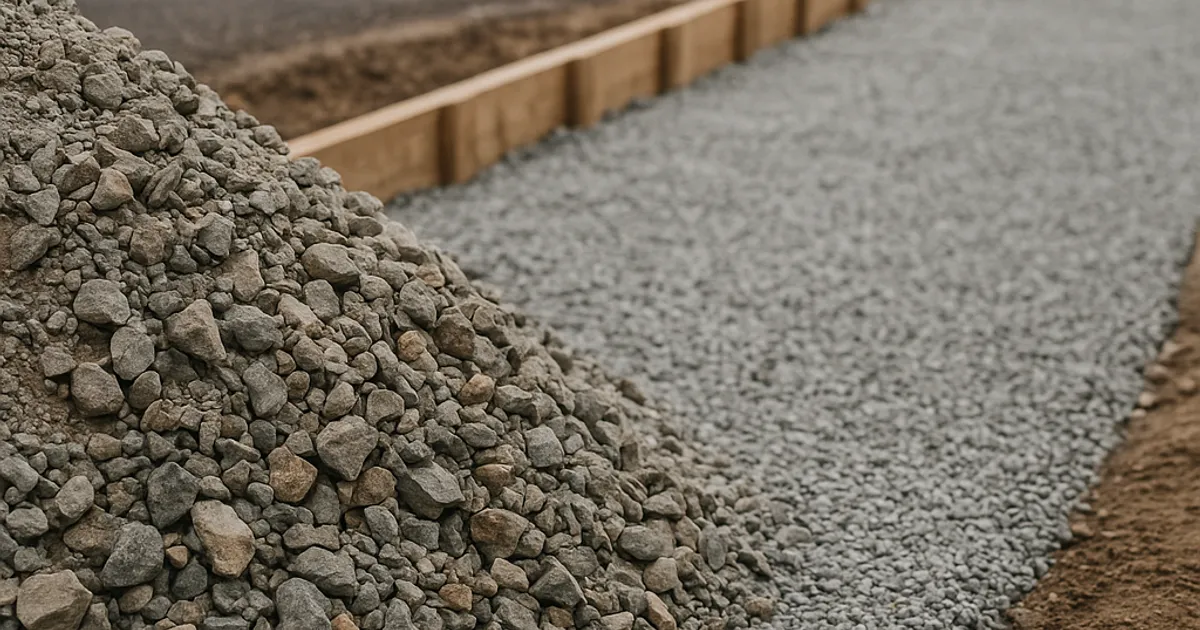
- Place engineered base materials (gravel, crushed stone) under hardscape areas.
- Pour concrete or asphalt for driveways, walks, and slabs.
- Replace stripped topsoil or import new topsoil to achieve final grade at 4 to 6 inches depth over all planted areas.
- Establish vegetation through seeding or sodding.
This sequence ensures structural integrity beneath hardscape and foundations while providing the biological growing medium needed for landscape success above grade. Skipping the topsoil replacement step is a false economy. Contractors who try to grow grass directly on compacted fill clay end up with callbacks and warranty claims that cost far more than the topsoil they saved.
Cost Considerations and Budgeting for Dirt Materials
Material selection decisions in earthwork are always intertwined with cost. Here is what project managers and estimators should understand about pricing in 2026:
Topsoil Pricing Factors
Screened topsoil runs Dollar 45 to Dollar 85 per cubic yard delivered in most U.S. markets as of 2026, with premium blended mixes (topsoil plus compost) reaching Dollar 90 to Dollar 120 per cubic yard. Key pricing drivers include:
- Screening quality: Triple-screened topsoil commands a premium over single-pass material.
- Organic matter content: Higher organic content from compost blending increases cost.
- Haul distance: Topsoil is a high-volume, relatively low-value material, so freight cost is a large portion of delivered price.
- Market scarcity: In regions with heavy development activity, quality topsoil can be scarce and priced accordingly.
Fill Dirt Pricing Factors
Fill dirt is substantially cheaper than topsoil, ranging from Dollar 8 to Dollar 35 per cubic yard delivered in most markets. However, several factors can dramatically affect cost:
- Clean fill availability: In some markets, contractors with excess fill from excavation projects will deliver it free of charge (or for a nominal trucking fee) to sites that need fill, because they are paying to dispose of it otherwise. This dynamic is exactly what platforms like DirtMatch are built to capture, connecting excavators who need to offload material with sites that need fill.
- Fill quality and specification: Structural fill engineered to specific gradations costs more than general fill. Select fill for trench backfill or subbase can approach Dollar 25 to Dollar 40 per cubic yard.
- Contamination screening: Fill sourced from unknown locations carries risk. Sites with fill from demolition, industrial sites, or unknown histories may contain contaminated material. Always verify clean fill status, particularly on projects in urban redevelopment areas.
The Real Cost of Misapplication
Using topsoil where fill is required wastes money immediately (topsoil at Dollar 60 per yard versus fill at Dollar 15 per yard for a 500-yard fill job represents a Dollar 22,500 difference) and creates structural problems later. Using fill dirt where topsoil is required means landscape failure, replanting costs, and client dissatisfaction. Neither substitution pays off.
Find or Post Dirt, Rock & Aggregate
Join thousands of contractors using DirtMatch to buy, sell, and exchange earthwork materials.
Try DirtMatch FreeSoil Testing: How to Verify What You Are Getting
Purchasing dirt without verification is a gamble that experienced contractors learn to avoid. Soil testing provides objective data about what you are actually getting.
For Topsoil
A basic topsoil quality test from a commercial agricultural lab runs Dollar 25 to Dollar 75 and typically reports:
- pH
- Organic matter percentage
- Major nutrient levels (nitrogen, phosphorus, potassium)
- Texture (sand, silt, clay percentages)
- Cation exchange capacity (CEC)
For larger purchases (over 500 cubic yards), testing multiple samples from different areas of the stockpile is advisable because topsoil quality can vary significantly within a single lot.
For Fill Dirt
Fill dirt testing priorities differ from topsoil testing. Key tests for fill include:
- Proctor compaction test (ASTM D698 or D1557): Establishes maximum dry density and optimum moisture content for compaction.
- Gradation analysis: Confirms particle size distribution meets specifications.
- Atterberg limits: Determines plasticity of fine-grained soils, which affects compaction behavior and shrink-swell potential.
- Environmental screening: Phase I or II environmental site assessments for fill from urban or industrial sources to confirm absence of contamination.
For projects where fill origin is uncertain, the EPA Brownfields Program provides guidance on contaminated soil assessment and remediation that applies to fill material sourced from previously developed urban land.
Regional Considerations: Soil Types Vary by Geography
The natural soil conditions in a given region dramatically affect both the availability and the appropriate use of topsoil and fill materials.
Pacific Northwest and Pacific Coast
The Pacific Northwest features some of the deepest, richest topsoil in the country due to volcanic parent material and high rainfall. Projects in the dirt exchange in Seattle region often have access to excellent native topsoil from site stripping. However, the same rainfall that creates rich soils also means fill projects must address drainage carefully, as wet clay fills compact poorly and can cause instability.
Mountain West and High Desert
In the dirt exchange in Denver and dirt exchange in Boulder markets, clay-heavy expansive soils (Colorado's famous bentonite-rich soils) create unique challenges. Fill in these regions must often be amended with lime or replaced with import fill to avoid expansive heave beneath foundations. Topsoil in high-elevation areas tends to be thinner and less organically rich than in wetter climates.
Southern California
The dirt exchange in Los Angeles and dirt exchange in San Diego markets are characterized by dry, low-organic native soils and a highly active construction market. Topsoil is frequently imported for landscaping projects because native soils lack the organic matter needed for ornamental planting. Clean fill is in constant demand for grading projects on hillside lots, where import fill volumes can be enormous.
Common Mistakes and How to Avoid Them
Industry experience consistently reveals the same errors being repeated on projects of all sizes. Here are the most consequential mistakes in topsoil and fill selection:
Mistake 1: Placing Topsoil Beneath Structures
Organ matter decomposes. Topsoil placed beneath a concrete slab, foundation, or compacted road section will compress over time as organic content breaks down. This causes differential settlement that cracks slabs, shifts foundations, and destroys pavements. Never use topsoil as fill beneath any structure.
Mistake 2: Using Fill Dirt as a Finish Grade Material and Planting in It
Dense, compacted fill clay has almost no porosity, no organic matter, and almost no biological activity. Planting grass or landscape plants directly in it results in predictable failure. Always install a minimum 4-inch topsoil layer over compacted fill before any planting.
Mistake 3: Accepting Unknown Fill Without Verification
Free fill dirt can be tempting, especially on tight budgets. But accepting fill from demolition sites, former industrial properties, or unknown origins without environmental screening is a liability risk. Contaminated fill can trigger regulatory action, removal requirements, and significant legal exposure under environmental liability law.
Mistake 4: Skipping Compaction on Fill Layers
Fill placed without proper lift-by-lift compaction will settle over time, sometimes dramatically. A 10-foot fill placed in a single uncompacted mass may settle 6 to 18 inches over several years as the loose material consolidates under its own weight and traffic loads.
Mistake 5: Buying Topsoil Without Testing
The commercial topsoil market has wide quality variation. Low-quality material may be subsoil with minimal organic content, sandy material with poor water retention, or even contaminated fill sold as topsoil. A simple soil test before accepting a large delivery can save thousands in replacement costs.
Sourcing the Right Material: How DirtMatch Simplifies the Process
Finding quality topsoil or clean fill dirt at a reasonable price and short haul distance has traditionally required contractors to make dozens of phone calls, navigate informal networks, and hope that available materials met their specifications. In 2026, that process has been significantly modernized.
DirtMatch operates as a matching platform specifically built for earthwork material exchanges. When a grading contractor has excess fill from an excavation project, they can list it on DirtMatch. When a developer needs 2,000 yards of clean fill for a building pad, they can find available sources nearby through the same platform. The result is shorter hauls, lower costs, and better material utilization across the regional construction ecosystem.
For topsoil specifically, the platform also connects contractors and landscapers with screened topsoil sources, including surplus material from land clearing operations where the topsoil would otherwise be wasted. This kind of material matching is particularly valuable in high-cost urban markets where both topsoil and fill dirt carry significant freight premiums.
Contractors who regularly manage earthwork material logistics report that sourcing dirt through a structured platform like DirtMatch can reduce procurement time by 60 to 70 percent compared to traditional phone-based sourcing, while also providing better documentation of material origin and quality.
Environmental and Regulatory Considerations
Moving large quantities of topsoil or fill dirt is not purely a logistical exercise. There are environmental and regulatory dimensions that practitioners must understand.
Topsoil as a Protected Resource
In many jurisdictions, topsoil removal from agricultural land is regulated or restricted because topsoil takes hundreds to thousands of years to form naturally. Some counties and municipalities require permits for topsoil stripping operations, particularly on agricultural land. Contractors should verify local regulations before large-scale topsoil removal.
Fill Dirt and Clean Fill Regulations
Clean fill acceptance at receiving sites is regulated in most states. Loads containing any demolition debris, contaminated soil, asphalt millings, concrete, or organic waste may not qualify as clean fill and may require disposal at a licensed facility rather than use as site fill.
Wetland Fill Permits
Filling wetlands with any material, including clean fill dirt, requires a Section 404 permit from the U.S. Army Corps of Engineers under the Clean Water Act. Unpermitted wetland fill is one of the most serious and costly regulatory violations in earthwork, carrying penalties in the tens of thousands of dollars per day.
Stormwater Compliance
Disturbing soil for fill or topsoil operations on sites over one acre triggers National Pollutant Discharge Elimination System (NPDES) stormwater permit requirements. Sites must implement erosion and sediment controls and maintain a SWPPP throughout construction.
Practical Decision Framework: Choosing the Right Material
When facing a material selection decision, use this simple framework:
Step 1: Identify the final use of the area. Is this area going to support a structure, paving, or other hardscape? Or will it be planted with grass, gardens, or trees?
Step 2: Determine the depth involved. Are you working more than 6 inches below finished grade? If yes, the answer is almost always fill dirt (assuming no planting occurs at depth).
Step 3: Consider load-bearing requirements. Will any structure, vehicle, or compacted surface sit on this material? If yes, fill dirt compacted to specification is required.
Step 4: Assess biological need. Does the application require plant growth? If yes, topsoil is needed at the surface.
Step 5: Layer accordingly. For most projects, the answer is both materials in the correct sequence: fill to achieve grade, topsoil at the surface for planting areas.
Step 6: Verify material quality. Test or certify both materials before accepting large deliveries. The cost of testing is trivial compared to the cost of replacing substandard material after the fact.
If you are managing a project and need to source either material efficiently, get started with DirtMatch to find verified topsoil and fill dirt sources in your region, list surplus material for offload, and connect with vetted earthwork contractors who understand the material requirements for every job type.
Summary: Making the Right Call Every Time
The organic topsoil versus fill dirt decision ultimately comes down to function. Topsoil is a living, biologically active growing medium designed to support plant life at the surface. Fill dirt is an inorganic, compactable material designed to provide stable mass and structural support below grade. Each material is excellent at its intended job and a poor substitute for the other.
The most successful earthwork and landscaping projects treat these materials as partners rather than alternatives. Fill creates the platform; topsoil finishes the surface. Getting that sequence right, sourcing quality materials, testing what you receive, and compacting fill to specification are the fundamentals that separate professional results from costly callbacks.
As the earthwork industry continues to evolve in 2026, material matching platforms are making it easier than ever to source the right dirt at the right price without the inefficiency of traditional procurement. Whether you are a grading contractor managing a large development project or a landscape professional finishing a residential lot, knowing your materials and how to find them efficiently is a competitive advantage worth developing.