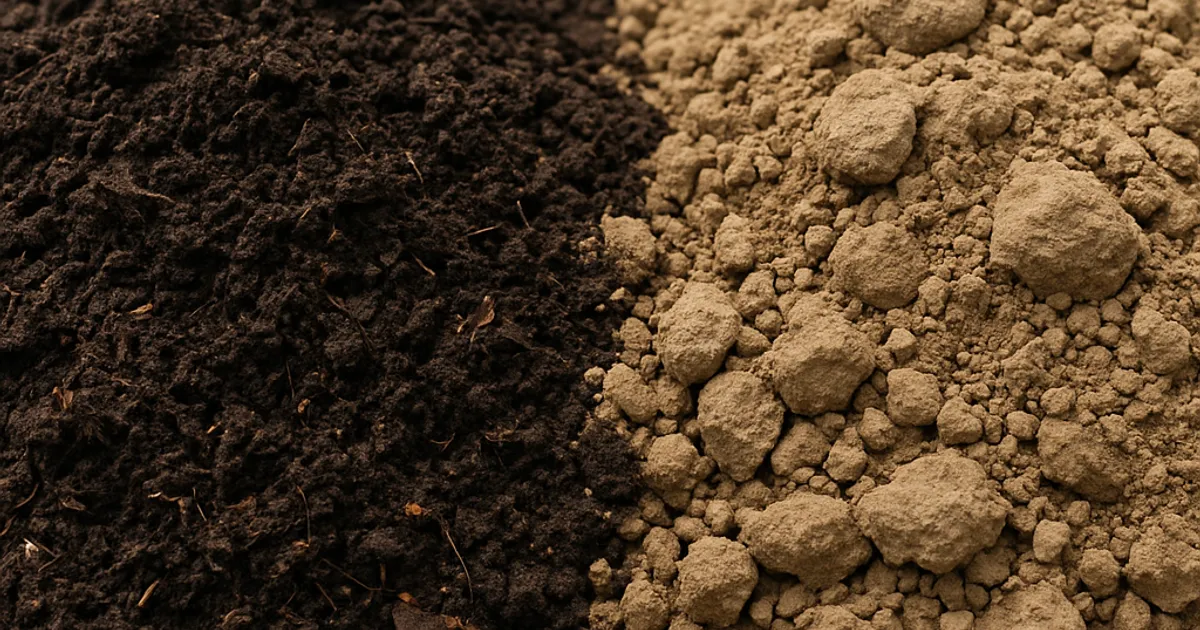
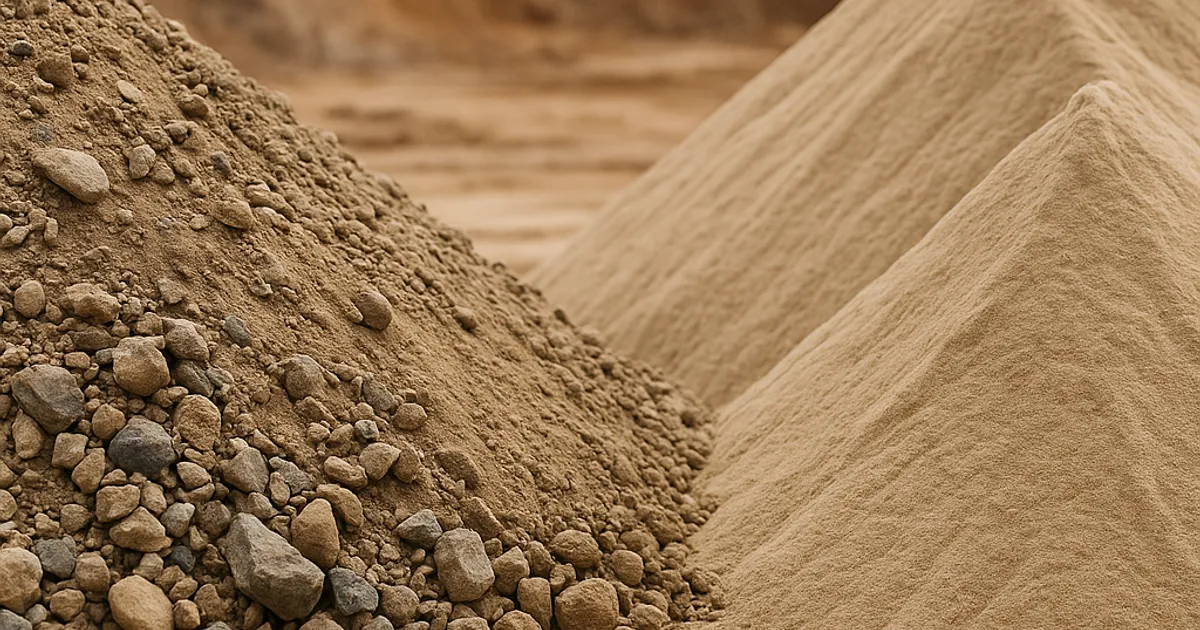
Sandy loam soil sits at the intersection of performance and practicality. It drains fast enough to prevent waterlogging, compacts reliably enough for structural support, and supports plant life better than nearly any other fill material on the market. Across residential subdivisions, commercial grading projects, athletic fields, and highway embankments, sandy loam consistently earns its place as a contractor favorite.
Yet sourcing the right sandy loam, at the right volume, at a competitive price, remains one of the more frustrating logistics challenges in the earthwork industry. This guide breaks down the science, the applications, the costs, and the sourcing strategies that experienced earthwork contractors rely on in 2026.
What Is Sandy Loam Soil? Composition and Classification
Sandy loam is a soil texture class defined by its particle size distribution. According to the USDA Natural Resources Conservation Service (NRCS) textural triangle, sandy loam contains roughly 50 to 70 percent sand, 10 to 25 percent clay, and the remainder as silt. The exact proportions shift depending on the classification system in use, but the defining trait is that sand dominates the mixture while enough finer particles remain to provide cohesion and nutrient retention.
Soil texture classification under ASTM D2487 (the Unified Soil Classification System, or USCS) approaches the material slightly differently, grouping sandy loam within the SM (silty sand) or SC (clayey sand) categories depending on plasticity. Geotechnical engineers frequently cross-reference both systems when writing specifications for fill and backfill work.
Key composition characteristics include:
- Sand fraction (0.05 to 2.0 mm particles): Provides drainage pathways, reduces shrink-swell behavior, and makes the soil easy to work with hand tools or equipment.
- Silt fraction (0.002 to 0.05 mm particles): Contributes to moisture retention and adds modest cohesion.
- Clay fraction (less than 0.002 mm particles): Binds the mixture together, improves compactability, and supports cation exchange capacity critical for plant nutrition.
This balanced particle size distribution is why sandy loam performs well across such a wide range of applications. Pure sand drains too quickly and lacks cohesion. Heavy clay retains too much water and shrinks dangerously when dry. Sandy loam splits the difference in a way that civil engineers and landscape architects have recognized for decades.
The USDA Web Soil Survey is a free online tool that allows contractors and project owners to look up native soil textures at any location in the United States. Before importing fill, checking the native soil profile can reveal whether existing material can be amended or whether imported sandy loam is truly necessary.
Key Physical and Engineering Properties of Sandy Loam
Understanding sandy loam properties is essential before specifying it in any project document. Civil engineers, landscape architects, and earthwork contractors need to know how the material will behave under load, with water, and over time.
Drainage and Hydraulic Conductivity
Sandy loam typically exhibits a saturated hydraulic conductivity (Ksat) between 1.5 and 5.0 inches per hour. This places it in the moderately rapid drainage category according to NRCS standards. In practical terms, this means water moves through sandy loam fast enough to avoid saturation during most storm events, but slowly enough that it does not simply run off the surface before plants can absorb it.
For construction sites subject to EPA stormwater permits under the NPDES program, this drainage behavior is an asset. Sandy loam used in graded areas reduces ponding and supports faster vegetation establishment on disturbed slopes, both of which help meet permit conditions.
Compaction Characteristics
Sandy loam compacts predictably under standard Proctor testing (ASTM D698) and modified Proctor testing (ASTM D1557). Typical maximum dry density values range from 100 to 120 pounds per cubic foot, with optimum moisture content generally falling between 10 and 15 percent by dry weight. These numbers vary with the exact particle size distribution and clay content.
For structural backfill applications, most specifications require compaction to at least 90 to 95 percent of maximum dry density. Sandy loam reaches this threshold relatively easily because its sand skeleton responds quickly to vibratory or impact compaction. Contractors often achieve spec density in fewer passes compared to high-clay soils.
Shear Strength and Bearing Capacity
Sandy loam exhibits moderate friction angle values, typically between 28 and 34 degrees for well-compacted material. Cohesion values are low to moderate, generally ranging from 0 to 5 pounds per square inch. These values translate to adequate bearing capacity for light to moderate structural loads when properly compacted, making sandy loam a suitable base for residential slabs, light commercial pavements, and landscaping retaining structures.
Plasticity and Shrink-Swell Behavior
One of sandy loam's most important engineering advantages is its low to non-plastic behavior. Plasticity index (PI) values typically fall below 10, and often below 5. This means the soil does not expand significantly when wet or contract severely when dry, reducing the risk of foundation movement, pavement cracking, and pipe joint separation that plague high-clay soils in climates with seasonal moisture changes.
Sandy Loam Soil Uses in Construction
Construction is where sandy loam earns its reputation as a workhorse fill material. Its combination of drainage, compactability, and low plasticity makes it suitable for a wide range of structural and semi-structural applications.
Foundation and Utility Backfill
Sandy loam is one of the most commonly specified materials for backfilling foundation walls, utility trenches, and underground pipe corridors. When a foundation wall is waterproofed and ready for backfill, contractors need a material that will compact uniformly, drain away from the structure, and remain stable over decades of seasonal moisture cycling.
High-clay soils fail this test repeatedly. They retain water against foundation walls, develop hydrostatic pressure, and expand and contract with the seasons in ways that eventually crack waterproofing membranes and shift foundation elements. Sandy loam, by contrast, drains quickly and maintains a stable volume.
For pipe zone bedding and initial backfill in utility trenches, many municipal specifications reference ASTM D2321 (standard practice for underground installation of thermoplastic pipe), which allows sandy loam or well-graded sandy material as an acceptable bedding option. The key requirement is achieving uniform support around the pipe haunch, which sandy loam's workability makes achievable by hand tamping if necessary.
Structural Embankments and Road Subgrade
Highway and road construction projects frequently call for sandy loam or similar granular fill in embankment construction. State departments of transportation (DOTs) generally specify fill materials by gradation and plasticity limits. Sandy loam with a PI below 10 and less than 35 percent passing the No. 200 sieve commonly qualifies as acceptable embankment fill under AASHTO specifications.
For road subgrade preparation, sandy loam provides a stable working platform for base course placement. Its bearing capacity, when compacted to 95 percent modified Proctor density, is generally sufficient to support light base course construction traffic without excessive rutting.
Lot Grading and Residential Site Development
Residential subdivision development is arguably the largest single market for sandy loam fill dirt. When builders rough-grade new lots, they need a fill material that will establish positive drainage away from proposed building pads, support finish grading, and ultimately host lawn and landscape plantings.
Sandy loam satisfies all three requirements simultaneously. It grades smoothly with standard dozer and blade equipment, drains at rates compatible with residential drainage designs, and supports rapid turf establishment once the lots are turned over to homeowners. Builders in markets like dirt exchange in Denver and dirt exchange in Los Angeles frequently source large volumes of sandy loam fill during active construction seasons.
Retaining Wall and Geosynthetic Reinforced Soil Structures
Geosynthetic reinforced soil (GRS) retaining walls, bridge abutments, and mechanically stabilized earth (MSE) walls all require fill materials that meet strict gradation and plasticity requirements. Sandy loam with low plasticity often qualifies for use as retained fill behind these structures. The Federal Highway Administration's guidelines for MSE wall fill specify maximum particle size and plasticity index limits that sandy loam commonly meets.
Sandy Loam as Fill Dirt: What to Look For When Sourcing
Not all sandy loam fill dirt is created equal. Contractors who assume that any sandy loam will perform identically frequently encounter expensive surprises on the job. Here is what to evaluate before accepting a load.
Laboratory Testing Requirements
At minimum, request a grain size analysis (ASTM D422 or D7928) and an Atterberg limits test (ASTM D4318) on any sandy loam fill before placing it in a structural application. These two tests, which typically cost $150 to $400 combined at a geotechnical lab, confirm that the material meets the gradation and plasticity requirements in your project specifications.
For large fill projects, establish a testing protocol that includes proctor compaction testing (ASTM D698 or D1557) on at least one representative sample per source. Compaction test results become the reference standard for field density testing (nuclear gauge or sand cone) during placement.
Contaminant Screening
Fill dirt sourced from demolition sites, former industrial properties, or unknown origins carries contamination risk. Before accepting sandy loam from an unfamiliar source, request documentation of the material's origin and consider a Phase I environmental screening if the source site raises any red flags. The EPA's Brownfields Program provides guidance on due diligence standards for fill materials sourced from previously developed sites.
Organic Content
Excessive organic matter disqualifies a material from structural fill use. Organics decompose over time, creating voids and causing long-term settlement. ASTM D2974 provides the standard test method for measuring organic content. Most structural fill specifications cap organic content at 3 percent by weight. Sandy loam from topsoil-contaminated stockpiles or areas with heavy vegetation history may exceed this limit.
Best Soil for Backfill: How Sandy Loam Compares
Contractors often ask how sandy loam stacks up against competing fill materials. The table below compares common backfill options across the most important performance criteria.
| Material | Drainage | Compactability | Shrink-Swell Risk | Structural Suitability | Typical Cost per Cubic Yard |
|---|---|---|---|---|---|
| Sandy Loam | Excellent | Good | Very Low | Good | $12 to $30 |
| Clean Sand | Excellent | Moderate | None | Moderate | $18 to $40 |
| Clay Fill | Poor | Moderate | High | Poor to Moderate | $8 to $20 |
| Gravel/Crushed Stone | Excellent | Excellent | None | Excellent | $25 to $55 |
| Topsoil | Poor to Moderate | Poor | Low to Moderate | Poor | $20 to $45 |
| Silty Fill | Moderate | Moderate | Moderate | Marginal | $8 to $18 |
Sandy loam consistently scores in the top tier for drainage and shrink-swell resistance while remaining one of the more affordable options. The only materials that outperform it structurally are crushed stone and gravel, both of which cost significantly more per cubic yard.
For projects where cost efficiency matters and where specification requirements are met, sandy loam fill dirt frequently represents the best value in the backfill category. Connecting with nearby surplus material sources is one of the fastest ways to reduce per-yard costs. DirtMatch helps earthwork contractors find local sandy loam sources, matching buyers with sellers who have surplus fill available, often at a fraction of the cost of quarry or pit-sourced material.
Sandy Loam in Landscaping: Applications and Performance
Beyond construction, sandy loam is the soil texture most frequently recommended by horticulturists, turf managers, and landscape architects for a wide range of plant establishment and landscape grading applications.
Lawn and Turf Establishment
Turfgrass associations and university extension programs consistently rate sandy loam as one of the best native or import soils for lawn establishment. The drainage rate prevents root rot during wet periods, the texture allows deep rooting, and the clay fraction retains enough moisture and nutrients to reduce irrigation and fertilization requirements compared to pure sand profiles.
Golf course construction and renovation is an instructive case study. While putting greens are built to USGA specifications using high-sand profiles for maximum drainage and firmness, fairways and roughs on most courses are either native sandy loam or are graded to sandy loam profiles specifically because the texture supports aggressive turf recovery from traffic and divot damage.
Raised Bed and Garden Soil Mixes
Sandy loam forms the mineral foundation of most premium garden soil mixes. Blended with 20 to 30 percent compost or other organic amendments, sandy loam creates a friable, nutrient-retentive growing medium that drains freely between irrigation events and supports vigorous root development across vegetables, perennials, and shrubs.
Many landscapers charge a premium for amended sandy loam mixes in raised bed installation projects, with finished amended soil often retailing at $45 to $90 per cubic yard depending on the amendment ratio and regional market.
Athletic Fields and Recreational Areas
Sports field construction represents one of the more demanding landscaping applications for sandy loam. Fields must drain quickly after rain, recover from heavy foot traffic, and support aggressive turf through a full playing season. Sandy loam profiles, typically blended to ASTM specifications or local athletic field standards, strike the performance balance that pure sand profiles cannot achieve on their own.
School districts, municipalities, and sports facility developers in markets like dirt exchange in Seattle and dirt exchange in San Francisco regularly source large volumes of screened sandy loam for field renovation projects, often competing with residential developers for available supply during peak construction months.
Erosion Control and Slope Stabilization
Sandy loam's moderate cohesion and ability to quickly support vegetation makes it a preferred topdressing material on disturbed slopes. Hydroseeding over a sandy loam cap layer accelerates germination compared to seeding over exposed subgrade, because the sandy loam retains seed moisture during the critical first two to three weeks after application.
For steeper slopes or areas subject to concentrated flow, contractors combine sandy loam with erosion control blankets or hydraulic mulch to create a stable seedbed while the root system establishes.
Find or Post Dirt, Rock & Aggregate
Join thousands of contractors using DirtMatch to buy, sell, and exchange earthwork materials.
Try DirtMatch FreeCompaction and Placement: Field Best Practices
Even the best sandy loam fill will fail to perform if it is not placed and compacted correctly. Here are the field practices that experienced earthwork crews follow on sandy loam projects.
Lift Thickness and Equipment Selection
For structural backfill applications, place sandy loam in lifts no thicker than 8 to 12 inches (loose measurement) when using vibratory plate compactors or jumping jack compactors. For large open embankment fills using vibratory drum rollers, lift thicknesses up to 12 to 18 inches may be acceptable depending on roller size and energy output.
Vibratory rollers are particularly effective on sandy loam because the vibratory energy rearranges the sand particles into a denser packing arrangement. Static smooth drum rollers are less effective and require more passes to reach the same density.
Moisture Control
Sandy loam compacts best near its optimum moisture content as determined by Proctor testing. In the field, this typically means the material should feel slightly damp but not sticky or muddy when squeezed in your hand. If the material is too dry (particularly in arid regions like Denver or Los Angeles), light pre-wetting with water trucks before rolling significantly improves density results. If the material is too wet, drying by scarifying and aerating the lift before rolling is more effective than attempting to compact saturated material.
Quality Control and Density Testing
For most structural fill applications, specifications require density testing every 500 to 2,000 square feet of compacted area depending on the engineer's requirements. Nuclear moisture-density gauges (calibrated to the Proctor curve for your specific sandy loam source) are the most common field testing method. Failing test areas must be recompacted or removed and replaced before the next lift is placed.
Pricing and Market Conditions for Sandy Loam Fill Dirt in 2026
Sandy loam pricing in 2026 varies significantly by region, source type, and volume. Understanding the cost drivers helps contractors budget accurately and negotiate effectively.
Price Ranges by Region
In the Mountain West (Colorado, Utah, Wyoming), sandy loam fill dirt delivered to a job site typically runs $20 to $35 per cubic yard. In the Pacific Coast markets (California, Oregon, Washington), prices range from $25 to $45 per cubic yard delivered, reflecting higher fuel and labor costs. In the Southeast and Midwest, pricing is generally more favorable at $12 to $25 per cubic yard for delivered material.
Pick-up pricing (contractor hauls from source) runs 30 to 50 percent lower than delivered pricing in most markets. On large projects requiring thousands of cubic yards, the transportation cost frequently exceeds the material cost itself, which makes proximity to source a critical factor in project economics.
Surplus Fill as a Cost-Reduction Strategy
One of the most effective ways to reduce sandy loam fill costs is to source material from active construction projects that have surplus cut material available. Excavation projects, road cuts, and site development work routinely generate thousands of cubic yards of native sandy loam that contractors are obligated to remove from the site. Rather than paying to haul it to a landfill or distant stockpile, many project owners are willing to provide this material free or at nominal cost to buyers who can self-haul.
Identifying these surplus sources has historically been difficult without local relationships. Platforms like DirtMatch connect earthwork contractors and fill dirt buyers with nearby surplus sources, making it straightforward to locate available sandy loam within a practical haul radius. For large fill projects, this kind of connection can reduce material costs by $10 to $20 per cubic yard compared to pit-sourced pricing, representing significant savings on a 5,000-cubic-yard project.
Cost Factors to Budget For
- Material cost: $12 to $45 per cubic yard depending on region and source type
- Hauling: $8 to $22 per cubic yard per one-way haul for typical truck loads, varying by haul distance and fuel costs
- Laboratory testing: $150 to $600 per source for basic classification and compaction testing
- Placement and compaction: $4 to $12 per cubic yard for labor and equipment depending on site conditions
- Density testing: $250 to $600 per day for geotechnical technician time and equipment
Environmental and Regulatory Considerations
Moving sandy loam fill dirt across jurisdictions involves navigating a patchwork of environmental regulations that vary by state, county, and project type.
Stormwater Permit Requirements
Construction sites disturbing more than one acre are required to obtain a National Pollutant Discharge Elimination System (NPDES) stormwater permit under EPA regulations. Sites importing fill must ensure that the fill placement does not increase site runoff rates or turbidity in ways that violate permit conditions. Sandy loam's moderate drainage characteristics generally support compliance better than high-clay fills, but grading plans must still account for concentrated flow paths.
Wetland Fill Restrictions
Filling in jurisdictional wetlands with any material, including sandy loam, requires Section 404 permits from the Army Corps of Engineers and may trigger Section 401 water quality certification from the relevant state agency. Contractors operating near wetland areas should verify jurisdictional boundaries before beginning any fill operations.
Import Fill Documentation
Many states and localities now require documentation of fill material origin, particularly when fill is imported from out of state or from sites with any industrial history. Oregon, Washington, California, and Colorado all have regulatory frameworks that may require fill manifests, soil characterization reports, or approval from state environmental agencies for large fill importation projects. Contractors in the dirt exchange in Boulder and dirt exchange in San Diego markets, for example, routinely work through county-level fill import approval processes before beginning large residential grading projects.
For contractors managing complex multi-site fill logistics, having a centralized platform to document material origins and track deliveries simplifies compliance documentation. DirtMatch Pro provides contractors with project tracking tools that help maintain the material origin records increasingly required by state regulators.
How to Source Sandy Loam Efficiently for Your Next Project
For project managers and estimators preparing to source sandy loam fill dirt, here is a practical step-by-step framework that reflects current industry practice in 2026.
Step 1: Quantify your volume needs accurately. Use your grading plan takeoffs and apply a swell factor (typically 1.1 to 1.25 for sandy loam depending on its native density) to convert bank cubic yards to loose cubic yards for trucking purposes.
Step 2: Define your material specification. Work with your project engineer to document the required gradation, plasticity limits, compaction standard, and any contaminant exclusions. This becomes your acceptance criteria for any material you evaluate.
Step 3: Identify candidate sources. Check local quarries, pit operators, and ready-mix suppliers for available sandy loam products. Also search for active construction projects within a 20-mile haul radius that may have surplus cut material matching your specification. Using DirtMatch to browse active fill listings in your market area is one of the fastest ways to identify surplus sources.
Step 4: Test before you commit. Never accept large volumes of fill based on visual inspection alone. Pull a representative sample and run the grain size and Atterberg limits tests before signing a supply agreement.
Step 5: Plan your logistics. Coordinate truck schedules, staging areas, and compaction equipment availability before material begins arriving. Sandy loam should be placed and compacted within a reasonable time after delivery to avoid moisture loss in dry climates or saturation in wet weather.
Step 6: Implement quality control. Assign a field technician to monitor moisture and perform density testing at the frequency required by your specification. Address failing areas immediately rather than covering them with additional lifts.
Following these steps reduces the risk of costly specification failures, rejected material, and rework that can derail project timelines and budgets.
Sandy Loam vs. Other Soil Types: A Quick Reference Guide
Contractors frequently face decisions about whether sandy loam is truly the right material for a specific application, or whether an alternative would perform better. Here is a quick reference for common decision scenarios.
| Application | Best Choice | Why |
|---|---|---|
| Foundation wall backfill | Sandy Loam | Low plasticity, good drainage, stable volume |
| Under-slab base | Gravel or Sandy Loam | Sandy loam acceptable if PI is very low |
| Athletic field topdress | Sandy Loam | Supports turf, drains well, recoverable from traffic |
| Roadway embankment | Sandy Loam or Granular Fill | Low PI material, easy to compact |
| Lawn establishment | Sandy Loam | Balanced drainage and fertility support |
| Garden raised beds | Amended Sandy Loam | Drainage plus organic matter for plant nutrition |
| Wetland mitigation fill | Not Recommended | Regulatory restrictions apply regardless of material |
| Structural fill under heavy loads | Gravel/Crushed Stone | Sandy loam capacity may be insufficient |
| Steep slope erosion control | Sandy Loam with cover | Supports rapid vegetation, moderate cohesion |
This table is a starting point, not a substitute for project-specific geotechnical analysis. When structural loads are significant or site conditions are complex, always engage a licensed geotechnical engineer to specify fill materials and compaction requirements.
Conclusion: Making Sandy Loam Work for Your Projects
Sandy loam soil earns its versatile reputation through a combination of physical properties that few other materials can match at a comparable price point. Its drainage performance, reliable compactability, low shrink-swell risk, and ability to support plant life make it a genuine all-purpose material that serves construction and landscaping applications equally well.
The challenge in 2026 is not finding sandy loam soil; it is finding the right sandy loam, at the right price, within a practical haul distance, and with the documentation needed to satisfy increasingly demanding specification and regulatory requirements. Contractors who build efficient sourcing networks, test their materials rigorously, and place and compact according to specification consistently outperform competitors who treat fill dirt as an afterthought.
For earthwork professionals looking to streamline fill dirt sourcing, get started with DirtMatch to connect with local sandy loam sources, reduce hauling costs, and keep projects moving on schedule.