Winter is not a pause button for the earthwork industry. Deadlines do not wait for a thaw, project owners push for year-round progress, and the contractors who figure out cold-weather operations early are the ones landing the most work. But winter dirt hauling introduces a genuine set of complications that range from mildly inconvenient to genuinely dangerous. Frozen ground, shifting soil moisture, reduced equipment performance, restricted trucking windows, and tightened compaction tolerances all collide at once.
This guide gives earthwork contractors, site supervisors, and trucking operators a detailed, practical look at how cold weather affects every stage of a dirt-hauling job, and what you can do about it.
Why Winter Changes Everything in Earthwork
The physics of soil change dramatically when temperatures drop below freezing. Water within the soil matrix expands by roughly 9 percent when it transitions to ice, creating internal pressures that alter the structural integrity of the ground you are trying to excavate, move, or compact. The USDA Natural Resources Conservation Service notes that soil behavior under freeze-thaw cycles depends heavily on soil type, moisture content, and drainage characteristics, which is why the USDA Web Soil Survey is a genuinely useful pre-winter planning tool for any site superintendent trying to understand what they are dealing with before temperatures plunge.
Soil freezing depth varies significantly by region. In northern climates like Minnesota, Michigan, or upstate New York, frost can penetrate 4 to 6 feet into undisturbed soil. In transitional zones like Denver or the mid-Atlantic, frost depths of 18 to 36 inches are common. Coastal regions and southern states rarely see significant frost penetration, but they still deal with cold-weather complications like excessive soil moisture from winter precipitation, reduced crew productivity, and winter weight restrictions on rural haul roads.
Beyond the soil itself, air temperature affects diesel fuel gelling, hydraulic fluid viscosity, tire pressure, battery performance, and the physical stamina of your crew. When you stack all of these variables together, it becomes clear that winter earthwork is its own operational discipline, not simply a cold version of summer work.
Understanding Frozen Ground Excavation
Frozen ground excavation is one of the most demanding challenges in the earthwork calendar. Once the frost line sets in, standard excavation techniques can become inefficient or impossible without the right approach and equipment.
The Frost Line Problem
When soil freezes, its compressive strength increases dramatically, which sounds useful until you realize that this same hardness resists your bucket, blade, and ripping tooth just as stubbornly as it resists a load. Frozen clay, for example, can reach compressive strengths comparable to weak concrete. Attempting to excavate at normal cycle times in these conditions will overstress your machine, increase fuel consumption, and accelerate wear on ground-engaging tools.
Contractors dealing with frozen ground excavation typically employ one or more of the following approaches:
- Frost ripping: Attaching a hydraulic ripper to a dozer or excavator to mechanically break frozen layers before digging. Single-shank rippers mounted on large dozers (D8 class and above) are effective to frost depths of 24 to 36 inches in most soil types.
- Frost blankets and insulated tarps: Placing heavy-duty insulated blankets or foam-board insulation over planned excavation areas 48 to 72 hours before work begins can prevent frost from setting deeply into the soil. This is particularly effective in transitional-climate regions where frost is 12 to 24 inches deep.
- Thermal heating systems: Hydronic heating mats, propane-fired ground thawing equipment, and electric ground thaw blankets can all be used to artificially thaw frozen ground. Propane heating is common on smaller urban sites. Hydronic systems are more cost-effective over large areas.
- Sawing or impact breaking: For very shallow but extremely hard frozen layers, concrete saws or hydraulic breakers can score or fracture the frozen crust to allow excavation below.
Equipment Adjustments for Frozen Ground
Operating excavators and dozers in frozen conditions requires specific equipment adjustments. Hydraulic systems need cold-weather hydraulic fluid rated for low temperatures, and operators should idle machines for 10 to 20 minutes before engaging the hydraulic system under load. Ground-engaging tools wear faster in frozen soil, so keeping a supply of replacement bucket teeth, cutting edges, and ripper tips on hand is essential.
Consult your equipment manufacturer's cold-weather guidelines. Caterpillar's construction resources and Komatsu's operator documentation both provide specific cold-weather startup and operation protocols that should be followed to avoid costly hydraulic or drivetrain damage.
How Cold Weather Affects Soil Compaction
Compaction is one of the most specification-sensitive operations in earthwork, and cold weather throws most of the standard assumptions out the window. Understanding how winter conditions interact with compaction requirements is critical to passing inspections and avoiding rework.
The Moisture-Temperature Relationship
Proper compaction depends on achieving optimal moisture content in the soil being placed. ASTM standard D698 (Standard Proctor) and D1557 (Modified Proctor) define the moisture-density relationships that most project specifications reference. The problem in winter is that these tests are conducted at standard laboratory temperatures, and field conditions diverge sharply.
When soil is too cold, it may hold excess moisture from precipitation or snowmelt, pushing it well above optimum moisture content. Saturated soils cannot be compacted to specification regardless of roller effort. Alternatively, soils excavated from frozen stockpiles may arrive at the fill area with pore ice that temporarily mimics proper moisture content but releases water as it thaws under roller passes, leading to pumping, rutting, and failed density tests.
Practical Compaction Strategies in Winter
Experienced earthwork superintendents use several strategies to manage compaction quality in cold weather:
- Thinner lift thicknesses: Reducing lift thickness from a standard 8 to 12 inches down to 4 to 6 inches allows roller energy to penetrate fully and helps the material warm slightly from compactive effort and contact with unfrozen base layers.
- Work in short windows: Schedule compaction operations during the warmest part of the day, typically between 10 a.m. and 3 p.m., to take advantage of solar gain and slightly higher air temperatures.
- Avoid placing fill on frozen subgrade: Placing fill material on a frozen base layer creates a compaction time bomb. When the underlying frozen soil thaws, it loses bearing capacity and the fill placed above it settles unpredictably.
- Use nuclear density gauges frequently: Increase testing frequency in winter conditions to catch moisture or density problems before too much fill is placed.
- Protect placed fill overnight: Cover compacted fill areas with insulated tarps or frost blankets at the end of each shift to prevent the work already done from refreezing before the next lift is placed.
Winter Trucking Soil: Hauling Challenges and Solutions
The trucking side of winter dirt hauling presents its own set of challenges, from regulatory weight restrictions to driver safety and load management. A project can have perfect excavation and compaction plans but still fall apart if the hauling operation cannot keep pace.
Seasonal Weight Restrictions on Haul Roads
One of the most significant and often underestimated winter trucking complications is seasonal road weight restrictions. Many states and counties impose reduced load limits during spring thaw periods, but some jurisdictions also impose restrictions during deep-freeze events when road bases are vulnerable to damage from heavy vibration. In states like Michigan, Wisconsin, Minnesota, and Maine, seasonal weight restriction programs can limit gross vehicle weights on certain road classes by 25 to 35 percent compared to summer limits.
Contractors using public roads for haul routes need to monitor state DOT restriction announcements carefully. Building haul route flexibility into the project schedule is wise, as is identifying private haul roads or access agreements that avoid restricted public routes where possible.
For regulatory guidance on commercial vehicle operation in winter conditions, the Federal Motor Carrier Safety Administration provides hours-of-service rules and commercial vehicle safety standards that apply year-round, with winter weather adding additional considerations around driver hours, pre-trip inspections, and load securement.
Managing Frozen Loads in Dump Trucks
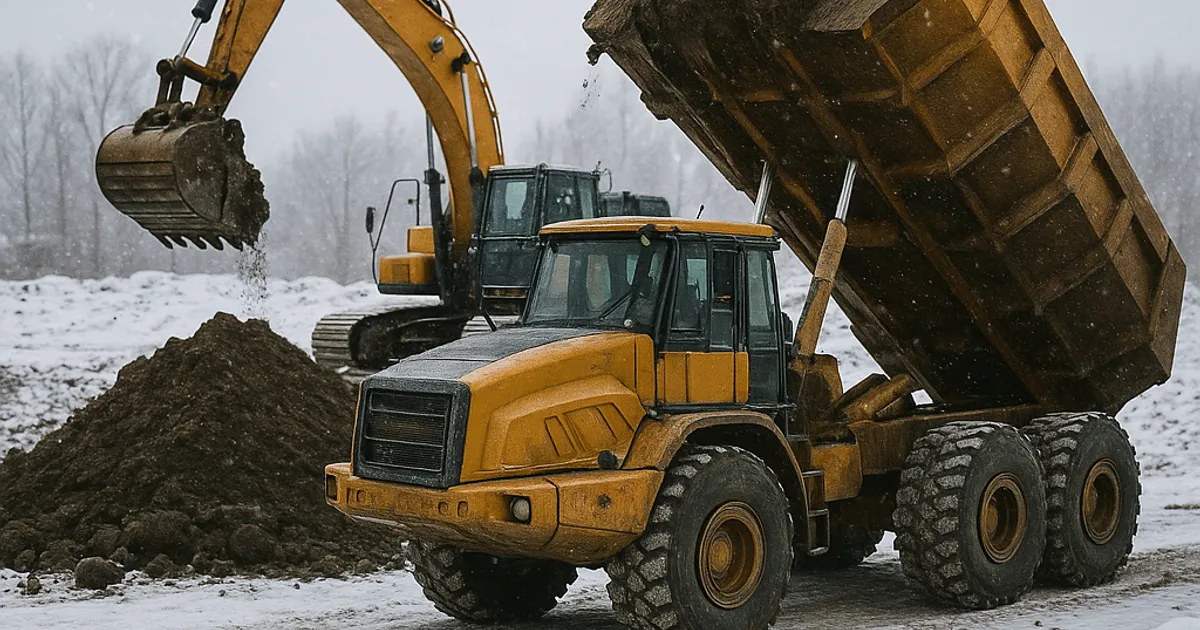
Frozen dirt loads are a serious operational hazard in winter trucking. When wet or damp soil is loaded into a dump body at the start of a cold day, it can freeze solid during transport, preventing the load from releasing cleanly when the bed is raised. The consequences range from simply slow unloading to catastrophic: loads shifting inside the bed, trucks tipping during attempts to dislodge frozen material, and significant damage to dump body hydraulics from over-pressuring.
Solutions used by experienced winter hauling operations include:
- Tarp systems: Keeping loads covered during transport reduces moisture loss and heat loss, slowing the freezing process.
- Dump body liners and coatings: Spray-on polymer liners or specialized slick-plate lining systems significantly reduce the adhesion of frozen material to the steel bed.
- Bed heaters: Exhaust-heated dump body systems route engine exhaust heat through channels in the dump body floor, keeping the load from freezing to the metal.
- Load management: Scheduling loads to minimize wait time between loading and dumping, and communicating with dump site operators to keep receiving areas clear and ready.
Driver Safety in Winter Conditions
Winter trucking soil across public roads in snow and ice conditions demands a higher standard of driver awareness and vehicle preparation. Pre-trip inspections become more critical than ever. Tire condition, brake function, light visibility, mirror defrosting, and windshield condition all need to be verified before each run. Slow speeds on turns, longer stopping distances, and heightened awareness of other construction traffic on job site access roads are non-negotiable behaviors.
Seasonal Earthwork Challenges by Region
Not all winter earthwork challenges are equal. The type and severity of cold-weather complications depends heavily on geography, and contractors who work across multiple regions need to adjust their playbook accordingly.
Northern Climates: Deep Freeze Operations
In states like Minnesota, Wisconsin, North Dakota, and Michigan, winter earthwork means dealing with genuine deep-frost conditions. Frost lines can reach 5 to 6 feet. Equipment must be rated and maintained for sustained sub-zero ambient temperatures. Heated site facilities, fuel management, and crew welfare protocols are operational necessities, not luxuries.
For contractors managing projects in the upper Midwest and Northeast, winter is often the season when pre-planned stockpile management becomes most valuable. Material that was excavated and stockpiled in fall can be protected with frost blankets or snow berms to keep it workable through the winter for ongoing fill placement needs.
Transitional Climates: The Freeze-Thaw Problem
Some of the most operationally complicated winter earthwork happens in transitional climates where temperatures cycle repeatedly above and below freezing throughout the season. Regions like the mid-Atlantic, the Pacific Northwest, and the interior Mountain West experience freeze-thaw cycling that can occur multiple times in a single week.
For example, contractors working on dirt exchange in Denver regularly navigate winter conditions where morning temperatures are in the teens but afternoons warm to the low 40s, creating a daily freeze-thaw cycle that plays havoc with compaction, haul road conditions, and site access. Similarly, the dirt exchange in Boston market deals with a winter season that oscillates between hard freezes and wet thaw events, requiring adaptive daily planning.
Freeze-thaw cycling degrades the structural integrity of both in-place soils and fill material. Each cycle pumps moisture upward through capillary action, progressively saturating upper soil layers and destroying any density gains achieved during compaction. Managing this requires aggressive drainage work before winter begins, strategic use of geotextile fabrics to separate layers, and realistic expectations about fill placement productivity during active freeze-thaw periods.
Mild Winter Climates: Different Challenges, Same Deadlines
In regions like coastal California, the dirt exchange in Los Angeles or dirt exchange in San Diego markets rarely deal with frost, but winter still brings its own earthwork complications. California's rainy season typically runs from November through March, delivering the bulk of annual precipitation in concentrated storm events. This means saturated soils, limited working days, SWPPP compliance requirements, and erosion control obligations that can slow dirt-hauling operations significantly.
Even in mild-winter regions, contractors benefit from building weather contingency days into winter schedules and pre-positioning erosion control materials before the first significant storm of the season.
Find or Post Dirt, Rock & Aggregate
Join thousands of contractors using DirtMatch to buy, sell, and exchange earthwork materials.
Try DirtMatch FreePlanning and Scheduling for Winter Dirt Hauling
The difference between a profitable winter earthwork job and a costly one often comes down to planning decisions made weeks or months before the ground freezes. Strategic scheduling, pre-mobilization work, and contingency planning are the hallmarks of contractors who consistently succeed through winter seasons.
Pre-Winter Site Preparation
The most effective winter earthwork preparation begins in fall. Before the ground freezes, experienced contractors complete as much below-grade work as possible, install drainage systems that will protect the site through winter precipitation, and establish stockpile locations for materials that will be needed through the season.
Key pre-winter preparation tasks include:
- Grading site drainage to direct surface water away from critical work areas
- Installing perimeter silt fences, inlet protection, and other erosion controls before the first major precipitation event
- Identifying and marking underground utilities that may be obscured by snow
- Establishing paved or graveled access routes to minimize tracking and haul road deterioration
- Pre-positioning frost-fighting equipment and materials (blankets, heaters, ripper attachments)
- Reviewing and updating the project schedule to reflect realistic winter productivity rates
Building Realistic Winter Productivity Rates
Winter productivity in earthwork operations is consistently lower than summer productivity across nearly every task. Industry data and contractor experience suggest the following general productivity adjustments when building winter schedules:
| Operation | Summer Productivity | Winter Productivity Adjustment |
|---|---|---|
| Excavation (unfrozen soil) | 100% baseline | 70-85% |
| Excavation (frozen soil, frost ripping) | 100% baseline | 40-60% |
| Fill placement and compaction | 100% baseline | 55-75% |
| Truck cycle times (public roads) | 100% baseline | 75-90% |
| Crew mobilization and setup | 100% baseline | 80-90% |
| Equipment startup and warm-up | Minimal time | Add 20-45 min per day |
These adjustments should be reviewed with project owners and incorporated into contract schedules with supporting documentation. Contractors who present well-reasoned winter production plans command more respect from owners and are better positioned to negotiate schedule relief when genuine weather delays occur.
Finding the Right Material Sources in Winter
One underappreciated winter planning challenge is material sourcing. Borrow pits freeze. Quarry access roads get restricted. Regular suppliers may reduce winter production hours. Having backup material sources and the flexibility to adapt quickly is essential.
This is where platforms like DirtMatch provide real operational value for winter earthwork contractors. Instead of scrambling to find available fill material or off-haul sites when your primary source goes offline due to winter conditions, DirtMatch connects contractors with a network of verified material sources and receiving sites across the country. Finding a nearby surplus dirt source can be the difference between keeping a project on schedule and sitting idle for days waiting for a frozen borrow pit to open up.
Safety Considerations for Cold Weather Earthwork
Winter earthwork creates elevated safety risks compared to warm-weather operations, and maintaining a strong safety culture through the colder months requires specific attention to hazards that simply do not exist in summer.
Trench and Excavation Safety in Cold Weather
Frozen soil creates a dangerous illusion of stability in trenching operations. Because frozen soil exhibits much higher apparent strength than unfrozen soil, crews sometimes assume that frozen trench walls are safer than they actually are. When frozen soil thaws, either from solar radiation, from the heat generated by underground utilities, or from the body heat of workers below grade, it can lose its strength very rapidly and fail without visible warning signs.
Federal excavation safety standards under OSHA Trenching and Excavation regulations do not exempt frozen soil from protective system requirements. Frozen soil is classified as a specific soil condition that must be evaluated by a competent person, and protective systems such as shoring, sloping, or trench boxes are still required based on depth and conditions.
Cold Stress and Worker Health
Cold stress, hypothermia, and frostbite are genuine occupational hazards for outdoor earthwork crews in winter. OSHA and the National Safety Council both emphasize the importance of worker acclimatization, layered PPE protocols, warm break areas, hydration reminders (workers often fail to drink enough water in cold weather), and buddy systems for recognizing early symptoms of cold-related illness.
Best practice winter crew safety protocols include:
- Providing heated break trailers or site offices within reasonable walking distance of all work areas
- Establishing clear cold-stress symptom recognition training for all crew members and supervisors
- Setting a maximum continuous outdoor exposure time based on wind chill adjusted temperature
- Requiring high-visibility outerwear that is also weather-resistant
- Monitoring weather forecast updates throughout each shift and adjusting work exposure accordingly
Slip, Trip, and Fall Prevention
Ice on access ramps, equipment stairs, walking surfaces, and around material stockpiles significantly increases the risk of slips, trips, and falls on winter job sites. Anti-slip grating on equipment access steps, sand or grit application on pedestrian pathways, and regular inspection of all elevated work surfaces for ice buildup are foundational winter site safety practices.
Managing Costs in Winter Dirt Hauling Operations
Winter dirt hauling almost always costs more per unit than the same operation in summer. Understanding where the cost increases come from, and how to manage them, allows contractors to bid winter work appropriately and protect their margins.
Cost Drivers Unique to Winter
The table below summarizes the major cost premium categories that winter earthwork contractors commonly experience:
| Cost Category | Typical Winter Premium | Notes |
|---|---|---|
| Fuel consumption | 10-20% higher | Cold reduces fuel efficiency; extended idling for warmup |
| Equipment maintenance | 15-25% higher | Accelerated wear on hydraulics, ground tools, batteries |
| Frost fighting (ripping, heating) | Varies widely | Can add $2-$8 per cubic yard in severe conditions |
| Crew overtime and cold-weather pay | 5-15% labor premium | Reduced daylight, lower productivity, safety protocols |
| Material rejection and rework | Significant risk | Failed compaction tests due to moisture or frozen lifts |
| Haul route maintenance | Project-specific | Gravel, plowing, and traction material for site access roads |
| Schedule contingency | 10-20% time buffer | Built-in delays for weather events and productivity reductions |
Bidding Winter Work Correctly
The most common financial mistake in winter earthwork is applying summer unit prices to winter conditions. Contractors who do this consistently end up absorbing the cost difference out of margin or, worse, out of capital. Proper winter bidding requires itemizing weather-contingency costs as distinct line items, applying realistic productivity factors to labor and equipment hours, and including specific allowances for frost-fighting operations if frost is a reasonable probability given the project location and schedule.
Contractors looking to stay competitive while covering their true winter costs benefit from efficient material logistics. When you can reduce haul distances by matching with nearby surplus material sources, every mile saved translates directly to margin retained. If you are not already using DirtMatch to find local material matches for your projects, winter is exactly the season to start, when efficiency matters most and every unnecessary haul mile costs you real money.
Regulatory and Permit Considerations for Winter Earthwork
Winter earthwork does not pause regulatory requirements. In some cases, cold-weather operations trigger additional compliance obligations that contractors must manage carefully.
Stormwater and Erosion Control in Winter
Erosion control and stormwater management requirements remain in effect year-round on permitted construction sites. The EPA's National Pollutant Discharge Elimination System (NPDES) program requires active Stormwater Pollution Prevention Plans (SWPPPs) on most construction sites disturbing one acre or more, regardless of season.
In winter, snow and ice create unique stormwater challenges. Snowmelt can mobilize sediment rapidly during a thaw event, and frozen ground prevents infiltration, concentrating runoff into channels that may not have been designed for that volume. Best management practices for winter stormwater include maintaining silt fences even when ground is frozen (to be ready for thaw events), installing rock check dams in drainage channels before winter, protecting stockpile areas from erosion, and inspecting the site within 24 hours after any significant precipitation or snowmelt event.
Utility Conflicts and Winter Excavation Permits
Winter excavation in urban environments often involves utility conflicts complicated by frost. Locating underground utilities before excavation is required by law in all 50 states (811 Call Before You Dig), but frozen ground and snow cover can obscure surface indicators of buried lines. Contractors should call 811 well in advance of any winter excavation, and should confirm that utility marks are still visible and accurate before breaking ground after significant snowfall.
Some municipalities also impose winter excavation permit conditions that require specific soil management, street repair, or pavement patching protocols that differ from warm-weather standards.
Leveraging Technology and Data for Winter Earthwork Planning
Modern technology tools give earthwork contractors significant advantages in planning and executing winter dirt hauling operations. From machine control systems that maintain grade accuracy on frozen ground to digital platforms that optimize material logistics, technology investment pays off particularly well in challenging winter conditions.
GPS Machine Control in Cold Weather
GPS grade control systems from providers like Trimble Construction remain effective in winter conditions and actually deliver some of their greatest benefits when site visibility is reduced by snow, when staking is obscured, or when soft spots and frozen patches create irregular surface conditions. Machine control helps operators maintain design grades even when visual reference points are compromised, reducing rework and maintaining quality through difficult conditions.
Weather Integration and Daily Planning
Professional earthwork contractors are increasingly integrating high-resolution weather forecasting into their daily planning cycles. Hyper-local forecast data that provides wind chill projections, precipitation timing, and temperature trends at hourly resolution allows superintendents to make informed decisions about crew deployment, material placement, and equipment allocation before arriving on site each morning.
Digital Material Matching Platforms
One of the most impactful technology adoptions for winter dirt hauling efficiency is the use of digital material matching platforms. When a primary material source freezes up, when a project generates unexpected surplus that needs to move quickly before a cold snap, or when a fill shortage threatens to idle compaction crews, having access to a real-time network of material sources and receivers is a genuine competitive advantage.
DirtMatch connects earthwork contractors, site developers, and trucking operators through a platform specifically built for the dirt, rock, and aggregate industry. Rather than working the phones for days trying to find an available fill source or a receiver for surplus excavated material, contractors can use DirtMatch to identify matches quickly and keep their winter operations moving. Whether you are managing a large infrastructure project in Denver or a residential development near Boston, having that logistics network available through winter is a meaningful operational asset. If you are ready to simplify your material logistics this winter, get started with DirtMatch and see how the platform works for your operation.
Summary: Building a Winter-Ready Earthwork Operation
Winter dirt hauling demands a fundamentally different operational mindset than warm-weather earthwork. The contractors who thrive through cold months are those who plan ahead, invest in the right equipment and materials, build realistic schedules, price their work correctly, and maintain an unwavering commitment to safety.
Here are the core principles to carry into every winter earthwork season:
Before winter arrives:
- Complete pre-winter site drainage and erosion control installation
- Assess frost-fighting equipment needs and source materials early
- Review material source alternatives in case primary sources become inaccessible
- Update project schedules with realistic winter productivity factors
- Train crews on cold-stress recognition, winter safety protocols, and equipment cold-weather procedures
During winter operations:
- Monitor weather forecasts at the hyper-local level and adjust daily plans accordingly
- Protect placed fill overnight with insulated blankets to prevent refreezing
- Increase compaction testing frequency and document all test results carefully
- Maintain clear communication with owners and GCs about weather-related production impacts
- Keep haul roads maintained and safe for truck traffic at all times
Throughout winter trucking operations:
- Conduct thorough daily pre-trip inspections focused on cold-weather specific systems
- Monitor seasonal road weight restriction announcements in your haul regions
- Manage frozen load risk through body liners, tarps, and load timing
- Build flexibility into truck dispatch to account for weather delays and route changes
Winter earthwork is challenging, but it is also an opportunity. Contractors who master cold-weather operations can capture work that less-prepared competitors walk away from, building reputation and relationships that pay dividends well beyond the winter season.