Subgrade soil is the unsung hero of every construction project. Whether you are building a six-lane interstate, a suburban subdivision, or a commercial warehouse pad, the native soil beneath your structure determines how well everything above it performs for the next 20, 40, or even 100 years. Yet subgrade preparation is routinely underestimated, rushed, or misunderstood, and the consequences are costly.
According to the Federal Highway Administration, premature pavement distress, rutting, and structural failure trace back to inadequate subgrade preparation in a significant share of road rehabilitation projects nationwide. With the United States spending hundreds of billions of dollars on infrastructure annually, getting the subgrade right is not just a technical requirement; it is a financial imperative.
This guide covers everything contractors, project managers, and earthwork professionals need to know about subgrade soil: what it is, how it behaves, how to prepare it correctly, how it differs from the subbase, and what happens when you get it wrong.
What Is Subgrade Soil?
Subgrade soil refers to the natural or compacted earth layer that lies directly beneath a pavement structure, floor slab, or engineered fill. In pavement engineering, it is the lowest structural layer, sometimes called the "formation layer," and its primary job is to support all loads transmitted from above, whether from traffic, buildings, or stored materials.
The subgrade is not always the same as the native ground. In many projects, engineers cut below the natural surface to reach a stable elevation, then import or rework materials to create a uniform subgrade. In cuts (where you excavate down), the subgrade may be exposed native soil. In fills (where you build up), the subgrade is engineered compacted material placed in controlled lifts.
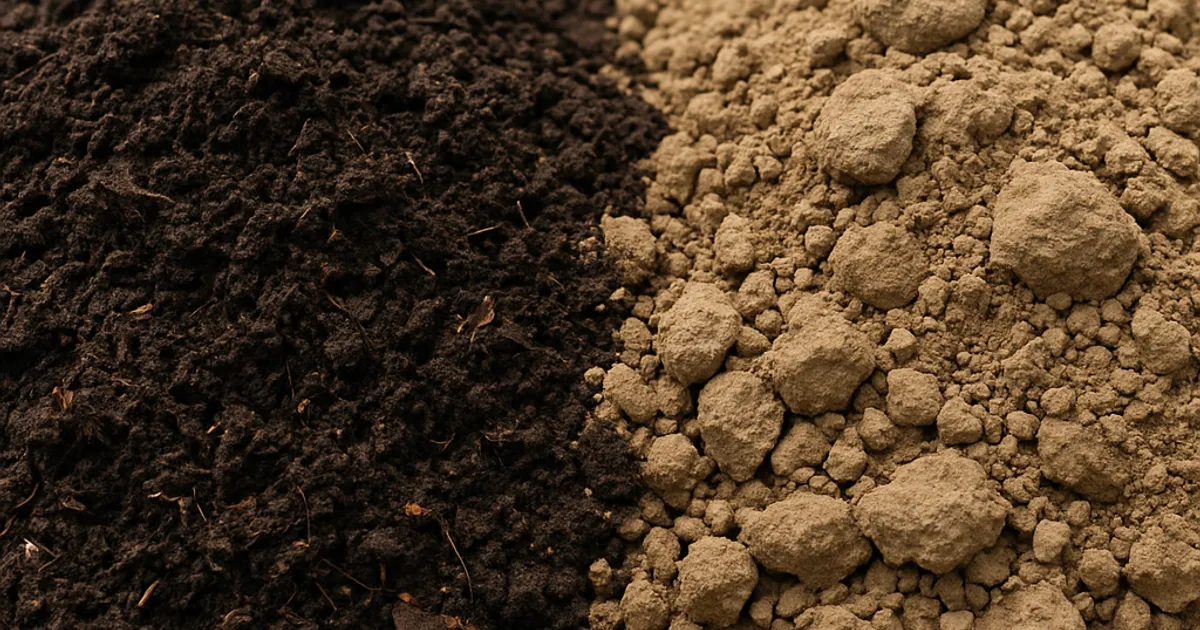
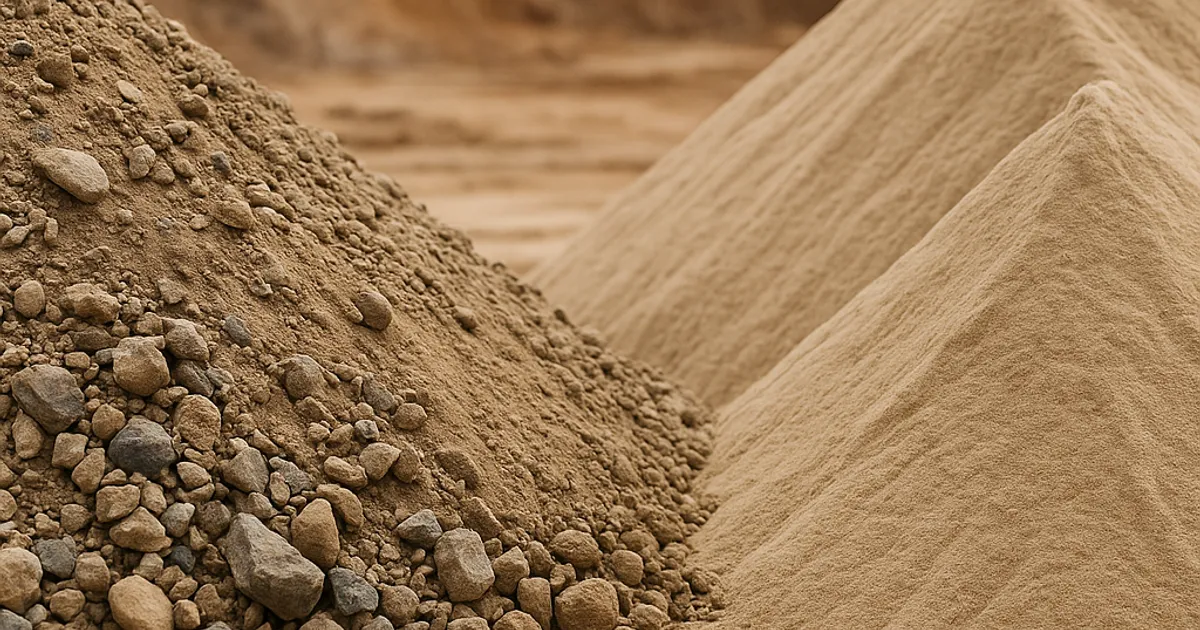
From a classification standpoint, subgrade soils are categorized using systems like the ASTM International Unified Soil Classification System (USCS), defined under ASTM D2487, or the AASHTO soil classification system used widely in highway construction. These systems divide soils into groups based on grain size, plasticity, and behavior, ranging from gravels and sands at the high-performance end to highly plastic clays and organic soils at the problematic end.
The bearing capacity of subgrade soil is typically expressed using the California Bearing Ratio (CBR), a percentage that compares the material's resistance to penetration against a standard crushed-rock baseline. A CBR of 2 to 3 represents weak clay; a CBR above 20 represents excellent granular material. Most highway design relies on CBR values between 5 and 15 for native subgrades.
Why Subgrade Quality Varies So Dramatically
Soil is not a uniform material. It changes based on geology, climate, groundwater, organic content, and land use history. A project site in the Denver Front Range may encounter highly expansive claystone just a few feet down. A coastal project in the San Francisco Bay Area may run into Bay Mud, one of the most notoriously compressible and weak native soils in the country. Rocky soils in New England behave entirely differently from the sandy loams of the Southeast.
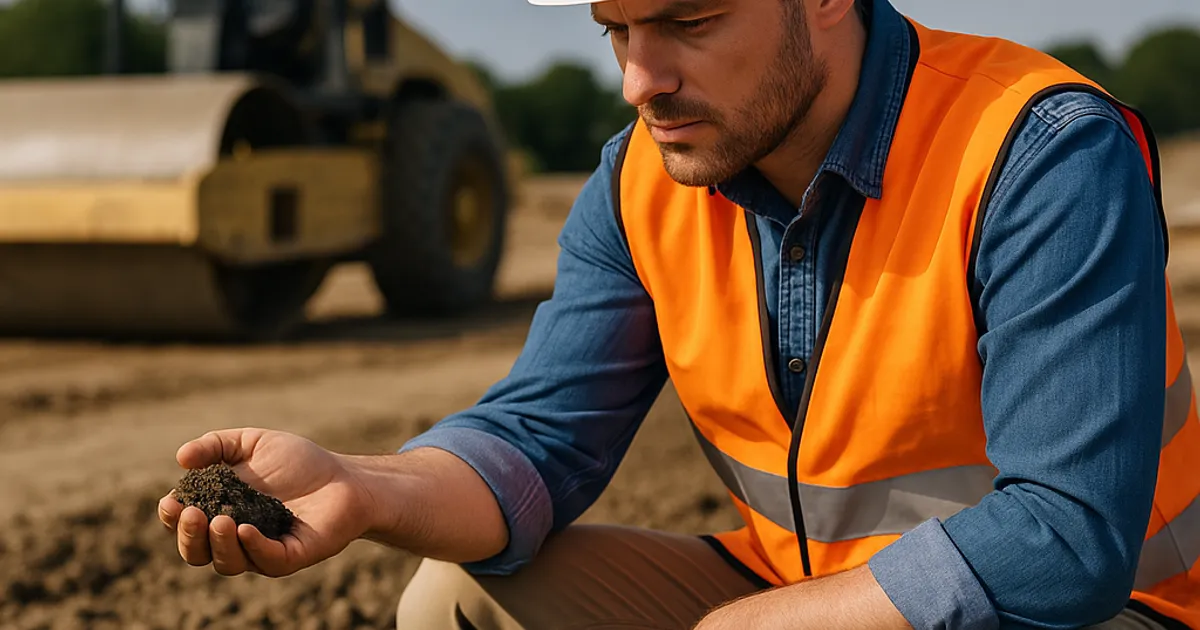
This variability is why geotechnical investigation, including soil borings, lab testing, and in-situ testing such as Standard Penetration Tests (SPT) or Dynamic Cone Penetrometer (DCP) readings, is a non-negotiable first step in any significant earthwork project.
Subbase vs. Subgrade: Understanding the Difference
One of the most common sources of confusion in pavement and foundation engineering is the distinction between subgrade and subbase. These terms are related but refer to different layers with different functions.
| Layer | Position | Function | Typical Material |
|---|---|---|---|
| Surface Course | Top | Wear and skid resistance | Asphalt, concrete |
| Base Course | Below surface | Load distribution | Crushed aggregate |
| Subbase | Below base | Drainage, load spread | Crushed gravel or stone |
| Subgrade | Bottom | Ultimate load support | Native or compacted soil |
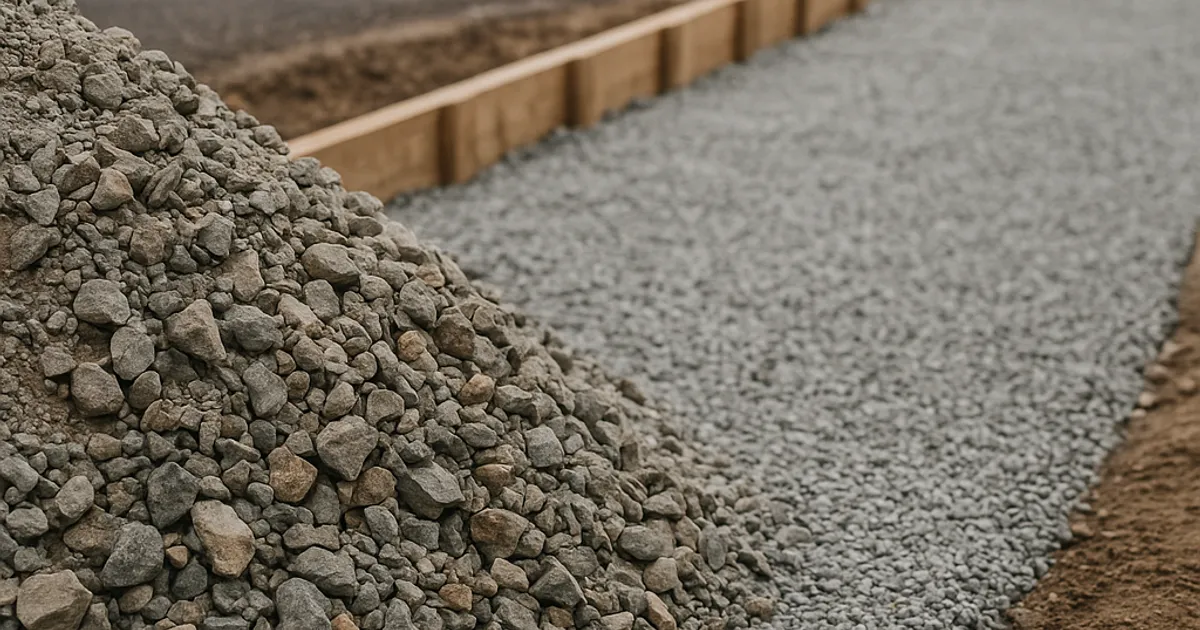
The subgrade is the in-situ or prepared soil layer. The subbase is an engineered granular layer placed on top of the subgrade to improve load distribution, provide drainage, and act as a working platform. Think of the subbase as a buffer between the natural earth and the structural pavement layers above.
Why does the distinction matter? Because design decisions flow downward. Pavement engineers calculate required base and subbase thicknesses based on subgrade CBR values. A weak subgrade (CBR of 3 to 5) may require 12 to 18 inches of subbase to support a lightly trafficked road, while a strong subgrade (CBR of 15 or higher) might need only 4 to 6 inches. Getting this relationship wrong leads to either over-designed (expensive) or under-designed (failing) pavements.
When Subbase Can Be Eliminated
On projects with strong native subgrades or where stabilization has been performed, engineers sometimes eliminate the subbase entirely and place the base course directly on the prepared subgrade. This is called a "full-depth" design and is more common in areas with stable granular soils. However, eliminating the subbase requires rigorous verification that the subgrade meets or exceeds design CBR requirements, confirmed through field testing.
How Subgrade Soil Affects Structural Performance
Every load applied to a pavement or floor system travels downward through the layers and ultimately dissipates into the subgrade. The subgrade's job is to spread that load over a large enough area that stress levels stay within the soil's elastic range. If stresses exceed the soil's capacity, permanent deformation, or rutting, occurs.
In flexible pavement design (asphalt roads), the subgrade is the controlling factor in determining pavement thickness. The AASHTO Pavement Design Guide and its successor, the Mechanistic-Empirical Pavement Design Guide (MEPDG), both use subgrade resilient modulus (Mr) as the primary soil input. Resilient modulus measures how stiff the soil is under repeated loading, and it is directly related to CBR (roughly, Mr in psi equals 1,500 times CBR for most cohesive soils).
For rigid pavements (concrete), subgrade support is expressed as the modulus of subgrade reaction (k-value), which describes how much the subgrade deflects under a given pressure. A soft clay subgrade might have a k-value of 50 to 100 pci, while a well-compacted granular subgrade can reach 200 to 400 pci or higher.
The Long-Term Cost of Poor Subgrade Preparation
Investing in proper subgrade preparation pays dividends that dwarf the upfront cost. A road built on a poorly prepared subgrade may require rehabilitation within 5 to 8 years. The same road built on a properly prepared subgrade can last 20 to 30 years before major intervention. Given that pavement rehabilitation costs can run $50,000 to $200,000 or more per lane-mile depending on the scope, skimping on subgrade prep is rarely a cost-saving measure in any real sense.
Building owners face similar risks. A warehouse slab built over weak or unevenly compacted subgrade can crack, heave, or settle, disrupting operations, damaging racking systems, and creating liability. Repair costs for slab-on-grade issues frequently reach six figures and sometimes require complete demolition and replacement.
Subgrade Compaction: The Core of Proper Preparation
Compaction is the process of mechanically densifying the soil to reduce air voids, increase stiffness, and improve resistance to moisture and load. It is the most critical activity in subgrade preparation, and it is governed by well-established standards that every earthwork contractor should know inside and out.
Proctor Testing and Moisture-Density Relationships
Before compaction can be specified or verified, the soil's moisture-density relationship must be established. This is done using either the Standard Proctor Test (ASTM D698) or the Modified Proctor Test (ASTM D1557). Both tests compact soil at varying moisture contents and measure the resulting dry density, producing a curve with a clear peak, the maximum dry density (MDD), achieved at the optimum moisture content (OMC).
Field compaction specifications are then written as a percentage of the laboratory MDD. Common requirements include:
- 95% of Modified Proctor MDD for most highway subgrades
- 90% of Modified Proctor MDD for subgrade under light-duty pavements or parking areas
- 98% of Modified Proctor MDD for heavy industrial or airfield applications
Achieving these targets requires compacting at or near optimum moisture content. Soil that is too dry will not compact efficiently and may be brittle. Soil that is too wet will pump and deform under compaction equipment rather than densifying.
Compaction Equipment and Methods
The right compaction equipment depends on the soil type, lift thickness, and required density. Common options include:
Vibratory Smooth Drum Rollers: Ideal for granular soils (sands and gravels). The vibration causes particles to rearrange into a denser configuration. Manufacturers like Caterpillar Construction and Komatsu produce heavy vibratory rollers capable of compacting lifts up to 12 to 18 inches in granular materials.
Padfoot (Sheepsfoot) Rollers: Best for cohesive soils (clays and silts). The protruding feet penetrate and knead the soil, breaking up clods and achieving density from the bottom of the lift upward.
Pneumatic Tire Rollers: Useful for a wide range of soils and particularly effective for kneading and sealing fine-grained materials.
Plate Compactors and Jumping Jacks: Used in confined areas, trenches, and around structures where large equipment cannot operate.
Lift thickness is a critical variable. Most specifications limit loose lift thickness to 8 to 12 inches for granular materials and 6 to 8 inches for cohesive soils, ensuring that the compaction energy reaches the full depth of each layer.
Field Compaction Testing
Once compaction is performed, field testing verifies that specified densities are achieved. Standard methods include:
- Nuclear Density Gauge (ASTM D6938): Fast, widely used, provides immediate results
- Sand Cone Test (ASTM D1556): Reference method, slightly slower but no radioactive materials required
- Dynamic Cone Penetrometer (DCP): Provides continuous profile of strength with depth, correlates to CBR
- Intelligent Compaction (IC): GPS-equipped rollers that continuously measure and map compaction, reducing the need for spot testing
Intelligent compaction technology, offered by systems like Trimble Construction machine control platforms, has become increasingly common on large highway and airport projects. IC systems map compaction coverage and stiffness in real time, flagging areas that may be undercompacted before the next layer is placed.
Problem Soils and How to Address Them
Not every subgrade soil is cooperative. Problem soils require special treatment to achieve the required bearing capacity, and identifying them early, during geotechnical investigation, is essential to project planning and budgeting.
Expansive Clays
Expansive clays, common in the Mountain West, Southern Plains, and parts of California, swell when wet and shrink when dry. This cyclic volume change is one of the leading causes of pavement cracking and building foundation distress in the United States. The mineral montmorillonite (smectite) is the primary driver of expansive behavior, and soils with high plasticity indices (PI greater than 20 to 25) warrant careful attention.
Mitigation options include:
- Lime stabilization: Adding hydrated lime at 3 to 8% by dry weight reduces plasticity, increases stiffness, and limits swell. It is one of the most cost-effective treatments for high-PI clays.
- Cement stabilization: Portland cement at 3 to 6% creates a stiffer, more durable subgrade but is less flexible than lime treatment.
- Undercut and replace: In severe cases, excavating the problematic soil and replacing it with select fill or granular material is the most reliable solution.
For projects in areas like dirt exchange in Denver where expansive Front Range soils are prevalent, working with experienced earthwork contractors who understand local soil conditions is invaluable.
Soft and Compressible Soils
Organic soils, peat, and soft clays present bearing capacity and settlement challenges. These materials may have very low CBR values (1 or 2) and consolidate over time under sustained loading, causing long-term settlement. Treatment options include:
- Complete excavation and replacement with structural fill
- Surcharge preloading to accelerate consolidation before paving
- Wick drains or prefabricated vertical drains to speed drainage
- Geosynthetic reinforcement (geotextiles or geogrids) to bridge weak zones
- Deep soil mixing or column-supported embankments for extreme conditions
Projects in the San Francisco Bay Area regularly contend with Bay Mud, and earthwork contractors working in the region through dirt exchange in San Francisco know that subgrade treatment is rarely optional.
Frost-Susceptible Soils
In northern climates, frost heave poses a serious threat to pavement integrity. Fine-grained silts and some clays are highly frost-susceptible, meaning they draw moisture upward as the frost front advances and form ice lenses that lift the pavement surface. When thawing occurs in spring, the subgrade loses much of its bearing capacity during the "spring thaw" period.
Design solutions include:
- Providing adequate pavement thickness to insulate the subgrade from freezing
- Using non-frost-susceptible granular materials in the subgrade zone
- Installing subsurface drainage to lower the water table and limit moisture availability
- Designing for reduced load capacity during spring thaw periods
Road Subgrade Design and Construction Workflow
For highway and road construction specifically, subgrade preparation follows a structured workflow that begins well before any equipment hits the ground.
Step 1: Geotechnical Investigation
Soil borings, test pits, and laboratory analysis establish baseline subgrade conditions. The USDA Web Soil Survey provides a free starting point for understanding regional soil types and properties, though site-specific borings are required for engineered design.
Step 2: Subgrade Design and Treatment Planning
Based on geotechnical findings, the pavement design team selects subgrade treatment methods and establishes target CBR or resilient modulus values. Stabilization mix designs are developed and tested in the laboratory before field application.
Step 3: Clearing, Grubbing, and Stripping
Vegetation, topsoil, and organic material are removed from the subgrade zone. Topsoil typically has high organic content and low bearing capacity; it must be stripped and stockpiled separately. Strip depths of 6 to 12 inches are common, though areas with deep topsoil or heavy organic accumulation may require more.
Step 4: Rough Grading and Earthwork
The roadway is brought to approximate grade through cut and fill operations. Proper moisture conditioning of fill materials begins during this phase, ensuring that materials are at or near optimum moisture content when compaction begins.
Step 5: Subgrade Treatment
Any required stabilization (lime, cement, geosynthetics) is applied. Mixing and curing occur before final grading begins.
Step 6: Fine Grading and Compaction
The subgrade is brought to final grade, cross-slope, and elevation tolerances specified in the project documents. Compaction is performed in controlled lifts, with density testing at specified intervals (commonly every 500 to 2,000 square feet depending on the specification).
Step 7: Proof Rolling
A loaded tandem-axle truck or heavy roller makes passes over the finished subgrade while inspectors watch for pumping, rutting, or deflection. Areas that move visibly under proof rolling are flagged for additional compaction or undercut and replacement.
Step 8: Subbase and Base Placement
Once the subgrade passes proof rolling and density testing, subbase and base course placement can begin. Timing matters: placing subbase immediately after subgrade acceptance prevents moisture infiltration and disturbance from construction traffic.
Managing Moisture: The Most Critical Variable
If there is one factor that derails more subgrade preparation efforts than any other, it is moisture. Soil moisture content governs compactibility, strength, and long-term stability in ways that temperature, soil type, and equipment selection cannot fully overcome.
When soil moisture is too high, rubber-tire equipment causes pumping and rutting rather than compaction. Roller passes push water from one location to another without increasing density. The solution involves waiting for natural drying (weather permitting), scarifying and aerating the soil to accelerate evaporation, or blending dry granular materials to reduce moisture content.
When soil moisture is too low, particularly in arid regions like the Southwest, soil may be friable and difficult to compact uniformly. Water trucks must be used to add moisture incrementally, working the water in with a disk or rotary mixer before compaction passes.
For projects in regions with seasonal precipitation challenges, such as the Pacific Northwest or the northern Great Plains, scheduling subgrade work during appropriate windows is a project management discipline in itself. Earthwork contractors who can move quickly on subgrade prep when conditions are right often gain a competitive advantage on time-sensitive projects.
For contractors sourcing select fill material or importing granular material to improve problematic subgrades, DirtMatch connects earthwork professionals with nearby sources of fill dirt, granular subbase material, and aggregate, helping teams find the right material at the right price without burning time on phone calls and broker negotiations.
Find or Post Dirt, Rock & Aggregate
Join thousands of contractors using DirtMatch to buy, sell, and exchange earthwork materials.
Try DirtMatch FreeSubgrade Preparation for Buildings and Slabs
While highway subgrade design gets much of the technical attention, building and slab-on-grade construction has its own set of subgrade considerations that directly affect structural performance and occupant experience.
Residential Construction
For residential foundations, the subgrade beneath footings and slabs must be capable of supporting design bearing pressures without excessive settlement. The NAHB recommends that residential subgrades achieve a minimum bearing capacity of 1,500 to 2,000 pounds per square foot under most footing conditions, though this varies by local codes and structural loads.
Key preparation steps for residential subgrades include:
- Removing all topsoil and organic material from the building footprint
- Proofrolling or observing for soft spots before slab or footing work
- Placing and compacting structural fill in uniform lifts where fill is required
- Providing positive drainage away from the building to limit subgrade moisture variation
Commercial and Industrial Slabs
Warehouse and industrial floor slabs demand especially rigorous subgrade preparation because floor flatness, joint behavior, and long-term slab performance depend heavily on uniform subgrade support. Differential settlement beneath an industrial slab can cause joints to fault, creating trip hazards and forklift damage. Large-format distribution centers routinely specify subgrade CBR values of 10 or higher and may require compaction to 98% of Modified Proctor MDD.
In high-load industrial applications, some engineers specify aggregate subbase layers 12 to 24 inches thick to distribute loads and reduce subgrade stress, particularly under high-rack storage systems where point loads from rack legs can be substantial.
Geosynthetics in Subgrade Stabilization
Geosynthetic materials have become a standard tool in subgrade stabilization and reinforcement, particularly where weak native soils must be bridged or where aggregate subbase thickness must be minimized to control costs.
Geotextiles
Non-woven geotextiles placed directly on the subgrade serve two functions: separation (keeping subbase aggregate from migrating into weak subgrade soil) and filtration (allowing water to pass while retaining soil fines). On projects with CBR values below 3, a separation geotextile can reduce required subbase thickness by 20 to 40%, representing significant aggregate and cost savings.
Geogrids
Geogrids interlock with aggregate particles to create a mechanically stabilized layer that distributes loads more effectively than aggregate alone. Biaxial and triaxial geogrids are commonly used beneath aggregate subbase or working platforms to improve support over weak subgrades. Published research shows that geogrid reinforcement can reduce required aggregate thickness by 30 to 50% in some applications.
Geocells
Geocell confinement systems, three-dimensional honeycomb-like structures filled with aggregate or soil, provide strong lateral confinement that dramatically increases the bearing capacity of the filled material. Geocells are particularly effective for access road construction over very soft ground and can allow equipment access to sites that would otherwise be inaccessible.
Environmental and Regulatory Considerations
Subgrade preparation does not occur in a regulatory vacuum. Several environmental and safety requirements govern how earthwork is planned and executed.
The EPA Stormwater Construction program requires that construction sites of one acre or more implement Stormwater Pollution Prevention Plans (SWPPP), which directly affect how subgrade earthwork is sequenced and managed. Disturbed subgrade soils are highly erodible, and SWPPP measures including silt fences, inlet protection, and sediment basins must be installed and maintained throughout the earthwork phase.
For projects involving fill placement in or near wetlands, Army Corps of Engineers Section 404 permits may be required. Projects that inadvertently place fill in jurisdictional wetlands face significant penalties and potential project shutdown.
Contractors working on sites with known or suspected contamination must follow soil management plans that address handling, testing, and disposal of impacted materials. Imported fill used for subgrade improvement must also be verified as clean, as bringing contaminated materials onto a project site creates liability.
Quality Control and Documentation
A robust quality control program for subgrade preparation is both a contractual requirement and a risk management tool. Without proper documentation, contractors are exposed to disputes over whether specified compaction was achieved or whether problem conditions were properly reported.
Essential QC documentation for subgrade work includes:
- Proctor test reports establishing MDD and OMC for each soil type used
- Field density test logs with location, depth, moisture content, and percent compaction
- Proof rolling observation reports noting any areas of instability
- Subgrade treatment records (lime or cement application rates, mixing depths, curing times)
- Grade survey data confirming subgrade elevation and cross-slope
- Photographic documentation of problem areas encountered and corrective actions taken
Many state DOT specifications require that compaction records be submitted as part of as-built documentation, and failure to maintain adequate records can delay progress payments or create disputes at project closeout.
For contractors looking to scale their earthwork operations or take on more sophisticated subgrade projects, DirtMatch Pro offers tools to connect with verified material suppliers and fellow contractors, making it easier to source the right fill, aggregate, or amendment materials for any subgrade condition quickly.
Cost Factors in Subgrade Preparation
Budgeting for subgrade preparation requires understanding the key cost drivers and where the biggest variables lie.
| Cost Item | Typical Range (2026) | Key Variables |
|---|---|---|
| Geotechnical investigation | $5,000 to $50,000+ | Site size, boring depth, lab tests required |
| Clearing and stripping | $1,500 to $5,000 per acre | Vegetation density, strip depth |
| Lime stabilization | $8 to $18 per square yard | Lime rate, mixing depth, equipment mobilization |
| Cement stabilization | $10 to $22 per square yard | Cement rate, mixing depth |
| Undercut and replace | $15 to $40 per cubic yard | Excavation depth, haul distance, fill material cost |
| Aggregate subbase | $20 to $55 per cubic yard installed | Material cost, haul distance, compaction requirements |
| Compaction testing | $500 to $2,000 per day | Testing frequency, lab vs. field methods |
| Geosynthetics | $0.50 to $3.00 per square foot | Product type, installation conditions |
Haul distance for both removed unsuitable material and imported fill or aggregate is often the largest variable in subgrade preparation costs. Reducing haul distances by sourcing materials locally can save $5 to $25 per ton, which adds up quickly on large projects. Platforms like DirtMatch help contractors find nearby sources of fill dirt, select borrow, and granular aggregate, cutting material costs and trucking time simultaneously.
Regional Subgrade Challenges Worth Knowing
Subgrade conditions vary dramatically by geography, and experienced contractors calibrate their approach based on regional soil realities.
In the Pacific Northwest and along the West Coast, wet winters and high water tables create persistent moisture management challenges. Projects in the dirt exchange in Seattle market frequently require working platforms of imported granular material just to establish stable equipment access during winter earthwork seasons.
In the Mountain West, expansive soils and high-altitude freeze-thaw cycles dominate the subgrade conversation. Rocky soils require blasting or ripping before fine grading, and the resulting material may be angular and gap-graded, requiring careful assessment before use as compacted fill.
Along the Gulf Coast and in Florida, high groundwater tables and organic soils are the primary challenge. Organic material content must be verified to be below 3 to 5% before material is accepted as structural subgrade fill.
Conclusion: Subgrade Is Not a Place to Cut Corners
Subgrade soil is where projects either earn their longevity or mortgage their future. The hours and dollars invested in proper subgrade investigation, treatment, compaction, and verification pay returns that extend across the entire design life of a pavement or structure. Shortcuts at the subgrade level are almost always more expensive in the long run, measured not just in repair costs but in contractor reputation, owner relationships, and project legacy.
For earthwork professionals who take subgrade preparation seriously, having reliable access to quality fill materials, granular aggregate, and amendment products is essential. Whether you are conditioning an expansive clay subgrade with imported granular select fill or seeking aggregate for a thick subbase over a weak native soil, being able to find the right material quickly changes your ability to execute.
Get started with DirtMatch to connect with verified material sources and earthwork contractors across the country, and make sure your next subgrade is one that performs for decades to come.