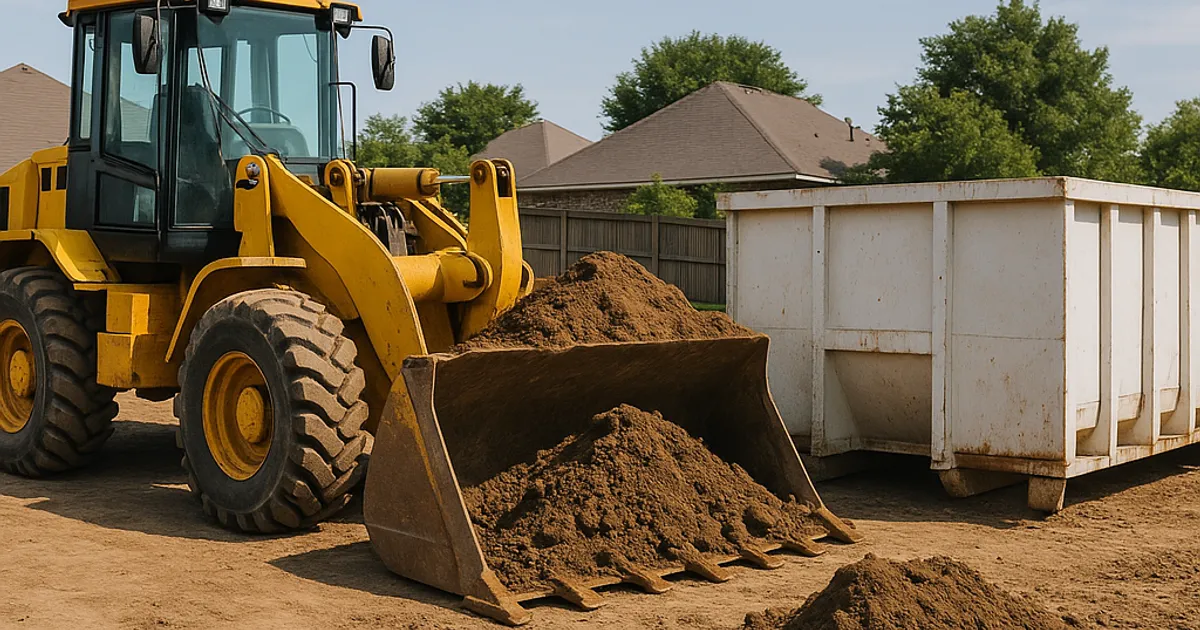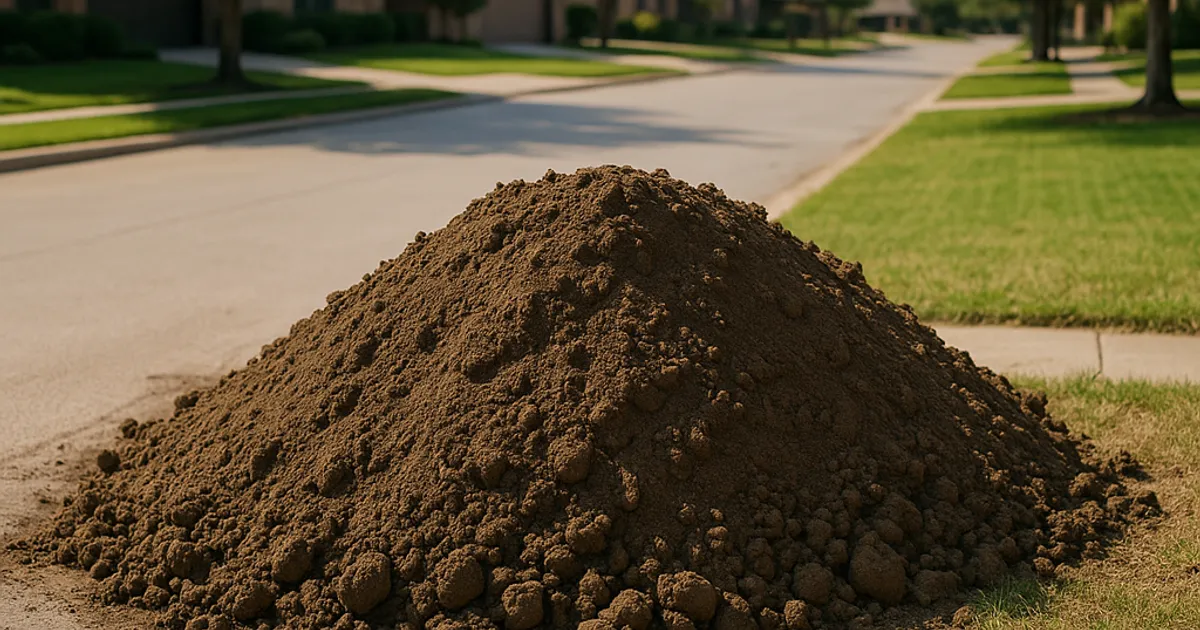
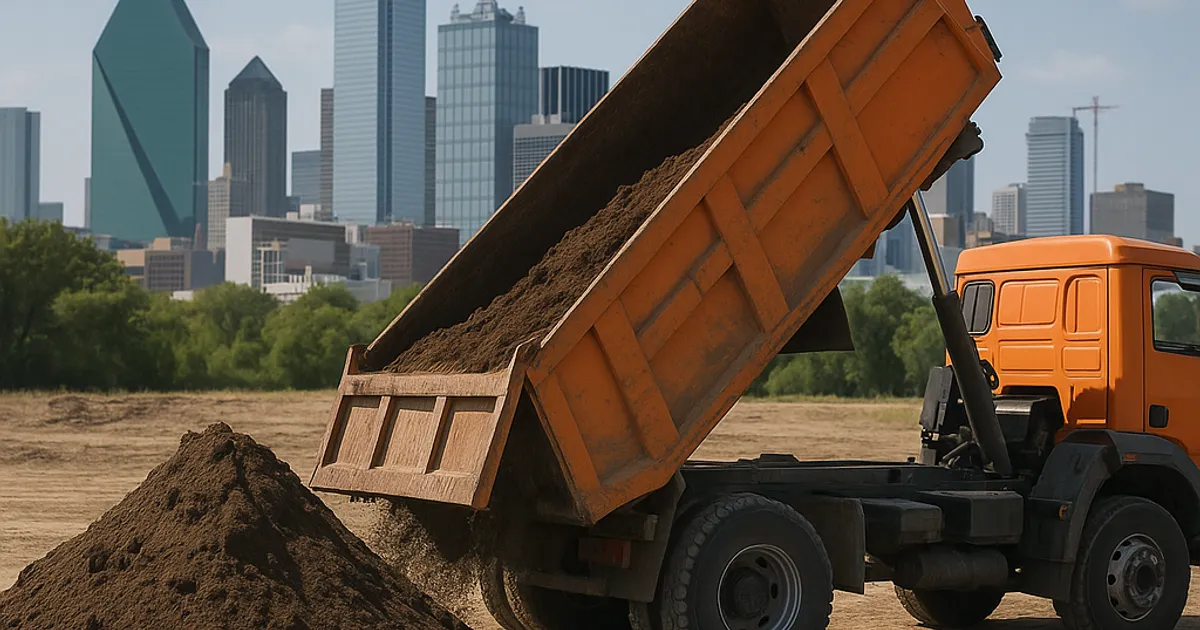
Every construction project in Dallas generates dirt — sometimes a surprising amount of it. Whether you're excavating a foundation in Uptown, grading a lot in Frisco, or clearing land out near Rockwall, you're going to end up with spoil material that needs somewhere to go. The problem is that "somewhere" isn't always obvious, and choosing the wrong option can cost you thousands of dollars in hauling fees, fines, or wasted time.
Dallas-Fort Worth is one of the fastest-growing metro areas in the country, with billions of dollars in active construction at any given time. That growth is great for the industry, but it also means competition for disposal capacity, rising tipping fees, and an increasingly complex regulatory environment around where and how you can legally deposit excavated soil. In 2024 alone, the DFW metroplex permitted over 47,000 new residential units — each one generating tens to hundreds of cubic yards of displaced fill material.
This guide covers everything: the legal dump sites available in and around Dallas, what it costs to use them, the regulations you need to understand before you load a single truck, and — importantly — the smarter alternatives that can turn your dirt problem into someone else's solution at little or no cost to you.
Understanding Dallas's Dirt Disposal Landscape
Before you start calling landfills or Googling "dump site Dallas," it helps to understand what you're actually working with. Not all dirt is created equal, and Dallas's regulatory environment treats different types of excavated material very differently.
Clean Fill vs. Contaminated Soil
The most fundamental distinction in dirt disposal is whether your material is clean fill or contaminated soil. Clean fill — also called uncontaminated fill dirt or virgin soil — is excavated earth that contains no hazardous materials, construction debris, organic matter, or chemical contamination. It can typically be deposited at far more locations, often for lower fees or even for free.
Contaminated soil, on the other hand, may contain petroleum hydrocarbons, heavy metals, pesticides, asbestos fibers, or other regulated substances. In Dallas, sites near older industrial corridors (particularly along the Trinity River industrial district or older neighborhoods in South Dallas), former gas stations, dry cleaners, or agricultural properties are more likely to yield contaminated material. This type of soil requires licensed disposal at a permitted hazardous or industrial waste facility and will cost significantly more to process.
If you're excavating on a site with an unknown history, it's worth investing in a Phase I Environmental Site Assessment before breaking ground. The cost — typically $1,500 to $3,500 in the Dallas market — is far less than the liability exposure of improperly disposing of contaminated material.
The Texas Commission on Environmental Quality (TCEQ) Framework
In Texas, the primary regulatory body overseeing soil and solid waste disposal is the Texas Commission on Environmental Quality (TCEQ). TCEQ administers the state's solid waste rules under Title 30 of the Texas Administrative Code (TAC), Chapter 330, which governs municipal solid waste facilities, and Chapter 335, which covers industrial solid waste. Excavated clean fill generally falls outside the definition of "solid waste" under Texas law — but that exemption disappears the moment the material is mixed with debris, trash, or contaminated soil.
For construction projects over one acre that disturb soil, you'll also need to comply with EPA stormwater discharge requirements. The EPA's stormwater construction permit program requires a Construction General Permit (CGP) and a Storm Water Pollution Prevention Plan (SWPPP), which governs how soil is managed and transported on your site. Violating these requirements during dirt hauling and disposal operations can result in fines starting at $10,000 per day.
City of Dallas Solid Waste Regulations
Within the city limits of Dallas, the Code of Ordinances Chapter 18 governs solid waste management and includes provisions for construction and demolition debris. Illegally dumping dirt or construction waste — even apparently clean soil — on public or private property without authorization is a Class C misdemeanor in Dallas, with fines up to $2,000 per offense. The city's Code Compliance Services department actively monitors for illegal dumping, particularly along creek corridors and undeveloped tracts in South and West Dallas.
Where to Legally Dump Dirt in Dallas: Your Site-by-Site Guide
Dallas and its surrounding communities are served by a variety of permitted disposal facilities. Options range from large regional landfills that accept construction and demolition (C&D) debris to smaller transfer stations and specialized fill sites. Here's what you need to know about each.
Construction and Demolition (C&D) Landfills
C&D landfills are the most straightforward option for disposing of excavated dirt, especially when you're not sure of the soil's composition or cleanliness. These facilities are permitted by TCEQ to accept inert materials including soil, concrete, asphalt, brick, and similar construction debris.
McCommas Bluff Landfill — Operated by the City of Dallas, McCommas Bluff is located at 5100 Youngblood Road in southeast Dallas. It's one of the largest municipal landfills in Texas and accepts clean construction fill. Tipping fees for clean soil and inert fill material run approximately $12 to $18 per ton for commercial loads. Hours are typically Monday through Saturday. Note that they require loads to be free of trash, hazardous materials, and liquid waste.
Republic Services — Dallas Area Facilities — Republic Services operates multiple transfer stations and landfill facilities in the DFW region. Their Skyline Landfill in Hutchins (just south of Dallas along I-45) accepts C&D material. Tipping fees vary but generally range from $15 to $25 per ton for excavated soil, depending on load composition and volume agreements.
Waste Connections — North Texas — Waste Connections serves the northern DFW market with several transfer and disposal facilities. Contractors in Plano, McKinney, and Frisco often use Waste Connections facilities for dirt disposal. Call ahead for current tipping fee schedules, as these change quarterly.
Texas Disposal Systems (TDS) — While headquartered in Creedmoor (near Austin), TDS also operates facilities that serve portions of North Texas. Their landfills are known for accepting a wider range of materials and offering competitive pricing for large-volume disposal contracts.
Transfer Stations in the Dallas Area
Transfer stations aren't technically disposal sites — they stage material for transport to a final landfill — but they can be more conveniently located and more flexible on operating hours than full landfills.
- Dallas Northwest Transfer Station — Located on Gulden Lane in northwest Dallas, this facility handles C&D debris and can accept clean fill. Fees are comparable to landfill tipping rates.
- Garland Transfer Station — Serves contractors working in eastern Dallas County and Garland proper.
- Irving Recycling and Solid Waste — Irving operates a solid waste facility at 1700 Delaware Creek Drive. Contact the City of Irving Public Works for current rates and acceptable materials.
- Mesquite C&D Facility — Serves the eastern corridor of DFW, convenient for contractors working in Garland, Rowlett, and Mesquite.
City-Operated Brush and Inert Debris Sites
Several DFW municipalities operate smaller inert debris acceptance sites where residents and sometimes contractors can drop off clean fill, concrete, and brush. These tend to have lower or no fees but stricter volume limits.
- City of Plano Recycling Center — Accepts inert fill material from Plano residents. Limited commercial access.
- Fort Worth Environmental Collection Center — Fort Worth's facility on White Settlement Road accepts limited quantities of clean fill dirt from Tarrant County residents.
- Arlington Solid Waste Division — Operates facilities that may accept small volumes of clean fill. Call 817-459-5153 for current policies.
Tipping Fees and Total Cost of Dirt Disposal in Dallas
Understanding the true cost of dirt disposal requires looking beyond the per-ton tipping fee. Here's a complete breakdown of what you're likely to spend.
Fee Structures at a Glance
| Disposal Option | Tipping Fee | Load Requirements | Best For |
|---|---|---|---|
| C&D Landfill (clean fill) | $12–$25/ton | Commercial loads, clean material | Large volumes, contractors |
| Municipal Landfill | $15–$22/ton | TCEQ-permitted, no hazmat | Mixed C&D with soil |
| Transfer Station | $14–$20/ton | Pre-sorted loads preferred | Mid-sized loads |
| Hazardous Waste Facility | $80–$200+/ton | Licensed manifest required | Contaminated soil |
| Free Fill Exchange | $0 tipping fee | Usually clean fill only | Clean excavated soil |
| Private Land (permitted) | Negotiated | Landowner permission + TCEQ | Bulk fill operations |
Hauling Costs: The Hidden Expense
The tipping fee is only part of your dirt disposal budget. Hauling — the cost of trucking your material from the excavation site to the dump site — often exceeds the tipping fee itself.
In the Dallas market, end-dump trucks typically haul 14 to 18 tons of soil per load. Hauling costs run $85 to $150 per load for short hauls within the metro area, and can climb to $200+ per load for sites on the fringe of the market (Weatherford, Ennis, Corsicana).
For a typical residential foundation excavation producing 500 cubic yards of spoil material:
- 500 CY ÷ 14 CY/truck ≈ 36 truckloads
- Hauling: 36 × $110 = $3,960
- Tipping (at $15/ton × ~1.2 tons/CY × 500 CY): $9,000
- Total disposal cost: ~$12,960
That's a meaningful line item on any project budget — and exactly why savvy contractors look for alternatives before defaulting to the landfill.
The Smart Alternative: Dirt Exchanges and Fill Matching
Here's the thing most contractors in Dallas don't fully leverage: your unwanted excavated dirt is almost certainly someone else's needed fill material. The DFW construction market is massive and perpetually hungry for clean fill. Subdivisions expanding in Celina and Anna need fill for pads. Golf course renovations in North Dallas need topsoil. Highway projects need embankment material. The demand is there — the challenge has always been connecting supply with demand efficiently.
This is exactly the problem that DirtMatch was built to solve. Rather than paying to haul your clean fill to a landfill, DirtMatch's platform connects excavators, grading contractors, and site-prep crews with builders, developers, and landowners who need fill material — often within just a few miles of each other.
The DirtMatch marketplace for fill dirt in Dallas currently shows over 586,000 yards of material available and more than 1.5 million yards needed across active listings — that's a substantial supply-demand gap that represents real opportunity for contractors willing to list their excess material. In the last 30 days alone, the platform recorded 1,093 matches across Texas. For example, there's currently 5,000 yards of clean fill dirt available in Irving, TX and active requests for clean fill in Frisco and Burleson — exactly the kind of hyperlocal connections that save hauling costs on both ends of the transaction.
For contractors who want to understand how the matching process works before signing up, the how DirtMatch works page walks through the entire workflow from listing your material to completing a match.
Benefits of Dirt Exchanges vs. Traditional Disposal
- Eliminate or dramatically reduce tipping fees — If someone picks up your dirt, your disposal cost may drop to near zero
- Reduce hauling distance — Local matches mean shorter hauls, lower fuel costs, and fewer truck hours
- Earn revenue from excess material — In high-demand markets, clean fill with good gradation can command $2–$8 per yard
- Reduce environmental footprint — Keeping reusable fill out of landfills is a genuine environmental benefit, and increasingly a requirement on projects with green building certifications
- Faster site clearing — When someone needs your dirt urgently, they often move quickly, which can accelerate your project timeline
Regulations You Must Know Before Hauling Dirt in Dallas
Ignoring the regulatory side of dirt disposal is how contractors end up with fines, stop-work orders, or worse. Here's a practical overview of the rules that govern dirt hauling and disposal in the Dallas area.
TCEQ Solid Waste Rules
As mentioned earlier, TCEQ Chapter 330 governs waste disposal in Texas. Clean, uncontaminated fill dirt is generally exempt from solid waste classification — but this exemption requires the material to actually be used as fill, not stockpiled indefinitely or mixed with other waste. If your "dirt" contains concrete chunks, rebar, wood scraps, or other debris, it may no longer qualify for exemption and could require disposal at a registered C&D facility.
Truck Permits and Weight Limits
Texas has some of the most specific overweight trucking rules in the nation. Dump trucks hauling fill dirt on state highways must comply with Texas Department of Transportation (TxDOT) load limits — typically 80,000 lbs gross vehicle weight on interstate highways and varying limits on state and county roads. Dallas County road weight limits are posted at county line entrances and on TxDOT's online permit system. Overweight trucks that damage roads can face liability for repair costs in addition to fines.
Commercial trucks over 26,001 lbs GVWR also fall under FMCSA regulations, including hours-of-service requirements and CDL standards, which apply to most end-dump and belly-dump operators in this market.
Stormwater and Erosion Control
When you're hauling dirt, you're also potentially tracking mud and sediment onto public roads — which creates its own regulatory issue. Dallas and most DFW municipalities require stabilized construction entrances (typically crushed stone tracking pads) at sites where trucks exit to public roads. Failure to control trackout can result in citations from city code compliance.
For larger sites (over one acre of disturbance), a SWPPP is required under EPA's Construction General Permit, and dirt management practices — including how and where spoil is stockpiled before hauling — must be addressed in that plan.
Wetlands and Protected Areas
Dallas sits within the Trinity River watershed, and portions of the metro area contain jurisdictional wetlands regulated under Section 404 of the Clean Water Act, administered by the U.S. Army Corps of Engineers. Filling wetlands or Waters of the U.S. without an Army Corps permit is a federal violation with serious penalties. If your dirt disposal site is near a creek, pond, or low-lying area that could be jurisdictional, consult with an environmental consultant before depositing any fill.
Private Land Disposal: What's Legal and What's Not
Many contractors in Dallas — especially those working in the more rural fringes of the metro in Kaufman County, Ellis County, or Parker County — explore the option of depositing fill on private agricultural or undeveloped land. This can be a legitimate option, but it requires more due diligence than most people realize.
Legitimate Private Fill Operations
A private landowner who wants to raise the grade of their property, fill a low-lying area, or build up a pad site can legally accept fill dirt without a TCEQ permit — provided the fill is clean and inert, the operation is genuinely for site improvement purposes (not just as a dump), and the site doesn't affect any jurisdictional waters or wetlands.
Contractors who bring fill to a landowner typically have a simple written agreement specifying:
- The type and volume of material to be delivered
- Confirmation that the material is clean fill (sometimes supported by a soil test)
- The purpose of the fill (grade improvement, pond dam construction, road building, etc.)
- The delivery schedule and access arrangements
What Makes Private Disposal Illegal
Private land disposal crosses the line into illegal dumping when:
- The material contains construction debris, trash, or hazardous materials
- The "fill" is being used as a pretext for cheap disposal rather than genuine land improvement
- Fill is placed in wetlands, creek beds, or floodplains without permits
- The landowner hasn't given explicit permission
- The site is later used to store waste long-term without TCEQ registration
Local soil and water conservation districts in North Texas counties actively monitor for unauthorized fill operations, particularly those affecting creek corridors and farm ponds.
Find or Post Dirt, Rock & Aggregate
Join thousands of contractors using DirtMatch to buy, sell, and exchange earthwork materials.
Try DirtMatch FreeFree Dirt Disposal Options in Dallas: Think Creatively
Beyond formal landfills and private land arrangements, there's a surprisingly active informal economy around free dirt disposal in the DFW area. These options work best for clean, relatively uniform fill material.
Craigslist and Facebook Marketplace
Posting free fill dirt on Craigslist's Dallas-Fort Worth section or in local Facebook groups ("DFW Home Improvement," "Dallas Landscaping," or neighborhood-specific groups) is a tried-and-true method. The challenge: response quality varies, pickup reliability is inconsistent, and you're typically moving material in small loads rather than full truck quantities.
Nextdoor and Community Boards
Neighborhood platforms like Nextdoor are excellent for residential-scale dirt disposal. A homeowner with a garden project or a neighbor building a raised planting bed may happily take your 20 to 50 cubic yards of topsoil.
Landscape and Nursery Operations
Some landscape supply yards, nurseries, and topsoil blending operations in the Dallas area will accept screened or quality topsoil at no charge — and may even pay for it. Call ahead and be prepared to describe your soil's composition, clay content, and whether it contains any rocks or debris.
Golf Courses and Athletic Fields
Dallas has dozens of golf courses, and many are always interested in quality fill or topsoil for course maintenance and renovation projects. Same with parks departments — DISD (Dallas Independent School District) and Dallas Parks and Recreation occasionally need fill for athletic field projects. These relationships take some outreach to develop, but can yield large-volume disposal opportunities.
DirtMatch for Free Connections
For contractors who want a more systematic and reliable approach than posting on Craigslist, get started with DirtMatch and list your available material on the platform. Because DirtMatch focuses specifically on earthwork materials — not general classified ads — the people on the other end of your listing are actually looking for fill dirt, not free furniture. That specificity makes matches faster and more reliable. The fill dirt in Texas marketplace page shows the scale of active transactions happening statewide, giving you a sense of just how active this market is.
Soil Quality and Testing: Know What You're Hauling
One of the biggest mistakes contractors make when arranging dirt disposal or exchanges is not knowing the quality of their material. This matters in two directions: you need to know it's not contaminated (for legal disposal), and you need to know its engineering properties (for anyone who might want to use it as fill).
Basic Soil Testing in Dallas
Dallas soils are predominantly expansive clay — specifically Houston Black and Austin Clay series — with plasticity indices (PI) often exceeding 40. This heavy clay is notoriously challenging for construction fill because it swells dramatically when wet and shrinks when dry, which can cause foundation movement, pavement cracking, and drainage issues.
For fill material that will be used under slabs, roads, or structures, the receiving party will often want to know:
- Plasticity Index (PI) — tested per ASTM D4318
- Compaction characteristics — Standard Proctor (ASTM D698) or Modified Proctor (ASTM D1557)
- Gradation — ASTM D422 for particle size distribution
- Atterberg Limits — liquid limit and plastic limit per ASTM D4318
Geotechnical labs in the Dallas area — including firms like Terracon, NOVA Group, and Kleinfelder — can perform basic soil characterization for $150 to $400 per sample. On large excavation projects, having this data in hand makes it significantly easier to find a receiving site, because you can demonstrate the material's suitability.
Environmental Screening
If there's any uncertainty about your site's history, consider at minimum a basic environmental screening — a round of soil samples tested for petroleum hydrocarbons (BTEX and TPH), metals, and VOCs. A basic soil screen runs $300 to $800 through an accredited environmental lab. This investment protects you from unknowingly transporting contaminated material and positions your clean fill as verified, which makes it far more attractive to potential recipients.
Dirt Disposal for Homeowners vs. Contractors in Dallas
The resources available for dirt disposal differ significantly depending on whether you're a homeowner with a weekend landscaping project or a commercial contractor clearing a 10-acre development site.
Homeowners: Smaller Scale, More Options
For typical homeowner projects — a pool dig, raised bed construction, drainage correction — you're probably dealing with 10 to 200 cubic yards of material. At this scale:
- City collection programs — Dallas and many DFW suburbs offer occasional inert debris collection or allow small volumes at transfer stations
- Free posting platforms — Craigslist, Nextdoor, and Facebook are viable because the volumes are manageable for someone with a pickup truck
- Local haulers — Small hauling companies in Dallas will often haul and dispose of residential dirt quantities for flat fees of $200 to $600 per truckload, handling both transport and disposal
- Landscape companies — Some will take clean topsoil as part of other landscape services
Contractors: Larger Scale, More Complexity
For commercial contractors managing large earthwork operations in Dallas, the calculus is different:
- Volume means the per-unit cost of disposal adds up fast — every dollar saved per ton matters
- Time is money: landfill queues, weigh station backups, and long hauls are productivity killers
- Regulatory compliance is non-negotiable — the exposure from an illegal dump site far exceeds any short-term savings
- Relationships matter: contractors who develop standing accounts with local landfills and fill exchange partners are better positioned than those who scramble site by site
For commercial-scale operations, DirtMatch Pro offers enhanced tools for managing larger dirt transactions, including priority matching, volume-based features, and the ability to manage multiple active listings simultaneously — particularly useful for GCs managing several active sites across the DFW metro at the same time.
Planning Your Dirt Disposal Strategy: A Step-by-Step Approach
Rather than scrambling to find a dump site after your excavation is already underway, build your disposal plan before the first bucket of dirt moves. Here's how.
Step 1: Characterize Your Material
Determine approximately how much material you'll be generating and what type it is. Use your geotech report if available. Estimate volume from your grading plan (plan area × average cut depth, adjusted for swell factor — Dallas clay typically has a swell factor of 1.25 to 1.35).
Step 2: Assess Contamination Risk
Review the site history. Check EPA's records system (if it's a brownfields-adjacent site), look at historical aerial photos, and talk to neighbors. If there's any doubt, budget for an environmental screen before disposing.
Step 3: Prioritize the Exchange Option
Before contacting a landfill, list your material on a fill exchange platform and post it on community boards. You may be surprised how quickly clean fill disappears in a hot construction market like Dallas. Even if you only move 60% of your material this way, you've meaningfully reduced your disposal costs.
Step 4: Get Landfill Quotes in Parallel
Don't wait until the exchange option is exhausted to call landfills. Get quotes from McCommas Bluff, Republic Services, and any other regional C&D facilities simultaneously so you have a fallback plan and a price benchmark.
Step 5: Arrange Transport
Line up your trucking early. In a hot construction season (typically March through June and September through November in Dallas), dump trucks can be hard to book on short notice. If you're using the exchange route, coordinate truck scheduling with the receiving site — they may have preferred haul days or access restrictions.
Step 6: Document Everything
Maintain records of where your material went, how much was hauled, and who received it. Keep weight tickets from landfills and signed agreements from private fill recipients. This documentation protects you if questions arise later about proper disposal.
DFW-Specific Considerations: Navigating the Metroplex
Dallas-Fort Worth is a massive, decentralized metro spanning dozens of municipalities across multiple counties. Dirt disposal logistics vary significantly depending on where in the metroplex you're working.
Inner Dallas (Inside I-635/LBJ)
Urban infill projects inside the loop deal with the tightest logistical constraints: limited staging space, heavy traffic, and proximity to residential uses that make extended stockpiling impractical. Disposal often needs to happen quickly, which puts a premium on having a destination locked in before excavation begins.
Northern Suburbs (Plano, Frisco, McKinney, Allen, Celina)
The northern corridor is the epicenter of DFW residential construction, with massive master-planned communities generating enormous quantities of both excess fill and fill demand simultaneously. This is one of the most active dirt exchange markets in Texas — which is exactly why listings on platforms like DirtMatch frequently show active matching activity in cities like Frisco and Melissa in this corridor.
Southern Dallas and Ellis County
South of Dallas in Duncanville, DeSoto, Cedar Hill, and into Ellis County, industrial development and logistics facility construction is booming. These projects frequently generate large quantities of cut material. Fill exchange opportunities exist with agricultural landowners in Ellis and Navarro counties looking to improve their land.
Western Suburbs (Fort Worth, Arlington, Mansfield, Burleson)
Tarrant County's construction market overlaps with Dallas County for many contractors. Fort Worth has its own set of disposal facilities, and the western corridor offers more private land disposal opportunities than the densely developed eastern suburbs.
Conclusion: Stop Treating Dirt as Waste
In the Dallas construction market, dirt is not just a disposal problem — it's a resource. The same material that costs you $12,000 to haul to a landfill might be exactly what a developer in McKinney or a homebuilder in Burleson is desperately seeking. The gap between those two realities is primarily one of information and connection.
The most successful contractors in the DFW area treat dirt disposal as a logistics and relationship problem to be solved before the job starts, not a last-minute scramble when the site is already full of stockpiles. They know their options — the landfills, the transfer stations, the exchange platforms, the private recipients — and they make informed decisions based on volume, timing, and material quality.
If you're managing earthwork in the Dallas area and want a smarter approach to dirt disposal, exploring the DirtMatch platform is a logical starting point. With thousands of active listings across Texas and a matching engine built specifically for earthwork materials, it's the most direct path to turning your excess dirt from a cost center into a solved problem — and sometimes, a revenue opportunity.