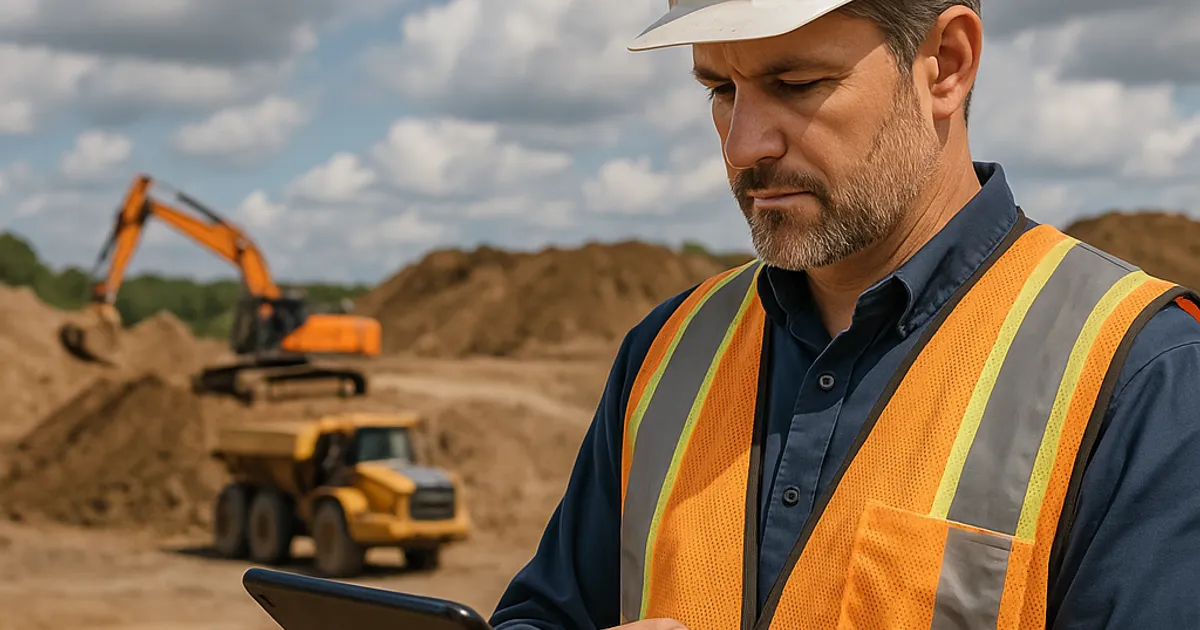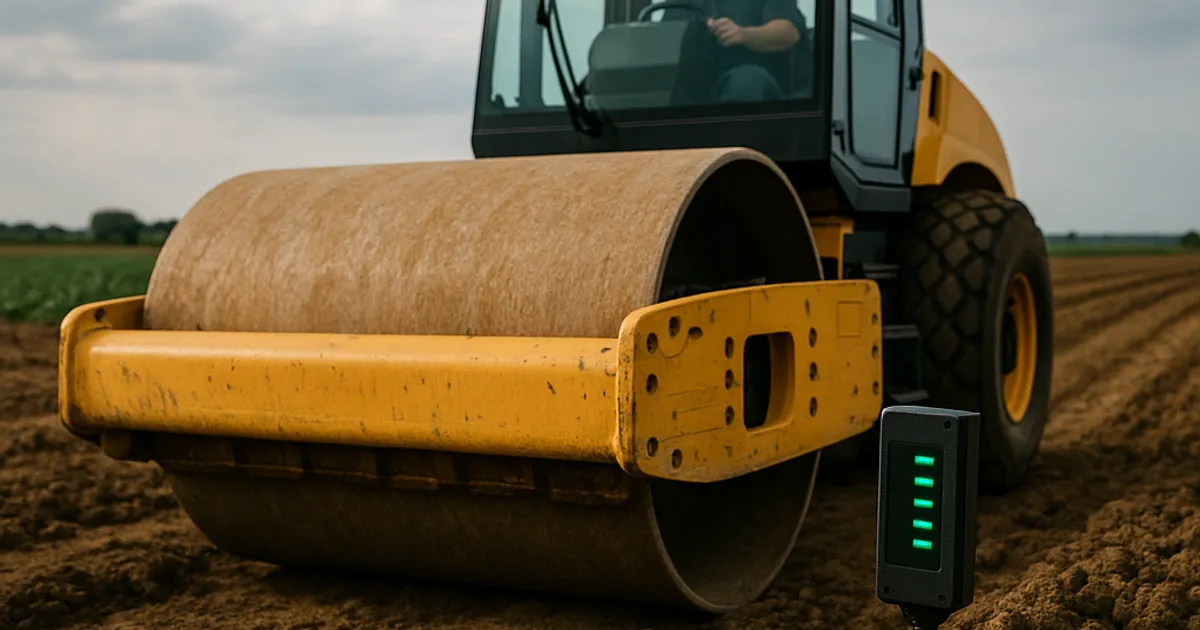
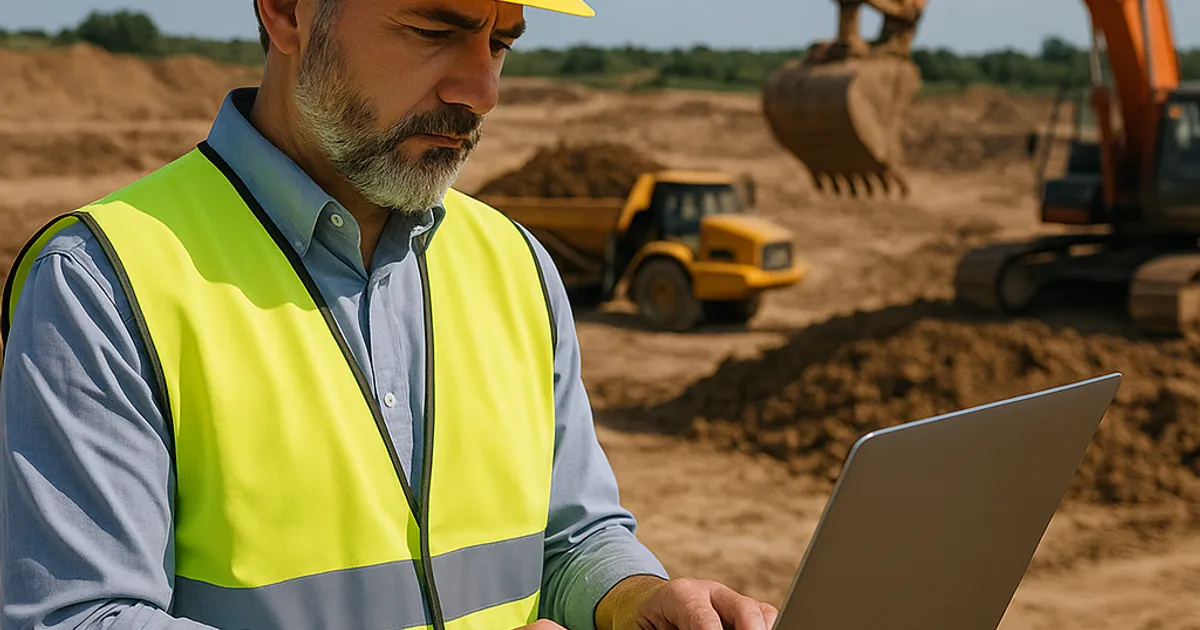
The excavator is running, the haul trucks are loaded, and your superintendent is standing in the field trying to reach the office on a crackly cell signal to get an updated plan sheet — meanwhile, back at the desk, your project manager is working off a spreadsheet that was already out of date before breakfast. If this scene sounds familiar, you're not alone. According to the Associated General Contractors of America, poor communication and information silos remain among the top five causes of cost overruns on heavy civil and earthwork projects.
The good news? Cloud-based project management software has matured dramatically, and in 2026 there are purpose-built platforms specifically designed for the unique demands of earthwork contracting — dirt moving, rock blasting, aggregate hauling, mass grading, utility trenching, and everything in between. This guide breaks down the leading platforms, the quantifiable ROI of going digital, and how to evaluate, implement, and get the most out of construction management software built for contractors who work with the ground beneath their feet.
Why Earthwork Is Different From Other Construction Disciplines
Before diving into software specifics, it's worth acknowledging that earthwork contracting has unique operational characteristics that generic construction management tools often fail to address adequately.
Unlike vertical construction — where progress is visible floor-by-floor — earthwork is defined by volume. Contractors bid on cut and fill quantities, move material horizontally across complex terrain, and manage the interplay between soil classification, compaction standards (governed by ASTM International specifications like D698 and D1557), moisture content, and equipment productivity. A project manager working a mass grading job needs to know cubic yards moved per hour per machine, not just whether a submittal was approved.
Additionally, earthwork job sites are:
- Geographically dispersed. A single highway corridor project might stretch 15 miles.
- Weather-dependent. Rain events can halt compaction operations for days and shift schedule logic entirely.
- Material-flow intensive. Borrow sources, spoil sites, and on-site material reuse require constant tracking.
- Equipment-heavy. Fleet costs can represent 40–60% of total project cost on a typical grading job.
- Regulatory-sensitive. Stormwater permits, erosion controls, and earthwork phasing are frequently inspected by agencies.
Generic project management tools handle RFIs, submittals, and meeting minutes well. But earthwork contractors need software that integrates quantity tracking, equipment dispatch, haul cycle analysis, and field measurement directly into the project management workflow. That's the gap the best platforms in 2026 have finally closed.
The Field-to-Office Communication Problem (and What It Costs)
The "field-to-office gap" is the persistent disconnect between what's happening in the dirt and what's reflected in the project record. Foremen track loads on paper, superintendents text photos of daily reports, and the office reconciles everything at the end of the week — often discovering that 800 cubic yards of unsuitable material were hauled to the wrong spoil location three days ago.
The financial cost of this gap is staggering. A 2026 industry analysis found that construction companies lose an estimated $177 billion annually to poor project data and process inefficiencies — a figure that has crept upward even as software adoption has increased, largely because adoption has been uneven and many firms still run hybrid paper-digital workflows.
For earthwork contractors specifically, the field-to-office gap manifests in several painful ways:
Quantity Disputes
When the owner's representative and your survey crew are working from different data sets — or worse, different versions of the grade plan — quantity disputes at pay estimate time can freeze cash flow for weeks. Digital quantity tracking tied directly to machine GPS or drone surveys eliminates most of these disputes before they start.
Rework from Miscommunication
A foreman who doesn't receive the latest plan revision before his crew begins work can grade an entire pad to the wrong elevation. Average rework cost on earthwork projects runs 5–9% of total contract value. On a $3 million grading job, that's up to $270,000 in preventable loss.
Equipment Idle Time
Without real-time dispatch and cycle time tracking, haul trucks sit waiting for excavators, scrapers are routed inefficient distances, and compaction rollers idle while waiting for material. Fleet telematics integrated into your project management platform can cut idle time by 12–18% according to recent fleet efficiency studies.
Payroll and Hours Discrepancies
Paper timecards filled out at the end of the week are notoriously inaccurate. Digital time tracking, combined with equipment hour logs, creates audit-ready payroll data and helps allocate labor costs accurately to cost codes.
Leading Cloud-Based Platforms for Earthwork Contractors
The earthwork software landscape in 2026 has consolidated around a handful of serious platforms, with clear leaders emerging in different segments of the market. Here's how the major players stack up.
Procore: The Enterprise Standard
Procore has become the de facto standard for large general contractors and is increasingly common on major heavy civil and earthwork projects where it's mandated by the GC or owner. As of 2026, Procore serves over 16,000 construction companies globally and processes more than $1 trillion in construction volume annually on its platform.
Procore's strengths for earthwork contractors include:
- Document management that keeps plan sheets, spec sections, and geotech reports version-controlled and field-accessible
- RFI and submittal workflows that integrate with project schedules
- Daily logs with photo documentation, weather data, and crew/equipment records
- Financial management with job cost tracking, budget forecasting, and subcontract management
- Robust mobile app that works offline and syncs when connectivity is restored
Procore's limitations for pure earthwork operations include its relative weakness in quantity tracking and equipment dispatch — areas where earthwork-specific tools excel. Most earthwork contractors using Procore supplement it with specialized tools for estimating, grade control, or fleet management.
Pricing: Procore is priced by annual construction volume, with most mid-size earthwork contractors ($10M–$50M revenue) paying approximately $35,000–$75,000 per year for full platform access.
B2W Software: Built for Heavy Civil
B2W Software is arguably the most purpose-built solution for earthwork and heavy civil contractors. Its suite includes modules for estimating, scheduling, field tracking, equipment management, and analytics — all designed around the operational realities of dirt work.
Key B2W capabilities include:
- One Platform estimating that flows bid quantities directly into field tracking
- Track module that captures daily quantities, production rates, and cost-to-complete in real time
- Maintain module for equipment maintenance scheduling and repair tracking
- Dispatch module for equipment assignment and utilization management
- Dashboards that give project managers live visibility into cost vs. budget by work item
B2W's biggest advantage is the seamless handoff from the estimating phase to field execution. When your estimator builds the bid using B2W Estimate, those exact cost codes, quantities, and production assumptions carry forward into the field tracking system — eliminating the manual re-entry that creates errors in hybrid workflows.
Pricing: B2W is also enterprise-priced, typically in the $40,000–$100,000+ per year range depending on modules and company size.
HCSS HeavyJob: The Field Foreman's Friend
HCSS (Heavy Construction Systems Specialists) has been serving heavy civil contractors for over 35 years. Their HeavyJob platform focuses intensely on the foreman experience — making it fast and intuitive for field supervisors to enter daily production data, time, and quantities from a tablet or phone.
HCSS differentiates through:
- Foreman-centric UI designed for use with gloves on, on a dusty tablet
- Real-time cost reports that let project managers see job cost vs. estimate updated daily
- GPS equipment tracking integrated with field data
- Safety inspection tools built into the daily workflow
- HeavyBid integration for seamless estimate-to-field handoff
HCSS has a strong following among mid-size earthwork contractors in the $5M–$75M revenue range who want powerful field tracking without the overhead of enterprise ERP systems.
Trimble Viewpoint and ProjectSight
Trimble offers a portfolio of construction technology that's uniquely relevant to earthwork because it spans both office software and machine control hardware. Trimble's ProjectSight platform handles project management, while Trimble WorksManager connects grade control data from machines directly to project records.
This integration — where the dozer's GPS blade control system feeds cut/fill progress data directly to the project manager's dashboard — represents the cutting edge of field-to-office connectivity in earthwork. In 2026, this kind of machine-to-cloud integration is moving from niche to mainstream.
Emerging Players to Watch
- Agtek Earthwork 4D: Industry-leading takeoff and 3D visualization for earthwork quantities
- InSite Software: Drone-based progress tracking with automatic quantity calculation
- Rhumbix: Workforce intelligence and field data capture for heavy civil
- Fieldwire: Affordable plan management and task tracking popular with subcontractors
Platform Comparison Table
| Platform | Best For | Earthwork-Specific Features | Price Range (Annual) | Field Mobile App |
|---|---|---|---|---|
| Procore | Large projects, GC-mandated | Daily logs, docs, RFIs | $35K–$75K+ | Excellent |
| B2W Software | Heavy civil specialists | Quantity tracking, equipment dispatch, estimating integration | $40K–$100K+ | Good |
| HCSS HeavyJob | Mid-size earthwork contractors | Foreman-first UI, real-time cost | $20K–$60K | Excellent |
| Trimble ProjectSight | Machine control integration | GPS machine-to-cloud data | $25K–$70K | Good |
| Fieldwire | Smaller subs, plan management | Task tracking, plan markups | $5K–$20K | Excellent |
| Agtek 4D | Quantity takeoff and visualization | 3D earthwork modeling | $3K–$15K | Limited |
Key Features Every Earthwork Contractor Should Demand
When evaluating any cloud-based project management solution, earthwork contractors should insist on the following capabilities before signing a contract.
Real-Time Quantity Tracking
The ability to track cubic yards moved, compacted, or imported against the project's bid quantities in real time is non-negotiable. Look for platforms that accept input from:
- GPS machine control systems (Trimble, Topcon, Leica)
- Drone survey uploads (DJI Pilot 2, DroneDeploy, Pix4D)
- Field measurement entries by foremen
- Truck load count tracking
Quantity dashboards should show daily production, running totals, and percentage complete by work item — not just overall project percentage.
Cost Code Integration with Estimating
Your field system and your bid should speak the same language. If you estimated 45,000 CY of common excavation at $4.20/CY and your field system tracks "earthwork" as a single line item, you've already lost visibility into whether you're making money. Demand granular cost code structures that match your estimate.
Equipment Telematics Integration
Modern construction equipment from Caterpillar, Komatsu, and John Deere transmits telematics data — hours, location, fuel consumption, fault codes — through manufacturer APIs. The best project management platforms aggregate this data alongside production records, giving you a complete picture of fleet productivity and maintenance status.
Offline Mobile Capability
Earthwork projects are frequently in areas with poor cell coverage — highway corridors, rural subdivisions, mining operations. Any field app that doesn't function offline and sync intelligently when connectivity returns is a liability, not an asset.
Daily Report and Photo Documentation
Structured daily reports with weather data, crew counts, equipment on site, quantities completed, and photo attachments create the project record that protects you in disputes, supports change order claims, and satisfies owner reporting requirements. The best platforms make daily report entry fast enough that foremen actually do it.
Integration with Accounting/ERP
Project management software that doesn't talk to your accounting system creates double-entry and reconciliation headaches. Look for integrations with Sage 100 Contractor, Viewpoint Vista, Foundation Software, or whatever accounting platform your firm runs.
Implementing Cloud Software: A Practical Roadmap
Buying software is the easy part. Successful implementation — getting your foremen, project managers, estimators, and accountants to actually use it consistently — is where most companies stumble. Here's a proven implementation framework for earthwork contractors.
Phase 1: Define Your Workflows (Weeks 1–4)
Before going live on any project, map your current workflows in detail. Document how a daily report flows from foreman to project manager to accounting today. Understand your cost code structure, your equipment numbering conventions, your subcontract management process. This baseline is what you're digitizing — don't assume the software vendor has done this thinking for you.
Phase 2: Configure and Pilot (Weeks 5–10)
Select one active project as your pilot — ideally a mid-size job with a cooperative superintendent. Configure the platform to match your workflows (not the other way around), import your cost codes and equipment list, and go live on that single project. Resist the temptation to launch company-wide immediately.
Phase 3: Train in Context (Weeks 8–12)
Generic software training is largely useless for field crews. The most effective training happens on the actual project, with real data, from a trainer who understands earthwork operations. Identify your internal champion — usually a tech-savvy PM or super — and have them lead peer training.
Phase 4: Evaluate and Refine (Month 3–4)
After 8–10 weeks on the pilot project, hold a structured review. What's working? What's creating friction? Where is data quality suffering? Use this feedback to refine your configuration before rolling out to additional projects.
Phase 5: Company-Wide Rollout (Month 5+)
With lessons learned from the pilot, roll out to your full project portfolio. Establish clear data entry standards, appoint project-level administrators, and set a defined timeline for retiring the old paper/spreadsheet workflows.
Integrating Material Logistics Into Your Digital Workflow
One area where even the best project management software has historically fallen short is material logistics — specifically, the sourcing, tracking, and disposition of dirt, rock, and aggregate materials. Where does your fill come from? Where does your spoil go? How do you document chain of custody for regulated materials?
For earthwork contractors managing large cut-and-fill operations, the ability to connect with verified sources of clean fill, topsoil, crushed aggregate, or structural fill — and to find buyers or receivers for excess cut material — is as operationally important as any software feature.
This is where platforms like DirtMatch add genuine value alongside your project management software. DirtMatch connects earthwork contractors with verified sources and destinations for dirt and aggregate materials, turning what has historically been an informal phone-call process into a searchable, documented exchange. Instead of spending hours calling around to find a home for 15,000 cubic yards of clean clay, a contractor can post the material on DirtMatch and connect with nearby projects that need exactly that fill type.
Contractors in high-growth markets — such as those managing dirt exchange in Denver or coordinating material flows in dirt exchange in Seattle — have reported significant reductions in haul-and-dump costs by matching excess material with nearby receivers rather than hauling to distant landfills or borrow pits.
Integrating material sourcing into your digital project management workflow means tracking not just quantities moved but quantities sourced, their origin documentation, and delivery receipts — all of which matter for regulatory compliance and owner reporting.
Find or Post Dirt, Rock & Aggregate
Join thousands of contractors using DirtMatch to buy, sell, and exchange earthwork materials.
Try DirtMatch FreeThe Data You Should Be Capturing (But Probably Aren't)
Most earthwork contractors who go digital start capturing the obvious data points — daily quantities, equipment hours, labor time. But the most sophisticated operations in 2026 are capturing a deeper layer of operational data that drives continuous improvement.
Haul Cycle Times
Tracking the time from load to dump to return for each haul truck creates the production data needed to optimize fleet size, haul road conditions, and loading zone efficiency. A 4-minute improvement in average cycle time across 10 trucks adds up to dozens of extra loads per shift.
Compaction Pass Data
Integrated compaction rollers with GPS can record the number of passes over each area, correlated with moisture and density test results. This creates a quality record that satisfies ASTM D698/D1557 compaction specification requirements without manual mapping.
Equipment Downtime Events
Logging every equipment downtime event — not just at PM intervals but every unplanned stoppage — creates data that reveals your most problematic machines and guides maintenance investment decisions.
Weather-Related Production Impacts
Correlating daily weather data (temperature, precipitation, soil moisture) with production rates gives you the historical data to support schedule delay claims and to build more accurate future bids in similar climates.
Subcontractor Performance Metrics
Tracking on-time mobilization, daily production rates, and quality records for drilling, blasting, utility, and paving subcontractors builds an internal performance database that informs future subcontract awards.
Drone Surveys and Machine Control: The New Field-to-Office Data Pipeline
If cloud-based project management is the brain of the modern earthwork operation, drone surveys and GPS machine control are the sensory nervous system feeding it real-world data.
In 2026, drone-based progress surveys have become a standard practice on projects of 5 acres or more. A 20-minute drone flight over an active grading site generates a point cloud and orthomosaic image that, when processed through platforms like DroneDeploy or Pix4D and compared to the design surface, automatically calculates cut/fill volumes remaining, identifies areas of over-excavation, and documents current grade conditions.
This survey data flows directly into project management dashboards, replacing the once-per-month quantity survey with weekly or even daily progress snapshots. The accuracy of drone-generated quantities, when properly calibrated with ground control points, is within 1–2% of traditional survey methods on most earthwork applications.
Trimble's machine control ecosystem takes this further: dozers, motor graders, and scrapers equipped with 3D grade control systems know exactly where they are relative to the design surface at all times. This data — updated in real time — can feed directly into project management platforms, giving the project team a live view of grade progress without waiting for a field report.
The combination of drone surveys + machine control + cloud project management creates a field-to-office data pipeline that was theoretical five years ago and is a competitive necessity today.
ROI: What Cloud Project Management Actually Delivers
Software vendors are generous with ROI claims. Here's a more grounded look at where earthwork contractors actually see returns.
Bid Accuracy Improvement
When historical production data from completed projects feeds back into the estimating process, bid accuracy improves over time. Contractors using integrated estimate-to-field systems report 8–15% improvement in bid accuracy within the first two years of consistent data collection.
Reduced Administrative Overhead
Digital daily reports, automated payroll export, and paperless submittals reduce administrative labor. A company processing 20 projects can typically reduce administrative FTEs by 0.5–1.5 positions, representing $40,000–$120,000 in annual savings.
Change Order Capture
Well-documented daily logs with timestamped photos and quantity records make change order claims faster and more defensible. Contractors consistently report 20–30% improvement in change order approval rates when supported by digital records.
Rework Reduction
Real-time grade data and version-controlled plan distribution reduce rework incidents. Even a 2% reduction in rework on a $5M project saves $100,000.
Equipment Utilization
Fleet telematics and dispatch optimization typically yield 10–15% improvement in equipment utilization, directly reducing equipment cost per cubic yard.
Material Cost Savings
For contractors managing material sourcing as part of their workflow, platforms like DirtMatch Pro provide access to a verified network of material sources and destinations that can dramatically reduce import and export hauling costs. Contractors sourcing clean fill through a local material exchange rather than a quarry 25 miles away can cut material transportation costs by 30–50% on import-heavy projects.
Common Implementation Pitfalls to Avoid
Even with the right software and good intentions, many earthwork contractors fail to realize the full value of their technology investments. Here are the most common pitfalls and how to avoid them.
Pitfall 1: Buying More Software Than You'll Use
Sophisticated platforms with dozens of modules are impressive in demos. But if your foremen are using two features and ignoring eighteen, you've bought expensive shelf-ware. Start with the features that solve your biggest pain points and expand deliberately.
Pitfall 2: No Executive Sponsorship
Field crews and project managers will revert to old habits unless senior leadership actively champions the new system. This means executives checking dashboards, asking for digital reports, and refusing to accept paper workarounds.
Pitfall 3: Inconsistent Data Entry
A project management platform is only as valuable as the data entered into it. Inconsistent cost codes, incomplete daily reports, and missing equipment entries create a false picture that's worse than no data at all. Establish clear standards and enforce them.
Pitfall 4: Ignoring the Accounting Integration
Project data that doesn't connect to your accounting system forces manual reconciliation and creates two sources of truth. Prioritize accounting integration in your implementation plan, even if it takes extra effort upfront.
Pitfall 5: Treating Software as a Replacement for Process
Software accelerates and scales your processes — good ones and bad ones. A chaotic change order process doesn't become organized just because you're tracking it in a digital system. Fix your processes, then digitize them.
Getting Started: A Decision Framework for Earthwork Contractors
If you're evaluating cloud project management software for the first time — or reconsidering your current platform — here's a practical decision framework.
Step 1: Quantify your current pain. What are the three most expensive operational problems you face? Quantity disputes? Rework? Equipment downtime? Equipment idle time? Document the cost of each problem in real dollars.
Step 2: Map required integrations. List your existing software (accounting, estimating, GPS, telematics). Any new platform must integrate with these systems or replace them.
Step 3: Evaluate for field usability. Have your best superintendent and your most tech-resistant foreman both evaluate any shortlisted platform. If the skeptic can't figure out daily report entry in 10 minutes, it won't get used in the field.
Step 4: Check the reference list. Ask every vendor for references from earthwork contractors of similar size and project type. Talk to those references about real implementation experience, not just software features.
Step 5: Negotiate implementation support. The software price is the beginning. Adequate implementation support — onboarding, configuration, training — often costs as much as the first year's license. Make sure this is included or budget for it explicitly.
Step 6: Plan for material logistics. As you build your digital operations stack, don't overlook material sourcing and disposition. Contractors who learn how DirtMatch works quickly realize that connecting material supply and demand through a verified marketplace is a natural complement to their project management workflow — reducing material costs and documenting chain-of-custody in one platform.
For earthwork contractors in growing metros — including those coordinating dirt exchange in Los Angeles across complex multi-project pipelines — having a dedicated material exchange platform alongside your project management software is increasingly a standard part of the digital operations toolkit.
The Future of Earthwork Project Management
Looking ahead through the remainder of the decade, several technological trends will reshape how earthwork contractors manage projects.
AI-powered production forecasting will use historical project data, weather models, and real-time production rates to dynamically reforecast project completion dates and cost-at-completion, flagging problems weeks before they become crises.
Autonomous and semi-autonomous equipment from Caterpillar, Komatsu, and emerging startups will generate continuous, machine-native production data without human data entry — feeding project management platforms automatically.
Digital twins — 3D models of the project site updated in real time with survey data, grade progress, and material tracking — will become standard for projects above a certain scale, replacing static drawings as the primary project record.
Blockchain-based material chain of custody will allow contractors to document the source, transport, and placement of fill materials in an immutable record — critical for regulated projects involving brownfield redevelopment or wetland fill permits.
Integrated labor and equipment analytics will enable project managers to benchmark their operations against anonymized industry data, identifying where their productivity lags peers and quantifying the cost of the gap.
The earthwork contractors who build digital foundations today — clean data, integrated systems, disciplined workflows — will be best positioned to adopt these emerging capabilities as they mature.
Conclusion: Going Digital Is No Longer Optional
The construction industry spent years debating whether digital transformation was worth the disruption. That debate is over. In 2026, earthwork contractors who still run their operations on paper daily reports, phone-call dispatch, and weekly spreadsheet reconciliation are competing at a structural disadvantage against firms that have real-time cost visibility, drone-surveyed quantities, and integrated material logistics.
The platforms are mature. The ROI is documented. The implementation playbook is well-established. What remains is the organizational will to change — and the discipline to implement technology correctly rather than layering it on top of broken processes.
Whether you choose Procore for enterprise document management, B2W for heavy civil quantity tracking, HCSS HeavyJob for foreman-first field capture, or a combination of specialized tools, the critical move is getting started. Pick your biggest pain point, find the software that solves it best, and build from there.
And when you're ready to round out your digital operations stack with smarter material sourcing and disposal — reducing haul costs, documenting compliance, and connecting with verified material partners in your region — get started with DirtMatch to see how the platform is changing the way earthwork contractors handle dirt, rock, and aggregate logistics from project to project.