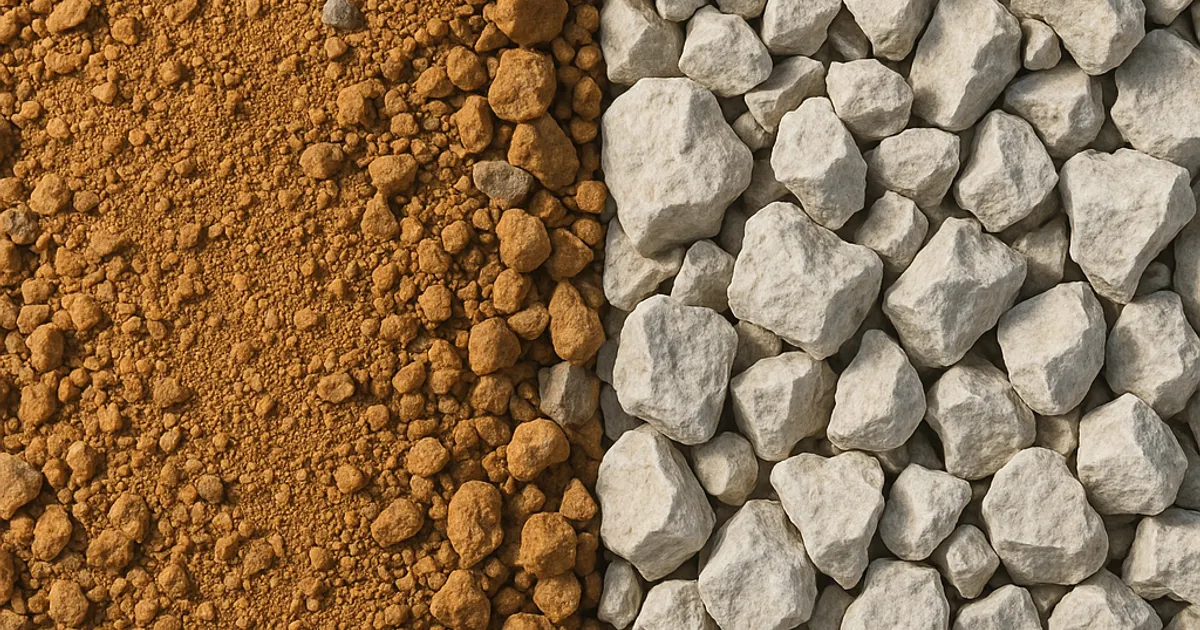
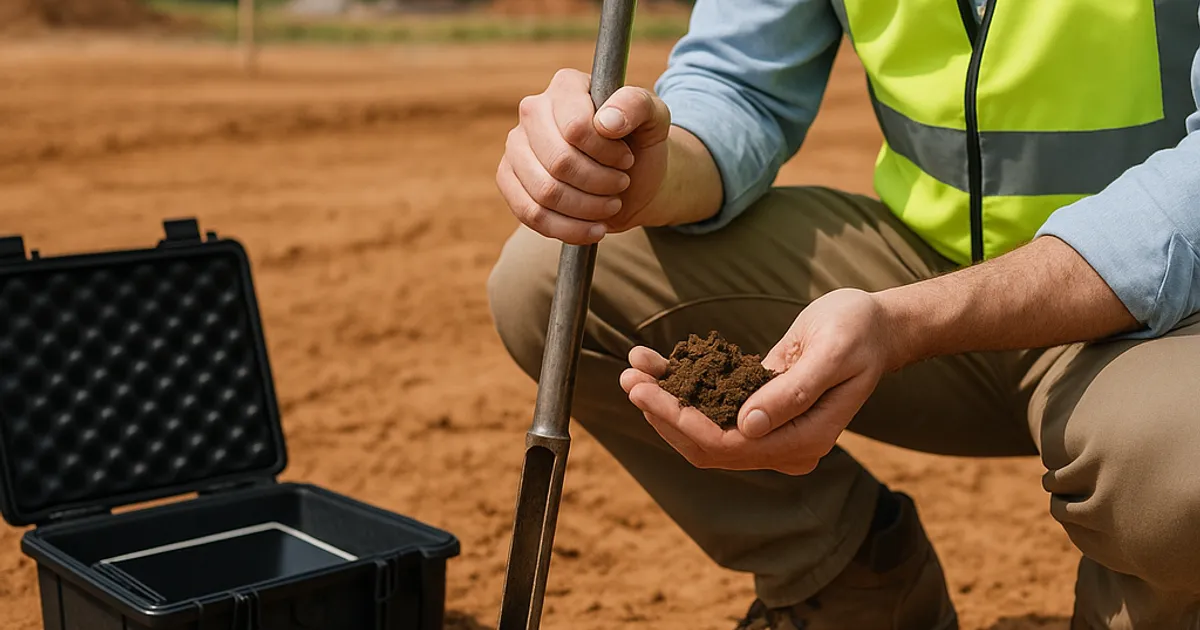
Every Texas earthwork contractor has stood at the edge of a job site and asked the same question: pit run gravel or base rock? The answer shapes your project budget, your compaction plan, your drainage performance, and your long-term liability. Get it right and the road, pad, or foundation you build will perform for decades. Get it wrong and you are looking at rutting, settlement, and costly remediation.
Texas presents a uniquely demanding environment for aggregate material decisions. The state spans multiple geological zones, from the caliche-rich limestone country of the Hill Country and Permian Basin to the sandy coastal plains of Houston and the blackland prairie clays of North Texas. Each region creates different sourcing conditions, different material specifications, and different performance expectations. A contractor working a commercial pad site in Midland is operating in a completely different world from one building an access road in East Texas piney woods.
This guide breaks down both materials in precise technical detail, compares them across the variables that matter most to working contractors, and gives you a practical framework for making the right call on every job.
What Is Pit Run Gravel and Where Does It Come From
Pit run gravel, sometimes called bank run gravel or crusher run depending on regional terminology, is raw aggregate material excavated directly from a gravel deposit or pit. The defining characteristic is that it receives minimal or no processing after extraction. What comes out of the ground goes onto your truck and then onto your job site.
In its natural state, pit run material contains a mixture of particle sizes ranging from fine sand and silt fractions up through cobbles and occasionally larger rocks. This natural gradation, which engineers refer to as well-graded material, is both its strength and its limitation. The variety of particle sizes means fines fill the voids between larger pieces, creating a dense matrix that can achieve strong compaction under the right conditions. However, because no screening or crushing controls the gradation, every pit produces material with slightly different characteristics.
The USDA Web Soil Survey is an underutilized resource for contractors who want to understand the aggregate potential of a specific Texas county before they start sourcing material. Survey data can reveal whether a region's subsurface geology favors quality pit run deposits or whether engineered base alternatives will be more reliable.
In Texas, pit run gravel is most readily available in the western and central portions of the state where limestone and caliche deposits are near the surface. The Permian Basin, Edwards Plateau, and Cross Timbers regions all have active pit operations that produce varying qualities of pit run material. East Texas, by contrast, is dominated by sandy loam and clay soils, making quality pit run gravel scarcer and typically more expensive due to haul distances.
Typical pit run particle gradations in Texas range from 3 inches maximum down to fines passing the No. 200 sieve at rates anywhere from 5 percent to 20 percent. That wide range is exactly why material testing matters before you commit to a supply agreement with a pit operator.
Typical Applications for Pit Run Gravel in Texas
Pit run gravel earns its keep in applications where cost efficiency matters more than tight specification control:
- Temporary construction access roads and haul roads
- Sub-base fill beneath engineered base courses
- Backfill in large utility trenches where specification tolerance is broad
- Rough grading of rural driveways and ranch roads
- Bulk fill to raise grade elevations before a processed base is applied
- Drainage aggregate in situations where gradation requirements are relaxed
The material's cost advantage over processed base rock typically ranges from 15 percent to 35 percent depending on haul distance and local market conditions. On large-volume projects where tens of thousands of cubic yards are required, that margin is significant.
What Is Base Rock and How Is It Produced
Base rock, also called road base, crushed base, or flex base in Texas DOT terminology, is aggregate material that has been crushed, screened, and graded to meet defined engineering specifications. The Texas Department of Transportation specifies flexible base material under Item 247, which sets requirements for gradation, plasticity index, liquid limit, Los Angeles abrasion value, and other performance indicators.
Production begins at a quarry or pit where raw limestone, caliche, or other rock is blasted or excavated, then run through a series of jaw crushers, cone crushers, and screening decks. The result is a consistently graded material with controlled particle size distribution, predictable compaction behavior, and known strength characteristics.
TxDOT Item 247 flexible base is available in multiple gradation types (Type A through Type D) with Grade 1 being the most common for road construction. Grade 1 material must pass 100 percent through a 1.75-inch sieve, have a plasticity index of 10 or less depending on class designation, and meet wet ball mill requirements that measure the material's resistance to degradation under moisture and abrasion.
For non-TxDOT work such as private commercial sites, industrial yards, and residential subdivisions, contractors may use products that approximate TxDOT flex base specifications without formal certification. These are commonly sold as commercial road base, crushed limestone base, or simply base rock, and they represent the middle ground between true engineered flex base and unprocessed pit run.
Key Differences in Production Quality
The crushing and screening process does more than just break rock into smaller pieces. It creates angular, fractured surfaces on each particle. Those angular faces interlock under compaction in a way that rounded, water-worn pit run particles simply cannot match. The result is a base course with higher internal friction angle, better resistance to shear failure under wheel loads, and more predictable deflection behavior.
AASHTO standards provide the framework that TxDOT and county engineers use when specifying base course materials for public road work in Texas. Understanding those standards helps contractors communicate more precisely with engineers and inspectors, reducing friction and change order disputes on public projects.
The Core Comparison: Pit Run Gravel vs. Base Rock Side by Side
The decision between these two materials ultimately comes down to a handful of variables. Here is a structured comparison across the dimensions that matter most to Texas contractors:
| Factor | Pit Run Gravel | Base Rock (Flex Base) |
|---|---|---|
| Material state | Unprocessed, variable gradation | Crushed, screened, graded to spec |
| Typical cost per ton (Texas, 2026) | $8 to $14 per ton | $14 to $22 per ton |
| Compaction behavior | Variable, depends on gradation | Predictable, high density achievable |
| TxDOT specification compliance | Rarely compliant | Yes (Item 247 when certified) |
| Load-bearing capacity | Moderate (CBR 20-50 typical) | High (CBR 50-100+ typical) |
| Drainage performance | Good to moderate | Moderate (fines reduce permeability) |
| Best use case | Sub-base fill, temp roads, bulk fill | Road base, parking lots, building pads |
| Availability in East Texas | Limited, higher haul cost | Good, multiple quarry sources |
| Availability in West Texas | Good, numerous pit operations | Good, limestone quarries common |
| Material consistency | Low (pit-to-pit variation) | High (processing controls gradation) |
| Testing requirements | Often informal on private work | Formal testing common on public work |
This table provides a starting point, but the real skill in aggregate selection comes from understanding how these factors interact with your specific project conditions.
Cost Analysis: Breaking Down Aggregate Economics in Texas
Material cost is only one component of total aggregate cost. Texas contractors who focus exclusively on the price per ton at the quarry gate often miss the larger picture.
Material Price Ranges in 2026
Current Texas market pricing for pit run gravel ranges from roughly $8 per ton in regions with abundant pit operations (Central Texas limestone belt, Permian Basin) up to $14 or more per ton in East Texas and coastal areas where haul distances increase. Processed flex base typically runs $14 to $22 per ton for the material itself, with certified TxDOT-compliant product commanding the upper end of that range.
Caliche, which is a naturally occurring calcium carbonate soil-rock mixture unique to arid and semi-arid Texas, occupies an interesting middle ground. Caliche functions similarly to processed base rock in dry conditions and is widely used across West Texas and the Panhandle for ranch roads, oilfield locations, and light industrial pads. Pricing for caliche base material typically runs $6 to $12 per ton depending on quality and location, making it an economical option where it is available. However, caliche performs poorly under moisture, losing significant strength when saturated, which limits its suitability for high-traffic or wet-climate applications.
Hauling Costs and the Break-Even Calculation
Hauling costs in Texas typically run $4 to $8 per ton for loads within 30 miles, rising to $10 to $16 per ton for 60-mile hauls. Given that material costs for pit run and base rock may differ by only $6 to $8 per ton, a pit run source that is 20 miles farther from the job site than the nearest flex base quarry can quickly eliminate the cost advantage.
Savvy contractors run a break-even haul distance calculation before committing to a material source. The formula is straightforward: divide the per-ton price premium for processed base by the per-mile hauling cost differential. This gives you the maximum additional haul distance where pit run remains the cheaper option.
Compaction Passes and Equipment Costs
Processed base rock typically achieves 95 percent Standard Proctor density in 4 to 6 passes with a vibratory roller. Pit run material with excessive fines or poor gradation may require 8 to 12 passes or more, and may still fail to achieve specification density if the gradation is too variable. Additional compaction passes translate directly to equipment hours and fuel costs. On large projects, those hidden costs can easily offset a $4 per ton material savings.
Contractors working in regions like Boyd, TX or Corsicana, TX, where the fill dirt and aggregate market in Texas shows consistently strong demand, understand that material efficiency is as important as material cost. DirtMatch currently shows over 6.9 million yards of material available across the state, with more than 2,700 matches facilitated in the past 30 days alone, reflecting how active and competitive the Texas aggregate marketplace is in 2026.
Understanding Texas Regional Geology and Its Impact on Material Selection
Texas is enormous, covering 268,596 square miles across dramatically different geological provinces. Material selection strategy that works in San Antonio will not necessarily work in Beaumont or Amarillo. Regional geology shapes what is available, what it costs, and how it performs.
Central Texas and the Hill Country
The Balcones Fault Zone and Edwards Plateau produce some of the best-quality limestone base material in the state. Multiple large quarry operations serve the Austin, San Antonio, and Waco markets with TxDOT-certified flex base that is competitively priced due to abundant raw material and strong competition. Pit run from this region tends to be high-quality limestone gravel with good gradation and low plasticity, making it a reliable option for sub-base applications.
North Texas Blackland Prairie
The expansive clay soils of North Texas, particularly the Dallas-Fort Worth and Waco-Corsicana corridors, create a challenging environment for base course materials. Native soils have high plasticity indices (PI values frequently exceed 30) and are prone to significant volume change with moisture fluctuation. This environment demands higher-quality, processed base materials because poor base rock can absorb clay fines through migration and lose its structural integrity quickly.
A current listing on DirtMatch shows a contractor near Corsicana, TX seeking 40,000 yards of clean fill dirt, illustrating how active the material demand is in this region. When native soils cannot be utilized, contractors often rely on imported aggregate to build stable working platforms.
West Texas and the Permian Basin
Caliche dominates the West Texas aggregate landscape. While not suitable for high-load permanent paving base without stabilization, caliche remains the backbone of oilfield location construction, ranch road building, and site grading across Midland, Odessa, Lubbock, and surrounding areas. Quality varies significantly by deposit, and contractors new to the region should always request material test reports before purchasing in volume.
East Texas and the Gulf Coast
The piney woods and coastal plain regions present the most challenging aggregate sourcing environment in the state. Quality pit run gravel is scarce because the regional geology consists primarily of sand, clay, and lignite deposits rather than gravel or limestone. Contractors in Tyler, Beaumont, and the Houston area typically rely on imported crushed limestone from quarries in the Austin Chalk or Georgetown Limestone formations, paying premium haul costs that make material efficiency critical.
Compaction Standards and Performance Testing for Texas Projects
Regardless of which material you choose, compaction testing is the validation step that confirms your base course will actually perform as designed. Texas contractors working on public roads, TxDOT projects, or permitted commercial developments face formal testing requirements. Understanding those requirements before you place material saves time, money, and conflict.
Proctor Density and Field Testing
The standard compaction test for base materials is the Standard Proctor test (ASTM D698) or the Modified Proctor test (ASTM D1557). TxDOT flex base specifications typically require field density to reach 95 to 100 percent of maximum dry density as established by the Modified Proctor test. For pit run material on private or less regulated work, 90 to 95 percent Standard Proctor is commonly specified.
Field testing is most commonly done with a nuclear density gauge, which measures wet density and moisture content simultaneously and allows the inspector to calculate compaction percentage on the spot. Some jurisdictions and engineers now use dynamic cone penetrometer (DCP) testing as a supplement or alternative, particularly useful for checking compaction at depth without the radiation licensing requirements of nuclear gauges.
Plasticity Index and Material Quality Testing
The plasticity index (PI) of your aggregate material is arguably the single most important quality indicator for base course performance in Texas. High-PI materials retain water, expand and contract with moisture changes, and lose bearing capacity when wet. TxDOT Item 247 Class 1 flex base requires a PI of 10 or less when tested at the sieve No. 40 passing fraction.
Contractors purchasing pit run material without testing assume unknown PI risk. A pit run sample that looks clean and well-graded can still fail specification if the clay fines content is excessive. A simple Atterberg Limits test from a geotechnical lab costs $75 to $150 and can prevent thousands of dollars in failed compaction tests and rejected material.
Find or Post Dirt, Rock & Aggregate
Join thousands of contractors using DirtMatch to buy, sell, and exchange earthwork materials.
Try DirtMatch FreeCaliche as a Third Option: The Texas-Specific Base Material
No discussion of base rock selection in Texas is complete without addressing caliche. This naturally occurring calcium carbonate-cemented soil material is abundant across a broad band of Texas running from the Panhandle through West Texas and into the Rio Grande Valley. For the right application, caliche offers cost and availability advantages that no quarry product can match.
When Caliche Works and When It Fails
Caliche performs well as a base material when:
- The application involves light to moderate traffic (ranch roads, oilfield locations, agricultural use)
- Climate and drainage conditions keep the base dry or rapidly drained
- The caliche deposit has been tested and confirmed to have adequate calcium carbonate content (typically greater than 50 percent)
- Dust suppression or surface sealing is applied to limit moisture infiltration
Caliche fails to perform adequately when:
- Traffic is heavy or sustained, particularly from loaded trucks
- The climate includes significant rainfall or ponding risk
- The project requires formal engineering certification for TxDOT or county acceptance
- Long-term performance under varied moisture conditions is required
For contractors comparing gravel vs. caliche base on West Texas jobs, the financial case for caliche can be compelling. Material costs can run $4 to $6 per ton less than imported crush limestone, and haul distances to local caliche pits are often much shorter. The trade-off is lower and less predictable long-term performance.
Selecting the Right Material for Common Texas Project Types
Practical guidance for the most common project categories Texas earthwork contractors encounter:
Commercial Pad Sites and Parking Lots
Processed base rock (TxDOT Item 247 or equivalent) is the standard choice. The design engineer's geotechnical report will typically specify minimum base thickness based on subgrade soil strength (expressed as CBR or R-value) and design traffic loading. Typical commercial base thickness in Texas ranges from 6 to 12 inches of compacted flex base over prepared subgrade. Pit run may be acceptable as a lower sub-base layer if budget pressure is significant and the design engineer approves.
Rural County Roads and Farm-to-Market Extensions
County specifications vary across Texas's 254 counties, but most county engineers accept TxDOT flex base for surfacing and will allow pit run or caliche for sub-base layers. Confirm the specific county's material requirements before purchasing, as some counties maintain their own approved material lists or require PI testing on all aggregate placed on county right-of-way.
Oilfield Location Construction
The Permian Basin and Eagle Ford Shale production areas have spawned an entire subculture of aggregate sourcing for oil and gas locations. Caliche is the workhorse material for new location pads, but lease roads and high-traffic areas around saltwater disposal wells often require crushed limestone base to handle heavy fluid haul truck traffic. Pit run mixed with local caliche is also common in this sector where specification control is less formal.
Residential Subdivision Development
City of Austin, Dallas, Houston, and San Antonio subdivision standards all specify minimum base course requirements for internal subdivision streets. These almost universally require TxDOT-certified flex base or an approved equivalent. For private driveways, utility easements, and drainage features within a subdivision, contractors often use commercial road base that mirrors flex base specifications without the certification paperwork.
Temporary Construction Roads
This is the domain where pit run gravel provides the clearest value. Temporary haul roads do not need to meet permanent design standards, and the focus is on creating a stable working surface that can be easily removed or integrated into final grades. A 6-inch to 10-inch lift of pit run, well-compacted with a vibratory drum roller, provides an adequate working platform for most construction equipment. Using certified flex base on a haul road that will be torn up in six months is simply wasteful.
How to Source Pit Run Gravel and Base Rock Effectively in Texas
Sourcing aggregate efficiently in Texas requires understanding both the formal supply chain (quarry operations, distribution yards, ready-mix suppliers) and the informal market where excess material from excavation projects becomes available at significant discounts.
The Formal Supply Chain
The Texas aggregate industry is served by several large producers including Vulcan Materials, Martin Marietta, and numerous regional operators who run single-quarry businesses serving local markets. For contractors with consistent volume needs, establishing a direct quarry account typically yields better pricing and priority scheduling compared to purchasing through a distribution yard.
For smaller contractors or those working on one-off projects, material brokers and aggregate distribution yards provide flexibility at a modest price premium. These suppliers typically stock multiple gradations and can deliver in quantities as small as a single triaxle load (approximately 15 to 18 tons).
The Secondary Market and Surplus Aggregate
Large excavation and grading projects routinely generate surplus aggregate material that must be removed from the site. This surplus, whether it is pit run gravel encountered during cut operations or excess base rock from overordered material, often sells at steep discounts or is available at no material cost to contractors willing to haul it away.
This is exactly the problem that DirtMatch was built to solve. By connecting contractors who have surplus aggregate with those who need fill or base material nearby, DirtMatch reduces the waste and cost associated with aggregate disposal and procurement simultaneously. If you are sourcing material for a North Texas project, checking what is available on the Texas fill dirt and aggregate marketplace at DirtMatch before calling quarries can reveal nearby surplus that saves substantial hauling costs. Projects currently active on the platform include a site near Boyd, TX seeking 50,000 yards of material, reflecting the scale of demand that flows through the marketplace regularly.
Understanding Haul Routes and Truck Access
Aggregate procurement is not complete until you have confirmed haul routes and truck access. Texas has a complex system of posted road weight limits, particularly on county roads and farm-to-market roads where bridge postings can restrict triaxle and semi loads. The Texas Department of Transportation manages oversize and overweight permitting, and contractors should verify that their intended haul routes can accommodate fully loaded aggregate trucks before signing a purchase agreement.
Quality Control and Material Acceptance on Texas Job Sites
Establishing a quality control plan for incoming aggregate material protects you from disputes, failed inspections, and performance failures down the road. The following practices should be standard on any Texas project where aggregate quality matters.
Visual Inspection Protocols
Train your crew to perform basic visual inspections on every incoming load. Watch for excessive clay balls, organic material, or oversized rock that indicates a problem with the source pit or crusher. Check that color and texture are consistent with previous accepted loads from the same source. Reject loads that show obvious contamination or dramatic variation from the approved material sample.
Random Sampling and Lab Testing
For projects with formal engineering oversight, establish a testing frequency with the project engineer before work begins. A common protocol for flex base placement is one gradation and Atterberg Limits test per 500 to 1,000 tons of material placed, plus compaction testing at a frequency specified by the engineer (often one test per lift per 2,500 to 5,000 square feet). For pit run material on less formal projects, testing one load out of every five to ten delivered from a given source provides reasonable quality assurance.
Documentation and Chain of Custody
Maintain delivery tickets for every aggregate load placed on the project. Tickets should record the date, truck number, source pit or quarry, material description, and tonnage. This documentation supports payment verification, protects against material substitution disputes, and provides the paper trail required for formal project closeout on public work.
Contractors who use DirtMatch Pro gain access to tools that streamline material sourcing documentation, helping manage the logistics of multiple aggregate suppliers across complex projects without losing track of material origin and quantities.
Environmental and Regulatory Considerations for Aggregate Use in Texas
Aggregate placement is not exempt from environmental regulation, and Texas contractors must understand the rules that apply to their specific project context.
TCEQ Stormwater Requirements
The Texas Commission on Environmental Quality (TCEQ) administers the Construction General Permit (CGP) under the EPA's NPDES stormwater program. Projects disturbing one acre or more must obtain permit coverage and implement a Stormwater Pollution Prevention Plan (SWPPP). Aggregate operations on site, including stockpile locations, haul road areas, and material staging, must be addressed in the SWPPP to control sediment runoff.
The EPA Stormwater Construction program provides federal guidance that TCEQ's state program builds upon. Understanding the overlap between federal and state requirements prevents compliance gaps that can trigger enforcement action.
Waters of the United States and Wetland Considerations
Aggregate fill placed in or near wetlands, streams, or other waters of the United States may require Section 404 authorization from the Army Corps of Engineers. This is a common issue on rural Texas projects where drainage features may qualify as jurisdictional waters even if they appear to be dry creek beds for most of the year. Confirm jurisdictional status before placing any fill material within 200 feet of a potential water feature.
Recycled Aggregate and Sustainability Trends
Recycled concrete aggregate (RCA) and recycled asphalt pavement (RAP) are increasingly accepted as substitute materials for road base applications in Texas. Several TxDOT districts now allow RCA as a substitute for virgin limestone flex base under Item 247 with appropriate testing documentation. The use of recycled aggregate reduces quarry extraction demand, lowers costs, and diverts material from landfills, aligning with sustainability goals that are increasingly required by private commercial clients.
Making the Final Decision: A Practical Framework for Texas Contractors
After reviewing all the technical and economic factors, the decision between pit run gravel and base rock comes down to four questions that every Texas contractor should answer before ordering material:
Question 1: What does the project specification require? If the project is public work or has formal engineering oversight, the specification will likely dictate the material. TxDOT and county projects almost always require certified flex base for road courses. Follow the spec.
Question 2: What is the subgrade condition? Weak or expansive subgrade soils require stronger, better-specified base materials to compensate. In North Texas blackland clays or coastal Gulf plain clays, processed base rock provides a more reliable performance buffer than variable pit run.
Question 3: What is the traffic loading and duration? Heavy, sustained traffic demands processed base. Light, temporary, or low-frequency traffic makes pit run economically rational.
Question 4: What is the total delivered cost differential? Calculate the full cost including material, haul, and compaction effort. If the processed base costs less than $5 per ton more on a total delivered and placed basis, the performance benefits almost always justify the premium. If the gap exceeds $8 to $10 per ton and the project allows pit run, the savings are meaningful.
For contractors who want to streamline the entire sourcing process, getting started with DirtMatch provides access to a marketplace where both pit run surplus and processed aggregate availability are visible across Texas, enabling faster, smarter purchasing decisions without hours of phone calls to quarries and brokers.
Conclusion: Matching Material to Mission in Texas Earthwork
Pit run gravel and base rock each have a legitimate and important role in Texas earthwork contracting. Pit run delivers cost efficiency and adequate performance for sub-base, temporary, and low-specification applications. Processed base rock delivers specification compliance, consistent compaction behavior, and engineering-documented performance where the project demands it. Caliche fills a third niche in the arid western portions of the state, offering local availability and cost savings for applications where its moisture sensitivity can be managed.
The contractors who consistently make the right call on aggregate selection are not the ones who always pick the cheapest material or always pick the highest specification material. They are the ones who understand their project requirements precisely, know the regional material landscape deeply, and source efficiently by using every available tool, including platforms like DirtMatch, to connect with the right material at the right price before the project schedule demands it.
Texas is growing rapidly, and so is the demand for aggregate materials across every sector of construction. Understanding the nuances of pit run vs. base rock is not just a technical exercise; it is a competitive advantage that directly affects your project margins, your client relationships, and your reputation as a contractor who delivers quality work on time and on budget.