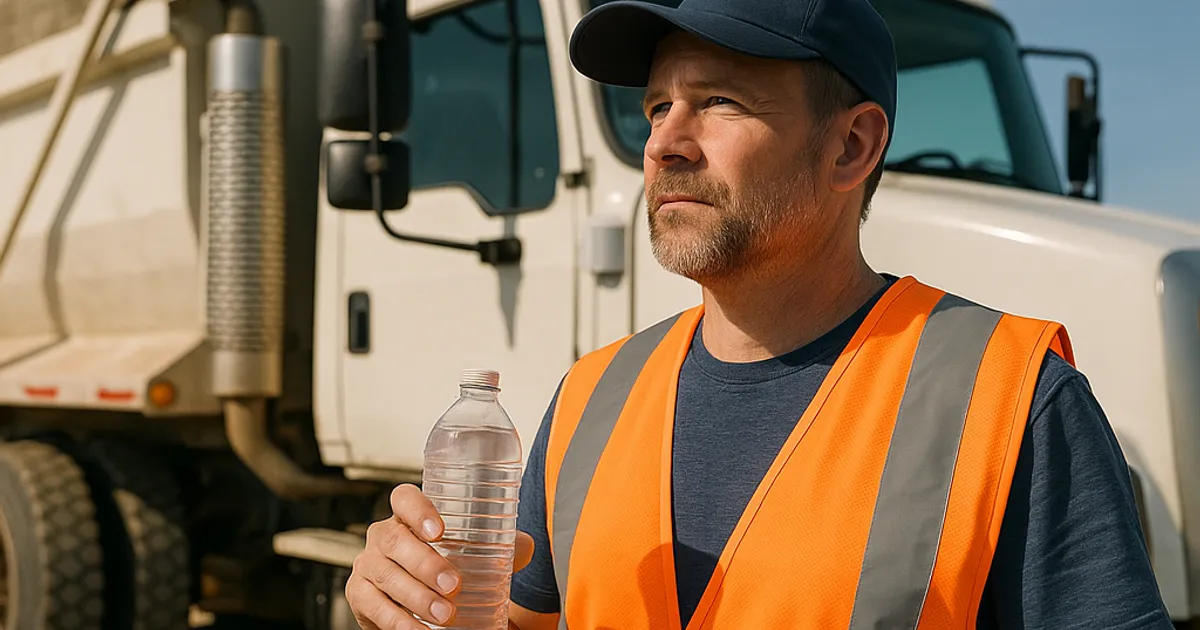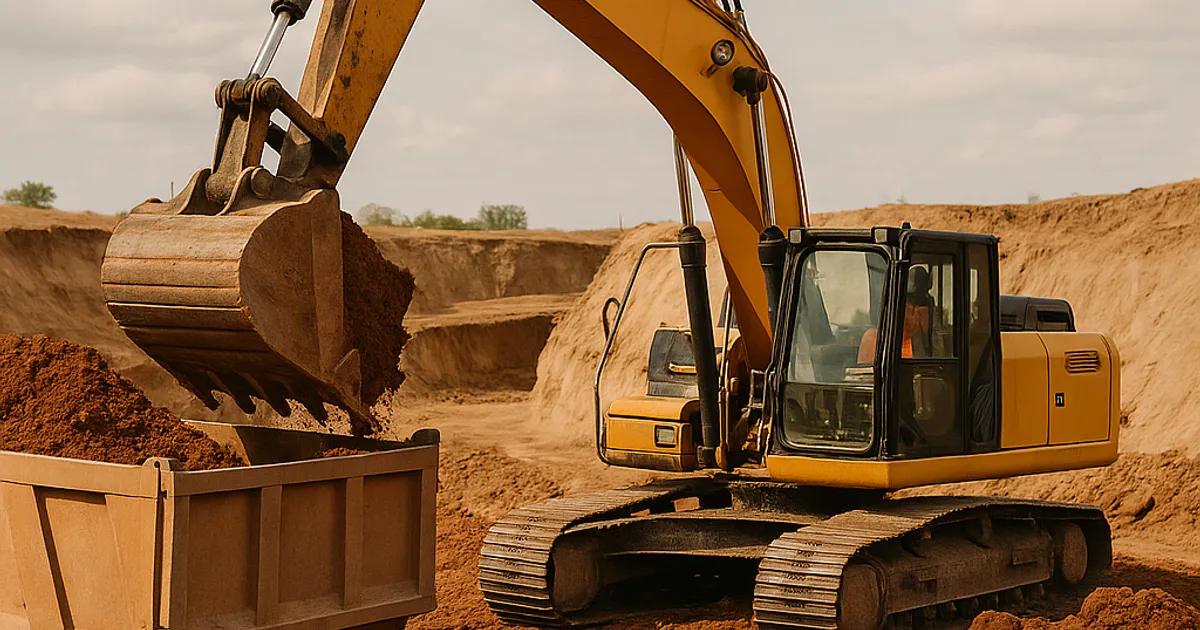
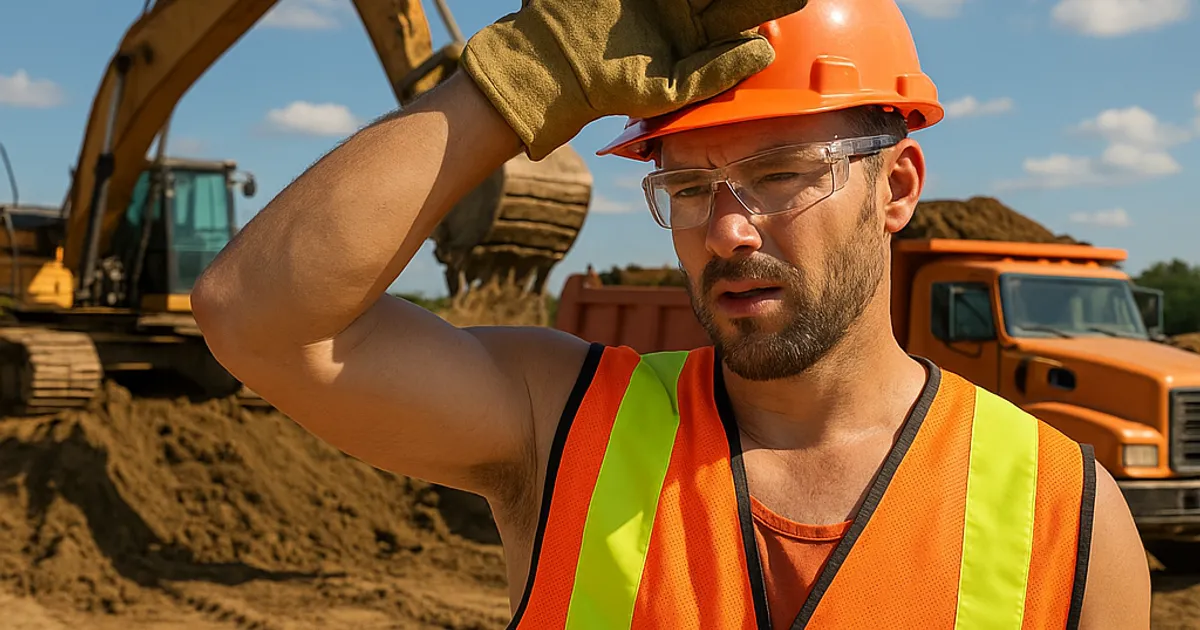
Summer on an earthwork job site is grueling. The sun hammers exposed soil and asphalt, equipment cabs trap heat even with air conditioning running, and operators spend hours navigating heavy loads across sites where shade is essentially nonexistent. For dump truck drivers, the challenge is compounded by long haul routes, tight delivery windows, and the physical exertion of managing loads, spotters, and tailgates in sweltering conditions.
Heat-related illness is not a fringe risk. According to Bureau of Labor Statistics data, the construction industry consistently records more heat-related fatalities than any other private-sector industry, accounting for roughly 36 percent of all occupational heat deaths in recent years. Earthwork and heavy civil construction crews are among the most exposed workers in the sector, often working on barren sites with no natural shade, surrounded by dark soil and equipment that absorbs and radiates heat aggressively.
This guide covers everything earthwork crews, dump truck operators, and site supervisors need to know about heat safety in 2026: the physiology of heat illness, OSHA's evolving regulatory framework, practical heat safety plans, hydration protocols, warning signs, and the operational strategies that keep crews productive without putting lives at risk.
Why Heat Is Especially Dangerous on Earthwork Sites
Earthwork sites create a uniquely hostile thermal environment. Unlike vertical construction where workers can occasionally move into shaded interiors, grading, excavation, fill compaction, and haul road operations happen entirely in open sun. Freshly disturbed soil, especially dark clay or decomposed granite, absorbs solar radiation and re-radiates it upward, creating a ground-level heat zone that can be 20 to 30 degrees Fahrenheit hotter than ambient air temperature.
On a day when the air temperature is 95°F, the surface of a graded pad can exceed 130°F. Workers walking across that surface, spotting trucks, or hand-finishing grade are exposed to radiant heat from both above and below simultaneously. Dump truck operators face a different but equally serious risk: cab temperatures can spike to dangerous levels during loading and unloading when engines idle but air conditioning struggles to overcome direct sun exposure through large windshields.
The combination of physical exertion, dehydration from sweat loss, and external heat load overwhelms the body's cooling mechanisms faster than most workers and supervisors expect. A healthy adult can lose one to two liters of sweat per hour under heavy exertion in high heat. Without consistent fluid replacement, cognitive function degrades, coordination suffers, and the risk of accidents involving heavy equipment escalates sharply.
There is also a meaningful acclimatization gap at the start of every summer season. Workers who have been on indoor or lighter-duty assignments through winter and spring need seven to fourteen days to physiologically adapt to sustained heat exposure. During that window, their sweat response is less efficient, their heart rate climbs higher for the same exertion, and their risk of heat exhaustion and heat stroke is significantly elevated. This is when many of the season's most serious incidents occur.
OSHA's Heat Standards: What Earthwork Contractors Must Know in 2026
For years, OSHA addressed heat illness through its General Duty Clause, which requires employers to provide a workplace free from recognized serious hazards. That framework put the burden of interpretation on inspectors and created inconsistent enforcement across regions and industries.
In 2024, OSHA published a proposed federal heat illness prevention standard, and by 2026 the regulatory landscape has shifted considerably. Earthwork contractors operating in states with state-plan OSHA programs, including California, Washington, Oregon, Colorado, and Minnesota, are subject to state-level heat illness prevention regulations that in many cases exceed the federal baseline. California's heat illness prevention standard (Title 8, Section 3395) remains the most detailed in the country and serves as a practical benchmark even for contractors working in federal OSHA jurisdictions.
Key requirements that apply across most regulatory frameworks include:
- Provision of shade: Employers must provide shade when the temperature reaches or is expected to reach 80°F. Shade must be available at all times, large enough to accommodate all workers on a rest break simultaneously, and located as close as practicable to the work area.
- Access to water: Fresh, pure, cool water must be available at no cost to workers. The standard in most state plans is at least one quart per worker per hour during periods of heavy exertion and high heat.
- Rest periods: Mandatory cool-down rest periods in shade for a minimum of five minutes when a worker feels the need. Some state standards require scheduled breaks every two hours during high-heat conditions.
- Acclimatization: Employers must implement an acclimatization schedule for new workers and workers returning after more than a week away. This typically means limiting heat exposure to 20 percent of the expected full-shift duration on the first day, increasing gradually over seven to fourteen days.
- Heat illness prevention plan: A written plan specific to the worksite, addressing water, shade, rest, acclimatization, emergency response, and employee training.
- Training: All workers and supervisors must be trained on heat illness recognition, prevention, and emergency procedures before beginning work in conditions that could cause heat illness.
The National Safety Council provides free resources for contractor heat safety training that align with current OSHA guidance and can be adapted for earthwork and dump truck crew contexts.
Contractors should be aware that OSHA has increased enforcement focus on heat-related violations in recent years, with heat illness citations now carrying penalties that can exceed $15,000 per violation and significantly higher amounts for willful violations. For subcontractors and owner-operators who work across multiple project sites, understanding which regulatory jurisdiction applies to each site is a critical compliance step at the start of every season.
Building a Written Heat Illness Prevention Plan for Your Crew
A written heat illness prevention plan is not just a regulatory checkbox. It is the operational document that gives supervisors and crew members clear instructions when conditions deteriorate quickly on a job site. An effective plan for an earthwork or haul operation should cover seven core elements.
Element 1: Site-Specific Hazard Assessment
Before the season begins, walk every active or upcoming job site and document heat hazards specific to that location. Note the orientation of the site relative to the sun, the presence or absence of natural shade, the reflectivity and color of surface materials, distances between work areas and water or shade stations, and any confined or low-airflow areas such as trenches and excavations. Trenches present compounded risk because they block wind circulation while concentrating radiant heat from the surrounding soil.
Element 2: Water and Hydration Infrastructure
Specify exactly how water will be provided on each site. For earthwork operations covering large areas, this typically means insulated water coolers mounted on a utility vehicle or ATV that circulates among crews on a scheduled basis, or designated water stations positioned at intervals of no more than 500 feet. For dump truck crews on haul routes, plan water resupply at each staging area. The plan should name who is responsible for stocking and distributing water each day.
Element 3: Shade Structures and Rest Zones
Document the type, location, and capacity of shade available on each site. Options include portable shade tents, shade structures on trailers, vehicle cabs with functioning air conditioning, and nearby buildings. The plan should specify the minimum distance workers must travel to reach shade, with the goal of keeping that distance under one minute of walking time.
Element 4: Acclimatization Schedule
Include a written acclimatization protocol that applies to all new hires, seasonal returnees, and workers coming back from illness or leave of seven or more days. A practical schedule for earthwork crews looks like this:
| Day | Maximum Heat Exposure Duration |
|---|---|
| 1 | 20% of full shift |
| 2 | 40% of full shift |
| 3 | 60% of full shift |
| 4 | 80% of full shift |
| 5-14 | Full shift with increased monitoring |
Element 5: Emergency Response Procedures
Every foreman and equipment operator should be able to answer three questions without hesitation: How do I recognize heat stroke versus heat exhaustion? What do I do immediately when I see a worker in distress? How do I get emergency medical services to this specific location? The plan should include the GPS coordinates or address of each site, the name of the nearest hospital with an emergency department, and a chain of command for initiating emergency response.
Element 6: High-Heat Procedures
Define thresholds for elevated precautions. When the heat index reaches 90°F, mandatory buddy checks and verbal wellness confirmations should occur every hour. When it reaches 103°F or higher, operations should shift to the coolest hours of the day, work rotations should be shortened, and a supervisor or designated heat safety officer should be assigned to monitor workers full-time.
Element 7: Training and Documentation
Document every training session with worker names, dates, and topics covered. Training must be completed before a worker is exposed to conditions that could cause heat illness, not after the first hot day arrives.
Recognizing Heat Illness: A Field Guide for Foremen and Operators
Every person on an earthwork or dump truck crew should be able to identify the progression from heat stress to heat exhaustion to heat stroke. The difference between those stages can be the difference between a worker who needs a rest break and one who needs an ambulance.
Heat Cramps
Heat cramps are muscle spasms caused by electrolyte loss through heavy sweating. They typically affect the legs, abdomen, and arms. A worker experiencing heat cramps should stop work, rest in shade, and drink fluids containing electrolytes. Do not allow the worker to return to heavy physical work until the cramps resolve and the worker has rehydrated. Heat cramps are an early warning signal, not a minor inconvenience.
Heat Exhaustion
Heat exhaustion occurs when the body cannot maintain adequate blood flow to both the muscles and the skin for cooling. Signs include heavy sweating, pale or moist skin, weakness, dizziness, nausea, headache, and a fast but weak pulse. Core temperature in heat exhaustion is typically below 104°F. A worker with heat exhaustion should be moved to a cool area immediately, have wet cloths applied to skin, and drink cool fluids if conscious and able to swallow. If symptoms do not improve within 15 minutes, call emergency services.
Heat Stroke
Heat stroke is a life-threatening emergency. It occurs when the body's core temperature exceeds 104°F and the thermoregulatory system fails. Classic signs include confusion, slurred speech, loss of consciousness, seizures, very high body temperature, and skin that may be hot and dry or still wet from sweating. Suspected heat stroke requires immediate emergency services activation and aggressive cooling while awaiting paramedics: remove excess clothing, apply ice packs to the neck, armpits, and groin, and use any available water or wet cloths on exposed skin. Do not give fluids to an unconscious or confused worker.
A laminated heat illness recognition card posted in every equipment cab, tool trailer, and water station is a simple and effective way to keep this information accessible in an emergency.
Hydration Protocols That Actually Work in the Field
The standard guidance of "drink water" is not specific enough to protect workers on a high-exertion earthwork site in 100°F heat. Effective hydration for outdoor construction workers requires a structured protocol with realistic targets and peer accountability.
The One Quart Per Hour Baseline
For workers performing moderate to heavy physical labor at temperatures above 90°F, one quart of water per hour is the minimum replacement target. At temperatures above 95°F with direct sun exposure, some workers may need more. Encourage workers to establish a personal baseline by monitoring urine color: pale yellow indicates adequate hydration, dark yellow or amber means the worker is already behind on fluids and should increase intake immediately.
Electrolyte Replacement
Water alone is insufficient for workers sweating heavily for four or more hours. Heavy sweating depletes sodium, potassium, and magnesium, and replacing only water without electrolytes can cause hyponatremia, a dangerous condition where blood sodium drops too low. Electrolyte tablets, sports drinks, or electrolyte powder packets added to water should be available on site and used by workers during shifts exceeding four hours of moderate to heavy exertion.
Pre-Shift and Post-Shift Hydration
Workers who arrive on site already dehydrated are at significantly higher risk. Encourage crew members to drink 16 ounces of water before leaving home on hot days and to avoid alcohol the night before high-heat workdays, as alcohol accelerates dehydration. Post-shift, workers should continue drinking fluids until urine is consistently pale yellow.
Hydration Tracking for Dump Truck Operators
Dump truck operators face a specific challenge: they may be reluctant to drink enough water because stopping to use a restroom interrupts haul cycles and creates schedule pressure. Address this directly with operators and dispatchers. Hydration breaks are not optional, and no haul schedule should create conditions where operators feel they cannot safely manage their own basic physiological needs. A brief stop at a designated rest area costs far less than a serious incident.
Scheduling and Operational Adjustments for Peak Heat
The most effective heat mitigation strategy is reducing exposure during the hottest hours of the day. For most earthwork sites in the continental United States, the peak heat window runs from approximately 10:00 a.m. to 4:00 p.m. Shifting start times earlier, to 5:00 or 6:00 a.m., allows crews to complete the heaviest physical work before the heat index climbs to dangerous levels.
Early Start Protocols
Early starts require coordination with material suppliers, testing labs, and inspectors, but the operational and safety payoff is significant. Grading, compaction, and fill placement done in the cool morning hours can be followed by equipment maintenance, administrative tasks, or reduced-intensity work during peak heat periods. For dump truck crews, early morning hauls are also safer from a cognitive standpoint: reaction time and decision-making are measurably better in cooler conditions.
Work-Rest Rotation Tables
The following table provides recommended work-rest ratios based on heat index and physical demand level. These are based on occupational health guidelines and should be adapted to specific site conditions.
| Heat Index (°F) | Light Work | Moderate Work | Heavy Work |
|---|---|---|---|
| Below 91 | No restriction | No restriction | No restriction |
| 91 to 103 | No restriction | 45 min work / 15 min rest | 30 min work / 30 min rest |
| 103 to 115 | 45 min work / 15 min rest | 30 min work / 30 min rest | 20 min work / 40 min rest |
| Above 115 | 30 min work / 30 min rest | Suspend or essential only | Suspend |
Heavy work in this context includes manual grade work, hand compaction, unloading activities, and any task requiring sustained physical exertion. Light work includes equipment operation in a climate-controlled cab, inspection, and flagging.
Equipment Cab Comfort and Safety
For equipment operators, cab air conditioning is not a luxury; it is a safety control. Before each summer season, have cab HVAC systems inspected and serviced. Check refrigerant levels, cabin air filters, and door seals. An excavator or dozer cab with a failing air conditioner on a 105°F day can reach internal temperatures exceeding 120°F within 30 minutes of shutdown. Operators in those conditions face impaired judgment and a sharply elevated risk of heat exhaustion.
For dump truck operators, add reflective window shades for windshields and side windows during rest periods. Pre-cool the cab before re-entry by running the air conditioning for several minutes before the operator gets in after a loading stop.
Find or Post Dirt, Rock & Aggregate
Join thousands of contractors using DirtMatch to buy, sell, and exchange earthwork materials.
Try DirtMatch FreePersonal Protective Equipment and Clothing for Hot Weather Operations
Workwear choices on hot days involve a real tradeoff between sun protection and breathability. The right combination reduces heat load while still protecting workers from UV radiation and job-site hazards.
Light-colored, loose-fitting, moisture-wicking shirts and pants significantly outperform dark cotton clothing in high heat. High-visibility vests are required on most earthwork sites, but look for mesh or perforated designs that allow airflow rather than solid polyester vests that trap heat. Wide-brim hard hats or hard hat sun shades reduce radiant heat on the head and neck substantially. Neck gaiters or cooling towels soaked in water and worn around the neck can reduce perceived temperature by several degrees.
Sunscreen with SPF 30 or higher applied to all exposed skin is non-negotiable. Sunburn reduces the skin's ability to dissipate heat, compounding the thermal burden on the body. Make sunscreen application part of the pre-shift toolbox talk rather than leaving it to individual workers to remember.
Cooling vests with ice packs or evaporative cooling panels are increasingly common on high-heat earthwork sites and have demonstrated measurable reductions in core temperature during heavy exertion. While the upfront cost of $50 to $150 per vest is real, it is a fraction of the cost of a single heat-related workers' compensation claim, which averages over $20,000 in medical expenses and lost wages.
Heat Safety Training: What Every Crew Member Needs to Know Before Day One
Training is the foundation of every other element of a heat illness prevention program. Knowledge about warning signs, hydration, and emergency procedures only protects workers if it has actually been communicated and retained before conditions become dangerous.
Effective heat safety training for earthwork and dump truck crews should cover:
- The body's heat regulation mechanism and why it fails under sustained extreme conditions
- The three stages of heat illness with specific symptoms for each
- Personal responsibility for monitoring hydration and communicating early symptoms to a supervisor
- The acclimatization schedule and why pushing through early-season heat is dangerous
- Site-specific water and shade locations and rest break schedules
- How to call for emergency medical services from the specific job site location
- Recognition that coworkers may deny being unwell due to peer pressure or production concerns, and how to respond
Training should be delivered in the primary language of the crew. On earthwork sites where Spanish-speaking workers make up a significant portion of the workforce, all written materials, laminated reference cards, and verbal briefings must be provided in Spanish. OSHA's Heat Illness Prevention campaign materials are available in both English and Spanish and can supplement employer-developed training content.
For earthwork businesses looking to improve coordination across crews and job sites this summer, DirtMatch Pro gives operators tools to manage schedules, communicate with project partners, and track job site logistics in one place, making it easier to build operational heat safety protocols into daily dispatch and scheduling workflows.
Regional Considerations: Heat Risk Varies Significantly by Location
Heat hazard profiles differ dramatically depending on where your earthwork operation is based. Understanding the specific climate conditions in your region allows you to calibrate your heat safety plan appropriately rather than applying a one-size-fits-all approach.
In the desert Southwest, including Southern California, Nevada, and Arizona, crews face dry heat that can exceed 110°F for weeks at a time. Sweat evaporates quickly in low humidity, which can mask how much fluid is being lost. Workers in these regions need to be especially vigilant about proactive hydration rather than drinking only when thirsty. Earthwork contractors handling dirt exchange in Los Angeles and dirt exchange in San Diego frequently encounter extended heat events where ambient temperatures remain above 90°F even after sunset, reducing the recovery window between shifts.
In the Pacific Northwest and Mountain West, heat hazards are different in character but equally serious. Seattle and Denver experience shorter but intense summer heat events that can catch crews off guard precisely because the same conditions do not persist all season. Workers in these regions often have lower acclimatization to extreme heat, making early-season heat waves particularly dangerous. Earthwork crews managing dirt exchange in Denver or dirt exchange in Seattle should treat any day with a forecast heat index above 90°F with the same rigor as a desert contractor treats a 105°F day, because for those crews, the acclimatization baseline is much lower.
In the Southeast and Gulf Coast, high humidity is the defining hazard. At 95°F and 80 percent relative humidity, sweat cannot evaporate efficiently, and the body's primary cooling mechanism is severely compromised. The heat index in these conditions can exceed 115°F, and work-rest ratios must reflect the actual felt temperature rather than the ambient air reading.
Using Technology and Platforms to Reduce Heat Exposure
One underappreciated way to reduce worker heat exposure on earthwork projects is to minimize the time crews spend in unproductive heat: waiting for materials, sitting idle at staging areas, or making unnecessary haul runs due to poor load coordination.
Inefficient dirt logistics mean workers stand in full sun waiting for trucks that are late, equipment operators idle on pads waiting for direction, and dump truck drivers circle staging areas during peak heat hours while loads are being organized. Better coordination directly reduces exposure duration.
Platforms like DirtMatch, which connects earthwork contractors with nearby dirt, rock, and aggregate sources and disposal sites, reduce haul distances and improve load scheduling. Shorter hauls mean less time dump truck operators spend in cabs during peak heat hours, less fuel burned, and faster project turnarounds that allow crews to knock off earlier in the day before heat index peaks. If you are new to the platform, learning how DirtMatch works takes only a few minutes and can meaningfully change how your operation plans summer haul logistics.
Digital scheduling tools, GPS dispatch, and real-time load tracking all contribute to tighter haul coordination. Equipment telematics platforms, including those integrated with Caterpillar and Komatsu machines, can also alert dispatchers when cab temperatures or engine conditions suggest operators may be working in degraded conditions.
Foreman and Supervisor Accountability: Leading Heat Safety from the Top
Heat illness prevention fails most often not because workers lack information but because supervisors allow production pressure to override safety protocols. The foreman who tells crews to push through because "we need to get this pour done" on a 108°F day is creating the conditions for a heat stroke incident, regardless of how good the written safety plan looks on paper.
Supervisor accountability for heat safety should be built into project performance metrics. Consider these practices:
- Daily heat index monitoring by the foreman starting at 6:00 a.m., with written documentation of temperature and humidity readings and any protocol adjustments made
- Foreman authorization required to suspend or modify work when the heat index exceeds site-specific thresholds
- Incident reporting that includes near-misses such as workers who received early heat exhaustion treatment, not just cases that resulted in injury
- Post-season review of any heat-related events, near-misses, or protocol deviations to identify patterns and improve the following year's plan
Safety culture on a job site flows from the top. When operators and laborers see their foreman drinking water, taking shade breaks, and enforcing hydration protocols on crew members, compliance rises dramatically. When supervisors push through in visible disregard of heat conditions, workers follow that lead at significant personal risk.
For contractors looking to grow their business while maintaining a strong safety culture, getting started with DirtMatch connects you with a network of vetted project partners who share your commitment to professional, safe operations.
After the Summer Season: Reviewing Your Heat Safety Program
At the close of the summer season, take time to conduct a formal review of your heat safety program before fall projects ramp up and before next summer's conditions are planned for. This review should be documented and used to update your written heat illness prevention plan for the following year.
Key questions for a post-season review:
- Were any workers treated for heat-related illness on site or after leaving work? What were the contributing factors?
- Were water and shade resources consistently available and adequate throughout the season?
- Did all new and returning workers complete the acclimatization schedule, or were there pressures to cut that short?
- Were there any days when work-rest schedules were not followed due to production pressure? What were the outcomes?
- Did dump truck operators have access to adequate hydration throughout haul routes?
- What would you change about training, scheduling, or site infrastructure for next summer?
Inputs from crew members who worked through the summer should be actively solicited. Workers on the ground often identify practical failures in heat safety systems that are invisible from a management perspective, such as a water station that was consistently stocked late in the morning, a shade tent that was too far from the work face, or a scheduling pattern that concentrated heavy work during the hottest part of the day.
The National Safety Council offers post-season safety review templates and resources specifically designed for construction employers that can structure this process effectively.
With thoughtful planning, strong supervisor leadership, consistent training, and the right operational tools, earthwork and dump truck crews can work productively through the hottest summer conditions without compromising the safety of anyone on site. The stakes are real, the regulations are increasingly specific, and the standard for what constitutes adequate heat protection in 2026 is higher than it has ever been. Build your program to meet that standard, and your crew will make it to fall intact.