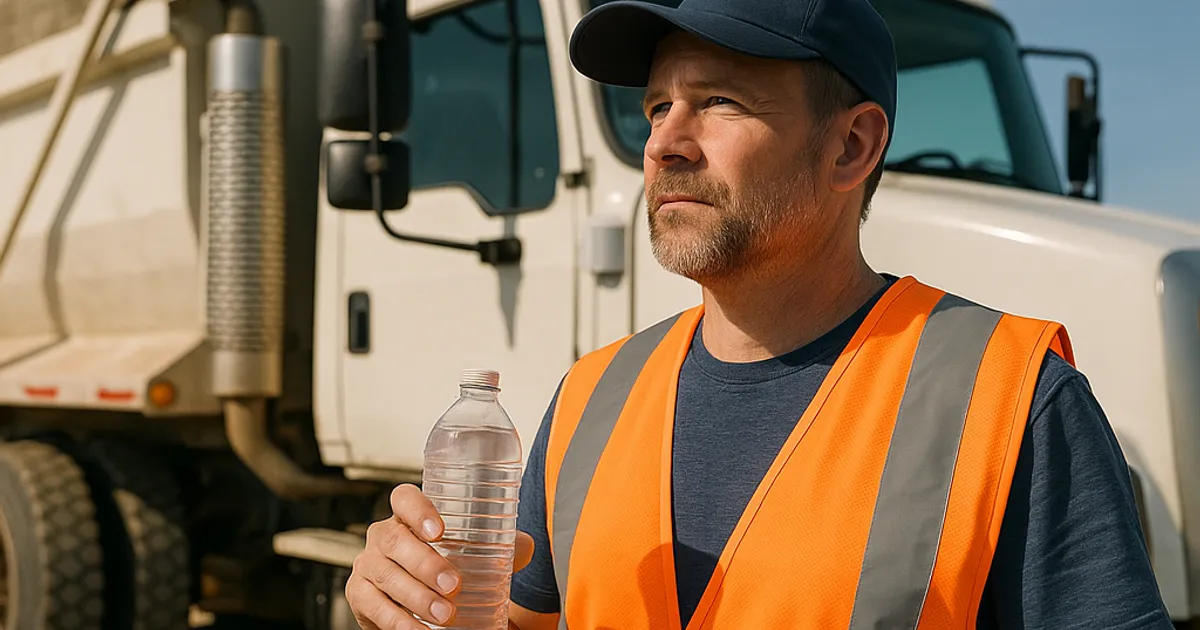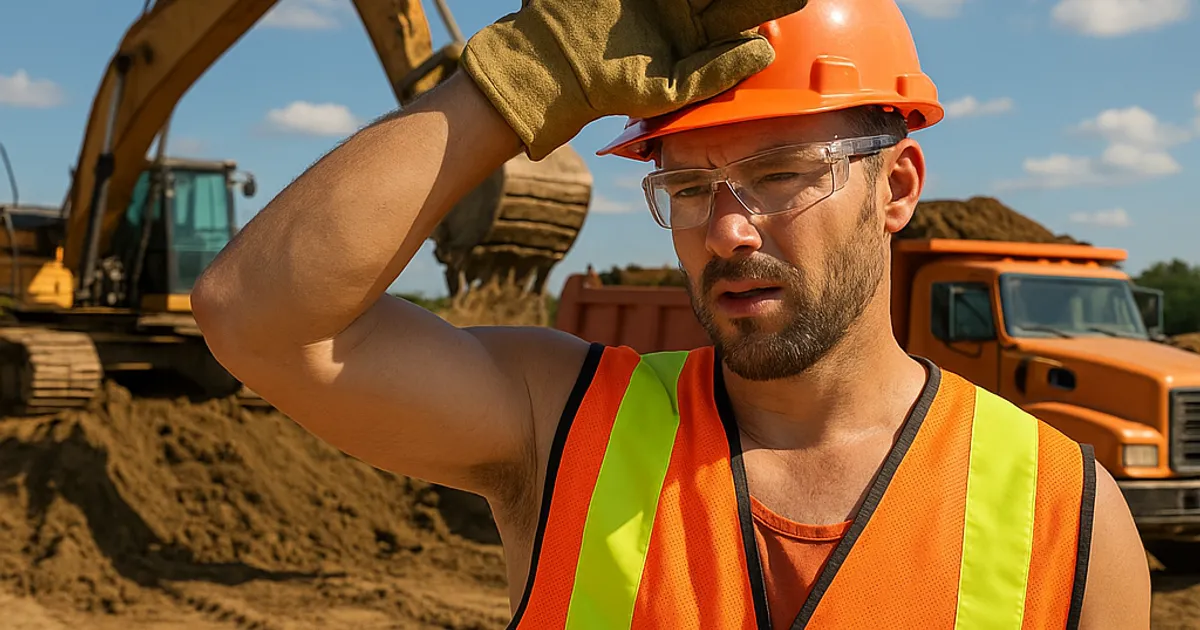
The summer sun doesn't take days off — and neither do earthwork contractors. Whether you're grading a new subdivision, hauling fill dirt across a dusty site, managing excavation crews, or coordinating aggregate deliveries in the scorching heat, what you wear on the job is far more than a style choice. It's a productivity tool, a safety system, and in some cases, a legal compliance requirement.
According to the U.S. Bureau of Labor Statistics, construction and extraction occupations account for a disproportionately high share of heat-related illnesses and fatalities each year. The Centers for Disease Control and Prevention (CDC) estimates that heat stress costs employers billions of dollars annually in lost productivity, workers' compensation claims, and medical expenses — with outdoor construction workers among the most vulnerable populations.
For professionals operating in the dirt, rock, and aggregate space — where work happens entirely outdoors on exposed, reflective surfaces — the risk is compounded. Bare, disturbed soil and gravel can absorb and radiate heat significantly more than vegetated ground, raising ambient temperatures on active earthwork sites by 10–15°F above the surrounding environment.
This comprehensive guide covers everything you need to know about choosing, layering, and maintaining workwear that keeps you cool, safe, OSHA-compliant, and productive during summer earthwork operations. From fabric science to hi-vis requirements, from sun-protection ratings to budget comparisons, we've got every detail covered.
Why Summer Workwear Is a Safety-Critical Decision for Earthwork Professionals
Before diving into specific product recommendations, it's essential to understand the physiological and regulatory stakes involved. Choosing the wrong summer workwear on a dirt jobsite isn't just uncomfortable — it can be life-threatening.
The Science of Heat Stress on Active Jobsites
The human body regulates its core temperature primarily through sweating and skin blood flow. When ambient temperature exceeds skin temperature (approximately 91–95°F), the body can no longer cool itself through convection and must rely entirely on evaporative cooling (sweating). On a dirt or gravel jobsite, workers face a triple heat burden:
- Ambient air temperature — Often 90–105°F in summer months across the Sun Belt and interior western states
- Radiant heat — From direct solar exposure and heat radiating off exposed soil, rock, and aggregate piles
- Ground-reflected heat — Compacted dirt and gravel absorb solar energy and re-emit it upward, creating a "heat island" effect at ground level
Research from the National Institute for Occupational Safety and Health (NIOSH) shows that workers performing moderate-to-heavy physical labor in these conditions can generate internal heat loads of 300–600 watts — the equivalent of running several incandescent light bulbs inside your body simultaneously. Without proper workwear, this heat cannot dissipate efficiently, and core body temperature rises rapidly.
Heat exhaustion sets in when core temperature reaches 101–104°F. Heat stroke — a medical emergency with a fatality rate of up to 63% without rapid treatment — occurs above 104°F. The progression from discomfort to emergency can happen in under 30 minutes in extreme conditions.
OSHA Requirements and Employer Obligations
OSHA's Heat Illness Prevention standards require employers to provide water, rest, and shade for outdoor workers — but workwear selection is increasingly recognized as a core component of a comprehensive heat illness prevention program. While OSHA does not currently mandate specific fabric types for summer workwear (as of 2024), the General Duty Clause (Section 5(a)(1) of the OSH Act) requires employers to protect workers from recognized hazards, which includes heat exposure.
Several states have gone further. California's Heat Illness Prevention Standard (CCR Title 8, Section 3395) and Washington State's WAC 296-62-095 both require employers to implement specific heat illness prevention plans. In California, where earthwork operations in the Central Valley and Southern California often occur in 100°F+ heat, compliance with these standards is closely monitored.
For contractors managing crews on active dirt jobs — whether in the desert Southwest or the humid Southeast — investing in proper summer workwear is not optional. It's a risk management imperative.
Understanding Fabric Technology: What Actually Keeps You Cool
The workwear market is flooded with claims about "cooling technology" and "moisture management." Not all of them are accurate, and on a dirty, dusty earthwork site, many consumer-grade athletic fabrics simply aren't appropriate. Here's a breakdown of the fabric science that actually matters for dirt professionals.
Moisture-Wicking vs. Moisture-Absorbing Fabrics
There's a critical distinction between fabrics that absorb moisture and those that wick it. Traditional 100% cotton absorbs sweat and holds it against the skin, which can feel cooling initially but quickly becomes heavy, chafe-inducing, and — when wet — actually increases the risk of hypothermia in cooler evening temperatures.
Moisture-wicking synthetic fabrics (typically polyester or nylon blends with microfiber construction) pull sweat away from the skin and spread it across a larger surface area, accelerating evaporation. Independent testing by the American Association of Textile Chemists and Colorists (AATCC) using the AATCC 195 Liquid Moisture Management Properties test shows that quality moisture-wicking fabrics can move moisture away from skin up to 300% faster than standard cotton.
The Cotton Debate: When Traditional Wins
Despite the rise of synthetics, many experienced earthwork professionals swear by cotton — and there's legitimate reasoning behind it. Lightweight, breathable cotton (particularly ring-spun cotton or open-weave constructions) can be very effective in low-humidity environments like the desert Southwest, where the dry air quickly evaporates moisture from cotton fabric.
However, in high-humidity environments like the Gulf Coast, the Southeast, or coastal regions, cotton becomes problematic because the already-saturated air cannot absorb evaporated moisture efficiently. In these conditions, moisture-wicking synthetics or cotton-synthetic blends (typically 60/40 or 65/35 polyester-cotton) significantly outperform pure cotton.
General Rule:
- Arid climates (Arizona, Nevada, inland California, Colorado, New Mexico): Lightweight cotton or cotton blends work well
- Humid climates (Florida, Texas Gulf Coast, Southeast, Pacific Northwest): Moisture-wicking synthetics or performance blends are superior
UPF Ratings: Sun Protection That Matters on Open Jobsites
On a dirt or excavation site, there is zero natural shade cover. Workers are exposed to direct UV radiation for 8–12 hours per day. The American Cancer Society estimates that outdoor workers receive 3–4 times the annual UV exposure of indoor workers, dramatically increasing their risk of skin cancer.
UPF (Ultraviolet Protection Factor) ratings, established under ASTM D6603 standards, measure how much UV radiation penetrates fabric. The scale works similarly to SPF for sunscreen:
| UPF Rating | UV Blocked | Protection Level |
|---|---|---|
| UPF 15–24 | 93.3–95.9% | Good |
| UPF 25–39 | 96.0–97.4% | Very Good |
| UPF 40–50+ | 97.5–98%+ | Excellent |
For earthwork professionals spending full days in the sun, garments rated UPF 40 or higher are strongly recommended. Most quality workwear brands in the outdoor/work category now include UPF ratings on their technical shirts, and several — including Carhartt Force, Ariat FR, and Columbia PFG lines — offer UPF 50+ options specifically designed for heavy-duty outdoor use.
Essential Clothing Categories: A Head-to-Toe Summer Earthwork Kit
A functional summer workwear system for dirt operations requires thoughtful selection across every garment category. Here's the complete breakdown.
Performance Work Shirts: Your Most Important Investment
The work shirt is the single most impactful garment for heat management. For summer earthwork operations, look for the following specifications:
Long-Sleeve vs. Short-Sleeve: Counterintuitively, many experienced outdoor workers prefer long-sleeve shirts in summer. A lightweight long-sleeve shirt with UPF 50+ protection shields your arms from UV radiation without requiring constant sunscreen reapplication. Research from the University of Southern California's Keck School of Medicine shows that sunscreen efficacy drops significantly after 2 hours of heavy sweating, while UPF fabric maintains its protection rating regardless of sweat or activity level.
Top Picks for Earthwork Professionals:
| Brand & Model | Fabric | UPF | Price | Best For |
|---|---|---|---|---|
| Carhartt Force Long-Sleeve | 100% Polyester | 40+ | $35–$45 | General earthwork, durability |
| Ariat Rebar Horizon | 91% Poly/9% Spandex | 30+ | $40–$55 | High-mobility grading work |
| Columbia PFG Bahama II | 100% Nylon | 30 | $45–$60 | Humid coastal sites |
| Wrangler Riggs Workwear | 65% Poly/35% Cotton | 25 | $25–$35 | Budget-conscious crews |
| Kuhl Renegade | 100% Nylon | 50+ | $75–$90 | Site managers, long-haul outdoor work |
FR (Flame-Resistant) Considerations: If your earthwork operations involve proximity to utility work, welding, or equipment with fuel exposure, FR-rated shirts are required by NFPA 2112 standards. FR shirts must still meet OSHA heat stress guidelines; look for NFPA 2112-compliant options with moisture-wicking properties, such as those offered by Bulwark or Westex UltraSoft AC.
Work Pants and Shorts: Balancing Protection and Mobility
Below the waist, earthwork professionals face a specific challenge: pants need to be durable enough to withstand abrasive contact with equipment, rock, and soil, while remaining breathable enough to prevent heat buildup in the lower body.
For most dirt operations, full-length work pants are recommended over shorts, for several reasons:
- Protection from sharp aggregate, rebar, and equipment
- Reduced skin exposure to UV radiation
- Protection from soil contact (particularly important on sites with potential soil contamination)
- Required by many site safety programs
Best Fabric Options for Summer Work Pants:
- Lightweight ripstop nylon/polyester blends (6–8 oz fabric weight): Excellent air circulation, fast-drying, durable. Brands like Propper, 5.11 Tactical, and Carhartt offer work-specific versions.
- Ventilated cargo pants with mesh-lined pockets: The added mesh panels dramatically improve airflow in the thigh and knee areas where heat accumulates.
- Moisture-wicking canvas blends (7–8 oz): More traditional look for contractors who need to appear professional on job walks while staying cool.
When Shorts Are Appropriate: On owner-operated jobs where you set your own safety standards, or in roles where you're primarily in and out of vehicles or equipment (not working on foot in abrasive environments), lightweight work shorts in ripstop or canvas can be appropriate. Always ensure they extend past the knee to protect against UV exposure and scrape hazards.
Work Boots: The Ground-Up Heat Equation
Boot selection has an enormous impact on thermal comfort during summer earthwork. Your feet are your foundation — on a hot day, trapped heat in boots can make an otherwise manageable temperature feel unbearable.
Key Specifications for Summer Earthwork Boots:
- ASTM F2413-18 compliance for safety toe and puncture resistance — mandatory on most active construction sites
- Waterproof vs. breathable membranes: In summer, Gore-Tex and similar waterproof membranes can trap heat. Look for boots with moisture-wicking mesh linings instead, unless water crossing is required
- Full-grain vs. nubuck leather uppers: Nubuck and split-grain leathers are more breathable than full-grain; modern synthetic mesh uppers are the most breathable option
- Midsole composition: EVA midsoles are lighter and cooler than traditional PU; some manufacturers now offer open-cell foam midsoles with superior ventilation
- Outsole heat resistance: ASTM F1790 rates boot outsoles for heat resistance — important if you're working near hot asphalt, equipment exhaust, or on reflective gravel
Top-Rated Summer Work Boots for Dirt Operations:
- Timberland PRO Titan EV (composite toe, ventilated, ASTM F2413-18 compliant): ~$130–$160
- Wolverine Overpass (mesh upper, composite toe): ~$120–$150
- Keen Utility Lansing Mid (waterproof/breathable balance): ~$145–$175
- Red Wing 3228 Worx (full breathable mesh): ~$180–$210
Socks: The Underrated Heat Management Layer
Merino wool socks outperform cotton and synthetic alternatives in both moisture management and temperature regulation — and they work in summer, not just winter. Merino wool fibers naturally wick moisture, resist odor, and maintain their insulating properties even when wet. For summer earthwork, look for lightweight merino wool socks (150–200 weight) from brands like Darn Tough (with a lifetime guarantee), Smartwool, or Farm to Feet.
Alternatively, moisture-wicking synthetic blends from brands like Thorlos or Wigwam offer excellent performance at a lower price point ($8–$15 per pair vs. $20–$30 for merino).
Head Protection: Hard Hats, Sun Hats, and Cooling Headgear
On active earthwork and construction sites, hard hats are typically required under OSHA 29 CFR 1926.100. However, even within the hard hat requirement, there are meaningful choices that affect heat management:
Vented vs. Non-Vented Hard Hats: OSHA allows vented hard hats on most earthwork sites (vented hard hats are not appropriate near electrical hazards requiring Class E ratings). Vented models can reduce head temperature by 5–8°F compared to solid shells.
Sun Shade Brims: Aftermarket brim attachments (such as the OccuNomix Standard Tuff-Shield) can be added to most Type I and Type II hard hats, providing shade equivalent to wearing a wide-brim hat while maintaining ANSI/ISEA Z89.1-2014 compliance.
Evaporative Cooling Inserts: Hard hat cooling inserts that use phase-change materials or evaporative cooling pads are available from brands like OccuNomix, Fibre-Metal, and Ergodyne. Studies by NIOSH show these inserts can reduce helmet interior temperature by 6–10°F during peak heat exposure.
For operators and site managers not required to wear hard hats: A wide-brim hat (minimum 3-inch brim all-around) with UPF 50+ rating provides the best sun protection. Brands like Outdoor Research, Tilley, and Stetson offer OSHA-compliant wide-brim options designed for outdoor professionals.
Hi-Visibility Requirements in Summer Heat: Staying Seen Without Cooking
For earthwork operations near active roadways, many state DOTs and OSHA Standard 29 CFR 1926.201 require high-visibility (hi-vis) safety vests or garments meeting ANSI/ISEA 107 standards. In summer, hi-vis requirements can create a serious conflict with heat management — traditional hi-vis polyester vests trap heat and can raise body temperature significantly.
ANSI 107 Class Requirements for Common Earthwork Scenarios
| Work Environment | Required Class | Notes |
|---|---|---|
| Near traffic >25 mph | Class 2 minimum | Most roadside earthwork |
| Near traffic >50 mph | Class 3 minimum | Highway grading, ROW work |
| Equipment operators (enclosed cab) | Class 1 may suffice | Check state DOT specs |
| Site interior, no traffic | No requirement | Check site-specific plans |
Cool-Running Hi-Vis Solutions
Several manufacturers now produce ANSI 107-compliant hi-vis garments with heat management as a design priority:
- Hi-vis mesh vests (Class 2 and 3): The mesh construction dramatically improves airflow while maintaining retroreflective tape placement requirements. Brands: Ergodyne GloWear 8003Z, ML Kishigo B110, Radians SV55.
- Hi-vis moisture-wicking shirts (Class 2): Combines the work shirt and hi-vis vest into a single garment, eliminating the extra layer entirely. Brands: Carhartt High-Visibility, Helly Hansen Alna, Portwest.
- Hi-vis cooling towels and neck wraps with retroreflective properties: While not a substitute for a Class 2/3 vest, these can be used in addition to compliant hi-vis gear to assist with temperature regulation.
Pro Tip: Check your state DOT's specifications before selecting hi-vis gear. States like California (Caltrans), Texas (TxDOT), and Colorado (CDOT) have specific retroreflective tape width and placement requirements beyond the baseline ANSI 107 standard that may affect which garments are compliant.
Sun Protection Accessories: Completing the System
Workwear alone is not a complete sun and heat protection system. For full-day summer earthwork operations, the following accessories are essential components.
Neck Gaiters and Sun Sleeves
The back of the neck is one of the most sun-exposed areas for workers who look down at grade stakes, equipment controls, or ground conditions throughout the day. Lightweight neck gaiters made from UPF 50+ fabric (popularized by brands like Buff and Sunday Afternoons) provide continuous protection without the bulk of a collar.
Sun sleeves — essentially arm-length tubes of UPF 50+ fabric — allow workers wearing short-sleeve shirts to protect their arms without switching to a long-sleeve shirt. At $15–$25 per pair, they're an economical addition to any summer kit.
Cooling Towels and Evaporative Cooling Vests
Evaporative cooling technology has advanced significantly for occupational use. Two primary product categories are relevant for earthwork professionals:
Cooling Towels: Activated by soaking in water and wringing out, these towels (typically made from PVA or specialized microfiber) maintain surface temperatures 20–30°F below ambient through evaporative cooling. Studies from Arizona State University's Laboratory for Human Performance found that neck-applied cooling towels can reduce physiological strain index scores by 15–20% in high-heat conditions.
Phase Change Cooling Vests: Using materials that absorb heat as they change from solid to liquid (typically at 58–65°F), these vests can provide 2–4 hours of active cooling. They're particularly valuable during lunch breaks and cool-down periods. NIOSH endorses phase-change cooling vests as an effective heat stress intervention for outdoor workers.
Sunglasses: The Forgotten PPE
The American Academy of Ophthalmology recommends UV400 protection (blocking 99–100% of UVA and UVB) for all outdoor workers. On open dirt and aggregate sites, UV reflection off pale soil and rock can effectively double UV eye exposure. ANSI Z87.1-2020 provides safety standards for occupational eye protection — look for sunglasses that meet both ANSI Z87.1 and UV400 standards.
Wrap-around styles (180° eye coverage) are most effective for jobsite use, as they block UV from angles that standard lens cuts miss. Brands like Wiley X, Pyramex, and Bolle Safety offer ANSI Z87.1-compliant wrap-around sunglasses at $20–$80, well within jobsite budget parameters.
Building a Summer Workwear Budget: Cost Analysis for Crews of All Sizes
For small earthwork contractors and owner-operators, workwear is a real business expense — one that can either represent a smart investment or a recurring money drain if low-quality gear wears out quickly or fails to perform.
Individual Kit Cost Breakdown
| Item | Budget Option | Mid-Range | Premium |
|---|---|---|---|
| Performance work shirt (x3) | $60–$75 | $105–$135 | $200–$270 |
| Work pants (x2) | $50–$70 | $100–$140 | $180–$220 |
| Summer work boots | $80–$110 | $130–$170 | $180–$220 |
| Moisture-wicking socks (x5 pair) | $25–$40 | $50–$75 | $100–$150 |
| Hard hat with venting | $20–$35 | $40–$65 | $80–$120 |
| Hi-vis vest (mesh, Class 2) | $10–$20 | $25–$45 | $50–$80 |
| Sun protection accessories | $30–$50 | $60–$100 | $120–$200 |
| TOTAL per worker | $275–$400 | $510–$730 | $910–$1,260 |
Crew-Level Procurement Strategies
For contractors managing crews of 5 or more workers, several cost-reduction strategies are available:
- Bulk purchasing programs: Carhartt, Ariat, and Cintas all offer contractor/employer bulk pricing programs with 20–35% discounts for orders of 10+ units.
- Workwear rental/lease programs: Companies like Cintas, UniFirst, and Alsco offer full workwear programs where garments are rented, laundered, and replaced on a subscription basis. For crews of 10+, these programs often cost less than purchasing and managing laundry in-house.
- Tax deductibility: Work clothing purchased specifically for a business purpose that is not suitable for everyday wear is generally tax-deductible under IRS Publication 535. Consult your accountant to ensure proper documentation.
- Safety equipment tax credits: Several states offer tax credits for employer-provided safety equipment. Check with your state's department of labor for current programs.
Find or Post Dirt, Rock & Aggregate
Join thousands of contractors using DirtMatch to buy, sell, and exchange earthwork materials.
Try DirtMatch FreeRegional Considerations: How Climate Changes Your Summer Gear Strategy
The United States spans multiple climate zones, and the optimal summer workwear strategy varies significantly by region. Here's a region-by-region breakdown for earthwork professionals.
Desert Southwest (Arizona, Nevada, New Mexico, Inland Southern California)
Contractors handling dirt exchange in Los Angeles or working inland toward the Mojave face the most extreme dry heat conditions. With temperatures routinely exceeding 110°F and humidity often below 15%, the evaporative cooling advantage of breathable fabrics is maximized. Lightweight cotton and cotton-poly blends work well here. Hydration is the primary concern — the dry air masks heavy sweat loss. Moisture-wicking fabrics are critical for accurate sweat loss perception.
Key gear priorities: Maximum breathability, UPF 50+ protection, wide-brim shade (hard hat with brim attachment), cooling towels, electrolyte awareness.
Pacific Coast (San Francisco Bay Area, San Diego, Seattle)
Coastal conditions create unique challenges. Earthwork professionals managing dirt exchange in San Diego or dirt exchange in San Francisco may encounter morning marine layer and fog (with temperatures in the 60s°F) that burns off by noon to reveal intense UV radiation and temperatures in the 80–90°F range.
For coastal operations, layering systems are particularly important. A lightweight UPF 50+ base layer that works in cooler morning conditions, paired with a mesh hi-vis vest that can be added or removed, provides flexibility for these swing conditions. Gore-Tex rain gear should remain accessible even in summer months.
Rocky Mountain Region (Colorado, Utah, Wyoming)
At elevation, UV radiation intensity increases approximately 4% for every 1,000 feet of elevation gain. Contractors working at 5,000–8,000 feet elevation in the dirt exchange in Denver metro and mountain corridor face UV exposure levels 20–32% higher than sea-level workers at the same latitude — even on mild temperature days.
UPF 50+ protection is non-negotiable at elevation. Additionally, afternoon thunderstorm patterns mean that rapid temperature drops and lightning exposure are real concerns from July through September, requiring workwear layering systems that can adapt quickly.
Gulf Coast and Southeast (Texas, Florida, Louisiana, Georgia)
High humidity (70–95% relative humidity) makes the Gulf Coast the most physiologically demanding summer environment for outdoor workers. Moisture-wicking synthetics dramatically outperform cotton here, as the saturated air provides almost no evaporative cooling benefit. Workers effectively rely on conductive and convective heat transfer through their clothing rather than evaporative cooling.
In these conditions, ice vests (vests with pockets for ice packs) become one of the most effective heat management tools available. During rest breaks, applying cold to the chest, back, and neck can significantly reduce core temperature.
Mid-Atlantic and Northeast (DC, Pennsylvania, New England)
Contractors managing dirt exchange in Boston and the surrounding New England market face a different challenge: summer heat waves that arrive suddenly, often catching workers unprepared after months of cooler weather. The combination of high humidity and temperatures that can spike from 65°F to 95°F within days means that crews need to have summer gear ready — and heat acclimatization plans in place — from late May onward.
OSHA's guidance on heat acclimatization recommends a 7–14 day period for workers to adjust to heat exposure, starting at 20% of normal heat exposure and building gradually. This is particularly relevant in the Northeast, where the heat season arrives rapidly.
Care and Maintenance: Making Summer Workwear Last on Dirty Jobsites
Earthwork is among the most clothing-destructive industries. Soil, aggregate, equipment oils, and hydraulic fluids can degrade fabric performance rapidly if garments aren't properly maintained. Here's how to extend the life of your summer work gear investment.
Washing Best Practices
- Moisture-wicking synthetics: Wash in cold water (hot water degrades moisture-wicking coatings), avoid fabric softener (it clogs the microfiber channels that enable wicking), and tumble dry on low or air dry. Use sport-specific detergents like Nikwax Tech Wash or Granger's Performance Wash.
- UPF-rated garments: Avoid bleach and fabric softeners, which degrade UV-blocking chemical treatments. Most UPF chemical finishes are rated for 25–40 wash cycles — after which the UPF rating decreases. Tightly woven UPF fabrics maintain their rating regardless of washes.
- FR garments: Follow manufacturer care instructions precisely. Improper washing can compromise FR protection. Avoid starch, fabric softeners, and bleach. Consult NFPA 2112 care label requirements.
- Oil and hydraulic fluid contamination: Pre-treat with a commercial degreaser (Simple Green, Zout, or Fels-Naptha bar soap) before washing. Multiple wash cycles may be required. Heavily contaminated garments that cannot be fully cleaned should be retired, as residual hydrocarbons can be a fire hazard.
When to Replace Work Gear
Establish a garment replacement schedule to ensure gear maintains its protective properties:
- Moisture-wicking shirts: Replace when wicking performance noticeably degrades (typically 100–150 wash cycles, or 1–2 seasons of heavy use)
- Work pants: Replace when fabric thins at knee or seat, or when seams begin to fail
- Work boots: Replace when midsole cushioning compresses more than 50% (usually detectable by looking at the midsole from the side), or when outsole lug depth wears below 2mm
- Hard hats: Replace every 5 years from manufacture date (marked on interior), or immediately following any significant impact
- Hi-vis vests: Replace when retroreflective tape loses adhesion, fades significantly, or becomes visually obscured by dirt that cannot be laundered out
Heat Illness Prevention Beyond Clothing: The Complete Summer Safety System
Clothing is one component of a comprehensive heat illness prevention strategy — but it works best as part of an integrated system. Smart earthwork professionals and contractors build these complementary practices around their gear choices.
Hydration Protocols
OSHA recommends a minimum of 1 cup (8 oz) of water every 15–20 minutes during heavy outdoor labor in hot conditions — equivalent to 32–48 oz per hour, or a full liter or more. Plain water is adequate for work periods under 2 hours; for longer shifts, electrolyte replacement becomes important. Sports drinks, electrolyte tablets, or electrolyte-enhanced water help replace sodium, potassium, and magnesium lost through heavy sweating.
For earthwork crews, insulated water jugs (Yeti, RTIC, or Igloo construction-grade coolers) should be positioned at multiple points on large sites to minimize the walk to water and encourage regular hydration.
Work/Rest Scheduling
NIOSH recommends adjusting work/rest ratios based on WBGT (Wet Bulb Globe Temperature), which accounts for humidity, radiant heat, and wind speed in addition to air temperature. A practical rule of thumb for earthwork operations:
| WBGT (°F) | Recommended Work/Rest Ratio |
|---|---|
| 82–87 | 45 min work / 15 min rest |
| 88–89 | 30 min work / 30 min rest |
| 90–91 | 30 min work / 30 min rest + reduced pace |
| 92+ | Limit non-essential outdoor work |
Buddy System and Heat Monitoring
OSHA strongly recommends implementing a buddy system on hot days, with workers checking on each other for signs of heat illness. Early symptoms (heavy sweating, pale skin, fast and weak pulse, nausea, muscle cramps) can progress rapidly. All crew members should be trained on recognizing heat exhaustion and heat stroke and know to call 911 immediately for any worker who becomes confused, stops sweating, or loses consciousness.
Smart Gear for Smart Business: Connecting Equipment Investment to Operational Efficiency
Investing in quality summer workwear is really an investment in your crew's productivity, safety record, and overall business performance. Earthwork contractors who equip their teams well see measurable returns: lower workers' compensation claims, reduced turnover (workers stay with employers who demonstrate care for their wellbeing), fewer heat-related work stoppages, and stronger reputations for professionalism when bidding on future projects.
Those same values — efficiency, professionalism, and smart resource management — are exactly what drives smart operators to use platforms like DirtMatch to connect with nearby dirt, fill, and aggregate sources rather than wasting crews' time and fuel on inefficient material hauling. Just as the right workwear reduces heat stress risk, the right platform reduces the logistical stress of sourcing and moving materials — keeping projects on schedule and crews working in optimal conditions rather than burning hours in transit during the hottest parts of the day.
For contractors looking to streamline their entire summer operation — from how crews are equipped to how materials are matched and moved — understanding how DirtMatch works can be a genuinely game-changing step. The platform connects earthwork contractors with material sources and project needs in their area, which means less time wasted on speculative hauls and more time doing productive, billable work.
Top Brands for Summer Earthwork Workwear: A Contractor's Buying Guide
With dozens of brands competing for the workwear market, it helps to know which ones have earned genuine credibility among earthwork and construction professionals.
Tier 1: Full-Service Workwear Brands (Best for Complete Outfitting)
- Carhartt Force Line: The gold standard for American workwear durability, with an expanding line of moisture-wicking, UPF-rated summer gear. The Force line specifically targets heat management while maintaining Carhartt's legendary construction-grade durability. Price range: mid-tier.
- Ariat Rebar Line: Particularly popular among equipment operators and outdoor construction professionals in the Southwest and Mountain West. Excellent fit for active workers; generous range of motion construction. Price range: mid-to-premium.
- Duluth Trading Company: Excellent summer options including their No-Yank Tank and Fire Hose Work Pants in summer weights. Strong guarantee program reduces long-term cost. Price range: mid-to-premium.
Tier 2: Technical Outdoor Brands Adapted for Work
- Columbia: Their PFG (Performance Fishing Gear) and Omni-Freeze ZERO lines offer excellent heat management and UPF protection, though at a slightly higher price point than traditional workwear brands.
- Outdoor Research: Premium technical fabrics with UPF 50+ ratings across most summer shirts; designed for mountain guides and outdoor professionals but increasingly popular among earthwork site managers.
- Patagonia Workwear: For contractors prioritizing sustainability alongside performance, Patagonia's workwear line uses recycled materials and fair-trade certified manufacturing while delivering technical performance. Price range: premium.
Tier 3: Budget-Conscious Options
- Wrangler Riggs Workwear: Consistently well-reviewed for value. The Technician line offers moisture management at significantly lower price points than premium brands.
- Dickies Temp-iQ: Dickies' performance line delivers adequate summer functionality at entry-level pricing, making it practical for outfitting large crews cost-effectively.
- Amazon Essentials / Hanes X-Temp: For basic moisture-wicking undershirts and casual site layers, these options provide acceptable performance at the lowest available price points.
Putting It All Together: Your Summer Earthwork Workwear Action Plan
Building a functional summer workwear system doesn't happen overnight, but a systematic approach makes it manageable for both individual operators and crew managers.
Step 1: Assess your climate zone and determine the predominant heat challenge (dry heat vs. humid heat vs. UV exposure at elevation). This determines your fabric priority (breathability vs. moisture-wicking performance).
Step 2: Inventory current gear and identify items that are past their useful life or fail to provide adequate heat or sun protection.
Step 3: Establish a per-worker budget based on the cost analysis above. Prioritize shirts, boots, and head protection as your highest-impact investments.
Step 4: Verify compliance requirements for your specific project types — roadway work, utility corridors, and public-right-of-way projects may have hi-vis requirements that affect your purchasing decisions.
Step 5: Implement a care and replacement schedule to maintain gear performance and ensure that worn-out gear is retired before it fails to protect.
Step 6: Train crews on the integrated heat illness prevention system — workwear is only one component. Hydration, rest schedules, buddy systems, and early recognition of heat illness symptoms complete the picture.
For earthwork contractors who are serious about running efficient, professional operations — from how their crews are dressed in the field to how they source and move materials — resources like DirtMatch Pro offer tools designed specifically for professionals in the dirt and aggregate space. When your business is running smoothly at every level, from crew safety to material logistics, you're positioned to win more bids, build stronger client relationships, and grow your operation sustainably — even through the hottest summers on record.