Excavation and trenching operations are responsible for dozens of worker fatalities every year in the United States — and an even greater number of serious injuries that never make the headlines. A cubic yard of soil can weigh anywhere from 2,700 to 3,000 pounds. When a trench wall collapses, workers have virtually no time to react. That single, sobering fact is why federal regulators, industry associations, and experienced contractors treat excavation safety not as a checkbox exercise, but as a genuine life-or-death discipline.
This guide is built for earthwork contractors, site superintendents, equipment operators, and anyone else who sets foot near an open excavation. We'll cover the full landscape: OSHA regulatory requirements, soil classification, every major protective system, environmental and utility hazards, daily inspection protocols, training requirements, and the emerging technologies reshaping how the industry approaches trench safety. Whether you're running a small residential utility crew or managing a large commercial earthmoving operation, the principles here apply to every shovel that breaks ground.
Why Excavation Remains One of Construction's Most Dangerous Operations
The construction industry has made enormous strides in workplace safety over the past four decades, yet excavation-related fatalities remain stubbornly persistent. According to federal workplace safety data, trench cave-ins kill an average of more than 20 workers per year in the United States — a number that industry advocates argue is entirely preventable given how well-understood the hazards are.
What makes excavation uniquely dangerous is the combination of factors that converge on a single worksite:
- Speed of collapse. A trench wall can fail in less than a second. Unlike many construction hazards, there is often no warning and no time to escape.
- Weight of soil. A worker buried in a partial cave-in involving just two to three cubic feet of soil may be unable to breathe due to compression on the chest, even before being fully buried.
- Variable soil conditions. Soil that appears stable on the surface may be undermined by moisture, previous excavations, nearby vibration from equipment, or freeze-thaw cycles that aren't visible to the naked eye.
- Complacency. Many fatalities occur in short-duration trenches — the kind where a crew thinks the job will only take a few minutes. Research consistently shows that elapsed time in a trench does not correlate with safety; a trench open for five minutes is just as capable of collapsing as one open for five hours.
The financial consequences of excavation incidents compound the human cost. OSHA penalties for serious violations can reach $16,131 per violation, with willful or repeated violations reaching $161,323 per instance. Beyond fines, project delays, legal liability, increased insurance premiums, and reputational damage can threaten a company's long-term viability.
Understanding OSHA's Excavation Standard: 29 CFR 1926 Subpart P
The primary federal regulation governing excavation safety is OSHA 29 CFR 1926 Subpart P, which has been the controlling standard since 1989. Understanding what this standard actually requires — not just its broad strokes — is essential for any contractor operating in the earthwork space.
Who the Standard Applies To
Subpart P applies to all open excavations made in the earth's surface, including trenches. It covers excavations of any depth, though the most stringent requirements kick in at 5 feet. Any excavation 5 feet or deeper that workers enter must have a protective system in place unless a competent person examines the excavation and determines that the soil is stable enough and the geometry of the cut is such that no protective system is required. As a practical matter, this exception is rarely applicable and should never be assumed.
Excavations 20 feet or deeper require a protective system designed by a registered professional engineer — the competent person's judgment alone is not sufficient at this depth.
The Competent Person Requirement
OSHA requires that every excavation project have a designated competent person — an individual who is capable of identifying existing and predictable hazards in the surroundings or working conditions that are unsanitary, hazardous, or dangerous to employees, and who has the authority to take prompt corrective measures to eliminate those hazards.
A competent person for excavation must be able to:
- Classify soil using OSHA's soil classification system
- Identify the appropriate protective system for the conditions
- Conduct and document daily inspections
- Recognize signs of impending cave-in or protective system failure
- Make immediate stop-work decisions without managerial approval
This is not simply a title — it carries real legal and ethical weight. A competent person who fails to act on known hazards can face personal liability in the event of an incident.
Key Regulatory Requirements at a Glance
| Requirement | Threshold | Notes |
|---|---|---|
| Protective system | 5 feet or deeper | Unless PE certifies otherwise |
| PE-designed system | 20 feet or deeper | Mandatory |
| Daily inspection | Every excavation, every shift | Before work, after rain/weather events |
| Emergency rescue equipment | All trenches with water hazard | Lifelines, harnesses as needed |
| Access/egress | Every 25 feet of trench length | Ladder, ramp, or steps |
| Spoil pile setback | Minimum 2 feet from edge | Greater setback may be required |
| Utilities notification | Before any excavation | Call 811 — required in all 50 states |
Soil Classification: The Foundation of Every Safety Decision
OSHA's protective system requirements are entirely dependent on accurate soil classification. Getting this wrong is one of the most common contributing factors in trench fatalities. The standard recognizes three soil types plus stable rock.
Stable Rock
Natural solid mineral matter that can be excavated with vertical sides and will remain intact while exposed. True stable rock is relatively rare in typical utility and earthwork trenching — the presence of fractures, joints, or weathering can make what appears to be rock quite unstable.
Type A Soil
The most stable soil classification. Type A soils are cohesive with an unconfined compressive strength of 1.5 tons per square foot (tsf) or greater. Examples include clay, silty clay, sandy clay, and clay loam. Critically, soil cannot be classified as Type A if it is:
- Fissured
- Subject to vibration from traffic, equipment, or blasting
- Previously disturbed
- Part of a sloped, layered system where the layers dip into the excavation
- Subject to water seepage
This is where many competent persons make mistakes. Clay that would otherwise qualify as Type A may be downgraded to Type B or C based on site conditions.
Type B Soil
Cohesive soils with an unconfined compressive strength between 0.5 and 1.5 tsf. Type B also includes granular cohesionless soils like angular gravel, silt, and silt loam — and any previously disturbed soils that don't meet Type A criteria. Fissured soil that would otherwise be Type A also gets classified here.
Type C Soil
The least stable classification. Type C includes cohesive soils with an unconfined compressive strength of 0.5 tsf or less, granular soils such as gravel, sand, and loamy sand, and submerged soil or soil subject to water seeping. Any soil in a sloped, layered system where layers dip into the excavation at a 4:1 or greater slope also falls here.
When in doubt, always classify at the less stable category. An incorrect upgrade from Type C to Type B or from Type B to Type A can be fatal.
Field Testing Methods
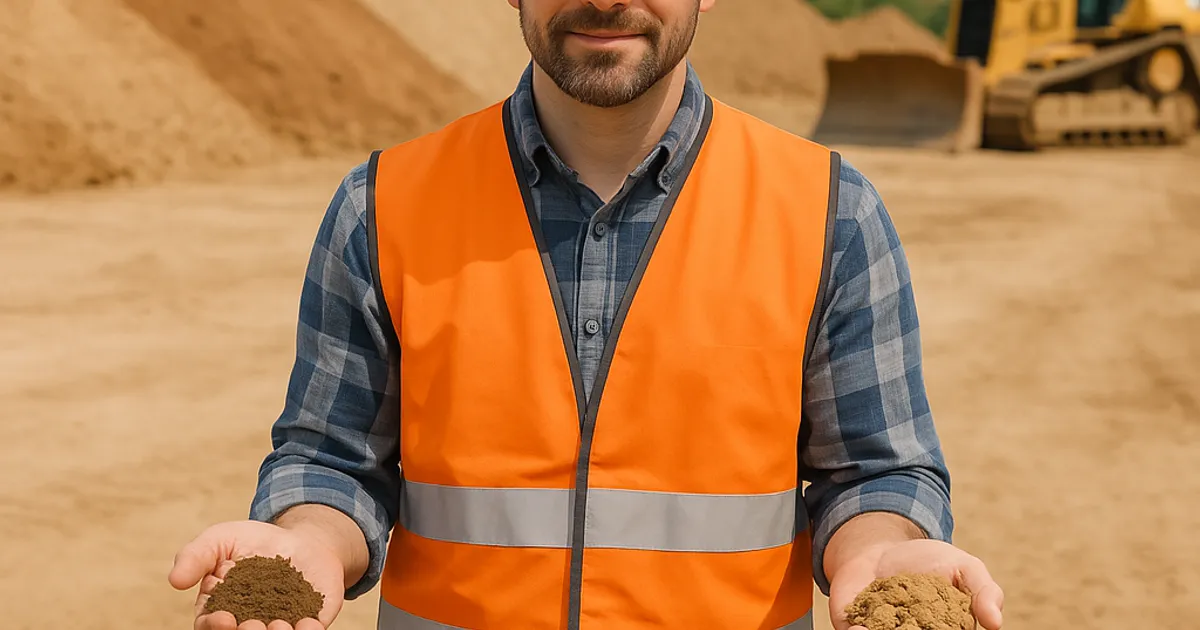
Competent persons use several field tests to classify soil:
- Thumb penetration test: A Type A soil resists penetration by a thumb; Type C can be penetrated with little effort.
- Plasticity test (ribbon test): Cohesive soils can be rolled into a thread and bent — highly plastic soils tend to be more stable.
- Dry strength test: A lump of dry soil that breaks with great difficulty suggests higher strength.
- Torvane shear device or pocket penetrometer: Provides a quantitative estimate of unconfined compressive strength.
- Visual observation: Look for fissures, water seepage, previously disturbed areas, and surface conditions.
The USDA Web Soil Survey can provide baseline soil data for a given location, which serves as a useful starting point before crews arrive on site — though field conditions always govern final classification.
The Three Protective Systems: Choosing the Right Approach
OSHA recognizes three primary methods for protecting workers in excavations: sloping and benching, shoring, and shielding. Each has specific applications, advantages, and limitations. The right choice depends on soil type, trench depth, site geometry, duration of the excavation, and available equipment.
Sloping and Benching
Sloping involves cutting the trench walls back at an angle away from the trench bottom, creating an inclined face that is less prone to failure. Benching is a variation where the walls are cut in a series of steps, each step being narrower than the one below.
Maximum allowable slopes by soil type:
| Soil Type | Maximum Allowable Slope | Rise:Run Ratio |
|---|---|---|
| Stable Rock | Vertical (90°) | N/A |
| Type A | 3/4:1 | 53° |
| Type B | 1:1 | 45° |
| Type C | 1½:1 | 34° |
Sloping is often the most economical option on sites with sufficient space, as it requires no special equipment beyond what's already being used for excavation. The trade-off is the significant increase in the volume of material that must be excavated and managed. For earthwork contractors, this material management piece matters — efficiently moving, stockpiling, or disposing of that additional excavated soil can make a real difference in project economics.
Simple benching (vertical faces within the bench steps) is only permitted in Type A soils. Benching is not permitted at all in Type C soils.
Shoring Systems
Shoring involves installing structural supports against the trench walls to resist lateral earth pressure. Unlike shielding, properly designed shoring actually prevents soil movement rather than simply protecting workers if movement occurs.
Aluminum hydraulic shoring is the most common system in use today. Hydraulic cylinders extend to press aluminum rails against the trench walls. Systems can be installed and removed from the surface using poles, keeping workers out of the unprotected trench during setup. Hydraulic shoring is rated for specific soil conditions and depth ranges — always consult the manufacturer's tabulated data.
Timber shoring is an older method using wood uprights, wales, and cross braces. OSHA's Appendix C to Subpart P provides timber shoring tables. While less common today than hydraulic systems, timber shoring remains a legitimate option and is sometimes used in combination with hydraulic components.
Beam and plate shoring uses steel sheet piling or soldier piles with lagging for deeper, longer-duration excavations or in very unstable soils. This approach is more common in large commercial projects.
Shielding (Trench Boxes)
Trench boxes — also called trench shields — are pre-manufactured steel or aluminum structures placed inside the excavation to protect workers. Unlike shoring, trench boxes do not prevent the surrounding soil from moving; they simply create a protected zone within the trench.
This distinction is critical: a trench box is not a cave-in prevention system. If soil settles or moves, it moves around the outside of the box. Workers inside the box are protected, but the trench box must be moved as work progresses. Workers must always be inside the box when in the trench — working outside or reaching beyond the box's protection is a serious violation.
Trench boxes must be used in accordance with manufacturer's tabulated data, which specifies the maximum allowable depth, soil conditions, and configuration. Stacking boxes, modifying them, or using them in conditions beyond their rating is prohibited.
Trench box selection factors:
- Trench depth and width
- Soil classification
- Duration of exposure
- Utility crossings within the trench
- Available crane or excavator capacity for placement and removal
Access, Egress, and Emergency Procedures
Even a perfectly protected trench becomes a hazard if workers cannot get in and out safely. OSHA requires that adequate means of egress be located within 25 lateral feet of workers in trenches 4 feet or more in depth. Acceptable means of egress include:
- Extension ladders extending at least 3 feet above the trench edge
- Cleated ladders secured at the top
- Ramps designed and constructed by a competent person
- Steps cut into the trench wall in appropriate soil types
Egress equipment must be in place before workers enter the trench, not installed after the fact. In a real emergency — rising water, equipment failure, or a partial collapse — workers must be able to exit without assistance.
Every crew working in trenches should have a written emergency rescue plan. This plan should address:
- Who to contact (911 and project superintendent)
- Where rescue equipment is staged
- Whether any confined space entry procedures apply (see below)
- Designated rescue roles for crew members
- Assembly point for accountability after evacuation
OSHA explicitly prohibits entering a collapsed or partially collapsed trench to rescue a coworker without proper protective systems and equipment in place. Many secondary fatalities occur precisely when a well-meaning colleague enters an already-failed trench. Rescue without proper equipment should always be left to trained emergency responders.
Atmospheric Hazards and Confined Space Considerations
Not all excavation hazards are structural. Many trenches — particularly those near landfills, swampy areas, underground fuel storage, or sewer infrastructure — can accumulate hazardous gases.
When a Trench Becomes a Permit-Required Confined Space
OSHA's Confined Space standard (29 CFR 1910.146 and 1926.1201 for construction) may apply to excavations that:
- Are deeper than 4 feet and have limited means of egress
- May contain or accumulate hazardous atmospheres
- Have internal configuration that could trap or asphyxiate a worker
Common hazardous atmospheres in excavations include:
- Hydrogen sulfide (H₂S): Common near sewer lines; deadly at low concentrations
- Methane (CH₄): Associated with decomposing organic material and landfill gas; explosive
- Carbon monoxide (CO): Can accumulate from nearby equipment or generators
- Oxygen deficiency: Displacement by other gases or oxidation of soil materials
Atmospheric testing must be performed by a competent person using properly calibrated instruments before workers enter and continuously during work if conditions warrant. Ventilation equipment — typically mechanical forced-air systems — must be provided if testing reveals a hazardous atmosphere. Natural ventilation is generally not sufficient for trench depths where atmospheric hazards are possible.
Water, Weather, and Environmental Hazards
Managing Water in Excavations
Water is among the most dangerous conditions an excavation crew can encounter. The presence of water in a trench dramatically reduces soil stability, can undermine shoring systems, and creates slip hazards. OSHA requires that excavations with accumulated water be inspected by a competent person before workers enter, and that water control measures be implemented.
Common water control approaches include:
- Sump pumps: For removing accumulated water from the trench bottom
- Wellpoints: Installed along the trench perimeter to lower the water table before excavation begins
- French drains or diversion berms: To redirect surface runoff away from the trench edge
- Sheeting and seals: On shoring systems to limit water infiltration
Never allow workers to enter an excavation where water is still actively accumulating without first implementing water control measures and having a competent person verify conditions.
Weather Events and Post-Storm Inspections
OSHA requires that excavations be re-inspected after any event that could have changed conditions — including rain, freeze-thaw cycles, or nearby blasting or heavy equipment operation. A trench that was safe at 7:00 AM may be a serious hazard at 10:00 AM after an hour of rain. Post-rain inspections are not optional — they are a legal requirement and a practical necessity.
Freeze-thaw cycles are particularly insidious. Soil that freezes overnight may appear solid and stable at morning inspection but become severely weakened as temperatures rise through the day. Competent persons in cold climates must account for this dynamic in their inspection schedules.
Stormwater and Environmental Compliance
Excavation operations also interact with stormwater regulations. Construction sites disturbing one or more acres of land generally require a permit under the EPA's NPDES Construction General Permit program. This includes developing and implementing a Stormwater Pollution Prevention Plan (SWPPP) to control sediment runoff from active excavations.
Utility Identification and Underground Hazard Management
Strikes on underground utilities during excavation are a leading cause of serious injuries, fatalities, and costly project delays. Electrocution from severed power lines, fires and explosions from ruptured gas mains, and flooding from broken water mains are all documented risks.
The 811 Call-Before-You-Dig Requirement
Every state in the US has a one-call system accessible through 811. Contractors are required by law in all 50 states to notify the appropriate one-call center at least two business days before excavating. Utility owners are then obligated to mark the location of their underground facilities with color-coded paint or flags.
Standard utility marking colors:
| Color | Utility Type |
|---|---|
| Red | Electric power lines |
| Yellow | Gas, oil, steam, petroleum |
| Orange | Telecommunications, cable TV |
| Blue | Potable water |
| Purple | Reclaimed water, irrigation |
| Green | Sewer, drain lines |
| Pink | Temporary survey markings |
| White | Proposed excavation area |
Calling 811 does not guarantee that all utilities are marked. Private utilities — irrigation systems, fiber optic lines installed by property owners, and utilities in easements — may not be in the one-call database. Ground-penetrating radar (GPR) or vacuum excavation around marked areas is often warranted before proceeding with mechanical excavation.
Safe Digging Practices Near Marked Utilities
Once utilities are marked, OSHA requires that mechanical excavation stop and hand digging begin within a prescribed tolerance zone near the marks — typically 18 to 24 inches on either side, depending on state regulations. Vacuum excavation (hydrovac) has become the preferred method for exposing utilities without risk of mechanical strike, and its use is increasingly specified in project contracts.
Find or Post Dirt, Rock & Aggregate
Join thousands of contractors using DirtMatch to buy, sell, and exchange earthwork materials.
Try DirtMatch FreeDaily Inspection Protocols: What a Competent Person Must Check
The daily inspection is the operational backbone of an effective excavation safety program. Under 29 CFR 1926.651(k), a competent person must inspect excavations and adjacent areas daily, before the start of work, and as needed throughout the shift. The inspection must also occur after any occurrence that could have increased hazards — including rain, equipment operation nearby, or freeze-thaw events.
Pre-Shift Inspection Checklist
Soil and Wall Conditions:
- Evidence of cracking, fissuring, or tension cracks near the trench edge
- Signs of sloughing or spalling on trench walls
- Water seepage through walls or accumulation at the bottom
- Changes in wall color or texture indicating moisture intrusion
Protective System Integrity:
- All shoring components properly installed and undamaged
- Trench box positioned correctly, not overextended above the soil
- Sloped walls maintaining correct angle throughout the length of the trench
- No undermining of protective system by water or excavation activities
Spoil and Surcharge Loads:
- Spoil pile positioned at least 2 feet from the trench edge
- No heavy equipment, vehicles, or materials stored within the potential failure zone
- Verification that equipment operators understand standoff distances
Access and Egress:
- Ladders or ramps in place and in good condition
- Egress located within 25 feet of all workers
- No obstructions to quick exit in the event of emergency
Atmospheric Conditions:
- Gas detection equipment calibrated and functional
- Testing results recorded for each shift
- Ventilation equipment operational if required
Utilities and Surface Conditions:
- All utility marks still visible and undisturbed
- No new surface cracking, subsidence, or heave near the excavation
- Adjacent structures showing no signs of settlement or distress
Inspection findings must be documented. A verbal walkthrough with no written record leaves the contractor exposed in the event of an incident. Most contractors use a standardized inspection form — either paper or digital — that includes fields for date, time, inspector name, conditions observed, and corrective actions taken.
Training Requirements: Building a Safety-Literate Crew
OSHA's excavation standard does not specify a precise number of training hours, but it does require that employees who work in excavations be trained to recognize hazards and to follow appropriate protective measures. This training obligation falls on the employer.
Competent Person Training
The competent person designation carries the heaviest training requirement. Effective competent person training covers:
- Soil mechanics and classification methods
- All three protective system types and their selection criteria
- OSHA regulatory requirements in full
- Inspection techniques and documentation
- Emergency rescue principles (including the prohibition on unprotected entry)
- Atmospheric testing equipment operation
Numerous organizations offer competent person certification courses, including the National Safety Council, trade associations, and equipment manufacturers. While OSHA does not require formal certification, documented training is essential for demonstrating competence in the event of an inspection or incident investigation.
Crew-Level Safety Training
Every worker entering a trench should understand:
- Why protective systems are in place and what they do
- The importance of staying inside the protected zone (for shielded trenches)
- Warning signs of impending failure — sounds, cracks, soil movement
- Emergency response procedures and egress routes
- The right to refuse entry to an unprotected or unsafe excavation
Toolbox talks are an effective way to reinforce excavation safety topics on a regular basis. Brief, focused conversations at the start of each shift keep safety top of mind without consuming significant project time.
Technology and Innovation in Excavation Safety
The earthwork industry has seen meaningful technological advancement in safety-related tools over the past decade. While no technology replaces proper training and regulatory compliance, these tools can meaningfully reduce risk.
Ground-Penetrating Radar (GPR)
GPR allows crews to see subsurface features — buried utilities, voids, previous excavations, and soil anomalies — before breaking ground. Modern GPR units produce real-time visual output that competent persons can use to supplement one-call markings and guide safe excavation paths.
Trench Safety Monitors
Electronic sensors can be mounted on trench walls or shoring systems to detect movement and provide real-time alerts. These systems don't replace daily inspection but can serve as a warning layer during active work.
Machine Control and GPS Grade Systems
GPS-guided machine control systems have improved both the precision and efficiency of excavation operations. Operators can maintain correct slope angles with greater accuracy, which directly supports the integrity of sloped protective systems. Companies like Trimble have developed integrated grade control platforms that are now widely used across the earthwork industry.
Vacuum Excavation (Hydrovac)
Hydrovac and air excavation technologies have become the standard of care for exposing underground utilities. A high-pressure water jet (or air knife) breaks up soil while a vacuum simultaneously removes the slurry, allowing precise, controlled excavation without mechanical strike risk. For earthwork contractors, integrating hydrovac into the workflow at utility crossings is increasingly a project specification requirement.
Excavation Safety in Special Conditions
Urban and Confined Site Excavation
Urban excavation presents compounding challenges: limited space precludes sloping, adjacent structures impose surcharge loads, underground utility density is high, and traffic creates constant vibration. In dense urban environments — from dirt exchange operations in Los Angeles to infrastructure projects in Boston — contractors must often combine shoring and shielding approaches and conduct more frequent inspections due to elevated vibration exposure.
Rocky and Mixed Soil Conditions
Many western states present excavation crews with mixed conditions — stable rock in some sections, loose talus or decomposed granite in others, and occasional clay lenses. Classification in these conditions requires the competent person to account for the weakest material present across the zone being worked, not the strongest.
Excavation Near Existing Structures
Excavating adjacent to foundations, retaining walls, or other structures requires engineering analysis to determine whether the structure imposes additional lateral loads on the trench wall. Underpinning or additional shoring may be required. This is an area where the registered PE requirement — even for trenches under 20 feet — is often the prudent call.
Managing Excavated Material: The Earthwork Connection
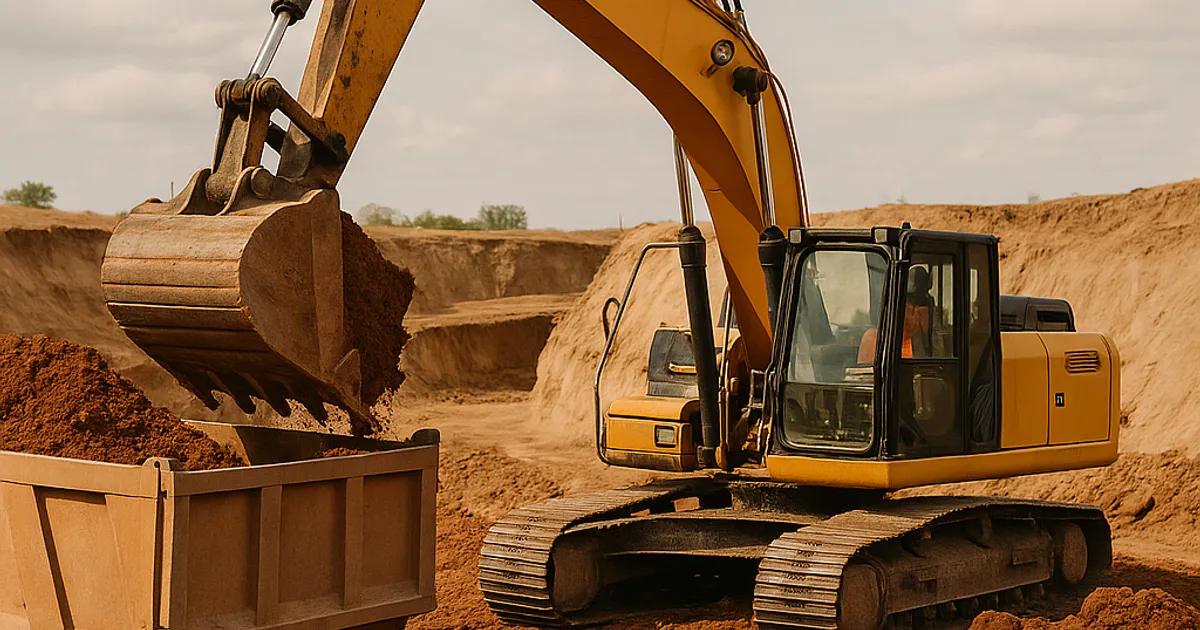
Any serious discussion of excavation safety has to acknowledge the practical reality of what happens to the material that comes out of the ground. Competent pile management — keeping spoil at least 2 feet back from the trench edge — is both a safety requirement and a logistics challenge on tight sites.
For larger earthwork projects, the excavated material often has significant value or represents a significant disposal cost. Clean fill, granular material, and select soils from excavation projects can frequently be matched with projects that need those exact materials nearby — reducing trucking costs, avoiding tipping fees, and keeping project economics in check.
This is precisely where DirtMatch helps earthwork contractors and project owners turn excavated material from a cost into an asset. By connecting projects that have excess soil with projects that need fill, DirtMatch creates a regional marketplace for dirt, rock, and aggregate that makes excavation operations more efficient and sustainable. If your crew is regularly dealing with excavated material disposal, learn how DirtMatch works to see how the platform can integrate into your project workflow.
Contractors operating in high-activity earthwork markets — including Denver, San Francisco, and San Diego — are already using DirtMatch to coordinate material movement across concurrent projects. Getting spoil off a job site quickly isn't just a logistics win; it directly reduces the surcharge load near active trenches and keeps site conditions cleaner and safer.
Building a Safety Culture That Lasts
All the regulations, protective systems, and inspection checklists in the world are only as effective as the culture in which they operate. Research consistently shows that companies with strong safety cultures have lower incident rates — not because they follow different rules, but because workers at every level feel empowered to raise concerns and confident that management will act on them.
Leadership Commitment
Safety culture starts at the top. When company owners, project managers, and superintendents visibly prioritize safety — showing up for toolbox talks, conducting unannounced inspections, investing in training — field crews follow suit. When safety is treated as a compliance burden to be minimized, the field team reads that signal too.
Near-Miss Reporting
Most serious incidents are preceded by near-misses that went unreported. Companies that create genuine psychological safety around near-miss reporting — no blame, immediate investigation, and visible corrective action — build the early-warning systems that prevent fatalities.
Subcontractor and Owner Integration
On multi-prime or general contractor/subcontractor projects, excavation safety responsibilities must be clearly allocated. The excavation subcontractor is always responsible for compliance with Subpart P within their work zone, but the GC's safety program should include excavation specifically. Pre-task planning meetings should include a dedicated excavation safety segment on any day when trenching begins.
Contractor Takeaways: A Practical Action Plan
If you take nothing else from this guide, here is a concise action plan for any earthwork contractor:
- Designate and train a competent person before any excavation project begins. Document their qualifications.
- Classify soil at the site using OSHA-approved field tests — never assume soil type based on a map or prior experience at a similar location.
- Select a protective system appropriate for the soil type, depth, site geometry, and duration.
- Call 811 at least two business days before excavating and confirm all markings before mechanical work begins.
- Inspect before every shift and after any event that could change conditions. Document findings in writing.
- Maintain proper egress — ladders or ramps within 25 feet of all workers.
- Test the atmosphere before entry in any trench where hazardous gases are possible.
- Keep spoil 2 feet back from the trench edge at minimum — more if the soil is poor or equipment will be operating nearby.
- Run crew-level safety training on excavation hazards, warning signs, and emergency procedures.
- Build a near-miss reporting system and use the data to prevent the next incident.
For contractors managing multiple active projects, the administrative burden of excavation safety compliance adds up. DirtMatch Pro offers tools designed for active earthwork contractors — including project management features that help you track active excavations, material movements, and site conditions across your portfolio. When safety documentation, material logistics, and project coordination live in the same ecosystem, the administrative overhead drops and nothing falls through the cracks.
Conclusion: Safe Excavation Is Always Worth the Investment
Every safety measure described in this guide — the competent person designation, the protective systems, the daily inspections, the crew training — represents an investment. It takes time, money, and organizational commitment. But the alternative is a business model that accepts preventable fatalities and injuries, OSHA penalties that can reach six figures per violation, and the legal and reputational consequences that follow serious incidents.
The earthwork contractors who build reputations for safe, professional operations consistently win more bids, attract better crews, and sustain their businesses through market cycles. Safety isn't separate from performance — it is performance.
If you're building or growing an earthwork contracting operation and want to work smarter on both the safety and logistics sides of the business, get started with DirtMatch and discover how a connected platform for dirt, rock, and aggregate can make your projects more efficient from first shovel to final grade.