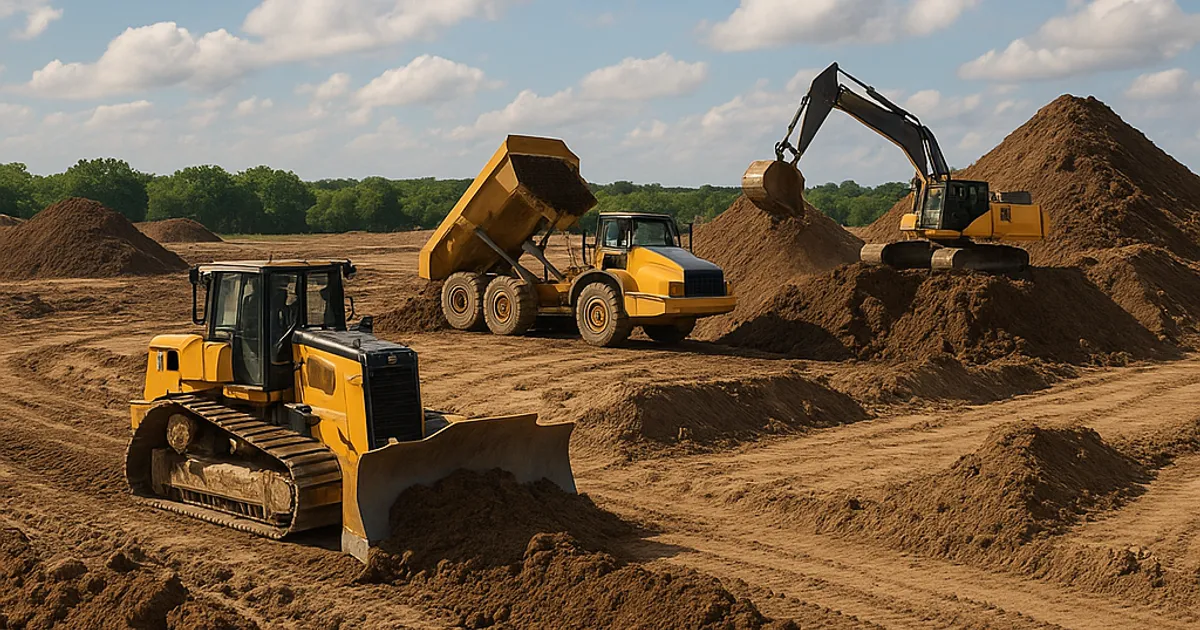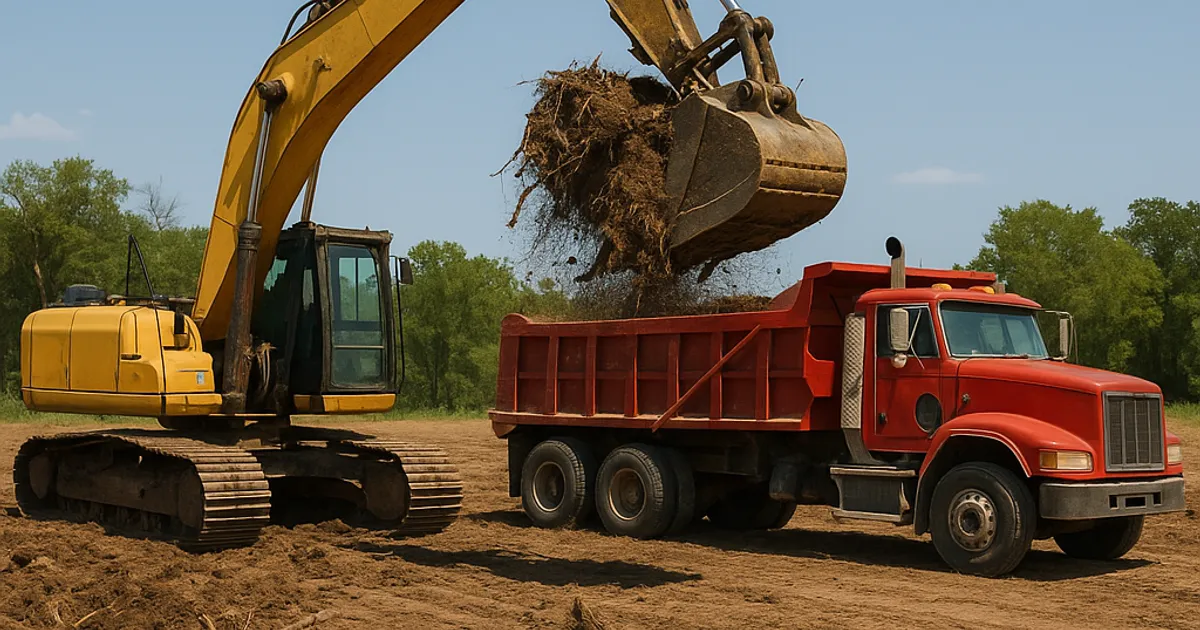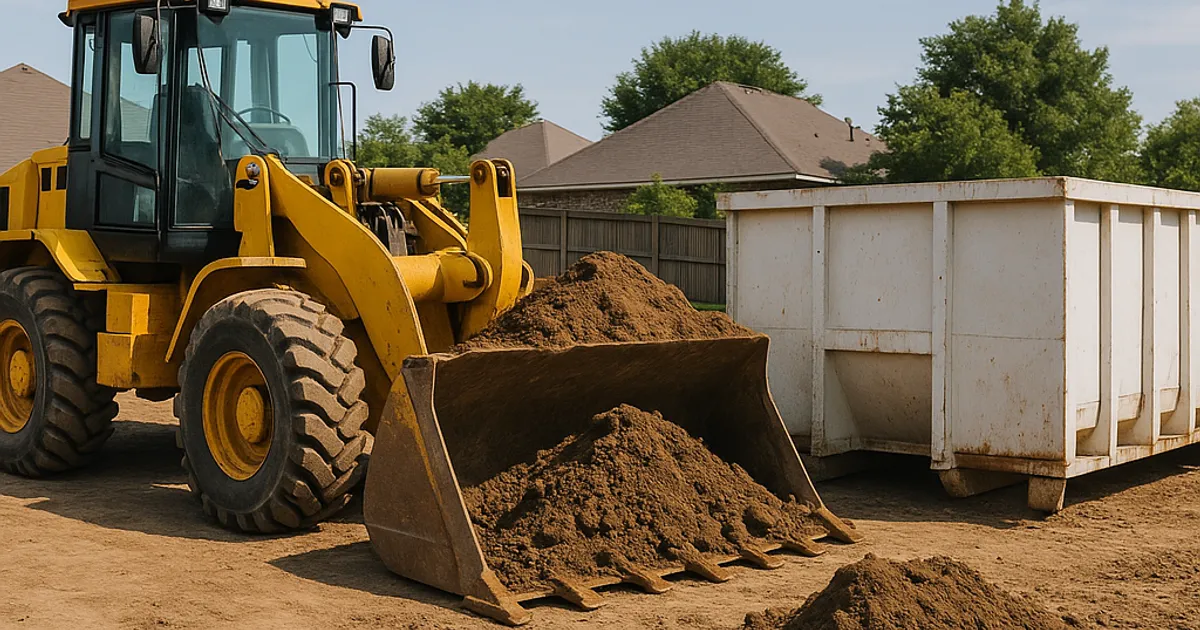
The Dallas-Fort Worth metroplex is one of the fastest-growing construction markets in the United States. In 2026, billions of dollars in residential subdivisions, commercial developments, highway expansions, and industrial parks are underway across Tarrant, Dallas, Collin, Denton, and surrounding counties. All of that construction activity shares one common challenge: what do you do with the dirt?
Excess soil — the material excavated during grading, trenching, foundation work, and site preparation — is generated on virtually every job site. In a region like DFW, where flat prairies meet expansive clay-heavy soils and infrastructure projects run continuously, the volume of excavation waste Texas contractors must manage is staggering. Conservative estimates suggest that major DFW construction zones generate millions of cubic yards of displaced earth each year, and mismanaging that material can cost contractors tens of thousands of dollars in unnecessary hauling fees, fines, and project delays.
Whether you're a general contractor overseeing a large commercial development in Frisco, a homebuilder working through a new subdivision in Mansfield, or a civil contractor grading a retail center in Irving, the way you handle excess soil directly impacts your bottom line, your schedule, and your compliance posture. This guide provides a comprehensive, practical roadmap for managing excess soil on DFW job sites in 2026.
Why Excess Soil Management Matters More Than Ever in DFW
DFW's construction boom didn't slow down after the pandemic-era surge — it accelerated. According to the U.S. Census Bureau's monthly construction spending data, Texas consistently ranks among the top three states for total construction spending, and the DFW metroplex anchors much of that activity. Cities like McKinney, Prosper, Celina, and Anna in Collin County are adding thousands of new residential lots annually, while major infrastructure projects along US-75, SH-114, and the Dallas North Tollway generate enormous volumes of cut material.
Here's the core problem: most job sites don't have a use for all the dirt they generate. A typical residential subdivision in Denton County, for example, might require significant cut-and-fill balancing across the site, but once that balance is achieved, remaining spoil material needs to leave — fast. Storage space is limited. Trucking is expensive. And Texas environmental regulations, while less restrictive than some coastal states, still carry real teeth when it comes to stormwater runoff, improper disposal, and contaminated fill.
The average cost to haul and dispose of excess soil in the DFW area in 2026 ranges from $12 to $28 per cubic yard, depending on haul distance, material type, and receiving facility tipping fees. For a project generating 10,000 cubic yards of excess spoil, that's a potential cost exposure of $120,000 to $280,000 — before accounting for scheduling delays if trucks aren't lined up on time.
Beyond raw cost, there are compliance considerations. The Texas Commission on Environmental Quality (TCEQ) enforces stormwater permit requirements under the Texas Pollutant Discharge Elimination System (TPDES), which applies to construction sites disturbing one acre or more. Improper stockpiling of excess soil near drainage ways or failure to implement erosion controls can trigger notices of violation, fines, and project shutdowns. The EPA's federal stormwater construction guidelines provide the foundational framework that Texas regulations build upon, making regulatory awareness non-negotiable for DFW contractors.
Understanding DFW Soil Types and Their Impact on Disposal Options
Not all dirt is created equal, and in the DFW region, the soil profile is remarkably diverse — and often challenging. Understanding what you're dealing with before you break ground will shape your entire excess soil strategy.
Expansive Black Clay (Blackland Prairie)
The dominant soil type across much of Dallas, Collin, and portions of Tarrant County is expansive black clay — also called Vertisols or "black gumbo" by locals. This material is notorious for its plasticity index, which can exceed 40 in some areas, meaning it swells dramatically when wet and shrinks and cracks when dry. Blackland Prairie clay is generally considered poor structural fill and is often rejected by receiving sites that require stable, well-draining material.
For contractors, this creates a disposal challenge: the material has limited reuse value, so it frequently must be hauled to a licensed landfill or dedicated clay disposal site. Tipping fees at these facilities in DFW typically range from $8 to $18 per cubic yard on top of hauling costs.
Sandy Loam and Alluvial Deposits
Along the Trinity River corridor, Elm Fork, and other waterway floodplains, contractors frequently encounter sandy loam and alluvial deposits. This material is far more desirable — it drains well, compacts reasonably, and is often accepted by fill sites, landscapers, and even agricultural operations. If your project is generating clean sandy loam, you may actually be sitting on an asset, not a liability.
Red Clay and Weathered Limestone (Cross Timbers Region)
Western portions of DFW — particularly in Parker County, far western Tarrant County, and areas around Fort Worth and Weatherford — transition into the Cross Timbers geologic zone, characterized by red clay over weathered limestone. This material can be moderate-quality fill if properly processed but often requires ripping and grading equipment capable of handling rock. Projects in this zone frequently generate both soil spoil and rock spoil, each requiring different disposal or reuse strategies.
Contaminated Soil: A Special Category
Some DFW sites — particularly urban infill projects, brownfield redevelopments, and properties near industrial corridors — may encounter contaminated soil during excavation. This material is regulated under the Texas Risk Reduction Program (TRRP) administered by TCEQ, and it cannot be disposed of at a standard fill site. Identification, characterization, and proper documentation of contaminated soil is a legal requirement, and violations carry significant penalties. Always conduct Phase I and Phase II Environmental Site Assessments before breaking ground on sites with any history of industrial or commercial use.
Texas Regulatory Framework for Excavation Waste Disposal
Texas contractors operating in DFW must navigate a layered regulatory environment covering stormwater, solid waste, and land disturbance. Here's a breakdown of the key frameworks you need to understand.
TCEQ and the TPDES Construction General Permit
Any construction site in Texas that disturbs one acre or more of land must obtain coverage under the TPDES Construction General Permit (TXR150000). This permit requires preparation and implementation of a Stormwater Pollution Prevention Plan (SWPPP), which must address how excess soil will be stockpiled, stabilized, and ultimately removed. Failure to comply can result in fines of up to $25,000 per day per violation under Texas Water Code provisions.
Key SWPPP requirements relevant to excess soil management include:
- Sediment controls at the perimeter of stockpile areas
- Stabilization of stockpiles inactive for more than 14 days
- Prohibition on stockpiling within 50 feet of storm drains or waterways
- Documentation of soil disposal and receiving sites
Solid Waste Rules for Construction and Demolition Debris
Excess soil in Texas is generally classified as "Class 2" non-hazardous industrial solid waste when clean, and is subject to TCEQ rules under 30 TAC Chapter 330. Clean fill material — defined as uncontaminated soil, rock, or inert material — can be disposed of at authorized Type IV landfills or clean fill sites, which are more numerous and less expensive than municipal solid waste facilities. However, site operators accepting clean fill must still meet certain authorization requirements, and contractors should verify that any receiving site holds appropriate TCEQ authorization before delivering material.
City and County Regulations
Beyond state rules, individual municipalities within DFW add their own layer of requirements. The City of Dallas, City of Fort Worth, City of Arlington, and many suburban municipalities have adopted local grading and drainage ordinances that govern where and how excess soil can be stockpiled during construction. Some cities require grading permits that specifically address soil export plans, and inspection requirements vary. Always check with the local municipality early in the permitting process.
The True Cost of Poor Soil Disposal Planning
Contractors who don't plan their soil disposal strategy before mobilizing often end up paying a steep premium. Here's a realistic cost breakdown comparing planned versus reactive soil disposal approaches on a hypothetical 50,000-square-foot commercial grading project in Plano generating 8,000 cubic yards of excess black clay:
| Cost Component | Planned Approach | Reactive Approach |
|---|---|---|
| Haul distance (avg.) | 8 miles | 22 miles |
| Trucking cost per CY | $9 | $18 |
| Tipping fee per CY | $10 | $16 |
| Total disposal cost | $152,000 | $272,000 |
| Schedule delay | 0 days | 4–8 days |
| Regulatory risk | Low | Moderate–High |
| Total exposure | $152,000 | $272,000+ |
The difference — over $120,000 on a single mid-sized project — underscores why excavation waste planning is a first-week task, not an afterthought. Proactive contractors identify receiving sites before they start cutting, negotiate rates in advance, and build disposal logistics directly into their project schedule.
Platforms like DirtMatch are specifically designed to close this gap, connecting soil disposal contractors in Dallas and the broader DFW metro with nearby receiving sites, fill dirt buyers, and compatible earthwork projects — often reducing net hauling costs dramatically by matching excess material with a site that actually needs it.
Finding a Soil Disposal Contractor in Dallas: What to Look For
Not every trucking or grading company in DFW has the expertise to manage excess soil disposal effectively. When evaluating a soil disposal contractor in Dallas or the surrounding metro, here are the key qualifications to vet.
Licensing and Compliance
A qualified soil disposal contractor should hold a current Texas Department of Transportation (TxDOT) oversize/overweight permit if applicable, operate trucks that meet FMCSA regulations, and have documented experience with TCEQ compliance requirements. Ask for their SWPPP experience and whether they've worked on sites with TPDES permit requirements.
Established Receiving Site Relationships
Experienced soil disposal contractors in DFW maintain relationships with multiple authorized receiving facilities across the metroplex — including Type IV clean fill sites, permitted landfills, and private landowners accepting fill. These relationships mean shorter haul distances and negotiated tipping rates, both of which directly benefit your project budget.
Fleet Capacity and Scheduling Reliability
In a hot construction market like DFW in 2026, truck availability is a real constraint. Ask potential contractors about their fleet size, availability windows, and backup capacity. A contractor who can commit to 10 trucks per day and actually deliver 10 trucks per day is worth more than one who promises 20 and shows up with 6.
Soil Testing and Documentation Capabilities
If there's any possibility your site contains contaminated or suspect material, your disposal contractor should have relationships with certified soil testing labs and experience navigating TCEQ reporting requirements. Documentation of soil classification and disposal chain of custody is increasingly important on urban infill and brownfield projects.
Track Record with DFW Projects
Local experience matters enormously. DFW soil types, regulatory relationships, traffic patterns, and seasonal conditions (especially during the spring wet season when expansive clays become nearly impassable) all require local knowledge. Ask for references from projects in the specific county or municipality where your work is located.
Soil Reuse Strategies: Turning a Liability Into an Asset
The smartest approach to excess soil isn't disposal — it's reuse. When the material you're excavating can be matched with a nearby site that needs fill, you eliminate tipping fees, shorten haul distances, and potentially generate revenue or offset disposal costs entirely.
On-Site Balancing
The first and most cost-effective strategy is cutting and filling within the same project. On large residential developments and commercial sites, a skilled earthwork contractor will design grading plans that maximize on-site balance — using cut material from high areas to fill low areas, minimizing net import or export. This requires careful coordination between civil engineers, grading contractors, and geotechnical consultants, but it's the foundation of efficient earthwork.
Off-Site Fill Matching
When on-site balance isn't achievable, the next best option is finding a compatible project nearby that needs the material you're generating. This is where technology has transformed the industry. Rather than relying on personal networks and phone calls, contractors in 2026 can use platforms like DirtMatch to post their excess material and get matched with construction projects, landscaping operations, or land developers in the DFW area who need exactly what they have.
This approach works particularly well for:
- Clean sandy loam from Trinity River-area projects
- Structural fill from highway and road projects
- Topsoil separated during stripping operations
- Rock and aggregate byproducts from limestone excavation in western Tarrant County
Agricultural and Landscaping Partners
Farms, ranches, and landscaping operations across the DFW exurban fringe frequently need fill material for erosion control, pond construction, road building, and land leveling. These partners often accept clean fill at no charge — or even pay a nominal rate for quality topsoil. Building relationships with agricultural contacts in areas like Parker, Hood, Wise, Johnson, and Ellis counties can open a valuable disposal channel for DFW contractors.
Landfill Cover Material Programs
Several active landfills in the DFW region operate approved cover material programs, accepting clean soil to use as daily or intermediate cover on active working faces. These programs typically accept material at reduced or zero cost compared to standard tipping fees, though they have specific requirements for material type and delivery scheduling. Contact your regional solid waste authority or private landfill operators for program availability.
Stockpile Management Best Practices for DFW Sites
Even when you have a disposal or reuse plan in place, there will always be periods when excess soil sits on-site in temporary stockpiles. Managing those stockpiles correctly is essential for stormwater compliance and site efficiency.
Location Planning
Place stockpiles as far as practical from site boundaries, drainage swales, storm inlets, and waterways. TCEQ generally requires a minimum 50-foot buffer from drainage features, and local municipalities may require more. Position stockpiles where they don't interfere with primary haul routes or future construction activities.
Perimeter Controls
Install silt fence, fiber rolls, or sediment berms around all active stockpiles before rain events. In DFW's spring season — when intense thunderstorms can drop two to four inches of rain in an hour — unprotected stockpiles can generate significant sediment loads in runoff. This is both a TCEQ violation risk and an erosion problem that creates additional cleanup costs.
Stabilization Requirements
Under the TPDES Construction General Permit, stockpiles that will remain inactive for 14 or more calendar days must be stabilized. This typically means hydromulching, seeding, or covering with erosion control blankets. While this adds a cost, it's far less expensive than a TCEQ fine or an enforcement order.
Tracking and Record-Keeping
Maintain records of stockpile volumes, inspection logs, and any soil testing results. As-built documentation of where material came from and where it went is increasingly requested by project owners, lenders, and regulatory agencies. Digital record-keeping using project management software makes this far more manageable than paper logs.
Find or Post Dirt, Rock & Aggregate
Join thousands of contractors using DirtMatch to buy, sell, and exchange earthwork materials.
Try DirtMatch FreeNavigating the DFW Trucking Logistics Puzzle
Material is only half the challenge — moving it is the other. DFW's highway network is extensive but routinely congested, and earthwork trucking in 2026 operates in a competitive environment where driver shortages, fuel costs, and regulatory requirements all add complexity.
Haul Route Planning
Effective haul route planning can save significant time and money. Identify permitted routes for overweight loads, avoid school zones and peak traffic hours, and coordinate with local municipalities if your haul route crosses city streets not designed for heavy truck loads. Some DFW suburbs require haul route agreements and road damage bonds for projects generating high truck traffic volumes.
FMCSA Compliance
Trucks hauling excess soil in DFW are subject to FMCSA hours-of-service rules, weight limit enforcement by TxDOT, and CDL requirements for operators. Ensure any hauling contractor or subcontractor you use maintains current DOT numbers, proper insurance, and driver qualification files. Non-compliance exposes you to liability in the event of an accident.
Fuel Cost Management
Diesel prices in Texas in 2026 remain a significant variable in earthwork budgeting. Every mile of unnecessary hauling distance adds cost that compounds across hundreds of truck loads. This is one of the most compelling reasons to invest time in finding nearby receiving sites before your project begins — even cutting the average haul distance by five miles on a 10,000-CY project can save $15,000 to $30,000 in fuel and driver time alone.
Using Technology to Streamline Excess Soil Management
The earthwork industry has traditionally relied on personal networks, phone calls, and local knowledge to match excess soil with receiving sites. That approach works — until it doesn't, which is often when you're under schedule pressure and time is critical.
In 2026, technology platforms are changing how DFW contractors manage their dirt logistics. GPS-enabled grading equipment from manufacturers like Caterpillar and Komatsu provides real-time volume tracking, helping project managers know exactly how much material they're generating day by day. Project management software integrates with trucking dispatch to track loads, document delivery receipts, and maintain chain-of-custody records.
But the most impactful technology shift for excess soil management is the emergence of dirt-matching platforms. By getting started with DirtMatch, DFW contractors gain access to a marketplace where excess soil can be listed, matched with nearby projects that need fill, and logistics coordinated — all in one place. Instead of spending hours making calls to find a receiving site, a contractor can post their material details and let the platform do the matching work. This is particularly valuable in the DFW market, where the sheer volume of concurrent construction activity means there's almost always a compatible match somewhere in the metro if you have the tools to find it.
For contractors who manage multiple simultaneous projects across the DFW metro, upgrading to DirtMatch Pro unlocks advanced features including priority matching, enhanced project visibility, and dedicated support for high-volume earthwork operations.
Environmental Compliance Deep Dive: Protecting Yourself on DFW Projects
Environmental compliance isn't just about avoiding fines — it's about protecting your company's reputation and avoiding liability that can follow you long after a project closes. Here are the key compliance areas DFW contractors must address when managing excess soil.
Pre-Construction Site Assessment
Before excavating, understand your site's soil profile and environmental history. Use the USDA Web Soil Survey to review mapped soil types, drainage characteristics, and any special designations. For sites with industrial or commercial history, commission appropriate environmental site assessments before breaking ground.
SWPPP Development and Implementation
Every covered project must have a current, site-specific SWPPP. This document should include a soil disposal and stockpile management plan that specifies where excess material will go, how it will be controlled on-site, and who is responsible for inspections. Update the SWPPP whenever your soil disposal plan changes.
Wetland and Waterway Setbacks
DFW has numerous creeks, tributaries, and wetland areas that fall under U.S. Army Corps of Engineers jurisdiction. Placing fill within jurisdictional waters without a Section 404 permit is a federal violation. Even temporary stockpiling in or adjacent to wetlands can trigger enforcement. Map your site's drainage features early and establish clear buffer zones.
Chain of Custody Documentation
For every load of excess soil leaving your site, maintain documentation that includes the material classification, volume, date, receiving site, and transporter. This documentation is your protection if a disposal site is later found to be non-compliant or if a regulatory agency questions where your material went. Digital load ticketing systems make this far more manageable than paper manifests.
Budgeting for Soil Disposal: A DFW Contractor's Framework
Accurate budgeting for soil disposal is a core competency for DFW earthwork contractors in 2026. Here's a practical framework for building disposal costs into your estimates.
Step 1: Quantify Your Export Volume
Start with your grading plan and calculate net cut versus net fill across the site. Apply a swell factor appropriate for your soil type — black clay in DFW typically swells 15–25% when disturbed, meaning the in-place volume you cut will translate to a larger bank volume in the truck. Use your geotechnical report to inform swell factor selection.
Step 2: Identify Receiving Site Options Early
Before bidding or during early pre-construction, research available receiving sites within your target haul radius (typically 10–20 miles for competitive pricing). Get preliminary pricing from at least three options. The spread between best and worst options can be $8–$12 per cubic yard — material at this stage of planning.
Step 3: Build in Contingency
Soil conditions in DFW are notoriously variable. What the geotech report shows as sandy loam in one area may transition to heavy clay 50 feet away. Budget a 10–15% contingency on disposal volumes and costs to account for unexpected material types or receiving site issues.
Step 4: Factor in Compliance Costs
SWPPP preparation, erosion control installation, stockpile stabilization, soil testing, and regulatory filing fees are all real costs that belong in your budget. A typical compliance budget for a mid-sized DFW commercial project might run $15,000–$40,000 depending on site complexity and permit requirements.
Step 5: Evaluate Reuse Opportunities Continuously
Don't set your disposal plan and forget it. As the project progresses, new reuse opportunities may emerge — a nearby developer who needs fill, a landscape contractor looking for topsoil, or a municipal project accepting donated material. Staying connected to the DFW earthwork community through platforms and associations keeps these opportunities visible.
Seasonal Considerations for DFW Soil Management
DFW's climate creates distinct seasonal challenges for excess soil management that experienced contractors plan around.
Spring (March–May): Wet Season Risks
Spring in DFW brings frequent, intense thunderstorms that can rapidly saturate expansive clay soils, making them nearly unworkable. Stockpiles can become destabilized, haul roads can fail under heavy trucks, and stormwater compliance risk peaks. Plan for reduced production days, ensure erosion controls are robust, and have contingency stockpile stabilization materials on hand.
Summer (June–September): Heat and Hardpan
DFW summers bring extended heat that rapidly dries clay soils, making them crack and harden into near-rock consistency. This can actually improve truck turnaround times in dry conditions, but water trucks may be needed to keep haul roads from generating excessive dust — particularly in areas with residential neighbors or air quality monitoring.
Fall (October–November): Prime Earthwork Season
Fall is generally the most favorable season for earthwork in DFW. Temperatures moderate, rainfall is typically lower than spring, and soils are workable. If your project schedule has flexibility, targeting major earthwork phases for fall can improve productivity and reduce weather-related cost exposure.
Winter (December–February): Variable Conditions
DFW winters are generally mild, but occasional ice events and freezing rain can shut down operations for one to three days at a time. More significantly, sub-freezing ground conditions can make clay soils temporarily easier to excavate, but thaw cycles create instability in stockpiles and earthen slopes.
Building a Long-Term Soil Disposal Network in DFW
The contractors who manage excess soil most cost-effectively in DFW aren't necessarily the ones with the biggest equipment or the largest budgets — they're the ones with the best networks. Building a reliable, diversified soil disposal network takes time, but the competitive advantage it creates is substantial.
Key relationships to cultivate include:
- Receiving site operators: Type IV landfills, permitted fill sites, private landowners
- Civil contractors: Colleagues who regularly need fill material for their own projects
- Landscape and nursery operations: Buyers of quality topsoil
- Municipal contacts: Public works departments that oversee parks, road projects, and drainage improvements
- Environmental consultants: Firms who can provide rapid soil testing and documentation support
- Trucking partners: Reliable haulers with flexible capacity
Digital platforms are accelerating network-building in 2026. By maintaining an active presence on DirtMatch, DFW contractors can expand their network beyond personal contacts to include the full marketplace of earthwork professionals operating across the metroplex — creating opportunities that simply didn't exist when dirt matching relied entirely on word of mouth.
Key Takeaways for DFW Contractors
Managing excess soil on DFW job sites is a multi-dimensional challenge that spans regulatory compliance, logistics planning, material classification, cost management, and relationship building. The contractors who get it right build these disciplines into their standard operating procedures — not as afterthoughts, but as core competencies.
Here's what the most successful DFW earthwork contractors do consistently:
- Quantify and classify excess soil before bidding — know your material type, volume, and compliance requirements before you sign a contract
- Identify receiving sites during pre-construction — don't wait until you're cutting to find out where the dirt is going
- Build SWPPP compliance into your schedule and budget — regulatory violations cost far more than compliance
- Pursue reuse opportunities aggressively — matched fill is almost always cheaper than landfill disposal
- Maintain documentation religiously — chain of custody records protect you legally and contractually
- Stay connected to the DFW earthwork community — the best disposal opportunities come through trusted networks
- Leverage technology — platforms, GPS tracking, and digital load management reduce cost and increase visibility
The DFW construction market in 2026 rewards efficiency. Excess soil is both a challenge and an opportunity — and the contractors who treat it strategically will consistently outperform those who treat it as an afterthought.