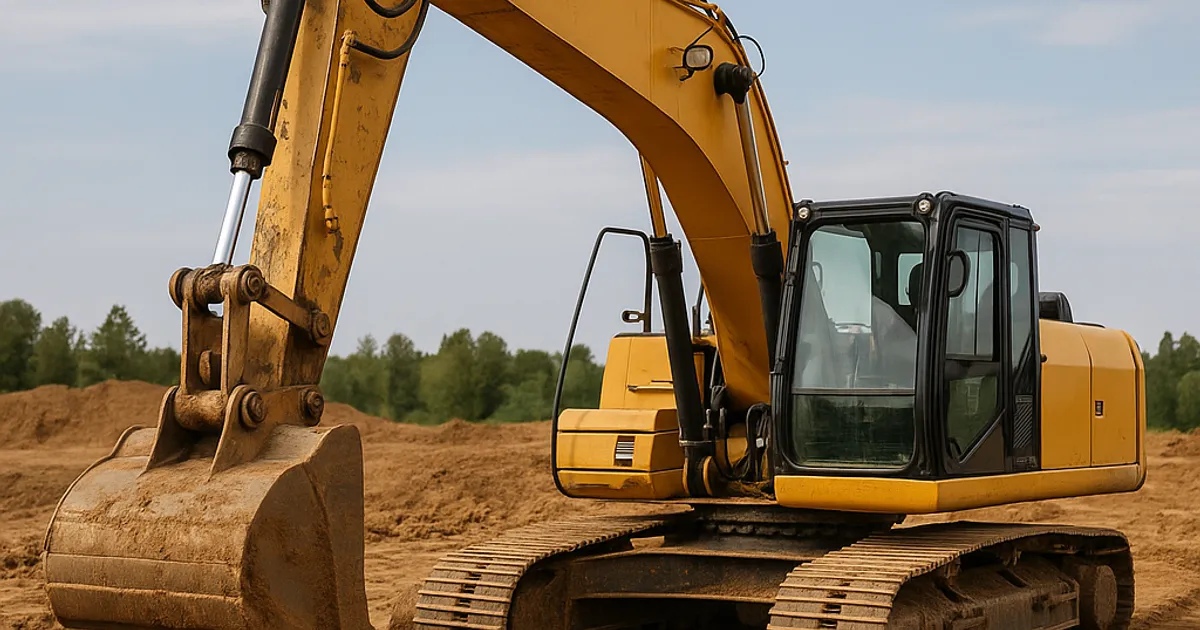

The earthwork and excavation industry generates over $100 billion annually in the United States, and dirt hauling sits at the very center of it all. Every new subdivision, commercial development, road expansion, and infrastructure project creates a constant, recurring demand for contractors who can move material safely, efficiently, and cost-effectively. For entrepreneurial owner-operators and growing fleet businesses alike, dirt hauling represents a market with remarkably low barriers to entry — yet significant upside for those who operate with professionalism and strategy.
But like any trade business, success isn't automatic. The difference between a hauler who stays booked year-round and one who struggles to find work often comes down to three things: the right business foundation, smart operational decisions, and access to a reliable network of projects. This guide covers all three in detail, including how platforms like DirtMatch are fundamentally changing the way dirt haulers find work and build sustainable businesses.
Whether you're starting from scratch with a single truck or looking to systematize a growing operation, the steps laid out here are grounded in real-world data, industry regulations, and the practical experience of successful hauling contractors.
Understanding the Dirt Hauling Industry Landscape
Before you invest a dollar in equipment or licensing, it pays to understand what you're actually entering. Dirt hauling isn't a monolithic industry — it encompasses several distinct types of work, each with different customers, logistics, and profitability profiles.
Types of Dirt Hauling Work
Fill dirt hauling involves transporting uncontaminated soil from excavation sites to locations where it's needed to raise grade, fill voids, or prepare building pads. This is one of the most common categories and often involves residential construction sites, commercial land development, and landscaping projects.
Spoils removal refers to hauling excavated material away from a job site — typically as part of foundation digging, utility trenching, or road grading. The material may go to a landfill, a fill site, or a staging area for reuse.
Aggregate and rock hauling covers the transport of crushed stone, gravel, sand, and other engineered materials from quarries or suppliers to job sites. This work tends to be more predictable and higher volume.
Topsoil hauling serves landscapers, agriculture, and restoration projects. Premium topsoil commands higher rates than fill dirt, and the market for it skews heavily residential and horticultural.
Clean import/export matching is a growing niche where material that would otherwise cost money to dispose of is matched with a site that needs exactly that material. This is the core value proposition of modern earthwork matching platforms.
Market Demand Drivers
According to the U.S. Census Bureau's Construction Spending data, residential construction spending exceeded $900 billion in 2023, with infrastructure and commercial development adding hundreds of billions more. Every one of those projects generates dirt movement. The Associated General Contractors of America (AGC) consistently reports that earthwork is among the most in-demand subcontractor categories in the country.
Regional demand varies significantly. Markets like Denver, Los Angeles, and Seattle are experiencing sustained construction booms driven by population growth and housing undersupply. If you're operating in one of these areas, you're entering a high-demand environment — and platforms like DirtMatch's dirt exchange in Denver or dirt exchange in Seattle connect local haulers with active projects in real time.
Choosing Your Business Structure and Legal Foundation
One of the most important early decisions you'll make is how to legally structure your dirt hauling business. This affects your taxes, liability exposure, and ability to secure financing and contracts.
Business Entity Options
Sole Proprietorship is the simplest structure — you operate under your own name with minimal paperwork. However, it offers no liability protection, meaning your personal assets are at risk if something goes wrong on a job site.
Limited Liability Company (LLC) is the most popular choice for small to mid-sized hauling businesses. An LLC separates your personal assets from business liabilities, is relatively inexpensive to form (typically $50–$500 depending on state), and offers flexible tax treatment. Most insurance underwriters and general contractors prefer working with formally organized LLCs.
S-Corporation or C-Corporation structures make sense once your annual revenue exceeds approximately $100,000–$150,000 and you have multiple employees or shareholders. The administrative overhead is higher, but the tax advantages can be substantial.
Recommendation: Start as an LLC and consult with a CPA who has experience in construction or transportation businesses before you begin operations.
Registering Your Business
Once you choose your structure, you'll need to:
- Register with your state's Secretary of State office — file your Articles of Organization (LLC) or Articles of Incorporation (Corp)
- Obtain an Employer Identification Number (EIN) from the IRS — this is free and can be done online at IRS.gov in minutes
- Register for state and local business licenses — requirements vary by state and municipality
- Open a dedicated business bank account — critical for clean bookkeeping and professional credibility
- Set up a bookkeeping system — QuickBooks, FreshBooks, or even a simple spreadsheet to start
Contractor Licensing Requirements
Dirt hauling licensing requirements vary significantly by state. Some states require a general contractor's license if you're doing earthwork beyond simple transport; others only require a commercial driver's license (CDL) and motor carrier authority. At minimum, most haulers need:
- Commercial Driver's License (CDL) — Class A or Class B depending on the Gross Vehicle Weight Rating (GVWR) of your trucks. The Federal Motor Carrier Safety Administration (FMCSA) mandates CDL compliance for vehicles over 26,001 lbs GVWR.
- USDOT Number — required for any commercial vehicle involved in interstate commerce or meeting certain weight/size thresholds
- Motor Carrier (MC) Number — required if transporting goods across state lines
- State-specific excavation or grading licenses — check with your state's contractor licensing board
Equipment: What You Need to Get Started
Your equipment decisions will be the largest capital commitment you make, and getting them right is essential to profitability from day one.
Truck Options and Costs
The backbone of any dirt hauling operation is the truck. Here's a breakdown of the most common options:
| Truck Type | Payload Capacity | New Cost (est.) | Used Cost (est.) | Best Use Case |
|---|---|---|---|---|
| Single Axle Dump | 8–14 tons | $90,000–$130,000 | $25,000–$55,000 | Small residential, tight access |
| Tandem Axle Dump | 14–20 tons | $110,000–$160,000 | $35,000–$75,000 | General commercial hauling |
| Tri-Axle Dump | 18–24 tons | $130,000–$185,000 | $50,000–$100,000 | High-volume fill and aggregate |
| Semi-End Dump (Transfer) | 20–28 tons | $140,000–$210,000 | $60,000–$120,000 | Long-haul, high-volume projects |
| Live Bottom / Belly Dump | 22–30 tons | $150,000–$230,000 | $70,000–$140,000 | Aggregate, road base spreading |
Starting recommendation: A used tandem axle dump truck in the $40,000–$70,000 range is the sweet spot for most new operators. It balances payload capacity with fuel efficiency, access to most job sites, and manageable financing.
Financing Your Equipment
Most new haulers finance their first truck rather than purchasing outright. Common options include:
- Equipment loans through banks or credit unions (typically 5–7 year terms, 6–12% interest for new operators)
- Equipment leasing — lower upfront cost but no ownership equity
- SBA 7(a) loans — available to qualified small businesses, often at more favorable rates
- Manufacturer financing — OEMs like Kenworth, Peterbilt, and Mack offer in-house financing programs
A general rule of thumb in the trucking industry: your monthly truck payment should not exceed 15–20% of your projected monthly gross revenue. If you expect to gross $25,000/month, your truck payment should ideally be under $4,000–$5,000.
Supporting Equipment Considerations
Depending on your niche, you may eventually need or want:
- GPS tracking systems — critical for managing multiple trucks and verifying loads
- Load scales or onboard weighing systems — to prevent overweight violations (fines can be $500–$10,000+)
- Tarps and tarp systems — legally required in most states for open-bed loads
- Telematics and fleet management software — platforms like Samsara or Motive improve efficiency and driver accountability
Insurance: Protecting Your Business from Day One
Dirt hauling involves heavy equipment, high-value loads, and significant liability exposure. Cutting corners on insurance is one of the most common and costly mistakes new operators make.
Required Coverage Types
Commercial Auto / Trucking Liability — The FMCSA mandates minimum liability coverage of $750,000 for most trucking operations, though many GCs require $1 million or more. Expect to pay $8,000–$20,000 annually per truck depending on your record, radius of operation, and the materials hauled.
Physical Damage Insurance — Covers your truck against collision, theft, and weather damage. Typically 2–4% of the truck's value annually.
General Liability Insurance — Covers property damage and bodily injury that occurs as a result of your business operations (not covered by auto policy). Most GCs require $1–$2 million per occurrence. Budget $1,500–$5,000 annually.
Cargo Insurance — If you're hauling materials with significant value (aggregate, topsoil), cargo coverage protects against loss or damage in transit. Less critical for inert fill dirt but worth discussing with your broker.
Workers' Compensation — Required in most states the moment you have even one employee. Rates in construction and trucking average 8–15% of payroll.
Occupational Accident Insurance — An alternative to workers' comp for owner-operators who classify themselves as independent contractors.
Finding the Right Insurance Broker
Work with a broker who specializes in commercial trucking or construction — not a general insurance agency. Specialized brokers understand the nuances of cargo classification, radius of operation, and how to structure coverage that satisfies both FMCSA requirements and general contractor insurance requirements.
Pricing Your Services: How to Set Competitive and Profitable Rates
Pricing is where many new haulers either leave money on the table or underbid themselves into bankruptcy. A clear understanding of your costs and the market is essential.
Understanding Your Cost Per Mile and Cost Per Hour
Before you can price accurately, you need to know what it costs you to operate. Key variable costs include:
- Fuel — Diesel averages $3.50–$4.50/gallon nationally; a typical dump truck gets 5–8 MPG loaded
- Maintenance and repairs — Budget $0.15–$0.25 per mile or 8–12% of gross revenue
- Tires — A full set of truck tires costs $3,000–$6,000; budget accordingly
- Driver wages — If you're hiring, expect $22–$38/hour depending on region and experience
- Insurance — Annualize and divide by working days/miles
- Truck payment — Fixed monthly obligation
- Overhead — Phone, office, software, licensing fees, etc.
A typical tandem axle dump truck operating 200 days per year will have an all-in cost of $1.20–$1.80 per mile including fixed and variable expenses.
Common Pricing Models
Hourly rate: Most common for short-haul and on-site work. Rates range from $85–$175/hour for a single tandem axle truck, depending on region, material type, and market conditions. Urban markets like San Francisco and Los Angeles typically command the higher end.
Per-load rate: Flat fee per load, typically based on tonnage or cubic yards. Common for aggregate deliveries where the load weight is consistent. Rates: $250–$600 per load for a standard tandem, varying by haul distance.
Per-ton rate: Often used by quarries and material suppliers. Typical rates: $8–$18 per ton for haul distances under 10 miles, increasing with distance.
Day rate: Agreed-upon flat rate for an 8–10 hour day, common for longer projects where the contractor wants cost certainty. Typical range: $650–$1,400/day per truck.
Profitability Benchmarks
Industry benchmarks suggest healthy dirt hauling operations target:
- Gross margin: 35–50% after direct operating costs
- Net profit margin: 15–25% after overhead
- Truck utilization: 80%+ of available working hours during peak season
If you're consistently below these benchmarks, you either need to raise rates, reduce operating costs, or both.
Finding Work: Building a Consistent Pipeline of Projects
Having the right truck and the right business structure means nothing if you don't have steady work. Building a reliable project pipeline is the most critical ongoing challenge for dirt haulers — and the area where most businesses either thrive or fail.
Traditional Methods of Finding Dirt Hauling Work
Direct relationships with GCs and developers remain the gold standard. General contractors who trust a hauler will keep them busy for years. Building these relationships requires consistent professionalism, reliable scheduling, and good communication.
Subcontractor networks — connecting with excavating and grading companies who regularly need hauling support — can provide steady referral work without the overhead of direct project procurement.
Online bid boards like The Blue Book Network, BuildingConnected, and ConstructConnect list subcontract opportunities, though competition can be fierce and margins thinner.
Municipal and government contracts — local governments, DOTs, and public utilities regularly bid earthwork and hauling contracts. Registering as a vendor with your state DOT and local municipalities can open doors to steady, well-paying public work.
Using DirtMatch to Find Projects and Material Sources
One of the most powerful tools available to modern dirt haulers is a dedicated earthwork matching platform. DirtMatch connects contractors who have excess excavated material with sites that need fill — and in the process, creates a constant stream of opportunities for haulers who need work.
Here's why this matters: on a typical construction project, the excavating contractor may need to export hundreds or thousands of cubic yards of material. Without a matching platform, they're calling landfills, posting on Craigslist, or relying on word of mouth to find a legal dump site — a process that can take days and cost significant money. When that same contractor lists their material on DirtMatch, a nearby hauler or fill site can respond immediately, turning a disposal problem into a win-win logistics solution.
For haulers specifically, DirtMatch provides visibility into active material availability and demand in their service area. Instead of cold-calling GCs, you're responding to real, active opportunities. If you're looking to understand how DirtMatch works, the platform is designed to be intuitive for contractors at every level — from solo owner-operators to multi-truck fleets.
Find or Post Dirt, Rock & Aggregate
Join thousands of contractors using DirtMatch to buy, sell, and exchange earthwork materials.
Try DirtMatch FreeNavigating Environmental and Regulatory Compliance
Dirt hauling may seem straightforward, but it intersects with environmental law in ways that can expose unprepared operators to serious liability. Understanding the basics is non-negotiable.
Soil Classification and Contamination
Not all dirt is created equal — and hauling the wrong material to the wrong location can result in significant fines and cleanup liability. The EPA's guidelines under the Resource Conservation and Recovery Act (RCRA) establish frameworks for identifying and managing contaminated soil.
Before accepting a load, experienced haulers know to ask:
- Has the site been assessed for contamination (Phase I or Phase II Environmental Site Assessment)?
- What is the source and classification of the material?
- Does the receiving site accept this material type?
Inert fill dirt (uncontaminated soil, rock, and concrete) can generally be moved freely. Soil with elevated metals, petroleum hydrocarbons, or other regulated substances must be handled under specific protocols and often requires licensed disposal.
Stormwater and NPDES Compliance
If your hauling activity involves working on active construction sites, you may need to be familiar with National Pollutant Discharge Elimination System (NPDES) stormwater permits under the Clean Water Act. Disturbing one or more acres of land typically requires a Construction General Permit (CGP), which includes requirements for erosion and sediment control measures.
OSHA's excavation and trenching standards (29 CFR 1926.650–652) apply when your hauling work involves loading from excavations. Understanding these standards protects both your workers and your business.
Weight Limits and Overload Regulations
Federal bridge law sets the standard maximum gross vehicle weight at 80,000 lbs for vehicles on the Interstate Highway System, with state roads often having lower limits. Overweight fines are significant — many states impose fines of $0.05–$0.15 per pound over the limit, meaning a truck that's 5,000 lbs overweight could face a $500+ fine per incident.
Invest in an onboard weighing system or regularly use certified truck scales to stay compliant. Repeat overweight violations can result in suspension of your operating authority.
Building Your Brand and Online Presence
In an industry driven by relationships and reputation, your brand matters more than many haulers realize. A professional online presence can mean the difference between getting called back from a GC and being passed over for a competitor.
Essential Brand Elements
Business name and logo: Choose a name that's memorable, easy to spell, and reflects your service area or specialty. Get a professional logo designed — $300–$800 through platforms like 99designs or a local graphic designer is a worthwhile investment.
Website: Even a basic, well-designed website dramatically improves credibility. Include your services, service area, equipment list, and a contact form. A simple WordPress or Wix site can be built for $500–$1,500.
Google Business Profile: Free and essential. A verified Google Business listing with photos, reviews, and accurate contact information ensures you show up in local searches for dirt hauling services.
Social media: LinkedIn is most valuable for connecting with GCs and developers. Facebook and Instagram can be effective for residential and landscaping referrals.
Building Reviews and Reputation
Ask every satisfied customer for a Google review. A business with 20+ positive reviews will consistently outperform competitors with fewer or lower-rated reviews in local search. Make it easy by sending a direct link to your Google review page via text or email after each completed job.
Scaling Your Dirt Hauling Business
Once your first truck is generating consistent revenue and you have a reliable pipeline of work, the natural question becomes: how do I grow?
The Second Truck Decision
The jump from one truck to two is the most significant scaling decision you'll make. It requires:
- Enough consistent work to keep both trucks busy (not just your truck busy plus overflow)
- A qualified driver you trust — consider starting with a family member or someone you know before hiring externally
- Sufficient cash reserves to cover 2–3 months of fixed costs on the second truck during slow periods
- Updated insurance policies and potentially a more complex dispatch system
Many successful operators wait until they're turning away work regularly before adding a second truck. This conservative approach reduces risk and ensures the second unit is immediately profitable.
Fleet Management and Operations at Scale
As you grow beyond two or three trucks, operational complexity increases significantly. Invest in:
Dispatch and scheduling software — tools like Truckbase, Axon, or even Google Sheets with a disciplined process can prevent scheduling conflicts and improve truck utilization.
Driver management — implement a hiring process, onboarding checklist, and performance standards from the beginning. Turnover in trucking is costly; a good driver retention strategy saves thousands annually.
Preventive maintenance programs — establish relationships with a reliable diesel mechanic and implement scheduled maintenance intervals based on hours or mileage, not breakdowns.
Diversifying Your Revenue Streams
Successful dirt hauling businesses rarely rely on a single customer or material type. Smart diversification strategies include:
- Adding aggregate hauling from quarries (typically higher volume and more predictable)
- Partnering with landscaping companies for topsoil deliveries
- Pursuing government contracts for road maintenance hauling
- Offering material sourcing as a service — helping GCs find fill material, not just haul it
This last point is where platforms like DirtMatch add value beyond just job listings. By connecting buyers, sellers, and haulers of earthwork materials across multiple regions — from dirt exchange in Los Angeles to dirt exchange in Boston — DirtMatch enables haulers to position themselves as logistics partners, not just truck drivers. That positioning commands better rates and stickier client relationships.
Financial Management for Long-Term Success
Many dirt hauling businesses fail not because of a lack of work, but because of poor financial management. Understanding the financial fundamentals of your business is as important as knowing how to operate a truck.
Cash Flow Management
Construction billing is notoriously slow. General contractors often pay on net-30 to net-60 terms, which means you might haul $30,000 worth of material in a month and not see payment for 60 days. In the meantime, your fuel bill, truck payment, and driver wages are due immediately.
Strategies to manage cash flow:
- Require deposits on large jobs before work begins
- Invoice immediately upon job completion, not at month-end
- Establish a business line of credit before you need it — banks are reluctant to extend credit when you're cash-strapped
- Maintain 60–90 days of operating expenses in a business savings account as a cushion
Tax Planning for Haulers
Dirt hauling businesses have access to significant tax advantages that, when properly utilized, dramatically improve after-tax profitability:
- Section 179 Deduction — allows immediate expensing of up to $1,160,000 (2023 limit) of qualifying equipment in the year of purchase
- Bonus Depreciation — 60% bonus depreciation available in 2024 for new and used equipment
- Mileage and fuel deductions — maintain detailed mileage logs
- Home office deduction — if you manage dispatch, billing, or scheduling from home
- Per diem deductions — for drivers who travel overnight
Work with a CPA who specializes in transportation or construction to maximize these benefits.
Key Performance Indicators to Track
| KPI | Target Benchmark |
|---|---|
| Truck utilization rate | 80–90% of available days |
| Revenue per truck per day | $800–$1,500 |
| Fuel cost as % of revenue | 25–35% |
| Maintenance cost as % of revenue | 8–12% |
| Days Sales Outstanding (DSO) | Under 45 days |
| Net profit margin | 15–25% |
Getting Started With DirtMatch: Your Platform for Finding Work
Every strategy in this guide becomes more powerful when you have a reliable platform connecting you to active opportunities. For dirt haulers, that platform is DirtMatch.
DirtMatch was built specifically for the earthwork ecosystem — matching contractors who have dirt, rock, and aggregate materials with sites that need them, and connecting haulers with the logistics opportunities that emerge from those matches. The platform operates in major construction markets across the country, and its user base includes GCs, excavating contractors, developers, and haulers at every scale.
For a new hauler just getting started, DirtMatch provides immediate visibility into active material movements in your area without the months of relationship-building typically required to access that kind of opportunity flow. For established operators looking to grow, DirtMatch Pro and DirtMatch Premium tiers unlock advanced features including priority listing, expanded market reach, and enhanced project matching capabilities that can meaningfully increase your truck utilization rate.
If you're ready to take the first step, you can get started with DirtMatch in minutes — creating a profile, listing your equipment and service area, and beginning to connect with active projects immediately.
Conclusion: Building a Dirt Hauling Business That Lasts
The dirt hauling industry rewards operators who combine practical competence with business discipline. Starting right — with the correct legal structure, appropriate insurance, reliable equipment, and a realistic pricing strategy — sets the foundation. But long-term success comes from the systems you build: consistent project pipelines, strong client relationships, sound financial management, and the willingness to use modern tools to outcompete operators who are still doing everything the old way.
The construction industry moves billions of cubic yards of earth every year, and that number isn't shrinking. Urbanization, infrastructure investment, climate-driven land restoration, and continued residential development ensure that demand for skilled, reliable dirt haulers will persist for decades. The opportunity is real — and the haulers who treat their business like a business from day one are the ones who capture it.
Use the frameworks in this guide as your roadmap. Research your local market, build your legal foundation, acquire the right equipment, price your services profitably, and plug into platforms and networks that give you consistent access to work. The combination of sound fundamentals and smart technology adoption is what separates thriving hauling businesses from those that plateau or fail.
The earthwork industry needs haulers. The question is whether it will need you — and with the right foundation, the answer can be yes.