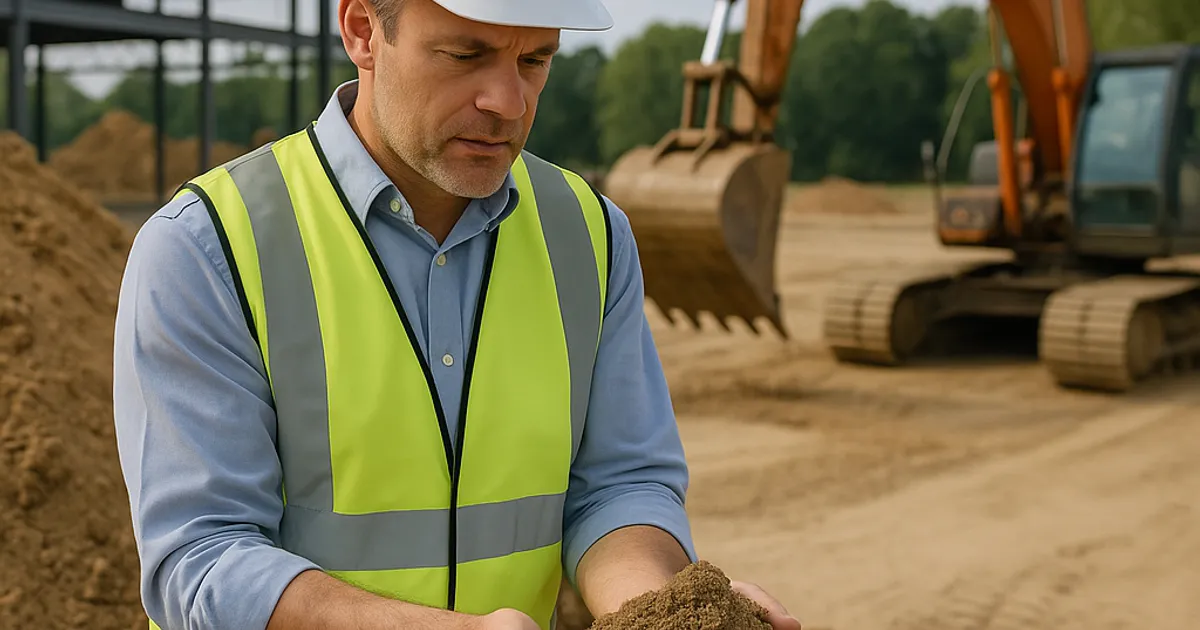
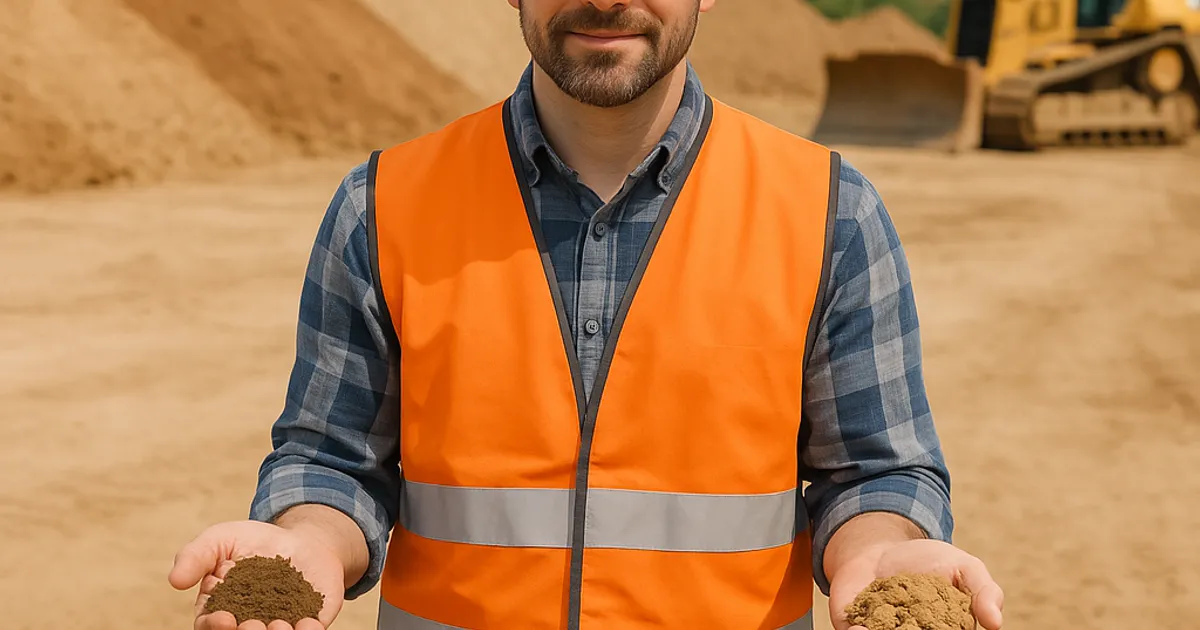
Walk onto any construction site and you'll encounter dirt being moved, tested, compacted, and carefully placed. To the untrained eye, it all looks the same. But to an experienced earthwork contractor, geotechnical engineer, or landscape architect, the difference between topsoil, fill dirt, clay, sand, and loam can mean the difference between a project that succeeds beautifully and one that sinks — literally.
The global earthwork and excavation market was valued at over $218 billion in 2023 and continues to grow as infrastructure investment accelerates across the United States. With that scale comes enormous demand for specific soil types, and enormous waste when the wrong material ends up in the wrong place. According to the U.S. Environmental Protection Agency, improper soil selection and placement contribute significantly to construction failures, foundation issues, and environmental contamination events each year.
This guide covers everything you need to know about the major types of dirt, their engineering characteristics, best-use applications, approximate costs, regulatory considerations, and how to source the right material for your next project.
Understanding Soil Classification: The Foundation of Every Decision
Before diving into specific soil types, it's essential to understand how soil is classified — because the classification system determines how contractors, engineers, and regulators communicate about material. In the United States, two primary classification systems are used:
The Unified Soil Classification System (USCS)
Developed by the U.S. Army Corps of Engineers and standardized under ASTM D2487, the Unified Soil Classification System (USCS) divides soils into coarse-grained and fine-grained categories based on particle size, plasticity, and gradation. Coarse-grained soils (gravels and sands) are labeled with letters like GW (well-graded gravel) or SP (poorly graded sand). Fine-grained soils (silts and clays) carry designations like CL (lean clay) or MH (elastic silt).
The AASHTO Classification System
The American Association of State Highway and Transportation Officials (AASHTO) classification system, outlined in AASHTO M 145, is widely used by state departments of transportation. It classifies soils from A-1 (best for road subgrades) through A-7 (poorest quality, highly plastic clays). Most state DOT specifications reference this system when specifying acceptable subgrade and embankment materials.
Why Classification Matters in Practice
Knowing a soil's classification helps you predict how it will behave under load, how well it will drain, how much it will compact, and whether it will expand or shrink with moisture changes. A CL clay that seems stable in dry summer conditions can become a costly liability during wet seasons if it was used inappropriately as structural fill. Soil testing — including sieve analysis, Atterberg limits tests, and compaction tests (Proctor test per ASTM D698 or D1557) — should always precede material placement on engineered projects.
Understanding these classifications also helps contractors and project owners communicate effectively when sourcing materials. Platforms like DirtMatch categorize available material by soil type and quality, so buyers and sellers can match projects with the right dirt — not just the nearest dirt.
Topsoil: The Living Layer That Powers Plant Growth
Topsoil is the uppermost layer of soil — typically the top 2 to 12 inches of earth — and it is the most biologically active soil type on the planet. It contains a rich mixture of mineral particles, decomposed organic matter (humus), microorganisms, fungi, and nutrients that make plant life possible.
Composition and Characteristics
Quality topsoil generally contains:
- Organic matter content: 2–10% (higher is better for agriculture; 5–8% is ideal for lawns and gardens)
- Texture: A loamy blend of sand, silt, and clay in roughly equal proportions
- pH range: 6.0–7.0 for most landscaping applications
- Nutrient profile: Nitrogen, phosphorus, potassium, and trace minerals
The Natural Resources Conservation Service (NRCS) estimates it takes nature 500 to 1,000 years to form just one inch of topsoil, which underscores its value and the importance of preserving it during construction.
Best Uses for Topsoil
- Lawn establishment and renovation: Spreading 4–6 inches of quality topsoil before seeding creates the ideal growing medium.
- Garden beds and landscaping: Raised beds, flower gardens, and vegetable plots all rely on topsoil quality for yield and health.
- Post-construction remediation: After grading, topsoil is re-applied to disturbed areas to restore vegetation — a requirement in many erosion control and stormwater management plans.
- Erosion control seeding: Topsoil provides the biological substrate needed for seed germination on disturbed slopes.
- Agricultural applications: Field restoration, reclamation projects, and orchard establishment.
Topsoil Costs and Sourcing
Bulk topsoil typically costs $10–$50 per cubic yard, depending on quality, organic content, and local market conditions. Screened topsoil (free of rocks and debris) commands premium pricing. Delivery adds $50–$150 depending on distance.
On large construction projects, stripping and stockpiling existing topsoil for later re-use is both a cost-saving strategy and often a regulatory requirement under local land disturbance permits.
Fill Dirt: The Workhorse of Construction Projects
If topsoil is the most valuable dirt for growing things, fill dirt is the most valuable dirt for building things. Fill dirt is subsoil — material excavated from below the topsoil layer — that has been stripped of organic matter, roots, and debris. Because it lacks organic content, it doesn't decompose and settle over time, making it ideal for structural applications.
What Makes Good Fill Dirt?
Good structural fill dirt exhibits:
- Low plasticity: It shouldn't shrink, swell, or crack with moisture changes.
- Good compactability: It should achieve 95% or greater of maximum dry density when compacted per ASTM D698 (Standard Proctor) or ASTM D1557 (Modified Proctor).
- Acceptable gradation: A mix of particle sizes that interlock well under compaction.
- Low organic content: Less than 2% organics by weight per most state DOT specifications.
Primary Applications of Fill Dirt
- Raising grade elevation: Filling low-lying areas to achieve a target elevation for construction.
- Foundation support: Creating a stable platform beneath slabs, footings, and foundations.
- Road embankments: Building up roadbeds to design elevation before applying aggregate base and pavement.
- Retaining wall backfill: Filling behind retaining walls (though drainage design is critical here).
- Land reclamation: Converting wetlands (with proper permits) or low-lying sites to usable land.
- Utility trench backfill: Covering buried pipes and conduits (typically with engineered granular fill near the utility, transitioning to structural fill above).
Fill Dirt Costs
Fill dirt is often free or very low cost when sourced from a nearby excavation project. The primary expense is typically hauling — running $5–$20 per ton depending on distance. In urban markets, quality fill dirt can cost $8–$25 per cubic yard when purchased from suppliers.
This is exactly where smart sourcing makes a financial difference. When a developer needs 10,000 cubic yards of fill and a nearby excavation contractor is hauling the same material to a landfill, both parties lose money. Connecting those two parties efficiently is the core value proposition behind how DirtMatch works — matching surplus excavated material with projects that need it, often cutting hauling costs dramatically.
Clay Soil: Powerful, Problematic, and Purposeful
Clay is among the most misunderstood materials in construction and landscaping. It carries a bad reputation — and for good reason in many contexts — but clay also has properties that make it indispensable in specific applications.
Engineering Properties of Clay
Clay particles are extremely fine (less than 0.002 mm in diameter per ASTM D422) and have a layered, plate-like structure that creates enormous surface area. This gives clay two defining characteristics:
- High plasticity: Clay absorbs water and swells significantly; when dry, it shrinks and cracks. Expansive clays (smectite/montmorillonite group) can exert pressures exceeding 10,000 pounds per square foot during swelling — enough to crack foundations, heave pavements, and break utility lines.
- Very low permeability: Clay's tight particle structure makes it nearly impermeable to water, with hydraulic conductivity values as low as 10⁻⁸ cm/s.
When Clay Is the Right Choice
Despite its challenges, clay's impermeability is its superpower in the right applications:
- Landfill liners and caps: Compacted clay liners (CCLs) are a standard component of engineered landfill systems under EPA Subtitle D and Subtitle C regulations. A minimum of 2 feet of clay with hydraulic conductivity ≤ 1×10⁻⁷ cm/s is required for many liner applications.
- Pond and reservoir liners: Clay-lined ponds and retention basins rely on compacted clay to hold water.
- Dam cores: Earthen dams often use a compacted clay core to prevent seepage through the embankment.
- Erosion-resistant slopes: Properly compacted clay resists surface erosion better than sandy soils.
- Adobe and rammed earth construction: Clay-rich soils are the primary material in traditional and modern earthen building techniques.
Managing Clay on Construction Sites
When clay is encountered unexpectedly as subgrade, several strategies are employed:
- Lime stabilization: Adding 3–8% hydrated lime by dry weight reduces plasticity and increases strength, per guidelines from the Transportation Research Board.
- Cement stabilization: Portland cement mixed into clay creates a more rigid material.
- Geotextile reinforcement: Placing geotextile fabric over soft clay subgrades to distribute load.
- Over-excavation and replacement: Removing problematic clay and replacing with select granular fill.
Sandy Soil: The Builder's Best Friend (With Caveats)
Sand occupies the opposite end of the soil spectrum from clay. Its coarse, rounded particles drain freely, compact predictably, and resist frost heave — all properties that make it attractive for construction.
Types of Sand in Construction
| Sand Type | Particle Size (ASTM D422) | Primary Use |
|---|---|---|
| Coarse sand | 0.5–2.0 mm | Concrete aggregate, drainage fill |
| Medium sand | 0.25–0.5 mm | Pipe bedding, fine concrete |
| Fine sand | 0.05–0.25 mm | Mortar, plaster, manufactured soil |
| Masonry sand | Well-graded fine | Block laying, joint sand |
| Play sand | Processed fine | Sandboxes, athletic fields |
Best Uses for Sandy Soil
- Pipe bedding: ASTM C12 and most utility specifications call for sand or fine gravel bedding around buried pipes to provide uniform support and prevent point loading.
- Concrete and mortar production: Fine aggregate in concrete must meet ASTM C33 gradation requirements.
- Drainage layers: Behind retaining walls, under slabs, and in French drain systems, clean sand or gravel provides the permeability needed to redirect water.
- Athletic field construction: Sand-based root zones in sports turf provide the drainage and trafficability that natural clay soils cannot.
- Beach and shoreline restoration: Sand nourishment projects restore eroded beaches and protect coastal infrastructure.
- Septic system drain fields: Coarse sand is often specified as a medium in leach field construction and mound systems.
Sandy Soil Limitations
Sand's biggest weakness is its susceptibility to erosion, both by water and wind. On slopes, unprotected sand can erode at alarming rates. Sand also has low bearing capacity when unconfined and loose, and has almost no cohesion — meaning it won't hold a vertical cut without lateral support.
Loosely placed sand below the water table is also vulnerable to liquefaction during seismic events — a major engineering concern in regions like the San Francisco Bay Area, where dirt exchange in San Francisco often involves navigating complex geotechnical and regulatory requirements.
Loam: The Ideal All-Purpose Soil
Loam is the Goldilocks of soil types — not too sandy, not too clayey, with just the right balance. By the USDA soil texture classification, loam contains approximately 25–50% sand, 25–50% silt, and 10–25% clay, with enough organic matter to support plant growth and enough structural integrity for light earthwork applications.
Why Loam Is Prized in Landscaping and Agriculture
- Moisture retention without waterlogging: Loam holds enough water for plant roots while draining excess, preventing rot.
- Workability: Loam is easy to till, shape, and grade without the stickiness of clay or the instability of pure sand.
- Nutrient retention: The clay and organic fractions hold nutrients and make them available to plants.
- Good compactability: Loam compacts well for light earthwork, including walkways, garden paths, and under-turf subgrades.
Loam Applications
- Lawn grading and seed bed preparation
- Garden soil amendment and bed construction
- Golf course fairway and rough construction
- Reclamation and revegetation of disturbed sites
- Erosion control on moderate slopes
- Organic farming field preparation
Loam typically costs $15–$60 per cubic yard depending on organic content, screening, and local availability. True sandy loam and loam are sometimes hard to find in quantity, making regional sourcing networks particularly valuable for landscapers and contractors working on large-scale revegetation projects.
Silt: The Tricky Middle Ground
Silt particles occupy the size range between sand and clay (0.002–0.05 mm per ASTM D422), and their behavior reflects that in-between character — they're neither as stable as well-graded sand nor as impermeable as clay. Silt is common in river valleys, floodplains, and glacial deposits.
Engineering Challenges of Silt
- Frost susceptibility: Silt is the most frost-susceptible soil type. Water moves through silt easily during freeze-thaw cycles, creating ice lenses that heave pavements and foundations. State DOTs in northern states like Minnesota, Wisconsin, and Massachusetts specifically restrict silty soils in road subgrades and require non-frost-susceptible (NFS) fill in frost-depth zones.
- Low strength when saturated: Wet silt loses bearing capacity rapidly, a condition called quick condition or boiling in excavations.
- Settlement: Loose silt deposits can settle significantly under load over time.
Beneficial Uses of Silt
Despite its challenges, silt has legitimate applications:
- Agricultural topdressing: River silt deposited by flooding has historically been among the most fertile agricultural soil.
- Manufactured topsoil: Blending silt with organic matter creates viable growing medium.
- Adobe brick production: Silt-clay mixtures are used in earthen construction.
- Reservoir silt management: Dredged silt from reservoirs is sometimes repurposed as agricultural amendment.
Find or Post Dirt, Rock & Aggregate
Join thousands of contractors using DirtMatch to buy, sell, and exchange earthwork materials.
Try DirtMatch FreeGravel and Aggregate: The Structural Foundation
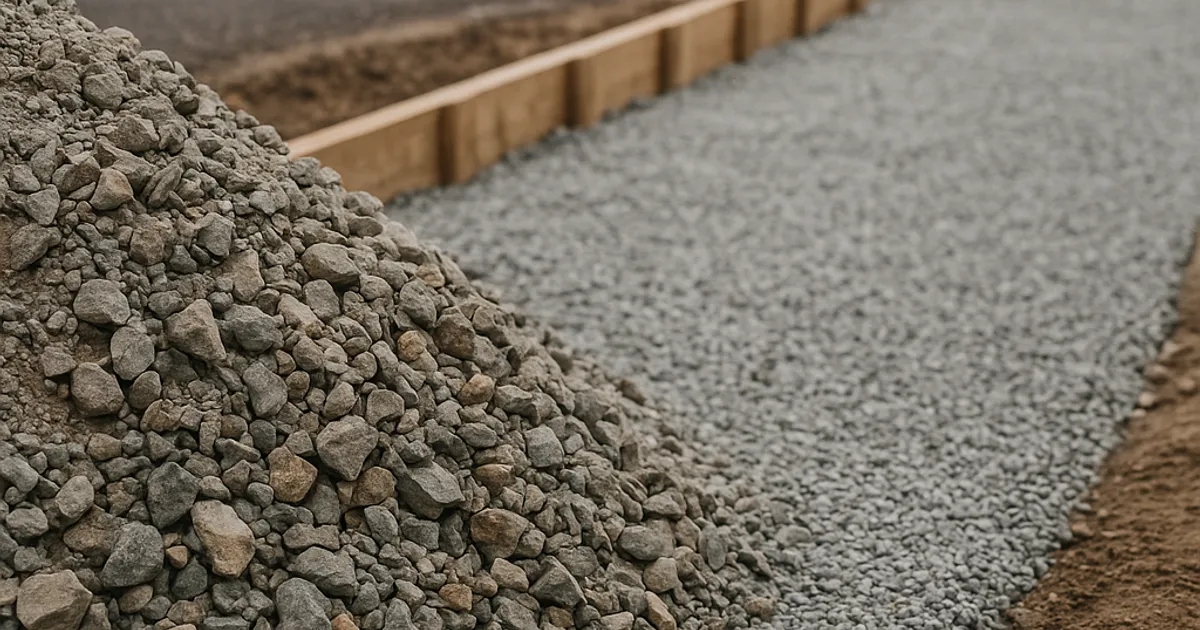
While technically not "dirt" in the traditional sense, gravel and aggregate materials are inseparable from earthwork discussions and are frequently excavated alongside native soils. Aggregate refers to granular mineral materials ranging from fine gravel to large crushed stone.
Aggregate Classifications
| Material | Size Range | ASTM Standard | Primary Use |
|---|---|---|---|
| Pea gravel | 3/8"–1/2" | ASTM D448 #8 | Drainage, pipe bedding |
| Crushed stone | 3/4"–1.5" | ASTM D448 #57 | Base course, drainage |
| Road base (DGA) | 3/4" minus | AASHTO M147 | Road subbase |
| Rip rap | 6"–24"+ | ASTM D6092 | Erosion protection |
| Bank run gravel | Mixed gradation | — | General fill, drainage |
Structural and Drainage Applications
- Pavement base course: Compacted gravel base (typically 6–12 inches per state DOT specifications) distributes traffic loads across the subgrade.
- French drains and infiltration systems: Washed gravel (ASTM #57 stone) surrounds perforated pipes to collect and redirect groundwater.
- Retaining wall drainage: Granular backfill behind retaining walls prevents hydrostatic pressure buildup.
- Concrete aggregate: Both coarse and fine aggregate must meet ASTM C33 specifications for use in structural concrete.
- Erosion control: Rip rap protects stream banks, outfall structures, and slopes from water erosion.
- Railroad ballast: Crushed stone ballast supports railroad ties and provides drainage beneath track.
In growing metro areas like dirt exchange in Denver and dirt exchange in Los Angeles, the demand for quality aggregate is intense, and regional sourcing networks play a critical role in keeping construction timelines and budgets on track.
Organic Soil and Muck: What to Avoid (and When to Use It)
Organic soils — peat, muck, and highly organic topsoil — represent the extreme end of the soil spectrum. These materials have organic content exceeding 30% by dry weight (classified as PT in the USCS) and are generally unsuitable for any structural application.
Why Organic Soil Is Problematic for Construction
- High compressibility: Organic soils compress dramatically under load, causing excessive and differential settlement.
- Decomposition: Organic matter continues to decay over time, causing ongoing settlement.
- Very low shear strength: Organic soils have minimal load-bearing capacity.
- High water content: Peat can hold 10–20 times its dry weight in water.
Building on organic soils without mitigation is one of the most common causes of foundation failure. OSHA's excavation standards (29 CFR 1926 Subpart P) classify some organic soils as Type C — the least stable soil type — requiring the most protective measures during excavation.
Legitimate Uses for Organic Soil
- Wetland creation and mitigation: Organic soil is essential for establishing wetland vegetation in mitigation banking projects.
- Horticultural amendment: Composted peat and muck improve water retention in sandy garden soils.
- Topsoil blending: Small additions of organic material to mineral soils improve their nutrient-holding capacity.
- Specialty agriculture: Muck farms in states like Michigan, New York, and Florida grow high-value vegetables like onions and celery on drained organic soils.
Contaminated Soil: Identification, Regulation, and Remediation
Not every cubic yard of excavated material is suitable for reuse. Contaminated soil — dirt containing petroleum hydrocarbons, heavy metals, pesticides, volatile organic compounds (VOCs), or other hazardous substances — requires careful management under federal and state regulations.
Regulatory Framework
- CERCLA (Superfund): The Comprehensive Environmental Response, Compensation, and Liability Act governs cleanup of contaminated sites nationwide.
- RCRA: The Resource Conservation and Recovery Act regulates the handling of hazardous waste, including contaminated soil.
- State programs: Every state has its own voluntary cleanup program (VCP) or brownfield program with soil cleanup standards. Massachusetts 310 CMR 40.0000, California's DTSC regulations, and Colorado's CDPHE standards are examples.
- Phase I and Phase II Environmental Site Assessments (ESAs): Per ASTM E1527-21 (Phase I) and ASTM E1903-19 (Phase II), these assessments are standard practice before purchasing or developing a site with potential contamination history.
Managing Contaminated Excavated Soil
- Testing: Soil samples analyzed by a certified laboratory for site-specific COCs (contaminants of concern).
- Classification: Determining whether soil is hazardous waste (RCRA), non-hazardous but restricted, or clean fill.
- Disposal: Contaminated soil must go to a licensed facility — costs range from $50–$500+ per ton depending on contamination type.
- Treatment: In-situ or ex-situ treatment technologies (bioremediation, thermal treatment, soil washing) can sometimes remediate soil for reuse.
- Beneficial reuse programs: Many states have programs allowing mildly impacted soil to be reused with restrictions — reducing disposal costs significantly.
Comparing Dirt Types: A Practical Reference Table
| Soil Type | Drainage | Compactability | Structural Use | Landscaping | Typical Cost/CY | Key Risk |
|---|---|---|---|---|---|---|
| Topsoil | Moderate | Poor | No | Excellent | $15–$50 | Settlement if used as fill |
| Fill Dirt | Variable | Good–Excellent | Yes | No | $0–$25 | Poor quality sources |
| Clay | Very Low | Good (when dry) | Limited | Poor | $5–$20 | Swelling, shrinkage |
| Sand | High | Good | Moderate | Moderate | $15–$40 | Erosion, liquefaction |
| Loam | Moderate | Moderate | Limited | Excellent | $20–$60 | Less structural stability |
| Silt | Moderate | Poor | No | Moderate | $10–$30 | Frost heave, settlement |
| Gravel | Very High | Excellent | Excellent | Poor | $20–$55 | Cost, transport |
| Organic/Peat | Very Low | Very Poor | Never | Specialized | $20–$80 | Severe settlement |
| Contaminated | Variable | Variable | Restricted | Never | $50–$500+ | Legal liability |
Sourcing the Right Dirt: Logistics, Costs, and Smart Strategies
Knowing what type of dirt you need is only half the battle — actually finding it at a reasonable cost and getting it delivered efficiently is the other half. Soil sourcing logistics are one of the most overlooked cost drivers in construction projects.
The Real Cost of Dirt Logistics
According to industry data, hauling costs account for 60–80% of the total cost of fill dirt operations on many projects. A project that needs 50,000 cubic yards of structural fill might face these scenarios:
- Nearby source (5 miles): $3–$6/CY hauling = $150,000–$300,000 total
- Regional source (25 miles): $8–$15/CY hauling = $400,000–$750,000 total
- Distant source (50+ miles): $15–$30+/CY hauling = $750,000–$1.5M+ total
The difference between a nearby source and a distant one can literally determine project profitability. This is why contractors who are actively managing excavation projects use matching platforms to find nearby surplus material before calling quarries. DirtMatch's platform facilitates exactly this kind of local matching — whether you're looking for dirt exchange in Seattle or managing fill needs in dirt exchange in Boston, connecting with nearby surplus sources can transform your project budget.
Smart Sourcing Strategies
- Check nearby excavation projects first: New building foundations, road projects, and utility work constantly generate surplus excavated material.
- Contact local DOT projects: Highway and infrastructure projects often have excess cut material available.
- Establish relationships with excavation contractors: Building a network of trusted soil sources is a competitive advantage.
- Use digital matching platforms: Get started with DirtMatch to access a network of contractors actively listing and seeking specific soil types in your region.
- Plan for testing: Budget for soil testing before committing to large volumes — $200–$800 per test set is cheap insurance against accepting unsuitable material.
- Negotiate transportation agreements: Sometimes the hauling cost split between the seller and buyer can be negotiated, especially when both parties benefit from the exchange.
Documentation and Chain of Custody
For any soil import or export, maintain thorough documentation:
- Soil classification test results
- Material origin records
- Delivery tickets with source address
- Compaction test results (if applicable)
- Any environmental clearance documentation
Many local municipalities and state agencies require import fill material to be accompanied by documentation confirming it's clean, uncontaminated soil — a requirement that has grown stricter following high-profile cases of contaminated fill being placed on residential lots.
Regulatory Considerations: What Contractors Must Know
Soil management is increasingly regulated at federal, state, and local levels. Staying compliant protects your business from liability and keeps projects on schedule.
Key Federal Regulations Affecting Soil Use
- Clean Water Act Section 404: Any fill of waters of the U.S. (including wetlands) requires a permit from the U.S. Army Corps of Engineers — even small quantities.
- OSHA 29 CFR 1926 Subpart P: Excavation safety standards require soil classification (Type A, B, or C) and appropriate protective systems based on soil type.
- EPA Solid Waste Rules: Excavated soil may be classified as solid waste depending on how it's managed, affecting disposal and transport requirements.
State and Local Requirements
- Erosion and Sediment Control Plans: Nearly all disturbed areas over 1 acre require a NPDES permit (Construction General Permit) and an approved erosion control plan.
- Fill Import Permits: Many municipalities require permits and source documentation for importing fill material.
- Stormwater Management: Fill operations that change drainage patterns may trigger stormwater management requirements.
- Grading Permits: Local building departments typically require grading permits for earthwork exceeding a certain volume or area.
Staying current on these regulations — which vary significantly by state and municipality — is part of professional practice for earthwork contractors. Connecting with experienced local contractors through platforms like DirtMatch can also provide regional knowledge about specific regulatory requirements that affect material acceptance in your area.
Actionable Takeaways for Contractors and Project Owners
Understanding soil types isn't just academic — it translates directly into better project decisions, lower costs, and fewer surprises. Here are the most important practical principles:
Always test before you place. Whether importing or using on-site material, verify soil classification and suitability with laboratory testing before committing to large quantities.
Match material to application. Use topsoil for growing, fill dirt for building, gravel for drainage, and clay only where impermeability is needed.
Source locally first. The cheapest fill dirt is the fill dirt being excavated nearby. Build sourcing networks — or use digital platforms — to access local surplus material before going to distant suppliers.
Document everything. Soil provenance, test results, and placement records protect you from liability and satisfy regulatory requirements.
Plan for compaction. Achieving specified compaction density is critical for structural fill — budget for testing and potential re-work if material doesn't meet spec.
Understand contamination risk. Never accept fill material without documentation. Importing contaminated soil can make you a responsible party under CERCLA — a liability that far outweighs any cost savings.
Think beyond the current project. Excess material from your current excavation might be exactly what a nearby contractor needs. Listing your surplus through a material exchange creates revenue and avoids disposal costs.
Whether you're a solo excavation contractor moving a few hundred yards of topsoil or a general contractor managing 100,000 cubic yards of structural fill for a major infrastructure project, understanding soil types and sourcing efficiently are foundational skills that directly impact your bottom line.