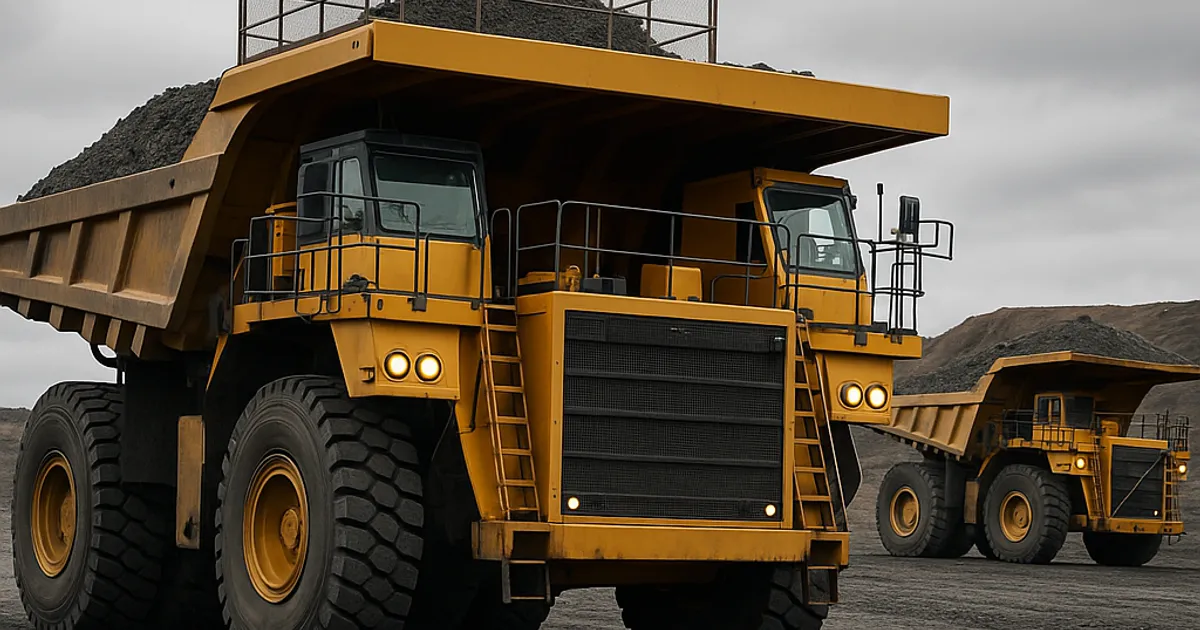

The summer of 2026 is shaping up to be another record-breaker. The National Oceanic and Atmospheric Administration confirmed that the past three consecutive summers have ranked among the hottest in recorded history, and construction workers are paying the price. Among the most vulnerable group on any active earthwork site: dump truck drivers.
Think about what a dump truck driver actually experiences during a peak summer shift. They climb into a cab that may have been sitting in direct sun for hours. They navigate through dusty, shadeless haul roads. They idle at staging areas where asphalt and bare earth radiate heat upward. The cab thermometer may read 95 degrees Fahrenheit even with the air conditioner running, and many older fleet vehicles run inefficient HVAC systems or suffer from refrigerant leaks that go unaddressed for entire seasons.
The stakes are not abstract. The Bureau of Labor Statistics reports that heat-related illnesses contribute to dozens of fatalities and thousands of lost workdays across construction and transportation each year, with earthmoving and aggregate hauling operations disproportionately represented. A single heat stroke incident can cost a fleet operator between $50,000 and $500,000 when you factor in emergency response, workers compensation claims, OSHA inspections, project delays, and potential litigation.
This guide is written for fleet managers, safety coordinators, dispatcher teams, and owner-operators who want a practical, research-backed summer heat plan that actually works on real job sites.
Why Dump Truck Drivers Face Unique Heat Risks
Not all construction workers experience heat the same way. A laborer working at a shaded excavation site with access to a cooler and regular break rotations faces a meaningfully different risk profile than a dump truck driver running a continuous haul cycle between a quarry and an active grading site.
Several factors combine to make dump truck drivers especially vulnerable to heat illness.
Continuous cab exposure. Unlike workers who can rotate into shaded staging areas or underground utility trenches, dump truck drivers spend the majority of their shift inside a vehicle cab. When ambient temperatures hit 95 degrees Fahrenheit and the sun angle is steep, cab interiors can reach 130 to 140 degrees Fahrenheit within minutes of the engine being shut off. Even with active HVAC, a poorly maintained system may only cool the cab to 80 to 85 degrees during peak heat hours.
Physical exertion during loading and unloading. Drivers are not simply sitting behind the wheel. They climb in and out of cabs multiple times per shift, operate tarp mechanisms, walk haul road surfaces to check loads, and sometimes assist with spotting. Each burst of physical activity elevates core body temperature and accelerates fluid loss.
Limited access to water and shade. Haul roads between quarries, pit sites, and active grading areas often offer no shade structures, no water stations, and no portable cooling equipment. Drivers may go 60 to 90 minutes between opportunities to hydrate or cool down.
Shift length and fatigue compounding. Many dump truck fleet operations run 10 to 12 hour shifts during summer months to maximize productivity before heat of the day becomes extreme. Fatigue accelerates heat illness onset, and drivers working longer shifts have less physiological reserve when their core temperature begins to climb.
Dehydration misidentification. Research from the National Safety Council documents that workers frequently misread early dehydration symptoms, including mild headache, reduced concentration, and slight dizziness, as general tiredness rather than the medical warning signs they actually represent.
Understanding the Heat Illness Spectrum
Effective prevention requires understanding exactly what you are trying to prevent. Heat illness is not a single condition. It exists on a spectrum from mild to life-threatening, and conditions can escalate with alarming speed when a driver is already dehydrated and working in a high-heat environment.
Heat Cramps
Heat cramps are the earliest and mildest form of heat illness. They present as painful muscle spasms, most commonly in the legs, abdomen, or arms. They occur when a worker sweats heavily and loses significant electrolytes, particularly sodium, potassium, and magnesium. A driver experiencing heat cramps should stop work immediately, move to a cool location, and consume a sports electrolyte drink or water with a small amount of salt. Heat cramps alone do not require emergency response, but they are a reliable early warning signal that the body is struggling.
Heat Exhaustion
Heat exhaustion represents a serious escalation. Symptoms include heavy sweating, cool and pale skin, fast and weak pulse, nausea, dizziness, fatigue, and headache. Core body temperature in heat exhaustion typically ranges from 100 to 104 degrees Fahrenheit. A driver in heat exhaustion must be removed from the heat environment immediately, laid down with legs elevated, and given cool water if conscious and able to swallow. If the driver does not improve within 15 minutes of cooling measures, call emergency services.
Heat Stroke
Heat stroke is a medical emergency with a fatality rate that exceeds 10 percent even with prompt treatment. There are two types: classic heat stroke (which can occur without heavy physical exertion) and exertional heat stroke, which is the primary risk for dump truck drivers and construction workers. Symptoms include core temperature above 104 degrees Fahrenheit, confusion, slurred speech, loss of consciousness, and critically, the absence of sweating in classic cases. Exertional heat stroke victims may still be sweating. Call 911 immediately. While waiting for emergency services, immerse the victim in cold water, apply ice packs to the neck, armpits, and groin, and fan the person aggressively.
Time to cooling is the single most important factor in heat stroke survival. Every minute of delay at temperatures above 104 degrees causes progressively more severe organ damage.
OSHA Heat Standards and What They Mean for Your Fleet in 2026
OSHA's regulatory framework around heat illness has undergone significant evolution over the past several years. In 2024, OSHA advanced a proposed heat illness prevention rule under the authority of the Occupational Safety and Health Act, and as of 2026, enforcement action under the General Duty Clause remains the primary federal mechanism for holding employers accountable for heat-related worker harm even as the formal rulemaking process continues.
Under the General Duty Clause (Section 5(a)(1) of the OSH Act), employers are required to provide a workplace free from recognized hazards that are causing or likely to cause death or serious physical harm. OSHA has successfully cited employers under this clause for heat illness incidents when the employer failed to provide water, shade, and acclimatization procedures. Citations can result in penalties ranging from $16,131 per serious violation to $161,323 per willful or repeated violation as of 2026 penalty levels.
Key elements that OSHA expects to see in an employer's heat illness prevention program include the following.
Written heat illness prevention plan. The plan must be specific to your work environment, not a generic template. It should identify heat hazard triggers, establish water and shade protocols, outline emergency response procedures, and include a heat acclimatization schedule for new and returning workers.
Water access. OSHA recommends one quart of water per worker per hour in high heat conditions. For dump truck fleets, this means having coolers stocked with cold water at all loading and staging areas, not just at the main yard.
Shade provision. Workers must have access to shade when temperatures or heat index values exceed 80 degrees Fahrenheit. On haul roads, this often requires portable shade structures at key rest points.
Acclimatization schedule. New workers and workers returning from absences of more than two weeks must not be thrown directly into full-intensity summer shifts. OSHA recommends a 7 to 14 day acclimatization period during which workload is progressively increased.
Training. All supervisors and workers must be trained to recognize heat illness symptoms in themselves and others, and must know the emergency response procedures.
Fleet operators managing haul cycles across multiple states should also verify state-level heat standards. California's Title 8, Section 3395 (Heat Illness Prevention standard) is among the most stringent in the country and applies to all outdoor workers. Operations like dirt exchange in Los Angeles and dirt exchange in San Diego must be particularly attentive to California's specific requirements, which include mandatory shade when temperatures reach 80 degrees Fahrenheit and mandatory rest periods when the heat index reaches 95 degrees.
Building a Comprehensive Fleet Hydration Protocol
A hydration protocol is not simply a policy that says "drink water." An effective protocol specifies quantities, timing, fluid types, monitoring methods, and accountability structures. Here is a framework that fleet safety managers can adapt to their specific operations.
Pre-Shift Hydration Loading
Dehydration does not begin on the job site. Many dump truck drivers arrive for a summer shift already mildly dehydrated due to inadequate overnight fluid intake, alcohol consumption, or consuming large amounts of caffeine (which has mild diuretic effects). Pre-shift hydration loading should be part of the morning dispatch routine.
Each driver should consume at least 16 to 24 ounces of water before leaving the yard. Dispatchers can build a brief hydration check into the pre-trip inspection process. Providing cold water at the dispatch office or yard break room costs almost nothing and removes the barrier of drivers having to remember on their own.
On-Route Hydration Scheduling
For continuous haul cycle operations, build structured hydration breaks into the dispatch schedule. Drivers should consume 6 to 8 ounces of water every 15 to 20 minutes during peak heat hours, even if they do not feel thirsty. The sensation of thirst lags behind actual dehydration by roughly 1 to 2 percent body water loss, at which point cognitive function and physical performance are already declining.
Practical implementation: install a mounted water bottle holder in each cab within arm's reach of the driver. Require each driver to start each shift with at least a 64-ounce insulated water bottle filled with ice water. Brief dispatchers on the importance of monitoring driver communication patterns during heat wave days, as confusion and slurred communication can be early signs of heat illness.
Electrolyte Replacement
Water alone is not sufficient during periods of heavy sweating. Prolonged sweating depletes sodium, potassium, magnesium, and chloride. Replacing fluid volume without replacing electrolytes can lead to hyponatremia (low blood sodium), a dangerous condition that mimics and can accelerate heat illness.
Fleet operators should stock electrolyte supplements at staging areas and yards. Oral rehydration tablets or powder packets, sports drinks (lower sugar formulations are preferable for sustained hydration), and electrolyte-enhanced waters are all practical options. Avoid pure energy drinks with high caffeine content, as they increase cardiovascular strain and can worsen dehydration.
Hydration Monitoring and Accountability
| Monitoring Method | Practicality | Cost | Effectiveness |
|---|---|---|---|
| Urine color chart (posted in porta-potties/restrooms) | Very High | Very Low | Moderate |
| Weight check in/out at yard | High | Low | High |
| Wearable hydration monitors | Low (adoption challenges) | High | High |
| Driver self-reporting via dispatch check-in | High | Very Low | Moderate |
| Buddy system on routes | High | Very Low | High |
The simplest and most effective low-cost monitoring approach is a combination of pre-shift and post-shift weight checks combined with urine color guidance. A driver who loses more than 2 percent of their body weight during a shift (roughly 3 to 4 pounds for a 175-pound driver) has experienced significant dehydration and should not be cleared for another haul cycle without adequate rehydration rest.
Vehicle Cab Cooling Strategies for Summer Operations
The dump truck cab is the driver's primary environment, and managing cab temperature is as important as managing the driver's hydration. A well-hydrated driver placed into a 130-degree cab will deteriorate rapidly.
HVAC Maintenance and Pre-Season Inspection
Every vehicle in the fleet should undergo a dedicated HVAC inspection before summer operations begin. This inspection should cover refrigerant level and system pressure, compressor belt condition, condenser and evaporator cleanliness, cabin air filter condition, and duct seal integrity. A system with low refrigerant may appear to function adequately in mild weather but fail completely when ambient temperatures climb above 90 degrees Fahrenheit.
Schedule HVAC inspections no later than April each year. For fleets operating in the Desert Southwest, consider scheduling them in March. The cost of a professional HVAC inspection and refrigerant recharge typically ranges from $150 to $400 per vehicle, a trivial expense compared to the cost of a heat-related worker absence or incident.
Cab Pre-Cooling Protocols
For trucks that must be parked in direct sun during shifts, pre-cooling protocols can meaningfully reduce the thermal load a driver experiences when returning to the vehicle. Options include remote start systems with AC activation (available on many newer fleet vehicles), reflective cab covers or windshield shades during parked periods, and parking orientation strategies that minimize direct sun exposure to the cab glass during peak heat hours.
Supplemental Cooling Technologies
Several supplemental cooling options have gained traction in commercial fleet operations over the past several years. Auxiliary power units (APUs) allow drivers to maintain climate control during extended stops without idling the main engine, reducing both heat exposure and fuel consumption. Evaporative cooling vests can provide meaningful thermal relief during brief cab exits, particularly in dry climates like those found in operations supporting dirt exchange in Denver or dirt exchange in Boulder. Battery-powered personal fans and neck cooling devices, while modest in their individual effect, can provide incremental comfort that reduces heat stress during the gap between cab exits and return.
Acclimatization Schedules and New Driver Onboarding
Heat acclimatization is the process by which the body physiologically adapts to working in high-heat environments. Acclimatized workers have higher plasma volume, lower core body temperature at equivalent workloads, lower heart rate, earlier onset of sweating, and reduced electrolyte loss in sweat. Full acclimatization to a hot environment takes 7 to 14 days of progressive exposure.
For dump truck fleet operations, acclimatization is particularly important for three groups: new hires starting summer employment, workers returning from extended absences (illness, vacation, or injury leave greater than two weeks), and existing employees transitioning from indoor or early-season duties into peak summer haul cycles.
Sample 10-Day Acclimatization Schedule
| Day | Maximum Shift Length | Heat Exposure Level | Haul Cycles Allowed |
|---|---|---|---|
| 1-2 | 6 hours | Light to moderate | 50% of normal |
| 3-4 | 7 hours | Moderate | 60% of normal |
| 5-6 | 8 hours | Moderate to high | 70% of normal |
| 7-8 | 9 hours | High | 85% of normal |
| 9-10 | Full shift | Full | 100% |
During the acclimatization period, maintain a buddy system or dispatcher check-in every two hours. Ensure acclimatizing drivers have priority access to the coldest water supplies and the best-functioning AC vehicles in the fleet.
Emergency Response Planning for Heat Events
Every fleet heat safety plan must include a detailed emergency response component. In a heat stroke event, response speed is the difference between a full recovery and a fatality or permanent disability. Every person involved in fleet operations, from dispatchers to site supervisors to fellow drivers, should know exactly what to do.
Fleet Emergency Response Protocol
Step 1: Recognition. Any worker who observes signs of severe heat illness in a driver (confusion, inability to communicate clearly, loss of coordination, unconsciousness, or seizure) should immediately activate the emergency protocol.
Step 2: Call 911. Do not delay calling for emergency services while attempting self-treatment. Make the call first.
Step 3: Begin cooling immediately. Move the driver out of the heat environment. Apply ice or cold water to neck, armpits, and groin. If available, immerse in cold water. Fan aggressively.
Step 4: Notify dispatch and site supervisor. The site supervisor should ensure the haul road and site access are cleared for emergency vehicle entry. Haul roads on earthwork sites frequently present significant navigation challenges for standard ambulances.
Step 5: Document and report. Following any heat illness incident, complete an incident report and notify OSHA if the incident results in hospitalization. OSHA requires notification within 24 hours for in-patient hospitalizations.
All fleet vehicles should carry a heat emergency kit containing ice packs (stored in a small cooler), a cold wet towel, and an emergency contact card with dispatcher phone numbers, site address, and nearest hospital location.
Find or Post Dirt, Rock & Aggregate
Join thousands of contractors using DirtMatch to buy, sell, and exchange earthwork materials.
Try DirtMatch FreeDispatcher and Fleet Manager Responsibilities
Heat safety is not solely the driver's responsibility. Dispatchers and fleet managers hold significant power to reduce heat risk through operational decisions that are made in the office, not on the haul road.
Scheduling Adjustments for Heat Waves
When a National Weather Service Excessive Heat Warning or Heat Advisory is issued for an operating area, fleet managers should consider shifting haul schedules earlier in the morning to complete the majority of haul cycles before the heat index peaks (typically between 1:00 p.m. and 4:00 p.m.). Starting shifts at 5:00 or 6:00 a.m. and pausing haul operations from 1:00 p.m. to 4:00 p.m. can dramatically reduce driver heat exposure without sacrificing total daily production.
Fleet operators who are efficiently connected to projects through platforms like DirtMatch can often negotiate haul scheduling flexibility with project owners more easily, since the platform facilitates direct communication between contractors and project stakeholders, reducing the friction that can make schedule changes feel logistically prohibitive.
Heat Index Threshold Triggers
| Heat Index | Action Required | |---|---|---| | Below 91°F | Standard precautions, water and shade access | | 91 to 103°F | Increased water breaks, limit solo routes, monitor all drivers | | 103 to 124°F | Mandatory 10-minute breaks every hour, buddy system required | | Above 124°F | Consider halting non-essential haul operations |
Post this chart at the dispatcher station and in the driver break room. Make heat index assessment part of the daily morning briefing.
Driver Wellness and Training Programs
Long-term driver wellness programs address heat risk not just as a summer compliance exercise but as part of a comprehensive approach to maintaining a healthy, productive workforce year-round. Drivers who maintain good baseline health, cardiovascular fitness, and adequate sleep are meaningfully more resilient to heat stress than drivers who do not.
Training Requirements and Delivery
All dump truck drivers should receive heat illness prevention training annually before summer operations begin. Training should cover recognition of heat illness symptoms in self and coworkers, hydration best practices, acclimatization principles, proper use of cooling equipment, and emergency response procedures.
OSHA recommends training be delivered in the worker's primary language. For fleets with multilingual crews (a common reality in earthwork and aggregate hauling operations), provide training materials in Spanish, Portuguese, and other relevant languages, not only in English.
Training can be delivered in a one-hour group session at the yard, supplemented by a printed wallet card that each driver keeps with their CDL documentation. Digital training modules accessible on a smartphone app can be an effective supplement for drivers who prefer self-paced learning.
Health Baseline Assessments
Certain medical conditions significantly increase heat illness risk. These include cardiovascular disease, diabetes, kidney disease, obesity, sleep apnea, and skin conditions that impair sweating. Medications including diuretics, beta-blockers, antihistamines, antidepressants, and certain blood pressure medications also increase heat sensitivity.
Fleet operators with the resources to do so should offer voluntary (never mandatory) health screening through an occupational health physician at the start of each summer season. Drivers with known risk factors should be prioritized for the coolest vehicles, the most shaded routes, and increased check-in frequency during heat events.
Technology Tools for Heat Safety Management
The technology landscape for fleet safety has advanced significantly in 2026. Several categories of tools are now practical and cost-effective for mid-size and larger dump truck fleet operations.
Telematics and cab temperature monitoring. Modern fleet telematics systems can monitor cab interior temperature in real time and alert dispatchers when temperatures exceed threshold values. Integration with driver fatigue monitoring systems (which use camera technology to detect signs of drowsiness and impaired attention) can provide an early warning of heat-related cognitive impairment.
Weather API integration in dispatch software. Several fleet management software platforms now offer real-time weather and heat index data integrated directly into the dispatch dashboard. This allows dispatchers to see the heat index at each active haul site and make routing and scheduling adjustments without needing to manually check weather services.
Wearable biosensors. While still relatively expensive and facing adoption barriers, wearable sensors that monitor skin temperature, heart rate, and hydration indicators are becoming more practical for high-risk occupations. Pilot programs in mining and military applications have demonstrated that wearable monitoring can detect early heat illness signs 20 to 30 minutes before the worker self-reports symptoms.
Driver-facing apps. Simple smartphone applications can help drivers track their own water intake, receive heat index alerts for their current location, and log symptoms for easy reporting. Some FMCSA-compliant electronic logging device platforms (see the FMCSA regulatory framework) are beginning to integrate wellness features alongside hours-of-service tracking.
Coordinating Heat Safety Across Multi-Contractor Job Sites
Many earthwork job sites involve multiple subcontractors operating simultaneously, with dump truck haul operations contracted separately from excavation, grading, and compaction crews. This multi-contractor environment creates accountability gaps where no single entity takes ownership of heat safety coordination.
Fleet managers should proactively establish heat safety coordination with the general contractor at project kickoff. Key questions to ask include: Who is responsible for maintaining water stations on the haul road? Where is the designated shade structure for truck drivers during breaks? What is the site evacuation plan for emergency vehicles? Who is the designated heat safety coordinator on site?
For earthwork contractors and fleet operators sourcing projects through DirtMatch Pro, job site safety expectations can be part of the project onboarding conversation from the first connection. Having heat safety standards clearly communicated at the start of a project relationship prevents the ambiguity that leads to gaps in worker protection.
On large grading and earthmoving projects in hot climates like those common to dirt exchange in San Francisco and the greater Bay Area, where summer temperatures can swing dramatically based on inland versus coastal positioning, even experienced crews can be caught off-guard by sudden temperature spikes. A coordinated site-wide heat plan that includes all subcontractors is far more effective than individual company plans operating in isolation.
Cost-Benefit Analysis of a Comprehensive Heat Safety Program
Some fleet operators hesitate to invest in comprehensive heat safety programs, viewing them as overhead that reduces profitability. The math, however, strongly favors investment. Consider the following cost comparison for a fleet of 20 dump trucks.
Program Implementation Costs (Annual)
| Item | Estimated Annual Cost | |---|---|---| | Pre-season HVAC inspection (20 vehicles at $250 each) | $5,000 | | Hydration supplies (coolers, water, electrolytes) | $3,000 | | Heat safety training (materials and facilitator time) | $1,500 | | Portable shade structures (2 at $800 each, amortized) | $400 | | Emergency heat response kits (20 vehicles) | $1,000 | | Total Annual Investment | $10,900 |
Cost of a Single Heat Stroke Incident (Conservative Estimate)
| Item | Estimated Cost | |---|---|---| | Emergency medical response | $5,000 to $15,000 | | Workers compensation claim (hospitalization and recovery) | $50,000 to $150,000 | | OSHA investigation and potential citation | $10,000 to $50,000 | | Project delay (production lost per day) | $15,000 to $40,000 | | Replacement driver training and recruitment | $3,000 to $8,000 | | Legal fees and liability exposure | Variable (potentially hundreds of thousands) | | Conservative Total | $83,000 to $263,000 |
The return on investment for a robust heat safety program is not hypothetical. It is a fundamental risk management decision that every fleet operator must make.
Establishing a Heat Safety Culture That Lasts
Policies and protocols are necessary but not sufficient. The most durable heat safety improvements come from culture change, where drivers, dispatchers, and managers all share the understanding that protecting against heat illness is a professional responsibility, not a personal weakness.
Some of the most effective culture-building practices fleet operators have implemented include recognizing drivers who report early symptoms and get help before incidents escalate, destigmatizing hydration breaks as a sign of weakness (a real and persistent challenge in physically demanding industries), involving drivers in the design of hydration and cooling protocols so that solutions fit real-world cab and route conditions, and making heat safety check-ins a standard part of daily dispatcher communication rather than a special protocol reserved only for declared heat emergencies.
Fleet operators who want to build a comprehensive operational foundation that supports not just safety but also business efficiency can explore how platforms like DirtMatch connect earthwork contractors with projects and hauling opportunities in ways that support smarter, better-managed fleet operations from the ground up.
Key Takeaways for Fleet Operators This Summer
Heat illness prevention for dump truck fleets is a multi-layered challenge that requires attention to vehicle maintenance, operational scheduling, driver training, emergency preparedness, and organizational culture. The good news is that the interventions that work best are not expensive or technologically complex. Cold water, shade, scheduled breaks, acclimatized ramp-up periods, and empowered workers who know how to recognize and report symptoms will prevent the vast majority of heat-related incidents.
The earthwork and aggregate hauling industry keeps construction moving, infrastructure projects on schedule, and communities growing. The drivers behind the wheels of those dump trucks deserve the same quality of safety planning that we apply to equipment maintenance and route optimization. A summer heat plan is not a compliance checkbox. It is a commitment to the people who make the work happen.
Start building or updating your fleet heat plan today. Review your HVAC inspection records, stock your staging areas with cold water and electrolytes, schedule your training sessions, and communicate your heat index threshold protocols to every dispatcher and driver on your team before temperatures peak.