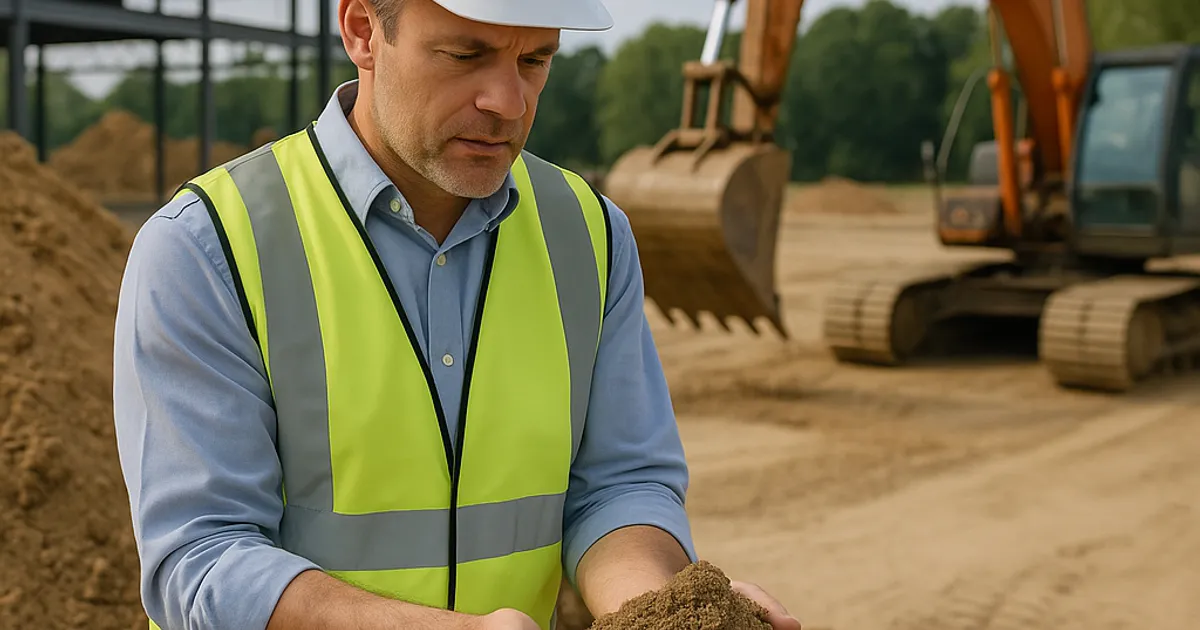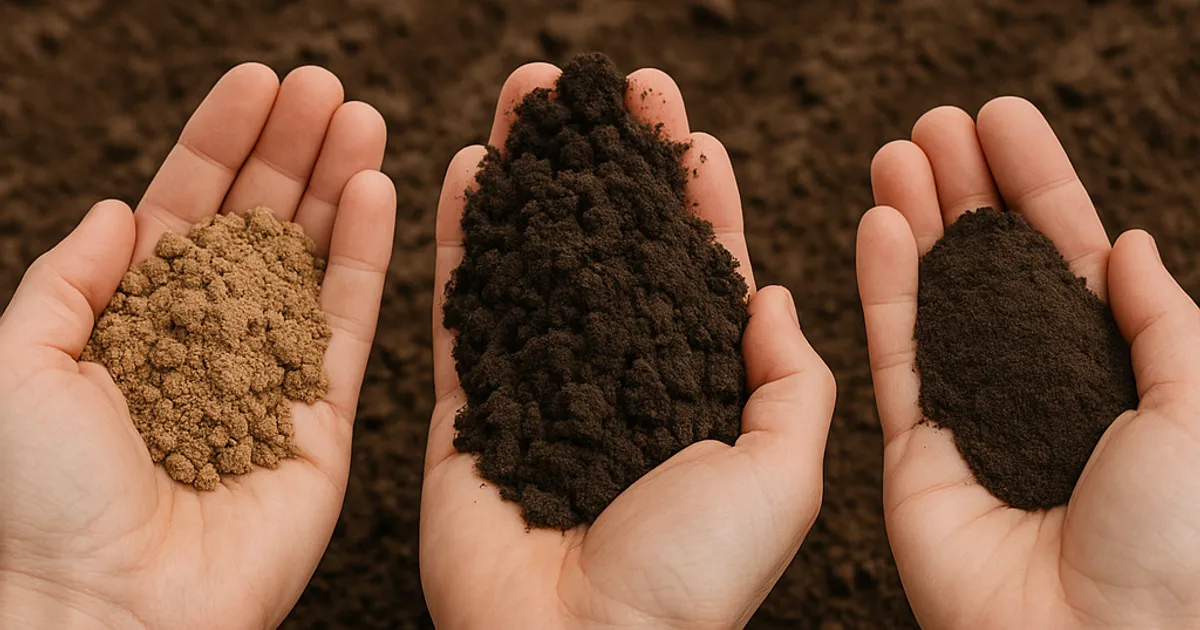
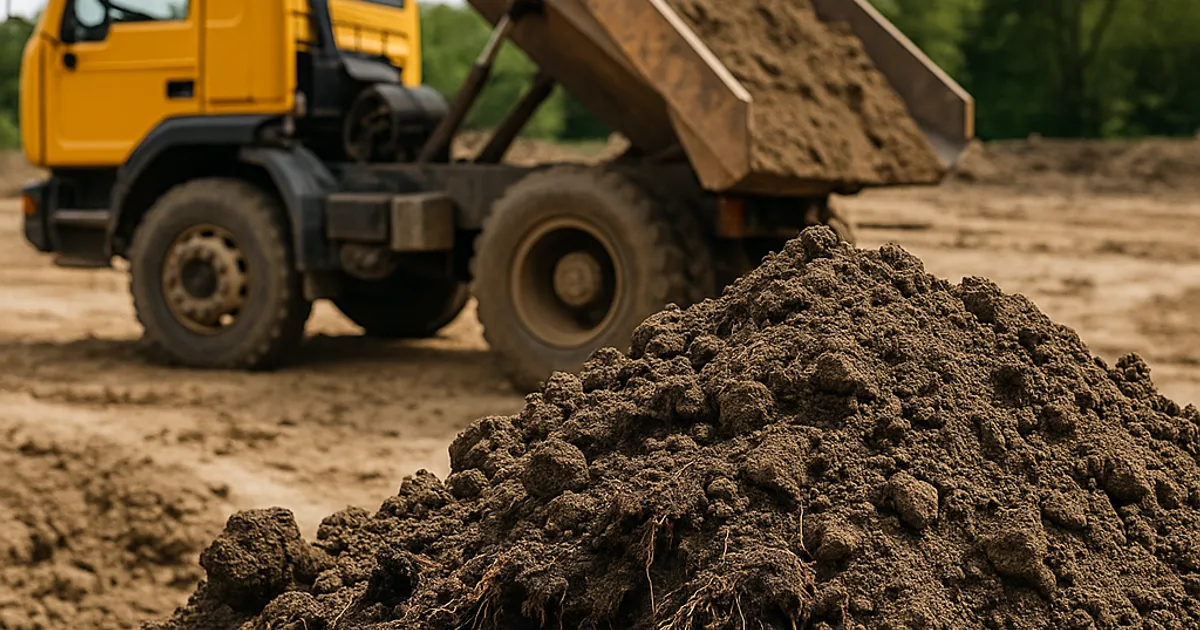
Organic matter in fill dirt is one of the most deceptively dangerous problems in construction. The material might look like perfectly acceptable brown soil when it arrives on site, but buried beneath a slab, a roadway, or a foundation, it quietly compresses, decomposes, and shifts over months and years. The result is differential settlement, cracked foundations, failed pavements, and in the worst cases, complete structural collapse.
This article breaks down the science behind organic soil failure, explains the industry standards used to identify and reject unsuitable fill, and gives contractors and project owners the tools they need to source clean, compactable fill dirt every time.
What Is Organic Matter in Soil and Why Does It Get Into Fill Dirt
Organic matter in soil refers to any material derived from living organisms: decomposed plant tissue, root systems, humus, peat, leaf litter, animal waste, and microbial biomass. In a natural ecosystem, organic matter is enormously valuable. It improves water retention, feeds soil biology, and supports plant growth. In a construction fill application, it is a liability.
Organic matter ends up in fill dirt for several reasons. Topsoil stripped during site preparation is sometimes stockpiled and later re-used as general fill, despite containing high concentrations of organic carbon. Excavated material from pond edges, wetlands, stream banks, and forested hillsides is frequently high in organic content. Contractors managing tight schedules sometimes accept whatever material is available rather than specifying clean structural fill. And in markets where fill is in short supply, buyers accept marginal loads rather than waiting for better material.
In the United States, the USDA Web Soil Survey classifies soils by organic content and identifies histosols, mucky soils, and peat deposits across the country. These designations exist precisely because organic-rich soils behave so differently from mineral soils that treating them the same way in construction is a fundamental engineering error.
Under ASTM D2487, the Unified Soil Classification System (USCS) designates soils with high organic content as OH (organic clay of high plasticity) or OL (organic clay of low plasticity). Muck and peat carry the designation Pt. All of these classifications are considered unsuitable for structural fill without significant treatment or replacement.
The Three Mechanisms of Organic Fill Failure
Understanding why organic fill fails requires understanding the three primary mechanisms through which it loses volume and strength under load.
Primary Consolidation
When load is applied to a saturated soil mass, water is squeezed out of the void spaces between particles. In clean mineral fill, this process occurs relatively quickly and produces predictable, manageable settlement. In organic-rich soils, consolidation is far more severe because organic particles are compressible themselves. The fibrous structure of peat and partially decomposed plant material collapses under pressure, and the high water content of these materials means there is far more water to expel. Settlement from primary consolidation in organic fill can be five to ten times greater than in comparable mineral fill.
Secondary Compression (Creep)
After primary consolidation is largely complete, organic soils continue to compress through a process called secondary compression or creep. This occurs because the organic matrix itself slowly deforms under sustained stress, even after most of the pore water has been expelled. Secondary compression in organic soils can continue for decades. A structure built on organic fill may appear stable for the first year or two and then begin to show progressive settlement long after construction is complete. This delayed onset makes organic fill failure particularly difficult to anticipate and expensive to remediate.
Biodegradation and Volume Loss
Perhaps the most insidious failure mechanism is biodegradation. Organic matter buried in fill continues to decompose, particularly in environments with moisture and moderate temperatures. As the organic carbon oxidizes or is consumed by microorganisms, it loses mass and volume. This creates voids and zones of weakened support that propagate upward through the fill column. Roots and woody debris buried in fill can decay over two to fifteen years depending on species, moisture, and soil temperature, leaving hollow channels and soft zones beneath finished surfaces.
The combination of these three mechanisms means that organic fill does not simply settle once and stabilize. It is a dynamic, ongoing source of movement and instability that continues long after a project is closed out.
How Much Organic Content Is Too Much
Industry standards provide clear guidance on acceptable organic content in structural fill, though specifications vary by project type and jurisdiction.
ASTM D2974 is the standard test method for determining the organic content of peat and other organic soils by loss on ignition (LOI). In this test, a soil sample is heated to 440 degrees Celsius, and the percentage of mass lost represents organic content. Most structural fill specifications set the maximum allowable organic content at 1 to 3 percent by weight. Some state departments of transportation set the threshold even lower, at less than 1 percent for subbase and subgrade applications.
The following table summarizes common fill dirt quality thresholds across different application types:
| Application Type | Max Organic Content | Relevant Standard |
|---|---|---|
| Structural foundation fill | Less than 1% | State geotech specs, ASTM D2974 |
| Road subbase | Less than 1 to 2% | State DOT specs, AASHTO M147 |
| General site grading | Less than 3% | Local building codes |
| Landscape grading (non-structural) | Up to 5% acceptable | No load-bearing use |
| Topsoil (planting areas only) | 3 to 8% or higher | ASTM D5268 |
In practice, visual inspection alone cannot reliably estimate organic content. Soil that appears clean and mineral-rich can still contain enough organic carbon to cause problems. Laboratory testing using ASTM D2974 or ASTM D7503 (the standard test method for measuring the exchange complex and cation exchange capacity of peaty organic soils) is the only way to confirm compliance with specification.
Visual and Field Identification of Organic Fill Dirt
While laboratory testing is essential for formal specification compliance, experienced geotechnical professionals use several field methods to flag potentially organic soils before committing to acceptance or rejection.
Color and Odor
Organic soils typically display dark coloration, ranging from dark brown to nearly black, caused by humic acids and decomposed organic matter. However, dark color alone is not definitive. Some dark-colored clays are entirely mineral in origin. Odor is a more reliable field indicator. Organic soils, particularly those from wetland or pond environments, often emit a distinctive musty, sulfurous, or earthy smell that intensifies when the soil is disturbed. This is caused by anaerobic decomposition byproducts including hydrogen sulfide.
Visible Inclusions
Roots, wood fragments, leaf material, and fibrous plant tissue are obvious red flags. Even small concentrations of visible woody material in a fill load should prompt rejection or laboratory testing. A single large root buried in fill can leave a void measuring several cubic feet as it decays.
Field Tests
The squeeze test involves taking a handful of moist soil and squeezing it in a closed fist. Organic-rich soils tend to be spongy, compressible, and slow to release water, unlike clean granular fill which feels gritty and does not compress noticeably. The thread test, used as part of ASTM D4318 for plasticity index, can also help distinguish between organic and inorganic clays. Organic clays lose a significant portion of their plasticity when oven-dried, a behavior that inorganic clays do not exhibit to the same degree.
Fill Dirt Rejection Standards and Contractual Implications
Most construction contracts and project specifications define unsuitable material and give the geotechnical engineer or owner's representative authority to reject loads that do not meet specification. When a load of fill is rejected for organic content, the financial and scheduling consequences can be significant.
Rejected fill must typically be hauled off site and replaced with conforming material. Depending on haul distances and market conditions, replacing unsuitable fill can cost between 18 and 60 dollars per cubic yard when factoring in removal, disposal, sourcing, and placement of compliant material. On a mid-sized grading project requiring 5,000 cubic yards of fill, a single bad source can result in remediation costs exceeding 200,000 dollars.
Beyond immediate costs, contractors who place organic fill and fail to disclose it may face liability for consequential damages when settlement or structural failure occurs. State courts have consistently held that contractors have a duty to verify fill material quality before placement, and ignorance of organic content is generally not a viable defense when laboratory testing was available and not performed.
For contractors navigating fill dirt sourcing, DirtMatch provides a platform where fill material is listed with details about its source and composition, making it far easier to identify clean structural fill before it arrives on your project.
Real-World Consequences: Case Studies in Organic Fill Failure
The engineering literature is filled with examples of projects where organic fill caused catastrophic or extremely costly failures. Several patterns emerge consistently across these cases.
Residential Subdivision Settlement
In low-lying areas of the southeastern United States, residential subdivisions developed on former agricultural land frequently encounter soils with elevated organic content in shallow subsurface layers. When builders import topsoil-contaminated fill to raise finished grades, the combination of organic native soils and organic fill creates compounding settlement risk. Homes in these subdivisions have experienced differential foundation settlement ranging from one to six inches over five to ten years, leading to cracked slabs, sticking doors, misaligned framing, and in some cases, condemnation.
Road Embankment Failure
Road embankments constructed over or with organic fill are particularly vulnerable to long-term settlement and lateral spreading. When an embankment settles non-uniformly, the riding surface develops dips, bumps, and transverse cracks that accelerate pavement deterioration. In some cases, embankments built over undiscovered peat deposits have experienced sudden bearing capacity failure, with the roadway dropping by a foot or more in a matter of hours. The Federal Highway Administration has published extensive guidance on identifying and remediating weak subgrade conditions, including organic soils, precisely because highway agencies have encountered these failures repeatedly.
Commercial Slab-on-Grade Distress
Warehouse and industrial buildings constructed on slab-on-grade foundations are highly sensitive to differential settlement. When fill beneath a slab contains organic material, settlement is rarely uniform. One corner of a slab may drop by two inches while the adjacent corner drops by half an inch. This differential movement cracks the slab, separates control joints, and in severe cases renders the floor unusable for fork truck operations or precision manufacturing processes. Repair costs for a 100,000-square-foot industrial floor with significant organic fill settlement can reach one to three million dollars, including foam injection, slab grinding, or complete demolition and replacement.
How to Source and Verify Clean Structural Fill Dirt
Preventing organic fill problems starts with sourcing. The following process provides a framework for identifying and verifying clean, compactable fill before it reaches your site.
Step 1: Define Your Specification Before Sourcing
Work with your geotechnical engineer to establish specific fill material requirements. At a minimum, structural fill specs should address maximum organic content (typically less than 2 percent by LOI), maximum particle size, plasticity index limits, and acceptable soil classifications under USCS or AASHTO. Having a written specification before you start sourcing is essential because it gives you a contractual basis for rejecting non-conforming material.
Step 2: Evaluate the Source Site
Visit the proposed fill source and evaluate the excavation area visually. Look for indicators of organic soil: dark coloration, visible roots or wood, low-lying or wetland environments, and characteristic odors. Ask the supplier for the excavation depth and whether the material being offered is from topsoil layers or deeper mineral horizons. Material excavated from depths below the root zone (generally 18 to 36 inches depending on vegetation) is far less likely to contain significant organic content.
Step 3: Collect and Test Samples
Collect representative samples from the proposed fill source and submit them to a geotechnical laboratory for organic content testing per ASTM D2974 and soil classification per ASTM D2487. Testing costs typically range from 150 to 400 dollars per sample set. This is a small investment relative to the cost of dealing with unsuitable fill after placement.
Step 4: Require Certifications and Test Reports
For large fill projects, require the fill supplier to provide laboratory test results for each source location. Build this requirement into your procurement documents. If a supplier cannot provide or refuses to provide test data, that is itself a significant red flag.
Step 5: Conduct On-Site Acceptance Testing
Even with pre-qualified source testing, conduct periodic on-site testing of incoming fill loads. Spot-check organic content, moisture content, and gradation throughout the duration of fill placement. This is particularly important when the supplier is drawing from multiple locations within a borrow area.
For contractors who need to find verified fill sources quickly and efficiently, get started with DirtMatch to connect with suppliers who list fill material details, helping you match project specifications with available supply in your region.
Find or Post Dirt, Rock & Aggregate
Join thousands of contractors using DirtMatch to buy, sell, and exchange earthwork materials.
Try DirtMatch FreeCompaction Testing and Why It Cannot Detect Organic Fill After Placement
One of the most dangerous misconceptions in earthwork is that passing a compaction test means fill is acceptable. Compaction testing, whether using the nuclear gauge method or the sand cone method per ASTM D1556, measures in-place dry density relative to a laboratory-determined maximum dry density. It confirms that fill has been mechanically densified to specification. It does not measure organic content or predict long-term settlement from biodegradation.
In fact, organic-rich fill can sometimes pass compaction testing in the short term because the fibrous organic matrix provides temporary resistance to the penetration probe or compaction equipment. The material reaches an acceptable density measurement immediately after compaction but then loses volume as the organic fraction decomposes over the following months and years.
This is why pre-placement material qualification through organic content testing is non-negotiable. Relying solely on post-placement compaction testing to verify fill quality is a fundamental flaw in quality control protocols that has contributed to numerous structural failures.
Regulatory and Environmental Considerations for Organic Soils
Organic soils are not just a structural concern. They carry regulatory implications that contractors must understand before excavating or placing them.
Wetland soils, which are frequently organic-rich, are subject to protection under Section 404 of the Clean Water Act, administered by the U.S. Army Corps of Engineers through the USACE Regulatory Program. Using dredged or fill material in waters of the United States, including wetland areas, requires a Section 404 permit. Contractors who excavate and relocate organic wetland soils without permits face significant civil and criminal penalties.
At the state level, many environmental agencies regulate the disposal of organic-rich spoils from excavation. Soils with elevated organic content may be classified as special waste depending on their origin and chemical characteristics, particularly if they originate from sites with historical agricultural chemical use or industrial activity.
Regional Considerations: Where Organic Fill Problems Are Most Common
Organic soil problems are not uniformly distributed across the country. Certain geographic regions have significantly higher concentrations of organic and highly compressible soils due to geological history, climate, and topography.
The Pacific Northwest presents frequent challenges for contractors dealing with fill quality. The Seattle metro area and surrounding Puget Sound lowlands contain extensive glacial lake deposits and peat bogs. Contractors working in the dirt exchange in Seattle market frequently encounter organic-rich native soils and need to be especially rigorous about fill sourcing and testing.
In the Mountain West, dirt exchange in Denver and dirt exchange in Boulder projects are often less affected by organic fill issues due to the prevalence of clean mineral soils, but fill imported from river bottom land or mountain meadows can contain surprising concentrations of organic material.
In the Northeast, the Boston metro area has extensive areas of filled tidal marsh and organic harbor sediments from historical land-making operations. Contractors engaged in the dirt exchange in Boston market need to be particularly aware of subsurface organic layers when importing or placing fill in low-lying areas.
Coastal California presents its own challenges. Both the dirt exchange in San Francisco and dirt exchange in Los Angeles markets include large areas of Bay mud and alluvial organic deposits. Projects in these areas frequently require extensive pre-loading, surcharging, or soil improvement to address organic soil compressibility before structural fill placement.
Alternatives and Remediation Options When Organic Fill Is Discovered
When organic fill is discovered after placement, or when native organic soils must be addressed before fill placement begins, engineers have several options depending on severity and budget.
Over-Excavation and Replacement
The most straightforward remediation is to excavate and remove the organic material and replace it with clean structural fill. This approach is reliable but costly, particularly when organic layers are deep or extensive. Cost per cubic yard for over-excavation and replacement typically ranges from 25 to 80 dollars depending on haul distance, material cost, and equipment requirements.
Surcharge Loading
For large areas with uniform organic soil conditions, surcharge loading places a temporary earth embankment on the organic soil to accelerate consolidation before construction begins. Vertical drains can be installed to speed up the drainage of pore water. This approach takes time, often six to eighteen months, but can be cost-effective on large sites where over-excavation would be prohibitively expensive.
Deep Soil Mixing and Ground Improvement
Deep soil mixing introduces cement, lime, or other binding agents into organic soil using large-diameter mixing augers. The resulting treated columns provide load-bearing capacity that bypasses the compressible organic layer. This approach is particularly effective for building foundations and is commonly used in coastal urban areas where deep organic deposits make over-excavation impractical.
Lightweight Fill Alternatives
In situations where reducing load on organic subgrades is more practical than removing or treating the organic soil, lightweight fill materials such as expanded polystyrene (EPS) geofoam or lightweight cellular concrete can be used. These materials reduce the stress applied to the organic layer, limiting settlement. Geofoam weighs as little as 1 to 2 pounds per cubic foot compared to 100 to 130 pounds per cubic foot for conventional fill, reducing applied stress by up to 98 percent.
Building a Quality Control Program for Fill Dirt Acceptance
Contractors who work regularly with fill dirt should implement a formal quality control program rather than relying on ad hoc judgment. A robust program includes the following elements.
Material pre-qualification requires testing of all proposed fill sources before hauling begins. This includes organic content, gradation, Atterberg limits, and standard Proctor compaction curves. Only sources that meet specification are approved for use.
Lot tracking maintains records of which fill material came from which source and was placed in which areas of the project. This is essential for tracing problems if settlement occurs after construction and for demonstrating due diligence if litigation arises.
Periodic re-testing samples incoming fill during placement at regular intervals, typically every 500 to 1,000 cubic yards, to verify that material continues to meet specification as the borrow area is worked.
Documented rejection procedures establish a clear process for rejecting non-conforming loads at the gate, including documentation of the basis for rejection, notification to the supplier, and disposal or return of the material.
For contractors who want to streamline fill sourcing and reduce the risk of receiving unsuitable material, DirtMatch Pro offers enhanced tools for connecting with verified fill sources and managing material logistics across multiple projects.
The Economic Case for Getting Fill Quality Right the First Time
The cost differential between using qualified fill and accepting whatever is available is striking when viewed through the lens of total project cost rather than initial material cost.
Clean structural fill from a reputable source might cost two to eight dollars per cubic yard more than marginal or organic-contaminated fill in a tight market. On a 10,000-cubic-yard project, paying a premium for quality fill adds 20,000 to 80,000 dollars to the project budget.
By contrast, remediation costs for organic fill failure in a completed structure can reach tens or hundreds of thousands of dollars, and that figure does not include lost productivity, litigation costs, reputational damage, or potential personal injury liability if structural failure causes harm.
The arithmetic is straightforward. Investing in fill quality testing and sourcing is one of the highest-return expenditures available in earthwork contracting. The NAHB has consistently identified foundation and subgrade issues as among the most costly construction defect claims in residential construction, and organic fill is a leading contributor to those claims.
Conclusion: Organic Fill Failure Is Preventable
Organic matter in fill dirt fails under load through three well-understood mechanisms: primary consolidation, secondary compression, and biodegradation. These processes produce settlement, differential movement, and structural damage that can manifest immediately or emerge gradually over years and decades. The consequences range from cosmetic cracking to complete structural failure.
The good news is that organic fill failure is almost entirely preventable. Clear material specifications, laboratory testing before placement, competent field inspection, and disciplined sourcing eliminate the vast majority of risk. The tools exist, the standards are well-established, and the cost of prevention is a fraction of the cost of remediation.
Sourcing clean fill in a market where demand often outpaces supply is one of the most practical challenges contractors face. That is exactly the problem that DirtMatch was built to solve. By connecting earthwork contractors with nearby projects and fill sources, DirtMatch makes it faster and simpler to find clean, specification-compliant fill dirt without the guesswork, reducing both sourcing time and the risk of accepting unsuitable material.