
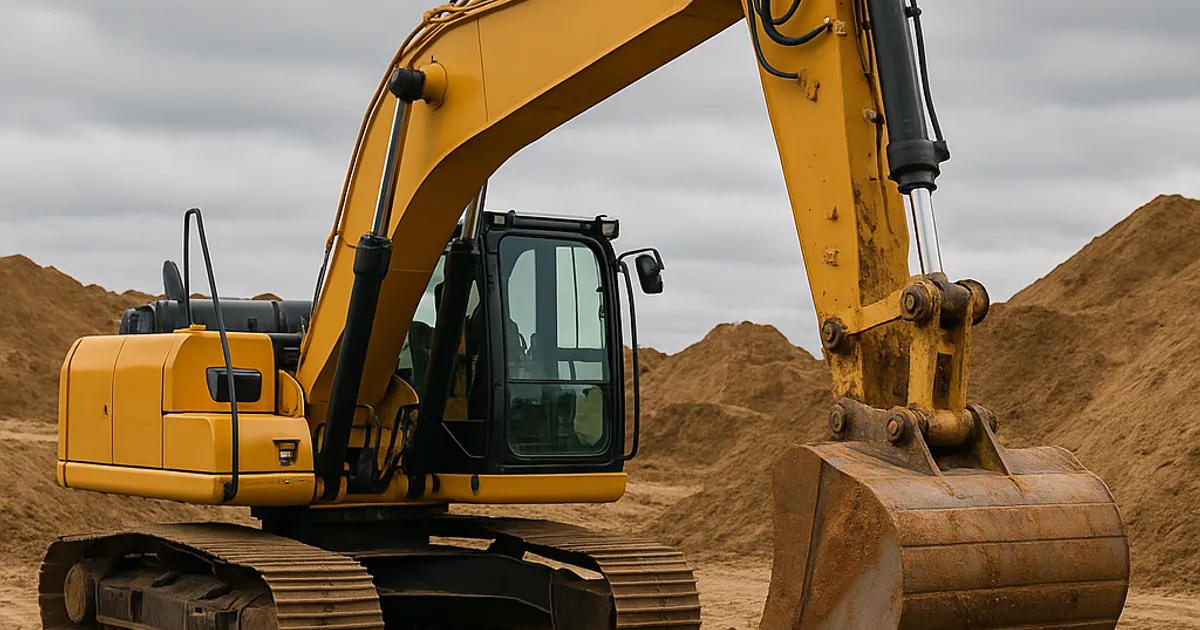
The excavator is the undisputed workhorse of the earthwork industry. Whether you're stripping topsoil from a residential lot, trenching utilities through urban bedrock, mining aggregate from a quarry, or managing massive cut-and-fill operations for a commercial development, the excavator you choose defines your productivity, your fuel budget, your maintenance overhead, and ultimately your profit margin.
According to the Association of Equipment Manufacturers (AEM), the North American construction equipment market shipped more than 25,000 hydraulic excavators in 2023 alone—a figure that underscores just how central this machine is to the industry. With so many manufacturers competing for your business, and with purchase prices ranging from $30,000 for a compact mini-excavator to well over $1,000,000 for a large mining-class machine, the stakes of making the wrong choice are enormous.
This guide cuts through the marketing noise and delivers a data-driven, real-world comparison of the most popular excavator brands in North America. We'll examine Caterpillar, Komatsu, John Deere, Volvo CE, Hitachi, Case, Liebherr, and Doosan/Develon across the metrics that matter most to earthwork contractors: digging performance, fuel efficiency, operator comfort, dealer support, technology integration, total cost of ownership, and resale value. By the end, you'll have a clear framework for selecting the machine—and the brand relationship—that will keep your dirt-moving business competitive for years to come.
Why Your Excavator Brand Choice Matters More Than You Think
Most contractors understand that buying a cheap excavator usually means spending more in the long run. But the brand decision goes far deeper than just build quality. Your excavator brand determines your access to parts, the caliber of technicians available in your region, the software ecosystem that manages your machine data, your financing options, and even your machine's residual value when it's time to trade or sell.
Consider this: a 2023 Equipment Watch analysis found that Caterpillar excavators retain approximately 52–58% of their original value after five years of typical use, while lesser-known brands may retain only 25–35%. On a $350,000 machine, that difference amounts to more than $80,000 in equity—enough to fund a year's worth of fuel and maintenance on a secondary unit.
Fuel costs are equally dramatic. The U.S. Department of Energy's Alternative Fuels Data Center estimates that a 20-ton excavator operating 8 hours per day, 250 days per year, consumes approximately 3,500–5,000 gallons of diesel annually. At $4.00 per gallon, that's $14,000–$20,000 per machine per year—meaning a 10% improvement in fuel efficiency saves $1,400–$2,000 annually, compounding significantly across a fleet.
Beyond the machine itself, the most successful earthwork contractors know that operational efficiency also comes from how well they manage their material supply chain. Platforms like DirtMatch help contractors connect with local dirt, rock, and aggregate sources, reducing haul distances and keeping expensive machines like excavators productive on-site rather than waiting for materials.
Understanding Excavator Size Classes Before Comparing Brands
Before diving into brand comparisons, it's essential to understand the size classifications that define how excavators are used in dirt-related operations. Different brands have different strengths at different weight classes.
Mini Excavators (Under 6 Metric Tons)
Mini-excavators (sometimes called compact excavators) are the fastest-growing segment of the market. These machines—typically 1.5 to 6 metric tons operating weight—are ideal for residential grading, landscaping, small utility trenching, and working in confined spaces where a full-size machine can't access. Major players include Kubota, Bobcat, Takeuchi, Yanmar, and all the big brands with compact product lines.
Mid-Size Excavators (6–30 Metric Tons)
This is the bread-and-butter class for most earthwork contractors. Machines in the 10–25 ton range are versatile enough for commercial site work, road construction, small quarry operations, and general cut-and-fill. All major brands compete vigorously here.
Large Excavators (30–90 Metric Tons)
Large excavators are deployed on heavy civil construction, pipeline work, large commercial developments, and aggregate mining operations. At this scale, Cat, Komatsu, Volvo, and Liebherr dominate the market.
Mining-Class Excavators (90+ Metric Tons)
For large-scale quarrying, mining, and major infrastructure projects, mining-class excavators from Caterpillar, Komatsu, Hitachi, and Liebherr represent the pinnacle of hydraulic excavation technology, with some models exceeding $2 million in purchase price.
Caterpillar (Cat): The Industry Benchmark
Caterpillar remains the most recognized excavator brand in North America, and for good reason. With over 95 years of history building earth-moving equipment, Cat has developed a product line—from the 300.9D mini to the massive 6090 FS mining excavator—that sets the performance and reliability standard other brands are measured against.
Performance and Technology
Cat's Next Generation (NG) excavator lineup, including the 320 NG, 323 NG, and 330 NG, represents a significant technological leap. These machines feature Cat's proprietary Smart Mode technology, which automatically adjusts engine speed and hydraulic pressure to match the task, delivering fuel savings of up to 25% compared to the previous generation. The integrated Grade with Advanced 2D system comes standard on NG models, allowing operators to achieve precise grading without a separate aftermarket solution.
The Cat 320 NG, one of the most popular mid-size excavators in the world, delivers approximately 148 net horsepower, a maximum dig depth of 22 feet, and a bucket breakout force of 36,750 lbf—numbers that hold up well against all competitors in its class.
Dealer Network and Support
Cat's dealer network is arguably its greatest competitive advantage. With over 170 dealer locations across North America and more than 2,400 worldwide, Cat dealers offer 24/7 parts availability, certified technician support, and robust equipment management through Cat's VisionLink telematics platform. The Cat Product Link system tracks machine health, location, idle time, and fuel consumption in real time, giving fleet managers actionable data.
Cost of Ownership
- Purchase Price (320 NG): $220,000–$270,000 new
- Average Fuel Consumption (320 NG): 4.0–5.5 gal/hr depending on application
- Recommended Service Interval: 500 hours (engine oil)
- 5-Year Resale Value Retention: 52–58%
Pros and Cons
Pros: Unmatched dealer network, best-in-class resale value, advanced technology integration, comprehensive parts availability, strong operator community and training resources.
Cons: Premium purchase price (typically 10–15% higher than equivalent competitors), some models have complex electronic systems that require dealer-level diagnostics for repairs.
Komatsu: Precision Engineering and Innovation
Komatsu is Cat's closest rival globally, and in many respects—particularly in technology integration and fuel efficiency—it has surpassed the American giant in specific categories. The Japanese manufacturer holds a significant market share in North America, particularly in the mid-size and large excavator segments.
Intelligent Machine Control (iMC)
Komatsu's most significant differentiator is its factory-integrated Intelligent Machine Control system, available across most of its PC series excavators. Unlike competitors who offer machine control as an aftermarket add-on costing $20,000–$50,000, Komatsu integrates 3D machine control directly from the factory on models like the PC210LCi-11, PC290LCi-11, and PC360LCi-11. This integration means the system works seamlessly with the machine's hydraulics and can actually stop the bucket from cutting below the target grade—a feature that virtually eliminates overexcavation.
For earthwork contractors doing grading-intensive work, this single feature can deliver ROI in months rather than years.
Performance Specifications (PC210LC-11)
- Operating Weight: 47,600 lbs (21.6 metric tons)
- Net Horsepower: 159 hp
- Maximum Dig Depth: 21 ft 10 in
- Bucket Capacity: 0.59–1.43 yd³
- Fuel Consumption: 3.8–5.2 gal/hr
- Purchase Price: $210,000–$255,000 new
KOMTRAX Telematics
Komatsu's KOMTRAX telematics system has been a standard feature since 2001—longer than any other major brand. The system monitors machine health, location, fuel levels, and operating hours, with automated alerts for maintenance needs. KOMTRAX data is accessible via web portal and mobile app, and Komatsu dealers use it proactively to schedule maintenance before failures occur.
Pros and Cons
Pros: Factory-integrated machine control saves $20,000–$50,000 vs. aftermarket systems, excellent fuel efficiency ratings, strong resale value (48–55% after 5 years), long-standing telematics platform.
Cons: Dealer network slightly smaller than Cat's in rural areas, some operators find the iMC system complex to configure initially, parts can sometimes require longer lead times in remote regions.
John Deere: The Contractor's Choice for Value and Support
John Deere's yellow-and-green excavators occupy a unique position in the market: they're trusted by contractors who prioritize dealer relationships, strong warranties, and competitive pricing without sacrificing performance. Deere's construction equipment division has invested heavily in its excavator lineup over the past decade, and the current P-Tier and X-Tier series represent a genuine step forward.
The P-Tier and X-Tier Lineup
Deere's P-Tier excavators (formerly the G-Series) focus on productivity and value, while the X-Tier machines incorporate premium technology including factory-integrated SmartGrade machine control on select models. The 210X P-Tier, for example, competes directly with the Cat 320 and Komatsu PC210 and delivers comparable digging performance at a purchase price typically 8–12% lower than the Cat equivalent.
Performance Specifications (210X P-Tier)
- Operating Weight: 47,700 lbs (21.6 metric tons)
- Net Horsepower: 156 hp
- Maximum Dig Depth: 22 ft 4 in
- Purchase Price: $195,000–$240,000 new
- 5-Year Resale Value: 45–52%
JDLink Telematics and SmartGrade
John Deere's JDLink system provides comprehensive machine monitoring and integrates with the John Deere Operations Center—a cloud-based fleet management platform that many contractors find more intuitive than competitors' offerings. The SmartGrade system on X-Tier models offers semi-automated grading assistance, though it requires dealer configuration and is not as deeply integrated as Komatsu's iMC.
Deere's dealer network is one of North America's largest, with over 1,500 locations (many shared with agricultural equipment dealers), giving contractors excellent parts access even in rural regions.
Pros and Cons
Pros: Competitive pricing, outstanding dealer network density, strong warranty programs (including PowerGard Protection Plan), intuitive telematics platform.
Cons: Resale values slightly below Cat and Komatsu, X-Tier machine control not as seamlessly integrated as Komatsu's iMC, some operators note that hydraulic feel differs from Cat/Komatsu (personal preference).
Volvo CE: Operator Comfort and Environmental Leadership
Swedish manufacturer Volvo Construction Equipment has carved out a distinct identity in the excavator market: world-class operator ergonomics, genuine environmental commitment, and excellent build quality. Volvo's EC series excavators are particularly popular in urban markets like the dirt exchange in San Francisco and dirt exchange in Seattle, where noise ordinances, emissions regulations, and tight job site access make Volvo's features especially valuable.
Operator Environment
Volvo consistently receives top marks from independent operator surveys for cab comfort. The EC220E and EC250E feature the most spacious cabs in their class, with fully adjustable heated air-suspension seats, low noise levels (under 70 dB at operator's ear), and a highly intuitive 10-inch touchscreen control panel. For operators spending 8–10 hours per day in the cab, these ergonomic advantages translate directly to productivity and reduced fatigue-related errors.
Eco Mode and Emissions Performance
All current Volvo EC series excavators meet Tier 4 Final emissions standards and feature Volvo's ECO mode, which reduces fuel consumption by up to 15% in applications that don't require maximum power. Volvo has also committed to fully electric and hybrid excavators, with its ECR25 Electric compact excavator already commercially available and a roadmap for larger electric models.
Performance Specifications (EC220E)
- Operating Weight: 51,200 lbs (23.2 metric tons)
- Net Horsepower: 168 hp
- Maximum Dig Depth: 21 ft 6 in
- Purchase Price: $215,000–$265,000 new
- 5-Year Resale Value: 44–51%
Pros and Cons
Pros: Best-in-class operator comfort, strong emissions performance, excellent build quality, growing electric/hybrid options, good performance in confined urban environments.
Cons: Dealer network smaller than Cat/Deere in rural America, resale value trails Cat and Komatsu, some proprietary hydraulic components require dealer-specific parts.
Hitachi: Built for Heavy Work and Long-Term Durability
Hitachi Construction Machinery holds a unique position in the North American market: its excavators are manufactured in a joint venture structure with John Deere (though the companies have been separating operations since 2021), and Hitachi machines are often found in quarry, mining, and heavy civil applications where raw durability matters most.
ZX Series Performance
Hitachi's Zaxis (ZX) series excavators are renowned for their undercarriage durability and hydraulic power. The ZX225USLC-6, a popular mid-size model, features a variable-speed engine management system called HIOS III (Hitachi Hydraulic Optimization System), which optimizes hydraulic flow to the attachment in real time. In high-duty-cycle applications like truck loading in aggregate operations, Hitachi machines consistently demonstrate longer cycle times.
Performance Specifications (ZX225USLC-6)
- Operating Weight: 51,035 lbs (23.1 metric tons)
- Net Horsepower: 162 hp
- Maximum Dig Depth: 22 ft
- Purchase Price: $205,000–$245,000 new
- 5-Year Resale Value: 42–50%
Pros and Cons
Pros: Exceptional undercarriage durability, strong performance in heavy-duty cycling applications, competitive pricing, proven hydraulic technology.
Cons: Dealer network transition post-Deere separation is still evolving, telematics platform (GlobalLink) less feature-rich than Cat VisionLink or Komatsu KOMTRAX, cab comfort ratings below Volvo and Cat.
Case Construction: Value-Focused Versatility
Case Construction Equipment, part of the CNH Industrial group, offers excavators that appeal to budget-conscious contractors who still demand professional-grade performance. The Case CX series competes primarily on price and versatility, often coming in $15,000–$30,000 below comparable Cat or Komatsu models.
CX Series Features
Case CX excavators feature the company's SmartFit attachment management system, which allows operators to store hydraulic flow and pressure settings for up to 30 different attachments—particularly valuable for contractors who regularly switch between buckets, thumbs, hydraulic breakers, and augers. The CX220D, Case's 20-ton entry, delivers solid dig depth and breakout force numbers at an accessible price point.
Performance Specifications (CX220D)
- Operating Weight: 48,500 lbs (22 metric tons)
- Net Horsepower: 160 hp
- Maximum Dig Depth: 20 ft 5 in
- Purchase Price: $185,000–$225,000 new
- 5-Year Resale Value: 38–46%
Pros and Cons
Pros: Competitive pricing, excellent attachment management system, decent dealer network through CNH Industrial, good warranty support.
Cons: Lower resale values, fewer technology integration options compared to Cat/Komatsu, less brand recognition can affect subcontractor perceptions on larger job sites.
Liebherr: European Precision for Demanding Applications
Liebherr excavators are less common on American job sites than the brands above, but they command intense loyalty from contractors who operate them. The German manufacturer is known for exceptional build quality, a powerful proprietary hydraulic system (Liebherr's Positive Control system), and outstanding performance in rocky, abrasive conditions—making them particularly valued in quarry and hard-rock excavation applications common in markets like dirt exchange in Denver and dirt exchange in Boulder.
R 920 Series Highlights
Liebherr's R 920 compact series and the larger R 938–R 960 models feature hydraulic systems designed to minimize energy losses, resulting in fuel efficiency numbers that often beat competitors in equivalent duty cycles. The R 938 Litronic, for example, consumes approximately 3.6–4.8 gal/hr in mixed-duty applications.
Pros and Cons
Pros: Superior build quality and longevity, excellent hydraulic efficiency, strong performance in abrasive/rocky conditions, premium resale value in specialized markets.
Cons: Limited North American dealer network, longer parts lead times in remote areas, higher initial purchase price, smaller operator community for training and support resources.
Find or Post Dirt, Rock & Aggregate
Join thousands of contractors using DirtMatch to buy, sell, and exchange earthwork materials.
Try DirtMatch FreeHead-to-Head Comparison Table: 20-Ton Class Excavators
The 20-ton class is the most competitive segment and the most common choice for general earthwork contractors. Here's how the major brands stack up:
| Brand / Model | Operating Weight | HP | Max Dig Depth | New Price Range | Fuel Use (gal/hr) | 5-Yr Resale % | Dealer Density (NA) |
|---|---|---|---|---|---|---|---|
| Cat 320 NG | 47,300 lbs | 148 hp | 22 ft | $220K–$270K | 4.0–5.5 | 52–58% | ★★★★★ |
| Komatsu PC210-11 | 47,600 lbs | 159 hp | 21 ft 10 in | $210K–$255K | 3.8–5.2 | 48–55% | ★★★★☆ |
| John Deere 210X | 47,700 lbs | 156 hp | 22 ft 4 in | $195K–$240K | 4.1–5.4 | 45–52% | ★★★★★ |
| Volvo EC220E | 51,200 lbs | 168 hp | 21 ft 6 in | $215K–$265K | 3.9–5.1 | 44–51% | ★★★☆☆ |
| Hitachi ZX225 | 51,035 lbs | 162 hp | 22 ft | $205K–$245K | 4.0–5.3 | 42–50% | ★★★☆☆ |
| Case CX220D | 48,500 lbs | 160 hp | 20 ft 5 in | $185K–$225K | 4.2–5.6 | 38–46% | ★★★☆☆ |
| Liebherr R 920 | 45,400 lbs | 156 hp | 20 ft 2 in | $210K–$260K | 3.6–4.8 | 47–54%* | ★★☆☆☆ |
*Liebherr resale varies significantly by region; values reflect specialized markets.
Technology Features Comparison: Machine Control and Telematics
Modern excavators are rolling technology platforms, and the software and sensor systems they run can be as important as raw horsepower and dig depth. Here's a focused look at technology differentiators:
Factory-Integrated Machine Control
Only Komatsu (iMC) and John Deere (SmartGrade on X-Tier) offer factory-integrated 3D machine control as a standard option. Cat's Grade with Advanced 2D is standard on NG models but 3D requires a Trimble or Topcon aftermarket system. Volvo, Hitachi, Case, and Liebherr all rely primarily on aftermarket machine control solutions.
Key insight: If you do significant finish grading work, Komatsu's iMC-equipped machines can save $25,000–$45,000 in aftermarket system costs and deliver better hydraulic integration than any bolt-on alternative.
Telematics Platform Comparison
| Brand | Platform | Free Subscription | Data Richness | Mobile App | Third-Party Integration |
|---|---|---|---|---|---|
| Cat | VisionLink | 3 years standard | ★★★★★ | Yes | API available |
| Komatsu | KOMTRAX | Lifetime | ★★★★☆ | Yes | Limited |
| John Deere | JDLink / Ops Center | 3 years standard | ★★★★☆ | Yes | API available |
| Volvo | CareTrack | 3 years standard | ★★★☆☆ | Yes | Limited |
| Hitachi | GlobalLink | 3 years standard | ★★★☆☆ | Yes | Limited |
| Case | SiteWatch | 3 years standard | ★★★☆☆ | Yes | Limited |
| Liebherr | LiDAT | 3 years standard | ★★★☆☆ | Limited | Limited |
Financing, Ownership Costs, and the Buy vs. Rent Decision
For earthwork contractors, the decision to buy, rent, or finance an excavator is as important as which brand to choose. Understanding total cost of ownership (TCO) is critical to making an economically sound decision.
Purchase Financing
Most major brands offer captive financing through their financial services arms:
- Cat Financial: Competitive rates, often 0% promotional financing on select models, flexible terms to 84 months
- Komatsu Financial: Strong promotional programs, particularly on iMC-equipped machines
- John Deere Financial: Robust program with aggressive rates for creditworthy customers
- Volvo Financial Services: Competitive for Volvo equipment, less flexible for mixed fleets
Typical interest rates for qualified contractors range from 4.9% to 7.5% in the current rate environment, with 60-month terms being most common. A $250,000 excavator at 6.5% over 60 months carries a monthly payment of approximately $4,870.
Rental Rates
For contractors who only need an excavator intermittently, rental is often more economical. According to data from the American Rental Association:
- Mini excavators (3–6 ton): $350–$650/day, $1,100–$2,000/week
- Mid-size (10–20 ton): $900–$1,800/day, $2,800–$5,500/week
- Large (30–50 ton): $2,500–$5,000/day, $8,000–$18,000/week
The TCO Framework
When evaluating true ownership cost over 5 years, include:
- Purchase price minus estimated residual value
- Financing interest paid
- Fuel costs (engine hours × fuel burn rate × diesel price)
- Scheduled maintenance (oil, filters, hydraulic fluid, undercarriage)
- Unscheduled repair costs (budget 5–8% of purchase price annually after year 3)
- Insurance and licensing
- Operator labor (not machine-specific, but factor in productivity differences)
For a Cat 320 NG at $250,000, a realistic 5-year TCO assuming 2,000 hours/year, $4.00 diesel, and average maintenance might total $420,000–$480,000 before residual recovery—highlighting why fuel efficiency and resale value matter so much.
Savvy contractors also understand that keeping their excavator productive—minimizing downtime waiting for materials—is just as important as the machine's performance specs. That's why many earthwork professionals use DirtMatch to coordinate material availability before mobilizing equipment, ensuring their excavators are working, not waiting.
Undercarriage: The Hidden Cost That Separates Brands
Undercarriage is the most expensive maintenance item on an excavator, typically accounting for 40–50% of total machine maintenance costs over its lifetime. In abrasive soil conditions—sandy soils, rocky terrain, decomposed granite—undercarriage wear is accelerated dramatically, and the quality difference between brands becomes starkly apparent.
Undercarriage Component Costs (20-Ton Class)
- Track chains: $8,000–$15,000 per side
- Sprockets: $600–$1,200 per side
- Track rollers (full set): $3,500–$7,000
- Idlers: $1,500–$3,000 per side
- Full undercarriage rebuild: $25,000–$55,000
Brands with the highest-rated undercarriage durability based on independent studies and contractor surveys:
- Hitachi – consistently rated #1 for undercarriage longevity in high-duty applications
- Komatsu – uses high-tensile steel and proprietary heat treatment on track components
- Caterpillar – Salt bath quenching on sprockets, sealed and lubricated track (SALT) systems available
- Liebherr – European-standard heavy construction in abrasive rock applications
Maintenance Best Practices (OSHA and Manufacturer Aligned)
The Occupational Safety and Health Administration (OSHA) requires regular inspection of excavator mechanical systems under 29 CFR 1926.602. Specifically:
- Daily pre-start inspection of undercarriage for damage, wear, and proper tension
- Track tension should be checked per manufacturer specification (typically 1.0–1.5 inch sag)
- Over-tensioned tracks accelerate sprocket and roller wear; under-tensioned tracks risk derailment
Emissions Regulations and Tier 4 Compliance
All excavators sold in the United States since 2015 must meet EPA Tier 4 Final emissions standards, which limit particulate matter (PM) and nitrogen oxide (NOx) emissions significantly compared to earlier tiers. Contractors operating in California must also comply with the California Air Resources Board (CARB) In-Use Off-Road Diesel Regulations, which have their own compliance timelines and requirements.
The Environmental Protection Agency's nonroad diesel regulations mandate that Tier 4 Final engines use diesel particulate filters (DPF) and selective catalytic reduction (SCR) systems. These systems require:
- Use of ultra-low sulfur diesel (ULSD) with maximum 15 ppm sulfur
- Diesel exhaust fluid (DEF) maintained at appropriate levels (typically 1 gallon DEF per 50 gallons diesel)
- Regular DPF regeneration cycles (active or passive depending on duty cycle)
Contractor tip: In California markets like dirt exchange in Los Angeles and dirt exchange in San Diego, contractors with pre-Tier 4 equipment may face mandatory repowering or fleet turnover requirements under CARB's fleet rules. Verify your compliance status at carb.ca.gov before operating in California.
From a brand perspective, Cat's ACERT technology and Komatsu's KCX hybrid hydraulic systems are generally considered the most refined Tier 4 solutions, with the fewest operator complaints about forced regen cycles interrupting productivity.
Brand-by-Brand: Best Applications for Dirt-Related Businesses
Different brands shine in different applications. Here's a practical guide to matching brand to application:
Residential and Light Commercial Earthwork
Best choices: John Deere (value, dealer support), Cat (resale, technology), Kubota/Bobcat (mini-excavator segment)
For small contractors doing residential grading, foundation excavation, and site prep, the priority should be dealer proximity, financing flexibility, and resale value when upgrading. John Deere's dense dealer network and competitive pricing make it an excellent choice for growing businesses in suburban markets.
Heavy Civil and Infrastructure
Best choices: Caterpillar, Komatsu, Volvo
On DOT and heavy civil projects, machine control integration, telematics compliance, and proven large-machine reliability become paramount. Komatsu's iMC system and Cat's Grade technology are particularly valued when working to ASTM D6938 or state DOT earthwork specifications that require precise lift thickness control.
Aggregate and Quarry Operations
Best choices: Hitachi, Komatsu, Liebherr, Cat (large class)
For truck-loading applications in aggregate pits and quarries, cycle time, undercarriage durability, and bucket capacity are the priority metrics. Hitachi's HIOS hydraulic optimization system delivers excellent cycle times in repetitive loading applications.
Urban Demolition and Site Work
Best choices: Volvo, Cat (reduced tail-swing models)
In urban environments where job site access is tight and noise/emissions are regulated, Volvo's quiet cabs, excellent visibility, and reduced-tail-swing models offer genuine advantages. Cat's 320E RR (reduced radius) is also highly regarded in urban applications.
Pipeline and Utility Work
Best choices: John Deere (long-arm configurations), Komatsu, Cat
For deep utility trenching, dig depth and stick reach are critical. John Deere's 210X and 310P with mass excavation arms offer extended reach configurations competitive with any manufacturer.
How to Choose the Right Excavator for Your Business: A Decision Framework
With the brand analysis complete, here's a practical decision framework for earthwork contractors:
Step 1: Define Your Primary Application
Before any other consideration, be honest about what work you do most. A machine optimized for truck loading in a quarry is a different animal from one optimized for finish grading on residential lots. Pick the primary use case first.
Step 2: Evaluate Dealer Support in Your Region
Call your three nearest dealers and ask: How many certified technicians do you have on staff? What's your average parts lead time for a 20-ton excavator? Do you offer mobile service? The answers will reveal dealer capability far more than sales materials.
Step 3: Run a 5-Year TCO Calculation
Build a simple spreadsheet using the TCO framework outlined earlier. Input realistic fuel prices, your expected annual hours, and honest maintenance estimates. The machine with the lowest purchase price often loses badly in 5-year TCO.
Step 4: Demo Multiple Brands in Your Conditions
Every major dealer will provide a demo machine. Run competitive demos on your actual job site with your actual soils and your actual operators. Pay attention to cycle time, fuel consumption, and operator fatigue at the end of a full shift.
Step 5: Negotiate Beyond the Sticker Price
The purchase price is negotiable, but so are: extended warranty terms, free scheduled maintenance packages, telematics subscription extensions, and attachment discounts. Experienced contractors routinely capture $15,000–$30,000 in total value through negotiation.
Step 6: Consider Your Material Supply Chain
The most productive excavator in the world still can't move material that isn't there. Earthwork contractors who use DirtMatch Pro to source and manage fill dirt, topsoil, and aggregate projects ensure that their equipment investment stays productive with a steady pipeline of work and materials, maximizing the return on their excavator investment.
Resale Value and the Used Market: What You Need to Know
The used excavator market is robust, with strong demand from contractors looking to expand fleets at lower capital cost. Understanding residual values helps you make smarter new-equipment decisions and maximize recovery when you sell.
Factors That Most Affect Used Excavator Value
- Hours: Under 5,000 hours is considered low; 8,000–12,000 hours is mid-range; 12,000+ hours requires careful inspection
- Telematics Records: Machines with complete telematics history command a 5–10% premium because buyers can verify claimed hours and operating conditions
- Maintenance Records: Complete dealer service records are worth $8,000–$15,000 in negotiating value
- Undercarriage Condition: Worn undercarriage can devalue a machine by $20,000–$40,000 depending on class
- Brand: Cat and Komatsu consistently achieve the highest prices at auction, per Equipment Watch and Ritchie Bros. auction data
Trusted Resale Channels
- Ritchie Bros. Auctioneers / IronPlanet: Largest heavy equipment auction platform globally
- MachineryTrader.com: Strong dealer-to-contractor marketplace
- IRONPLANET: Online inspected equipment with condition guarantees
- Brand Dealer Certified Pre-Owned Programs: Cat Certified Used, Komatsu Certified Plus—these carry inspected equipment with limited warranties and often provide the best value for buyers
Actionable Takeaways for Earthwork Contractors
After reviewing all brands and considerations, here are the most important action items for contractors making excavator decisions in 2024:
Don't buy on purchase price alone. A machine $20,000 cheaper that retains 10% less value after 5 years and burns 0.5 more gallons per hour costs you significantly more total.
Prioritize dealer support in your operating area. In remote regions, a slightly less-preferred brand with a nearby, well-staffed dealer is worth more than your preferred brand 200 miles away.
Factor in machine control costs. If precision grading is part of your work, Komatsu's factory iMC can make the brand the most economical choice even if its sticker price is higher.
Maintain telematics records meticulously. These records protect your machine's resale value and provide critical maintenance data. Never let a subscription lapse.
Match machine size to your typical project. The most common mistake is buying too large—a 30-ton machine doing work a 20-ton machine handles just fine burns 30–40% more fuel with no productivity gain.
Build your material supply chain alongside your equipment fleet. Getting started with DirtMatch allows earthwork contractors to build a reliable network of material sources and project opportunities, ensuring your excavator investment has consistent, profitable work to support it.
Conclusion: The Right Brand for Your Business
There is no single best excavator brand—there is only the best brand for your specific application, operating region, fleet strategy, and financial profile. Caterpillar delivers unmatched dealer support and resale value. Komatsu leads in factory-integrated technology. John Deere offers the best combination of value and dealer density. Volvo excels in urban environments and operator comfort. Hitachi and Liebherr serve heavy-duty and abrasive applications exceptionally well. Case provides entry-level value for price-sensitive buyers.
The contractors who build the most successful earthwork businesses don't just invest in great equipment—they invest in efficient operations end-to-end. That means precise machine selection, disciplined maintenance, smart financing, and a reliable supply chain for the materials their machines are moving. Connecting with a platform like DirtMatch ensures that your equipment investment is backed by a steady flow of matched projects and material sources, turning your excavator from a capital expense into a profit-generating asset.
The dirt business rewards preparation. Know your machines, know your market, and build the systems that keep your equipment—and your business—moving.