Why Your Liner Material Choice Defines Project Success
When a retention pond fails, the consequences ripple far beyond a muddy field. Contaminated groundwater, regulatory fines, structural collapses, and costly remediation can turn a profitable earthwork project into a financial disaster. The liner system sitting beneath that pond is the last line of defense between stored water and the surrounding soil and aquifer. Getting that choice right from the start is not optional.
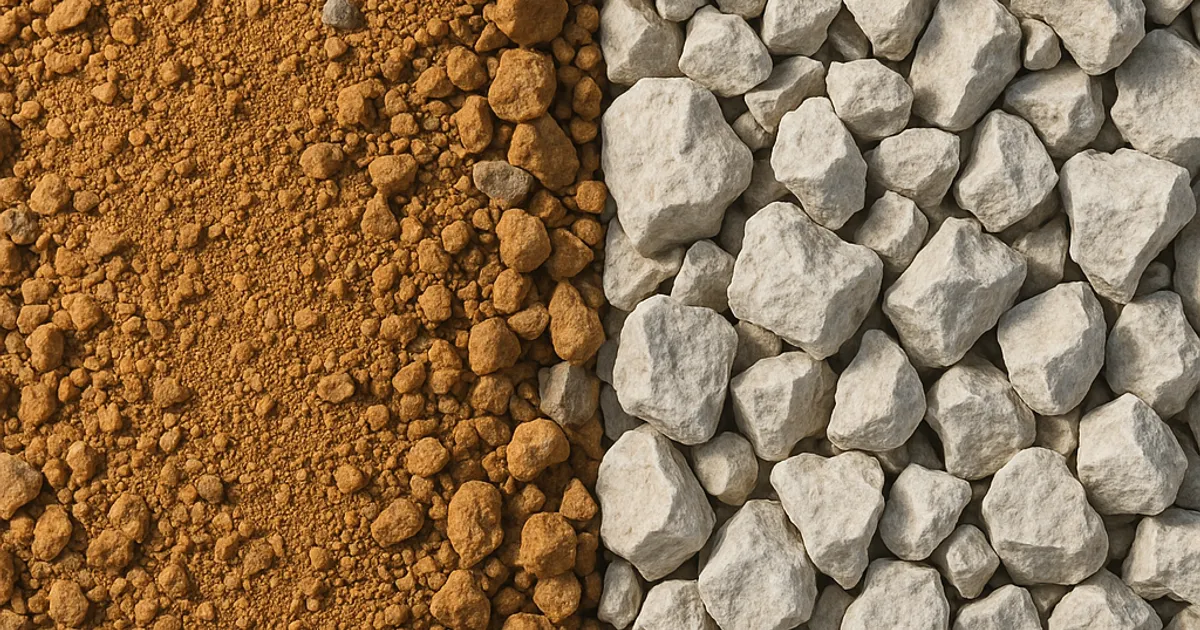
The two dominant natural liner materials in earthwork construction today are compacted clay and sodium bentonite. Both have been used for decades across agriculture, municipal water management, industrial impoundment, and stormwater infrastructure. Both are derived from the earth itself, making them broadly permittable and cost-competitive with synthetic alternatives. But they are fundamentally different materials with distinct installation requirements, performance profiles, and failure modes.
This article delivers a deeply researched, side-by-side comparison of bentonite versus clay as pond liner materials. We will cover hydraulic conductivity targets, compaction standards, cost per square foot, climate vulnerabilities, regulatory considerations, and real-world project scenarios. Whether you are planning a farm pond in rural Texas, a stormwater retention basin in a suburban subdivision, or an industrial waste impoundment in the Pacific Northwest, this guide gives you the technical foundation to make a confident, informed decision.
For earthwork contractors sourcing the right fill material for liner projects, DirtMatch connects you with verified local suppliers of both clay-rich soils and bentonite products, streamlining procurement and reducing hauling costs on projects of any scale.
What Is Compacted Clay and How Does It Work as a Liner?
Compacted clay liners (CCLs) are among the oldest engineered containment systems in human history. The basic principle is straightforward: fine-grained soils with high clay content, when properly compacted at the right moisture level, exhibit extremely low hydraulic conductivity. Water molecules struggle to migrate through the densely packed, flat clay platelets, creating an effective barrier.
Defining the Right Clay for Liner Work
Not all clay is created equal for liner applications. Engineers and geotechnical labs evaluate candidate soils using several key parameters.
Plasticity Index (PI): Liner-grade clay typically requires a PI between 15 and 40. Higher PI soils contain more active clay minerals and exhibit better self-sealing properties. Materials with PI below 10 are generally unsuitable as primary liner components.
Clay Content: The clay fraction (particles smaller than 0.002 mm) should ideally comprise at least 20 to 30 percent of the total soil mass. Soils dominated by silt rather than clay minerals may behave poorly under cyclic wetting and drying.
USCS Classification: Under the Unified Soil Classification System, liner-suitable soils typically fall into the CH (high plasticity clay), CL (low plasticity clay), or occasionally SC (clayey sand) categories. The ASTM International standard D2487 governs soil classification and is referenced in virtually every geotechnical specification.
Hydraulic Conductivity Target: The industry standard for compacted clay liners in most regulatory contexts is a saturated hydraulic conductivity (k) of 1 x 10^-7 cm/s or less. The EPA and many state environmental agencies require this benchmark for hazardous waste containment. Agricultural pond liners may accept k values up to 1 x 10^-6 cm/s depending on jurisdiction and application.
The Compaction Process for Clay Liners
Achieving target hydraulic conductivity in a compacted clay liner is entirely dependent on placement and compaction methodology. Simply dumping clay into a pond bottom and running a dozer over it will not produce a compliant liner. The process requires precision.
Lift Thickness: Clay is placed in lifts, typically 6 to 9 inches loose thickness, compacting down to approximately 4 to 6 inches. Overly thick lifts prevent adequate compaction at the bottom of each layer, creating permeable zones.
Moisture Content: Compaction must occur at or slightly wet of the optimum moisture content as determined by ASTM D698 (Standard Proctor) or ASTM D1557 (Modified Proctor). Compacting dry of optimum produces a stiff, brittle fabric that cracks upon drying. Compacting at 2 to 4 percent wet of optimum typically yields the lowest hydraulic conductivity values.
Compaction Equipment: Sheepsfoot or padfoot rollers are preferred for clay liner work because their protrusions knead and remold the soil, breaking up clods and promoting a homogeneous, low-permeability fabric. Smooth drum rollers are inadequate for this purpose in most clay liner applications.
Number of Passes: Specifications typically require 4 to 6 passes minimum per lift. Field density testing per ASTM D1556 or D6938 confirms that each lift achieves at least 95 percent of Standard Proctor maximum dry density.
Minimum Liner Thickness: Most state environmental regulations require a minimum compacted clay liner thickness of 2 feet for containment ponds. Some states, particularly those with active agricultural or mining industries, specify 3 feet for higher-risk applications.
What Is Bentonite and Why Is It Used in Liner Construction?
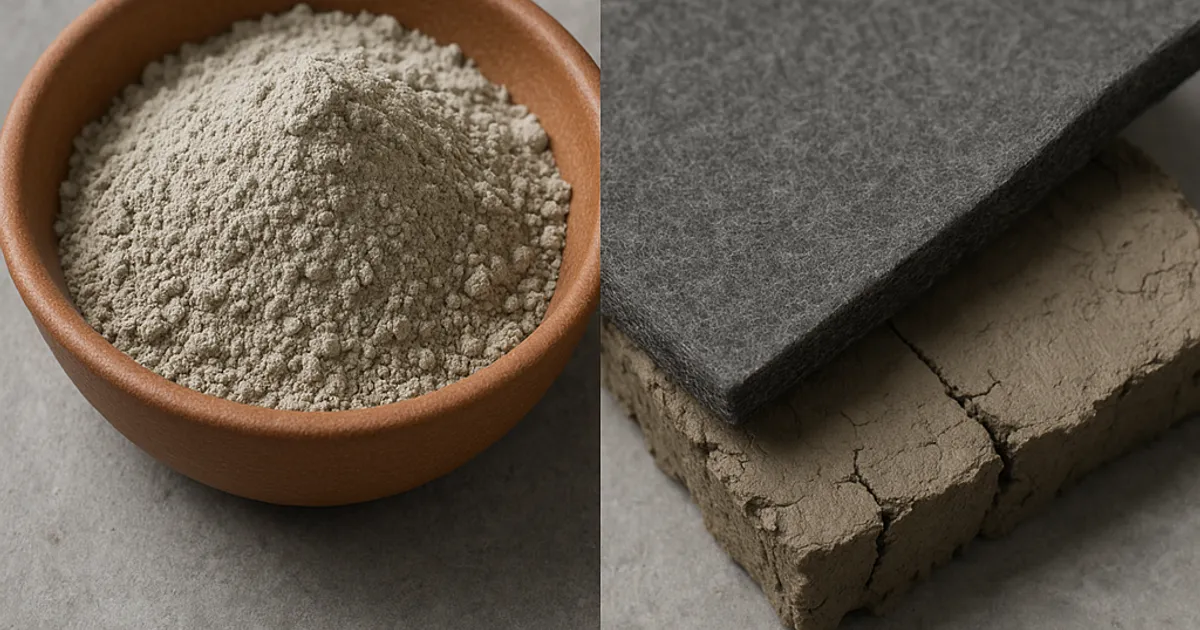
Bentonite is a naturally occurring clay mineral formed from the weathering of volcanic ash. The dominant mineral in most commercially used bentonite is sodium montmorillonite, a member of the smectite group. What makes bentonite extraordinary as a liner material is its almost unmatched capacity to absorb water and swell.
Sodium bentonite can absorb up to 15 times its dry weight in water, swelling to 10 to 20 times its original volume. This swelling generates enormous sealing pressure and produces hydraulic conductivity values in the range of 1 x 10^-9 to 1 x 10^-10 cm/s when properly hydrated, which is 10 to 1,000 times lower than a well-constructed compacted clay liner.
Forms of Bentonite Used in Liner Applications
Bentonite is not a single product. It is available in several forms, each suited to different installation methods and project conditions.
Granular or Powdered Bentonite (Surface Applied): The simplest application method involves spreading dry granular or powdered sodium bentonite over an existing soil surface at rates typically ranging from 1.0 to 2.0 pounds per square foot, then covering with a protective soil layer and compacting. This method is fast and cost-effective but requires careful moisture management during installation.
Soil-Bentonite Admixture: Bentonite is blended directly with on-site or imported soil, typically at rates of 2 to 8 percent by dry weight. The mixed material is then placed and compacted like a traditional CCL. This approach combines the permeability benefits of bentonite with the structural stability of native soils.
Geosynthetic Clay Liners (GCLs): GCLs are factory-manufactured panels consisting of a thin layer of bentonite (typically about 0.2 inches of dry bentonite powder) sandwiched between two geotextile layers and needle-punched together. GCLs are rolled out like carpet, overlapped at seams, and covered with a protective soil layer. They are widely used in landfill liner systems and are increasingly common in stormwater management applications.
Bentonite Slurry Walls: For vertical containment or trench cutoff wall applications, bentonite is mixed with water to form a slurry that is used both as excavation support and as the final barrier material, sometimes blended with soil or cement for added strength.
Why Bentonite Outperforms Clay on Hydraulic Conductivity Alone
The mineral structure of sodium montmorillonite is the reason bentonite performs so far beyond regular clay in terms of sealing capacity. Montmorillonite platelets are extraordinarily thin and have a high surface area relative to their mass. When water enters the interlayer spaces between platelets, the resulting swelling virtually eliminates macro-pore pathways that water could exploit. A properly hydrated bentonite layer is, for practical purposes, nearly impermeable to water.
Head-to-Head Comparison: Bentonite vs. Clay Liner Performance
The table below summarizes the core technical and practical differences between compacted clay liners and sodium bentonite-based systems.
| Attribute | Compacted Clay Liner (CCL) | Bentonite (Admix or GCL) |
|---|---|---|
| Hydraulic Conductivity | 1 x 10^-7 cm/s (typical) | 1 x 10^-9 to 10^-10 cm/s |
| Minimum Thickness (regulatory) | 24 to 36 inches compacted | 2 to 6 inches (admix); 0.2 in (GCL) |
| Plasticity Requirement | PI 15 to 40 | Works in most native soils |
| Installation Speed | Slow (multi-lift compaction) | Fast (surface apply or roll-out) |
| Material Cost per SF | $0.50 to $2.00 | $0.80 to $4.50 (GCL) |
| Installed Cost per SF | $2.00 to $6.00 | $3.00 to $9.00 (GCL) |
| Freeze-Thaw Resistance | Moderate (vulnerable when dry) | Good when hydrated; vulnerable dry |
| Desiccation Cracking Risk | High if liner dries out | Moderate (self-heals on rehydration) |
| Shrink-Swell with Salinity | Low | Very high (sodium sensitive) |
| Long-Term Performance | Proven 50-plus years | Proven 30-plus years (GCLs) |
| Regulatory Acceptance | Universal | Widely accepted; verify locally |
Cost Analysis: Bentonite vs. Clay Liner for Common Project Sizes
Cost is rarely the only decision driver in liner selection, but it is almost always a major one. The economics of bentonite versus clay shift considerably depending on whether suitable clay is available on-site, how far bentonite must be hauled, and what equipment the contractor already owns.
When On-Site Clay Is Available
If a project site contains adequate quantities of liner-grade clay, compacted clay liners are almost always the most economical choice. The clay is essentially free; the cost is in excavation, moisture conditioning, placement, compaction, and quality assurance testing. On projects where on-site clay volume is sufficient, CCL installed costs can drop below $1.50 per square foot for large surface areas.
This is where smart material sourcing makes a real difference. Earthwork contractors using DirtMatch can identify nearby projects generating surplus clay-rich excavation spoils, potentially acquiring liner-grade material at dramatically reduced cost compared to purchasing commercial fill.
When Clay Must Be Imported
Once clay must be hauled from an offsite borrow pit or commercial supplier, the economics shift. Hauling costs in 2026 average $12 to $22 per ton for distances of 10 to 30 miles, depending on fuel costs and regional market conditions. A 1-acre pond requiring a 2-foot compacted clay liner might consume 4,000 to 6,000 tons of clay-rich fill. At $15 per ton delivered, that is $60,000 to $90,000 in material cost alone before placement, compaction, or testing.
For the same 1-acre pond, a geosynthetic clay liner (GCL) might use roughly 50,000 square feet of panel material. At $2.50 per square foot installed, that comes to $125,000, which includes subgrade preparation, panel installation, and protective cover soil. The GCL is more expensive in this scenario but eliminates the need for large clay hauls and reduces installation time significantly.
Medium-Scale Project Cost Example (5-Acre Retention Pond)
Compacted Clay Liner Option:
- Clay material (imported): $180,000 to $270,000
- Placement and compaction labor: $85,000 to $120,000
- Quality assurance testing (density, permeability): $15,000 to $25,000
- Total estimated range: $280,000 to $415,000
Sodium Bentonite Admixture Option (4 percent by weight):
- Bentonite material: $90,000 to $140,000
- Native soil excavation and blending: $60,000 to $90,000
- Compaction and testing: $30,000 to $50,000
- Total estimated range: $180,000 to $280,000
GCL Option:
- GCL panels and installation: $220,000 to $360,000
- Subgrade preparation: $30,000 to $55,000
- Cover soil placement: $40,000 to $70,000
- Total estimated range: $290,000 to $485,000
These ranges reflect 2026 regional pricing and will vary based on location, site access, and contractor market conditions. Projects in high-cost urban markets like dirt exchange in San Francisco or dirt exchange in Los Angeles will typically run 25 to 40 percent above these baseline figures due to labor costs, permitting timelines, and trucking expenses.
Regulatory and Environmental Compliance for Liner Systems
Liner material selection does not occur in a regulatory vacuum. Federal, state, and local agencies impose specific requirements on liner systems depending on the type of water or waste being contained and the hydrogeologic sensitivity of the site.
Federal Framework
The EPA's NPDES stormwater program establishes baseline requirements for construction site stormwater management, including retention and detention ponds. The EPA Stormwater Construction program requires that sites disturbing one or more acres obtain coverage under a Construction General Permit and implement best management practices, which may include engineered liner systems for sediment basins.
For industrial impoundments and municipal solid waste facilities, EPA regulations under 40 CFR Part 258 (Subtitle D for non-hazardous solid waste) and 40 CFR Part 264 (Subtitle C for hazardous waste) specify minimum liner design requirements. Subtitle C facilities typically require composite liner systems combining a geomembrane with either a compacted clay liner or a GCL achieving k less than or equal to 1 x 10^-7 cm/s.
State Variability
State regulatory programs overlay and often exceed federal minimums. Texas Commission on Environmental Quality (TCEQ), California Regional Water Quality Control Boards, and Colorado's Water Quality Control Division each have distinct liner specification requirements. Before specifying any liner system, contractors must verify current state agency requirements.
Some states have pre-approved bentonite admixture specifications that streamline permitting. Others require full third-party verification testing of bentonite liner hydraulic conductivity using ASTM D5084 flexible wall permeameter tests before a facility can be authorized to accept waste or water.
Army Corps of Engineers Considerations
Pond construction in or adjacent to jurisdictional wetlands requires Section 404 permits from the Army Corps of Engineers. The choice of liner material can influence permit conditions, particularly if construction involves placement of fill in wetland areas.
Find or Post Dirt, Rock & Aggregate
Join thousands of contractors using DirtMatch to buy, sell, and exchange earthwork materials.
Try DirtMatch FreeFailure Modes: Understanding the Risks of Each Material
Every liner system fails eventually. Understanding the specific failure mechanisms of compacted clay and bentonite helps engineers and contractors design monitoring programs, select protective cover systems, and make informed decisions about which material's failure mode is most acceptable for a given application.
Compacted Clay Liner Failure Modes
Desiccation Cracking: The most common failure mode for CCLs in arid and semi-arid climates. When a clay liner dries out, it shrinks and cracks. Macro-cracks can create preferential flow paths with hydraulic conductivities several orders of magnitude higher than the intact liner. Protection against desiccation includes maintaining a minimum water depth, installing a protective soil cover, or using geomembranes as secondary protection.
Freeze-Thaw Degradation: Repeated freeze-thaw cycles disrupt the compacted fabric of clay liners, increasing porosity and hydraulic conductivity. Studies have documented hydraulic conductivity increases of one to two orders of magnitude in CCLs subjected to multiple freeze-thaw cycles without protective cover. This is a critical concern for projects in northern climates like dirt exchange in Denver or dirt exchange in Boston.
Root Penetration: Vegetation roots seeking moisture will penetrate clay liner systems over time, especially in shallower agricultural ponds. Root channels create direct conduits for seepage.
Construction Defects: Inadequate compaction, excessive lift thickness, insufficient moisture conditioning, and failure to scarify lift surfaces between placements are the most common construction-phase defects. These produce zones of elevated permeability that are difficult to detect without a comprehensive quality assurance program.
Bentonite Liner Failure Modes
Chemical Incompatibility: Sodium bentonite's extraordinary swelling capacity depends on sodium ions in the interlayer space. When exposed to high-concentration salt solutions, calcium, magnesium, or other divalent cations replace sodium through cation exchange, converting the bentonite to a calcium form with far less swelling capacity and hydraulic conductivity as much as 10 to 100 times higher. Leachate ponds, brine storage, and agricultural ponds receiving high-mineral irrigation return flows require careful evaluation.
Incomplete Hydration: Bentonite must hydrate with relatively clean water to achieve its design permeability. If bentonite is exposed to high-concentration chemicals before it has fully hydrated with water, the swelling reaction is compromised. Installation sequencing and subgrade moisture conditions are critical.
Panel Overlap and Seam Integrity (GCLs): GCL seams are overlapped, not welded. Inadequate overlap, installation on steep slopes, or differential settlement can open seam gaps. Industry practice typically requires a minimum 12-inch overlap for GCL seams.
Desiccation and Re-Wetting Cycles: Unlike CCLs, properly hydrated GCLs and bentonite admixture liners exhibit significant self-healing capacity on re-wetting. However, extreme desiccation that causes the bentonite to shrink away from adjacent soil particles can compromise this self-healing ability.
Site Investigation and Material Testing Requirements
Proper site investigation is not an optional step for liner system design. Cutting corners on subsurface investigation and material characterization is one of the primary causes of liner failures and cost overruns in earthwork projects.
Geotechnical Investigation for On-Site Clay Assessment
Before specifying a compacted clay liner using on-site material, the geotechnical investigation must include:
- Grain size analysis per ASTM D422 to confirm clay fraction
- Atterberg limits testing per ASTM D4318 to determine plasticity index and liquid limit
- Standard Proctor compaction testing per ASTM D698 to establish target density and optimum moisture content
- Hydraulic conductivity testing per ASTM D5084 on specimens compacted to field conditions
- Chemical analysis to identify potential compatibility issues with leachate or stored water
A minimum of 3 to 5 test borings or test pits per acre of proposed liner area is a common starting point, with additional testing for variable soil conditions.
Bentonite Compatibility Testing
For bentonite applications, the key additional test is chemical compatibility. The hydraulic conductivity of bentonite specimens should be measured using the actual liquid to be contained, not just clean water. This compatibility testing can take 4 to 12 weeks in a laboratory and is a prerequisite for proper liner design in chemical storage, leachate management, or industrial applications.
The USDA Web Soil Survey provides a valuable starting point for understanding regional soil types and clay mineral distribution, helping engineers and contractors quickly assess whether liner-grade clay may be available locally before committing to site investigation costs.
Climate and Regional Considerations for Liner Selection
Liner material performance is deeply influenced by climate. A liner system that performs excellently in the Pacific Northwest may fail prematurely in West Texas. Understanding regional climate drivers allows contractors and engineers to select the most durable, cost-effective system for local conditions.
Arid and Semi-Arid Climates
In dry climates, desiccation is the dominant threat to both clay and bentonite liners. However, GCLs have demonstrated better desiccation resistance than CCLs when covered with adequate soil, because the geotextile layers help retain moisture within the bentonite layer. For farm ponds in the Southwest that are seasonally dewatered, GCLs or bentonite admixture systems with a minimum 12-inch protective cover may outperform uncovered CCLs over a 20-year design life.
Cold and Northern Climates
Freeze-thaw vulnerability favors bentonite-based systems in northern climates when liners are protected from direct freezing. The self-healing capacity of bentonite is a significant advantage when minor freeze damage occurs. CCLs in northern climates require additional thickness or protective measures to prevent frost penetration reaching the liner zone.
High-Rainfall Humid Climates
In humid climates with consistent rainfall, both liner types perform well. The key concern shifts to subgrade stability and erosion protection of the liner surface. CCLs in humid climates with stable pond water levels often perform for 30 to 50 years with minimal maintenance.
Coastal and High-Salinity Environments
Sodium bentonite is poorly suited for liner applications where the stored water or influent soil pore water contains high concentrations of divalent cations or salts. Coastal projects, tidal wetland mitigation banks, and facilities receiving high-salinity industrial waters should default to compacted clay liners or synthetic geomembrane systems unless detailed compatibility testing confirms bentonite performance is acceptable.
Construction Best Practices for Both Liner Systems
Regardless of material choice, liner construction quality depends on attention to detail, experienced field personnel, and a robust quality assurance and quality control (QA/QC) program. The following practices apply to both CCLs and bentonite-based systems.
Subgrade Preparation
The subgrade beneath any liner system must be uniform, free of sharp objects, and compacted to a stable bearing capacity. Organic matter, tree stumps, and debris must be removed. Low spots and ruts must be filled and compacted. For GCLs, the subgrade surface should be smooth enough that panels lie flat without bridging over depressions.
Moisture Management During Construction
Both clay and bentonite liners are moisture-sensitive during installation. Clay must be conditioned to within 2 percent of optimum moisture before compaction. Bentonite surface applications must be protected from premature hydration by rainfall before the cover soil is placed. Construction sequencing must account for weather windows.
Quality Assurance Testing Frequency
A minimum QA/QC testing frequency for CCLs typically includes one nuclear density gauge reading per 500 square feet per lift, with laboratory verification tests at one per 5,000 square feet. For bentonite admixture liners, blend uniformity sampling and hydraulic conductivity testing of field specimens should be conducted at similar frequencies.
Documentation and Record Keeping
Regulatory agencies increasingly require comprehensive as-built documentation for liner systems, including daily field reports, laboratory test results, and photographic records of each lift. Maintaining organized, complete records protects contractors and project owners in the event of future regulatory audits or legal disputes.
When to Choose Bentonite and When to Choose Clay
With all the technical information in hand, the practical question remains: which material should you specify for your project? The following decision framework summarizes the key selection drivers.
Choose Compacted Clay When:
- Liner-grade clay is available on-site or from a nearby low-cost borrow source
- The project is large (10 or more acres) and clay supply is abundant
- The stored liquid has high salinity, divalent ion concentration, or unknown chemistry
- Long design life (30 to 50 years or more) is a priority and maintenance access is reliable
- Regulatory requirements specifically mandate a compacted clay liner of specified thickness
- Project is in a humid climate with stable water levels
Choose Bentonite When:
- No suitable on-site clay is available and hauling costs would be prohibitive
- Project schedule is compressed and multi-lift compaction is not feasible
- The stored liquid is clean water, stormwater, or low-ionic-strength leachate
- Site slope geometry makes compaction operations difficult or unsafe
- Self-healing capability is valued (seasonal pond draw-down cycles)
- Regulatory requirements allow GCL or admixture liner as a standalone system
- Project is a GCL retrofit of an existing failing liner
Consider a Composite System When:
For the highest-stakes applications, engineers often specify composite liner systems combining a geomembrane (HDPE or LLDPE) over either a CCL or a GCL. Composite systems provide redundancy and dramatically reduce leakage rates compared to either material alone. Landfill cells, hazardous waste surface impoundments, and critical water supply reservoirs typically warrant composite liner design despite higher initial cost.
For contractors navigating complex liner material sourcing across multiple project types, DirtMatch Pro provides enhanced tools for locating verified suppliers of liner-grade clay, bentonite products, and protective cover materials across regional markets, helping project teams manage procurement logistics from a single platform.
Finding and Sourcing Liner Materials Through DirtMatch
One of the most underappreciated challenges in liner construction is material procurement logistics. Liner-grade clay is not universally available, and sodium bentonite is produced primarily in Wyoming and Montana, requiring hauling to most project locations in the continental United States. Bentonite haul distances of 500 to 1,500 miles are common, making freight a dominant cost component.
On the clay side, many metropolitan earthwork projects generate substantial quantities of clay-rich excavation spoils from basement excavations, underground utility corridors, and transit tunnel projects. These materials are often disposed of as waste when they could serve as valuable liner-grade fill for nearby pond projects, provided they meet the required soil classification and hydraulic conductivity criteria.
DirtMatch was built to solve exactly this kind of supply-demand inefficiency. Contractors looking for liner-grade clay can browse available surplus material from nearby excavation projects, filter by soil type and material quantity, and connect directly with the hauling contractor to negotiate terms. Projects in the Mountain West, where bentonite is more locally abundant, can similarly use DirtMatch to source bentonite suppliers and manage delivery logistics. This kind of real-time material matching reduces procurement time and hauling costs on liner projects of every scale.
For new users, getting started with DirtMatch takes less than ten minutes and immediately opens access to regional material listings, project postings, and contractor connections tailored to earthwork and excavation professionals.
Summary: Balancing Performance, Cost, and Practical Realities
The bentonite versus clay liner debate does not have a single universal answer. What it has is a structured framework for making the right choice based on your specific project conditions.
Compacted clay liners offer unmatched long-term durability when suitable material is available locally, and they provide chemical resistance that bentonite cannot match in high-salinity or chemically aggressive environments. Bentonite-based systems, whether surface-applied, blended as admixture, or deployed as geosynthetic clay liner panels, offer superior hydraulic performance, faster installation, and valuable self-healing properties at the cost of chemical vulnerability.
The best liner projects in 2026 start with a thorough geotechnical investigation, involve a licensed geotechnical engineer in the design process, use verified material testing throughout construction, and maintain comprehensive QA/QC documentation. They also leverage modern procurement tools to source materials efficiently, because the difference between a $200,000 and a $400,000 liner budget on the same pond often comes down to how smartly liner material is sourced and how close that source is to the project site.
Whether your project calls for thousands of tons of imported clay fill or premium GCL panels from a regional distributor, connecting with the right material suppliers early in the design process is as important as any engineering decision you will make.