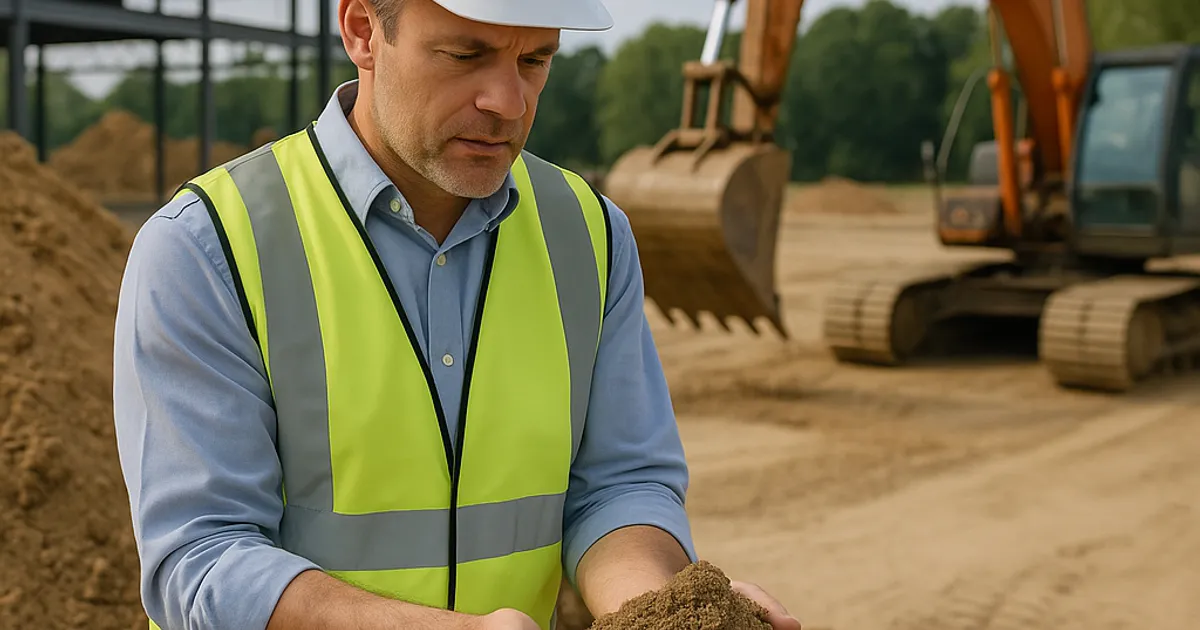
Winning a single grading job from a home builder feels great. Winning that builder's next twenty subdivisions feels like a business. The difference between dirt subcontractors who bounce from bid to bid and those who have their equipment scheduled six months out almost always comes down to relationship strategy, not just price. Home builders are creatures of habit. When they find a reliable dirt sub who performs, communicates, and shows up on schedule, they hold on tight.
This guide is written specifically for earthwork and grading contractors who want to move beyond one-off residential projects and build the kind of long-term home builder relationships that generate predictable, profitable work year after year. We will cover how home builders think, what they actually want from their dirt subs, how to price and perform for repeat business, and the operational habits that keep your name at the top of their call list.
Understanding How Home Builders Think About Their Dirt Subs
To consistently win repeat work, you first need to understand the world your clients live in. Home builders operate on razor-thin schedules driven by permit timelines, model home openings, interest rate lock expirations for buyers, and construction loan draw deadlines. A single delayed lot can cascade into six-figure costs for a builder when you factor in carry costs, buyer walk-offs, and extended financing.
According to the National Association of Home Builders, the average single-family home takes roughly eight to nine months to complete from permit to close in 2026, and site work represents one of the earliest and most schedule-sensitive phases. That means your performance as a dirt sub directly shapes whether a builder's entire production timeline holds together.
Builders categorize their subcontractors into two mental buckets: reliable partners and vendors. Vendors get called when a preferred sub is unavailable. Partners get called first, given schedule priority, and are brought into preconstruction conversations before bids even go out. Your goal is to be a partner.
The key insight here is that builders are not primarily buying the cheapest grade. They are buying certainty. Certainty that the lot will be ready when the framing crew shows up. Certainty that storm drain rough-in grades will pass inspection the first time. Certainty that you will answer the phone at 7 AM when the soil engineer flags a compaction issue. Price matters, but schedule reliability and communication often matter more, especially for production builders running 50 or more closings per year.
What Production Builders Value Most
Large production builders who run multiple subdivisions simultaneously have a different set of priorities than small custom home builders. Production builders value:
- Scalability: Can you handle five lots this week and fifteen next month without quality falling off?
- Crew consistency: Do the same operators show up so site supers recognize familiar faces?
- Documentation: Do you provide compaction test logs, cut and fill summaries, and as-built grade certifications without being asked?
- Billing accuracy: Are your invoices clean, itemized, and submitted on time so their accounting team can process draws without back-and-forth?
Custom and semi-custom builders care about those things too, but they also place heavy emphasis on flexibility, problem-solving during unusual site conditions, and your ability to communicate directly with their architects and civil engineers.
Building Your Reputation Before You Even Bid
Most dirt subs treat the bid as the beginning of the relationship. Smart operators start building their reputation before a single RFQ goes out. The residential construction world in any given metro area is smaller than you think. Builder project managers, site superintendents, and land development directors all talk to each other at NAHB chapter meetings, permitting offices, and on the golf course.
Start by mapping the active builders in your target geography. In high-growth metros like Denver and the greater Southwest, production builders are running dozens of active subdivisions at any given time. If you are operating in those markets, platforms like DirtMatch can help you identify active earthwork projects in your region and connect with GCs who need reliable dirt subs for subdivision grading work.
Strategies for Getting on the Radar
Attend local home builder association events. Most regions have active NAHB chapters that host quarterly meetings, award dinners, and trade shows. Sponsoring a lunch or having a table at a trade mixer costs a few hundred dollars and puts you face-to-face with the land development managers who control subcontractor selection.
Partner with civil engineering firms. Civil engineers design the grading and drainage plans for nearly every new subdivision. When they see a grading contractor who executes their plans accurately, grades to design intent rather than close-enough approximations, and catches errors before they become change orders, they start recommending that contractor to their builder clients. A warm referral from a civil engineer carries enormous weight.
Visit job sites strategically. If a builder is actively grading a subdivision near your territory, drive by and introduce yourself to the site superintendent. Bring a hat or a cooler of drinks for the crew. Keep it low-key, but make a personal connection. Supers have significant influence over who gets called for the next phase or the next phase one opening.
Deliver a capabilities package. Create a one-page capabilities summary that includes your equipment list, crew size, bonding capacity, insurance certificates, and two or three references from past projects. Include a project photo sheet with before and after shots of residential grading work. This does not need to be a glossy brochure; a clean PDF you can email in thirty seconds is enough.
Pricing for Repeat Business Without Leaving Money on the Table
This is where a lot of earthwork contractors get the strategy backwards. They assume the path to repeat business is being the cheapest bid every time. That is a race to the bottom that erodes margins and attracts the kind of builders who will drop you the moment someone bids a nickel less per cubic yard.
The better approach is pricing that reflects real value while leaving room for a builder loyalty relationship to develop naturally.
How to Structure Your Bids for Long-Term Relationships
Break out your costs transparently. Builders respect bids that clearly show mobilization, cut and fill volumes, haul distances, import or export unit pricing, and allowances for unsuitable soil. Transparent pricing builds trust and makes contract negotiations go faster. It also positions you as a professional, not a black-box vendor.
Offer a preferred partner rate. If you are bidding a builder's fourth or fifth project, propose a standing unit price agreement with guaranteed pricing for a set period, typically six to twelve months. This saves both parties time, locks in your workload, and gives the builder budget certainty. Most production builders will happily trade a slight premium for the elimination of the bid process overhead.
Include a schedule guarantee with defined assumptions. Spell out what your pricing assumes in terms of soil conditions, haul distances, and site access. Then commit to a production rate in cubic yards per day under those conditions. This protects you from scope creep while demonstrating confidence in your operations.
Build in a modest loyalty credit. Consider offering a 2 to 3 percent volume discount when a builder commits to three or more lots within a subdivision, or a tiered pricing structure where the unit rate drops slightly as total project volume increases. This creates a financial incentive for the builder to consolidate their earthwork with you rather than splitting it among multiple subs.
Understanding the True Cost of Losing a Repeat Client
The cost of bidding and winning a new client from scratch versus retaining an existing home builder relationship is significant. When you factor in the time spent on bid prep, site visits, insurance certificate coordination, new subcontract negotiations, and the inevitable learning curve on a new builder's documentation requirements, acquiring a new client can cost two to four times more in overhead than simply keeping a satisfied one. Price your work accordingly.
Performing at a Level That Earns the Next Call
Every job is an audition for the next one. This sounds obvious, but the specific performance standards that impress home builders are worth spelling out in detail, because they are not always what you would expect.
Schedule Adherence Is Non-Negotiable
If you committed to completing lot grading by a Thursday, the lot better be graded by Thursday. If weather or unexpected soil conditions push you back, the builder needs to know Wednesday morning, not Friday afternoon. Proactive communication about schedule changes is the single most important differentiator between dirt subs who get repeat calls and those who do not.
Set up a simple daily text or email update system for your superintendent to send the builder's site super every afternoon. Even a three-line message saying "Lots 14 and 15 completed final grade, Lot 16 rough grade 70% done, on track for Thursday finish" costs you nothing and builds an enormous amount of confidence over time.
Quality of Grade Matters More Than You Think
Builders who have been burned by sloppy grading remember it for years. A lot that drains toward the foundation because finish grades were done carelessly creates warranty callbacks, buyer complaints, and potential litigation. Take the time to verify your grades with a laser or GPS rover before you pull off a lot. Leave a copy of your final grade verification with the site super.
For subdivisions where compaction testing is required by the soils engineer, make sure your compaction numbers are documented and filed promptly. Builders who have to chase their dirt sub for compaction logs eventually stop calling that sub. If you are working in soil conditions that require specific testing protocols, referencing standards from ASTM International for compaction testing (D698 for standard Proctor, D1557 for modified Proctor) demonstrates technical credibility to builders and their engineers.
Cleanliness and Site Professionalism
Leave the site better than you found it. That means tracking pads on exit routes, sweeping streets when you track mud onto public roads, and picking up any debris your crew generates. This seems minor but it matters enormously to builders who are trying to maintain relationships with city inspectors, neighbors, and HOA boards. A dirt sub who creates neighbor complaints becomes a liability.
Building the Relationship Beyond the Job Site
The strongest home builder relationships are not built exclusively on the job site. They are built through consistent personal contact, mutual respect, and the kind of small gestures that remind a builder you see them as a partner, not just a check.
The Power of Regular Check-Ins
Do not wait for the next bid opportunity to contact your best builder clients. Reach out every four to six weeks with something of value: a heads-up about material cost trends, a note about a new equipment capability you have added, or simply a quick call to ask how their pipeline looks for the next quarter. These touchpoints keep your name front of mind and often surface work before it goes to bid.
Solve Problems They Did Not Know They Had
One of the most powerful things you can do to cement a repeat relationship is to identify and solve a problem the builder did not realize existed. If you notice during grading that a swale design will likely create ponding issues during heavy rain events, flag it before you execute the plan. Offer a solution. A builder who discovers you saved them a drainage warranty claim will remember that moment for years.
This kind of proactive problem-solving is especially valuable when dealing with complex soil conditions, fill settlement concerns, or sites that have environmental sensitivities. Subcontractors who bring solutions rather than just problems are rare and deeply valued.
Invite Them to See Your Operation
If you run a yard where you manage stockpiles or a transfer station where you process excess fill, invite your best builder clients for a tour. Showing them how you manage material, track loads, and maintain equipment visibility creates confidence in your operation. It also differentiates you from competitors who are essentially invisible between job starts.
For contractors who manage excess dirt and fill material across multiple projects, tools like DirtMatch make it easy to match surplus material from one builder's site with another project's fill needs, reducing disposal costs and creating additional value you can pass along to your builder relationships.
Find or Post Dirt, Rock & Aggregate
Join thousands of contractors using DirtMatch to buy, sell, and exchange earthwork materials.
Try DirtMatch FreeContracts, Insurance, and Documentation That Builders Trust
Even the best personal relationship will not save you if your back-office operations create problems for the builder's legal and finance teams. Getting your paperwork right is a prerequisite for repeat work at scale.
What Your Subcontract Should Cover
A solid earthwork subcontract for residential work should include:
- Clear scope of work with reference to the civil grading plan by sheet number and revision date
- Unit pricing schedule with defined pay items (cut, fill, haul off, import, rough grade, finish grade, etc.)
- Schedule milestones with defined completion criteria
- Soil condition allowances and change order triggers for unsuitable material
- Insurance requirements matching the builder's master subcontract agreement
- Lien waiver requirements and payment terms
- Dispute resolution process
Do not use a generic one-page contract for residential earthwork. Invest in a contract template reviewed by a construction attorney familiar with your state's lien laws and subcontractor protection statutes.
Insurance Requirements for Residential Earthwork
Most production home builders require their dirt subs to carry commercial general liability with limits of at least $1 million per occurrence and $2 million aggregate, plus auto liability covering your equipment haul trucks, workers compensation, and umbrella coverage. Some larger builders are now requiring $5 million umbrella policies.
Make sure your certificates of insurance are current, that the builder is listed as an additional insured, and that your agent can turn around updated certs within 24 hours when a builder's procurement team requests them. Slow certificate turnaround is a surprisingly common reason builders drop subcontractors from their approved lists.
Billing and Lien Waiver Discipline
Submit your invoices on the builder's billing cycle, not whenever it is convenient for you. Most production builders run weekly or biweekly pay applications with conditional lien waivers required at submission. If your billing is late or your lien waivers are missing, your invoice goes to the bottom of the stack and your cash flow suffers.
Create a simple billing calendar that tracks pay application deadlines for each builder you work with. This small discipline pays significant dividends in faster payment and smoother relationships with the builder's accounting team.
Scaling Your Capacity to Handle More Builder Volume
One of the most common ways dirt subs lose repeat builder business is by winning more work than they can actually deliver. A builder who gives you three simultaneous subdivisions and then watches your quality slip and schedules slide will consolidate back to a single project and start quietly sourcing alternatives. Growing your capacity to match your relationship growth is critical.
Building a Reliable Equipment Base
For residential subdivision grading, the core equipment package typically includes a motor grader for finish work, one or two track dozers for cut and fill operations, a compactor, water truck, and a fleet of haul trucks or a transfer trailer operation. The specific mix depends on your typical lot sizes and production volumes.
Invest in GPS grade control technology if you have not already. Builders and their civil engineers increasingly expect machine control as a standard capability, not a premium option. The accuracy and documentation benefits of GPS grading also reduce re-work and compaction test failures, which directly protects your margin.
Building a Reliable Labor Base
Equipment is easier to acquire than good operators. Invest in your people. Offer competitive wages, clear advancement paths, and safety training that goes beyond the minimum required. Operators who feel valued and well-trained stay longer, perform better, and represent your company professionally on job sites where the builder's superintendent is watching.
Managing Multiple Builder Relationships Simultaneously
As you grow your home builder portfolio, you will need systems to manage multiple relationships without dropping the ball on any of them. A simple CRM tool, even a well-maintained spreadsheet, can track each builder's pipeline, upcoming bid opportunities, key contacts, payment history, and outstanding issues. Treat your builder relationships with the same systematic attention you give your equipment maintenance schedule.
Using Technology to Stay Ahead of Competitors
The earthwork contractors winning the most repeat residential work in 2026 are not necessarily the ones with the most iron. They are the ones who use technology to communicate faster, document better, and manage material more efficiently than their competitors.
Digital Project Management Tools
Simple apps like Procore, Buildertrend, or even a well-structured Google Drive setup allow you to share grade verification documents, compaction logs, daily progress photos, and schedule updates with builders in real time. When a builder's site super can pull up today's grading progress photos without calling your office, you become dramatically easier to work with.
GPS and Drone Technology
Drone-based topographic surveys and GPS rover verification have become standard practice on quality residential earthwork projects. Offering your builder clients a pre-grade drone topo and a post-grade verification survey at no additional cost creates a documentation trail that protects everyone and demonstrates a level of professionalism that most competitors cannot match.
Dirt and Material Management Platforms
Managing excess cut material, sourcing clean fill for import sites, and coordinating haul-off logistics across multiple simultaneous projects is a significant operational challenge. Contractors who use purpose-built platforms to manage this workflow gain real advantages in cost control and schedule reliability. DirtMatch is built specifically for earthwork contractors who need to match dirt, rock, and aggregate across multiple projects, helping you reduce haul costs and find nearby material sources that keep your schedules on track.
Handling the Inevitable Problems Without Losing the Relationship
Every long-term builder relationship will eventually face a crisis. A freak rainstorm turns a finish-graded lot into a mud pit the day before framing. Soil conditions turn out to be significantly worse than the geotech report indicated. An operator mistake creates a grade error that requires rework. How you handle these moments determines whether the relationship survives and strengthens, or quietly dissolves.
Own Problems Immediately
When something goes wrong, communicate immediately and take ownership, even if shared responsibility is debatable. Builders will forgive problems far more readily than they will forgive a subcontractor who tries to deflect, minimize, or go silent. A phone call within two hours of discovering a problem, with a proposed solution included, is almost always enough to maintain the relationship.
Fix It at Your Cost When Appropriate
For errors that are clearly within your control, absorb the rework cost without billing the builder. The margin hit on a single lot is far smaller than the lifetime value of a builder relationship. Document the situation clearly in writing so both parties understand what happened and what was done to correct it, but do not let a billing dispute over a $3,000 rework cost a client worth $300,000 a year.
Know When to Escalate vs. Stand Firm
For changed conditions that genuinely exceed the original scope, such as unexpectedly deep unsuitable soils or a significant plan revision that changes your cut and fill volumes, document the change and submit a formal change order with supporting data. Builders respect subcontractors who manage scope professionally. What they do not respect is a sub who absorbs everything silently and then disappears after the project.
Creating a Feedback Loop That Drives Continuous Improvement
The best dirt subs are constantly learning from their builder clients. After each project completion, schedule a brief close-out conversation with the builder's site superintendent or project manager. Ask three simple questions: What did we do well? What could we have done better? Is there anything we should know before we start your next project?
This conversation accomplishes two things simultaneously. It collects genuinely useful operational feedback, and it signals to the builder that you take continuous improvement seriously. Very few dirt subs conduct formal project close-out conversations. Doing so makes you memorable and demonstrates a level of professionalism that reinforces the repeat relationship.
Document the feedback and actually act on it. If a site super mentions that your crew's communication about daily lot status was inconsistent, fix the communication protocol before the next project starts and tell the super you fixed it. Closed feedback loops build extraordinary trust over time.
Putting It All Together: Your 90-Day Plan to Earn Repeat Work
If you are starting from scratch or trying to deepen existing builder relationships, here is a practical 90-day framework to accelerate your progress.
| Week | Action | Expected Outcome |
|---|---|---|
| 1-2 | Map the top 10 active builders in your target market | Prioritized target list with key contacts |
| 3-4 | Attend one NAHB chapter event or builder trade mixer | 3-5 new face-to-face introductions |
| 5-6 | Send capabilities packages to top 5 builder targets | Open doors for bid invitations |
| 7-8 | Connect with 2-3 civil engineering firms that serve residential builders | Referral pipeline development |
| 9-10 | Audit your current builder client documentation and billing processes | Identify and fix operational gaps |
| 11-12 | Schedule close-out conversations with recent builder clients | Feedback collection and relationship deepening |
| 13+ | Implement standing unit price agreement with top repeat client | Formalize long-term partnership |
Building a repeat work pipeline with home builders is not an overnight process, but it is one of the most valuable investments an earthwork contractor can make. Each relationship you deepen reduces your dependence on the open bid market and increases the predictability of your revenue, your equipment utilization, and your ability to plan for growth.
Contractors who are ready to expand their project visibility alongside their relationship-building efforts can explore how DirtMatch connects dirt subcontractors with active residential projects and earthwork opportunities across their target markets, giving you a platform to grow both your network and your pipeline simultaneously.
The home builders who call you first, before the bid even goes out, are the ones who trust you completely. Earning that trust is a process, not a transaction. Start building it today.