Before a single foundation is poured, before a road is graded, before a field is planted—the land must be cleared. It's one of the most physically demanding, logistically complex, and regulatory-sensitive phases of any development project. Yet land clearing and dirt removal are often underestimated in scope, cost, and consequence.
In the United States alone, more than 1.5 million acres of land are developed annually, according to the USDA Economic Research Service. Each of those acres requires some form of clearing, grading, or soil management. The earthwork generated from these projects—trees, stumps, brush, rocks, and millions of cubic yards of soil—doesn't simply vanish. It has to go somewhere, and how it gets there determines cost, compliance, and environmental impact.
This guide walks you through every phase of the land clearing and dirt removal process: from initial site assessment and permitting to equipment selection, soil handling, material disposal, and cost management. Whether you're a contractor bidding a commercial grading job or a landowner preparing a rural parcel for development, understanding the full lifecycle of land clearing empowers you to make smarter decisions—and avoid expensive mistakes.
What Is Land Clearing? Defining the Scope
Land clearing is the process of removing vegetation, debris, rocks, and other obstructions from a parcel of land to prepare it for a specific use—whether that's construction, agriculture, landscaping, or infrastructure development. But the term encompasses a wide spectrum of activities:
- Vegetation removal: Cutting and removing trees, shrubs, brush, and ground cover
- Stump grinding and removal: Extracting root systems to prevent subsurface decay and pest infestation
- Grubbing: Removing roots, organic material, and topsoil layers down to stable subgrade
- Rock and boulder removal: Fracturing, hauling, or relocating large stone obstructions
- Debris disposal: Chipping, burning (where permitted), composting, or hauling organic waste
- Rough grading: Reshaping the land surface to meet engineering specifications
- Dirt removal: Excavating and hauling away excess soil generated during clearing and grading
The distinction between land clearing and earthwork grading often blurs on larger projects, where both happen simultaneously. On a commercial development site, for example, clearing crews may be removing brush while grading operators are already shaping pad elevations 200 feet away.
Types of Land Clearing Projects
Land clearing projects vary dramatically in complexity and scale:
| Project Type | Typical Acreage | Primary Challenge | Common Material Output |
|---|---|---|---|
| Residential lot prep | 0.25–2 acres | Tree removal, stump grinding | Woody debris, topsoil |
| Agricultural conversion | 10–500+ acres | Root grubbing, rock removal | Large volumes of organic material |
| Commercial site development | 2–50 acres | Regulatory compliance, mass grading | Excess dirt, rock, demolition debris |
| Road corridor clearing | Linear miles | Wetland avoidance, ROW compliance | Mixed soil and vegetation |
| Utility corridor | Linear miles | Precision clearing width limits | Vegetation, topsoil |
| Subdivision development | 10–200+ acres | Phased clearing, erosion control | Massive soil volumes |
Understanding which category your project falls into shapes every subsequent decision—from equipment rental to disposal strategy.
Phase 1: Site Assessment and Pre-Clearing Planning
Rushing into land clearing without thorough pre-planning is one of the most costly mistakes in the industry. A project that begins without a proper site assessment risks permit violations, unexpected soil conditions, protected species conflicts, and budget overruns that can exceed initial estimates by 50% or more.
Conducting a Professional Site Survey
A qualified civil engineer or land surveyor should complete a topographic survey before any clearing begins. This survey identifies:
- Existing elevations and contours: Critical for calculating cut-and-fill volumes
- Drainage patterns and floodplain boundaries: FEMA Flood Insurance Rate Maps (FIRMs) must be consulted
- Soil type and bearing capacity: USDA Web Soil Survey provides preliminary data; geotechnical borings confirm subsurface conditions
- Wetland delineations: Wetlands within or adjacent to the clearing area trigger Section 404 permitting under the Clean Water Act
- Utility locations: Call 811 (the national "Call Before You Dig" service) at least 72 hours before any ground disturbance
Environmental and Biological Assessments
Depending on project location and size, you may need a Phase I Environmental Site Assessment (ESA) to identify potential contamination, and a biological survey to assess the presence of protected species under the Endangered Species Act (ESA). Tree surveys may also be required in jurisdictions with heritage tree ordinances—removing a protected oak or redwood without a permit can result in fines exceeding $25,000 per tree in some California counties.
Soil Testing and Classification
Soil classification directly affects how material is handled and where it can go. The USDA Natural Resources Conservation Service (NRCS) maintains soil survey data that helps predict drainage, compaction behavior, and agricultural suitability. For construction purposes, the Unified Soil Classification System (USCS), standardized under ASTM D2487, categorizes soils into groups (GW, GP, SM, CL, MH, etc.) that determine compaction specifications and suitability as structural fill.
- Clean fill: Uncontaminated soil, sand, gravel, or rock—suitable for reuse on most projects
- Organic soil: High organic content makes it unsuitable for structural fill but valuable for landscaping
- Contaminated soil: Requires testing per EPA guidelines and regulated disposal at licensed facilities
Phase 2: Permits and Regulatory Compliance
Land clearing is one of the most heavily regulated construction activities in the U.S., and for good reason. Improper clearing causes erosion, sedimentation, habitat destruction, and downstream flooding. Understanding the regulatory landscape before breaking ground is not optional—it's legally required.
Federal Regulations
Clean Water Act, Section 404: Any clearing that impacts waters of the U.S.—including streams, wetlands, and floodplains—requires a permit from the U.S. Army Corps of Engineers. Nationwide Permits (NWPs) cover minor impacts; individual permits are needed for significant impacts.
NPDES Construction General Permit: The EPA's National Pollutant Discharge Elimination System requires a Construction General Permit (CGP) for sites disturbing 1 acre or more. This mandates a Stormwater Pollution Prevention Plan (SWPPP) and implementation of Best Management Practices (BMPs) such as silt fences, sediment basins, and erosion control blankets.
Endangered Species Act: Clearing that may affect federally listed species or their critical habitat requires Section 7 consultation with the U.S. Fish and Wildlife Service.
State and Local Permits
Most states have their own clearing and grading permit processes, often more stringent than federal requirements:
- Grading permits: Required by most county and municipal governments for any project disturbing significant soil volume (thresholds vary—typically 50 to 500 cubic yards)
- Tree removal permits: Cities like Seattle, Portland, and Austin require permits for removing trees above a certain diameter (typically 6–12 inches DBH)
- Air quality permits: Open burning of cleared vegetation is regulated by state air quality agencies and prohibited outright in many regions
- Archaeological review: Projects in areas with known cultural resources may require survey by a qualified archaeologist before ground disturbance
OSHA Safety Requirements
The Occupational Safety and Health Administration (OSHA) mandates specific safety protocols for excavation and earthwork under 29 CFR Part 1926, Subpart P. These include protective systems for excavations deeper than 5 feet, competent person requirements, and daily inspections.
Phase 3: Equipment Selection for Land Clearing
Choosing the right equipment for land clearing directly affects productivity, cost-efficiency, and quality of results. Matching machine to material and site conditions is both science and art.
Primary Clearing Equipment
Bulldozers (Track Dozers): The workhorses of land clearing, tracked dozers like the Caterpillar D6, D8, or John Deere 850 push trees, stumps, and debris into windrows. Blade attachments (PAT blades, brush rakes, root rakes) are selected based on material type. A D8T dozer operating at full capacity can clear roughly 1–3 acres per day depending on vegetation density.
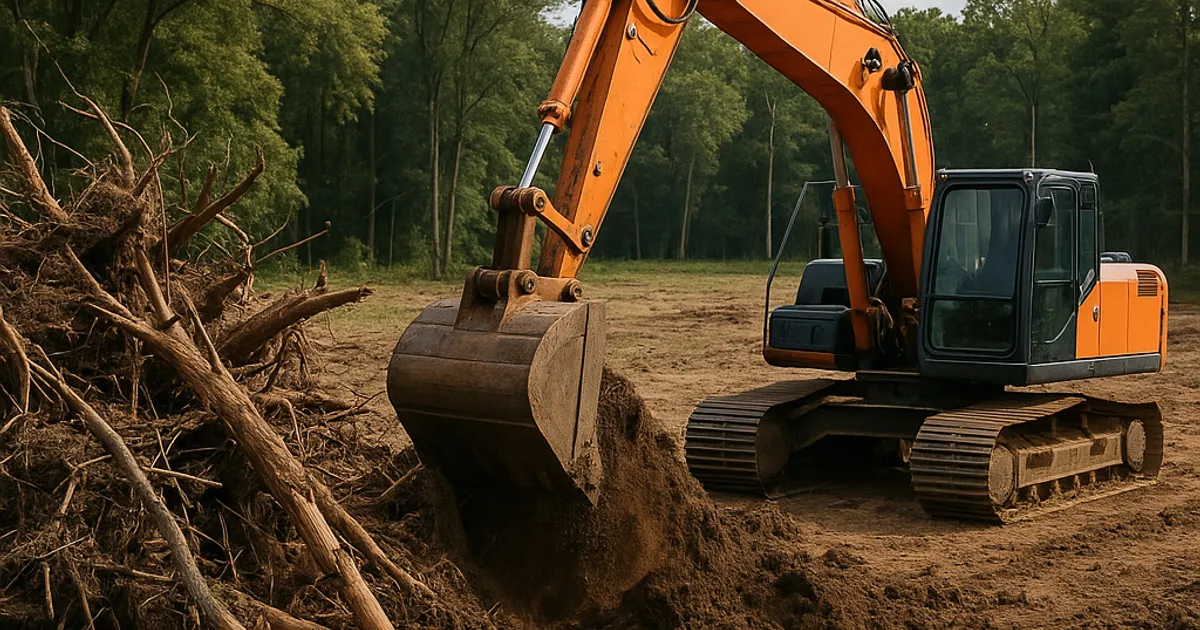
Excavators: Hydraulic excavators with thumb attachments or mulching heads provide precision clearing in tight areas or near structures. They excel at stump extraction and selective clearing where trees need to be individually removed.
Mulchers and Forestry Mulchers: Tracked or wheeled mulchers (brands like Fecon, Denis Cimaf, FAE) grind vegetation and stumps in place, leaving a layer of mulch on the ground. This eliminates haul-away costs for organic debris and reduces erosion risk—an excellent option for brush-heavy sites where the mulch layer won't interfere with construction.
Skid Steers with Attachments: Highly versatile on smaller sites, skid steers with brush cutters, grapple buckets, or stump grinders handle light clearing tasks efficiently.
Motor Graders: Used after primary clearing for rough grading, cutting high spots, filling low areas, and establishing drainage slopes.
Equipment Selection Guide
| Vegetation Type | Recommended Equipment | Cost per Hour (Operator + Machine) |
|---|---|---|
| Light brush and shrubs | Skid steer with brush cutter | $125–$200 |
| Medium timber (6–18" DBH) | Track dozer + excavator | $250–$450 |
| Heavy timber (18"+ DBH) | Large dozer + log loader | $350–$600 |
| Dense root systems | Excavator with root rake | $200–$350 |
| Stumps only | Stump grinder | $150–$300 |
| Mixed brush + trees | Forestry mulcher | $200–$400 |
Phase 4: The Dirt Removal Process—Managing Excess Soil
Once vegetation is cleared and grading begins, the single biggest logistical challenge is managing soil volume. Cut-and-fill calculations determine how much material stays on site versus how much must be imported or exported.
Understanding Cut and Fill
A "cut" occurs when material is excavated below an existing elevation. "Fill" occurs when material is added to raise an elevation. The goal on most grading projects is to balance cuts and fills—using excavated material as fill elsewhere on the site—minimizing the need to import or export dirt.
However, soil volume changes during excavation due to the swell factor. Bank measure (in-ground) soil expands when excavated. A cubic yard of clay soil in the ground may become 1.2–1.4 cubic yards of loose material in a truck. This swell factor must be accounted for in every haul calculation.
| Soil Type | Approximate Swell Factor |
|---|---|
| Sandy soil | 10–15% |
| Common earth | 20–25% |
| Clay | 25–35% |
| Rock (blasted) | 30–50% |
Soil Export: Finding a Home for Excess Dirt
When a site generates more cut material than can be used on-site, that soil must be exported. Historically, this meant expensive blind hauling—trucks driving material to a landfill or a distant fill site, often without knowing whether the material was truly needed at the destination.
This is where digital matching platforms have transformed the earthwork industry. DirtMatch connects contractors who have excess soil to export with nearby projects that need fill material—eliminating wasted hauls and dramatically reducing disposal costs. Instead of paying $15–$40 per ton to dump at a landfill, contractors can often find a local receiver willing to accept the material at low or no cost, simply because it solves their fill deficit.
Calculating Soil Volumes
Accurate volume calculations require survey data and software. Common methods include:
- Average end area method: Simple cross-sectional calculation used on linear projects like roads
- Prismoidal formula: More accurate for irregular terrain
- GPS/drone-based volumetrics: Modern drone surveys using photogrammetry (software like DroneDeploy or Pix4D) can calculate volumes within 1–2% accuracy over large sites
For large projects, 3D site modeling using Civil 3D or similar software is standard practice, allowing engineers to optimize earthwork balance before a single bucket is moved.
Phase 5: Soil Hauling Operations and Logistics
Dirt removal logistics are a discipline unto themselves. A poorly managed haul operation can burn through a project budget as fast as poor equipment selection.
Truck Types and Capacity
| Truck Type | Payload Capacity | Best Use Case |
|---|---|---|
| Tandem dump truck | 12–16 tons | Residential, urban sites |
| Semi-end dump | 20–28 tons | Highway projects, large commercial |
| Bottom dump (belly dump) | 22–30 tons | High-volume highway embankments |
| Rock truck (off-highway) | 40–100+ tons | Mine sites, large earthwork |
| Roll-off container | 10–20 tons | Small sites, urban infill |
Optimizing truck cycles—minimizing load times, haul distances, and queue times at the dump site—is essential for cost control. Industry standard is to calculate a "truck factor" based on haul distance and cycle time, then size the fleet to match excavator production.
Haul Road Management
On large sites, haul roads wear out quickly under loaded truck traffic. Maintaining haul roads with proper base material, grading, and dust control (water trucks or chemical suppressants) prevents costly delays and equipment damage. OSHA requires haul roads to be maintained in safe condition under 29 CFR 1926.602.
Finding Dump Sites and Fill Receivers
This is historically one of the most time-consuming aspects of dirt removal—and where significant cost savings are possible. Options include:
- Municipal construction landfills: Accept clean fill but charge tipping fees ($10–$30/ton)
- Private fill sites: Landowners who accept fill for free or nominal cost to level their property
- Other construction projects: Sites that need fill material and will accept delivery for free or reduced haul cost
- Recycling facilities: Concrete, asphalt, and clean rock can be recycled into aggregate products
Using a platform like DirtMatch to find nearby fill receivers can reduce haul-related costs by 30–50% compared to landfill disposal—a significant line item on any earthwork project.
Phase 6: Erosion Control and Environmental Protection During Clearing
Federal, state, and local regulations require erosion and sediment control measures to be installed before, during, and after clearing operations. Failure to comply can result in stop-work orders, fines, and costly remediation.
Required Best Management Practices (BMPs)
Silt fencing: Geotextile fabric barriers installed along the downhill perimeter of cleared areas to capture sediment-laden runoff. Must be maintained throughout the project.
Sediment basins and traps: Required on sites over 10 acres (under most state CGPs) to capture runoff and allow sediment to settle before discharge.
Construction entrance pads: Gravel pads at site exits prevent tracking mud onto public roads—a common compliance issue that triggers municipal complaints.
Hydroseeding and erosion control blankets: Used on graded slopes to establish vegetative cover quickly after clearing. Slopes steeper than 3:1 typically require blanket reinforcement.
Tree protection zones: During selective clearing near structures or protected trees, fencing at the drip line (tree's outer canopy edge) prevents root zone compaction by equipment—a requirement in many municipal codes.
Stormwater Pollution Prevention Plans (SWPPPs)
For projects over 1 acre, a SWPPP is required under the EPA's Construction General Permit. The SWPPP must be prepared by a Qualified SWPPP Developer (QSD) or equivalent, documenting BMP locations, inspection schedules, and corrective action procedures. SWPPPs must be kept on-site and made available to inspectors.
In high-precipitation areas like the Pacific Northwest, SWPPP compliance is rigorously enforced. Contractors doing dirt exchange in Seattle know that the region's heavy rainfall and sensitive salmon-bearing streams require especially robust erosion control measures—violations can result in fines exceeding $10,000 per day.
Find or Post Dirt, Rock & Aggregate
Join thousands of contractors using DirtMatch to buy, sell, and exchange earthwork materials.
Try DirtMatch FreePhase 7: Debris Management—What Happens to Cleared Material
One of the most overlooked aspects of land clearing is what happens to the organic debris generated during the process. Mismanaging cleared material is both an environmental violation and a missed opportunity for cost recovery.
Organic Debris Options
Chipping and mulching: Wood chippers convert brush and small-diameter trees into mulch that can be reused on-site for erosion control, sold to landscaping companies, or accepted by municipal composting programs. Chipping on-site eliminates haul costs for organic material.
Log salvage: Merchantable timber should be identified before clearing begins. Selling logs to local sawmills can offset clearing costs—a 50-acre clearing with mature timber can generate $5,000–$50,000 in log sales depending on species and market conditions.
Open burning: Where permitted by state air quality regulations, burning windrows of cleared vegetation is cost-effective but increasingly restricted. California, Oregon, Washington, and many other states require burn permits and have seasonal restrictions or outright prohibitions in many air basins.
Grinding and land application: Tub grinders reduce stumps and wood waste to fine material that can be incorporated into soil as organic amendment—a sustainable option that avoids disposal costs.
Landfill disposal: Green waste landfills accept organic clearing debris, but tipping fees ($30–$80/ton) make this the most expensive option and should be a last resort.
Rock and Stone Management
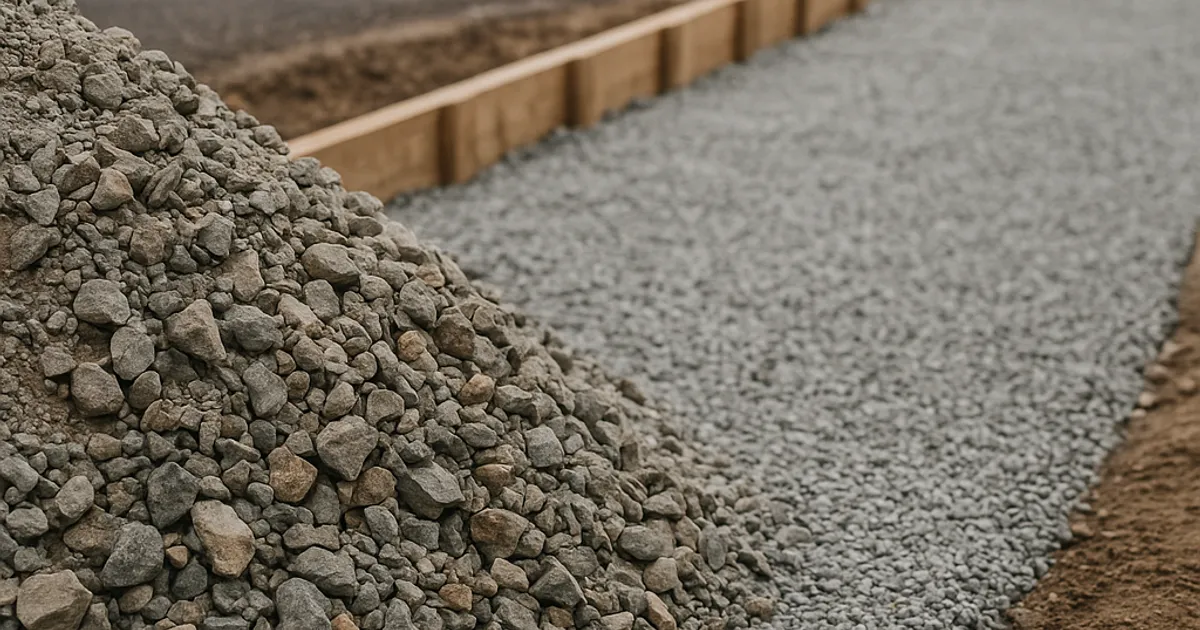
Rock excavated during clearing has real value. Clean crushed rock can be recycled into:
- Road base aggregate
- Drainage rock
- Riprap for erosion control
- Decorative landscape stone
Contractors in mountainous regions like Denver and Boulder deal with significant rock volumes during clearing. The dirt exchange in Denver and dirt exchange in Boulder markets see strong demand for quality crushed rock material—contractors who can match their surplus rock with projects that need aggregate material avoid disposal costs entirely while potentially generating revenue.
Phase 8: Costs of Land Clearing and Dirt Removal—A Realistic Breakdown
Cost is the question every client asks first, and the answer is always "it depends." But we can provide realistic ranges based on project type, vegetation density, soil conditions, and regional labor markets.
Land Clearing Cost Factors
- Vegetation density: Light brush clears faster and cheaper than dense hardwood timber
- Site accessibility: Steep slopes, wet conditions, or limited access add mobilization and equipment cost
- Debris disposal method: On-site mulching is cheapest; landfill hauling is most expensive
- Soil conditions: Rocky soil requires specialized equipment and slows productivity
- Local labor rates: Prevailing wages vary significantly by region
- Permitting costs: Environmental permits can add $2,000–$50,000+ in fees and consultant costs
Typical Cost Ranges
| Service | Light Vegetation | Medium/Mixed | Heavy Timber |
|---|---|---|---|
| Land clearing (per acre) | $1,500–$3,000 | $3,000–$6,000 | $6,000–$12,000+ |
| Stump grinding (per stump) | — | $150–$400 | $400–$800+ |
| Grubbing (per acre) | $500–$1,500 | $1,500–$3,000 | $3,000–$6,000 |
| Dirt removal (per cubic yard) | $8–$15 | $15–$25 | $25–$50+ |
| Truck hauling (per load) | $150–$300 | $300–$500 | $500–$900+ |
| Erosion control installation | $2,000–$5,000/acre | Varies | Varies |
Cost-Saving Strategies
- Sequence clearing with grading: Clearing crews followed immediately by grading operators prevents site conditions from deteriorating between phases
- Salvage merchantable timber: Log sales can offset 10–30% of clearing costs
- Use on-site mulching: Eliminate organic debris hauling by mulching in place
- Optimize soil balance: Invest in pre-construction earthwork modeling to minimize import/export
- Find fill receivers before hauling: Match excess soil with nearby projects rather than paying landfill tipping fees
- Stage clearing permits: On phased projects, pull permits in stages to avoid paying for clearing you won't do for months
Phase 9: Special Considerations for Urban and Infill Sites
Urban land clearing and dirt removal present unique challenges that rural or greenfield projects don't face. Space constraints, neighbor proximity, utility density, and municipal restrictions all complicate operations.
Confined Space Operations
Urban infill sites often have minimal staging area for equipment and debris. This forces contractors to use smaller equipment, conduct more frequent haul cycles, and carefully sequence operations to avoid blocking access. Noise ordinances in residential neighborhoods may restrict equipment operating hours to 7 a.m.–7 p.m. (or stricter), compressing the working day.
Truck Route Restrictions
Many cities restrict heavy truck routes through residential neighborhoods. Dump trucks hauling soil may need to use designated haul routes, adding distance and cost to each cycle. In dense urban cores like San Francisco and Boston, street permits for construction staging, lane closures, and truck access can add weeks to project scheduling.
For projects requiring dirt exchange in San Francisco or dirt exchange in Boston, working with experienced local earthwork contractors who know the permit processes and preferred haul routes is essential to keeping the project moving.
Soil Contamination Risks
Urban infill sites—especially former industrial or commercial properties—carry elevated risk of soil contamination. Phase II Environmental Site Assessments with soil sampling may be required before clearing. Contaminated soil cannot be reused as fill and must be handled as regulated waste under RCRA (Resource Conservation and Recovery Act) regulations, dramatically increasing disposal costs ($50–$200/ton or more depending on contaminant type).
Phase 10: Post-Clearing Site Preparation and Final Grading
After clearing, grubbing, and dirt removal are complete, the site must be prepared to receive whatever comes next—whether that's a building foundation, pavement, utilities, or landscaping.
Subgrade Preparation
The exposed subgrade after clearing must meet geotechnical specifications before construction can proceed. Typically, this requires:
- Proof rolling: A loaded tandem axle truck driven across the subgrade to identify soft spots. Any area deflecting more than 1 inch under load is rejected and must be over-excavated and backfilled with structural material.
- Compaction testing: Nuclear density gauge tests or sand cone tests verify that fill material has been compacted to specification—typically 90–95% of Modified Proctor density (ASTM D1557).
- Subgrade stabilization: Weak, clayey soils may require lime treatment, cement treatment, or geotextile reinforcement to achieve required bearing capacity.
Topsoil Preservation and Reuse
Best practice—and often a permit requirement—is to strip and stockpile topsoil separately from subsoil before major clearing and grading. Topsoil is then reapplied after final grading to support vegetation establishment. Typical topsoil strip depth is 4–8 inches. USDA guidelines recommend preserving topsoil as a non-renewable resource whenever possible.
Final Grading and Drainage
Final grading establishes positive drainage away from structures (minimum 2% slope per IBC requirements), creates swales and drainage features, and achieves the design grades shown on the civil drawings. This phase requires a motor grader, finish grade crews, and survey control to hit final grade within 0.1 foot of design.
Technology and Innovation in Land Clearing and Dirt Management
The land clearing and earthwork industry is being transformed by technology, from machine control systems to digital material exchanges.
Machine Control and GPS Grading
GPS-guided machine control systems (from manufacturers like Trimble, Topcon, and Leica) allow dozer and grader operators to hit design grades within 0.1 foot without traditional grade stakes. This reduces survey costs by 60–80% on grading projects and dramatically improves productivity. 3D machine control is now standard practice on most commercial grading projects.
Drone Surveys and Volume Calculations
Unmanned Aerial Vehicles (UAVs) equipped with high-resolution cameras or LiDAR sensors can survey a 100-acre site in 2–3 hours, generating topographic models accurate to 1–2 centimeters. This technology has made weekly volume tracking economical on projects of any size, enabling real-time earthwork balance monitoring.
Digital Material Matching
Perhaps the most disruptive innovation in dirt removal logistics is digital matching platforms that connect surplus soil sources with fill destinations. Just as logistics platforms transformed freight shipping, platforms like DirtMatch are transforming earthwork material exchange—making it possible to find a nearby fill receiver in minutes rather than the days or weeks of phone calls that used to characterize the process. If you're managing excess soil on your next clearing project, get started with DirtMatch to see how quickly you can connect with contractors and landowners in your area who need fill material.
Telematics and Fleet Management
Modern dump trucks and construction equipment are equipped with telematics systems that track fuel consumption, idle time, cycle counts, and location. Fleet managers use this data to optimize truck routes, reduce idle time (a major fuel cost), and track production against estimates in real time.
Sustainability and Environmental Responsibility in Land Clearing
As environmental regulations tighten and client expectations evolve, sustainability is becoming a competitive differentiator in the land clearing industry—not just a regulatory burden.
Selective Clearing Practices
Rather than clear-cutting entire parcels, selective clearing preserves mature trees, riparian buffers, and wildlife habitat within development areas. This approach reduces erosion risk, improves site aesthetics, and may reduce permitting friction with regulatory agencies. Many municipalities now require a tree preservation plan as part of the clearing permit application.
Soil Health and Carbon Sequestration
Researchers at institutions like the USDA Agricultural Research Service have documented the critical role of soil organic matter in carbon sequestration and ecosystem health. Preserving and reapplying topsoil, using composted wood waste as organic amendment, and minimizing compaction during clearing all contribute to post-development soil health—increasingly relevant for LEED certification and sustainable site design.
Reducing Haul-Related Carbon Emissions
Dirt hauling is carbon-intensive. A loaded tandem dump truck consumes roughly 10–15 gallons of diesel per 100 miles. On a large earthwork project moving 100,000 cubic yards of soil, optimizing haul distance by even 5 miles per load can reduce fuel consumption and carbon emissions by tens of thousands of gallons. Finding local material matches—rather than hauling to distant disposal sites—is both an economic and environmental win.
Regional Considerations: How Location Shapes Your Clearing Strategy
Land clearing practices, regulations, costs, and material markets vary enormously by region. What works in the arid Southwest won't work in the rainy Pacific Northwest, and urban market dynamics differ fundamentally from rural ones.
Pacific Northwest
Heavy rainfall, steep terrain, and stringent salmon habitat protections create some of the most demanding clearing environments in the country. Erosion control is paramount; the King County (WA) Surface Water Design Manual sets a high bar for stormwater management. Active markets for dirt exchange in Seattle reflect the region's constant development pressure against constrained geography.
California
California's regulatory complexity—CEQA review, Coastal Commission permits, air quality restrictions, and protected species requirements—can add months and significant cost to clearing projects. The Los Angeles and San Diego metro areas have thriving material exchange markets driven by constant construction activity. Contractors seeking dirt exchange in Los Angeles or dirt exchange in San Diego benefit from platforms that streamline the matching process in these large, complex markets.
Mountain West
Rocky soils, high-altitude weather windows, and expansive development in the Front Range create distinctive earthwork challenges. Blasting rock, managing cobbles, and dealing with short construction seasons drive up costs. The dirt exchange in Denver market reflects both the city's construction boom and the practical need to move large volumes of excavated material efficiently.
Conclusion: Turning Site Chaos Into Construction-Ready Ground
Land clearing and dirt removal are where projects truly begin. The decisions made in this phase—about permits, equipment, soil management, debris disposal, and material logistics—ripple through every subsequent phase of construction. A well-executed clearing operation delivers a clean, stable, properly graded site that accelerates downstream work and builds project confidence. A poorly managed one can trigger regulatory violations, cost overruns, and schedule delays that haunt a project from day one.
The good news is that the tools, technologies, and platforms available to today's contractors make it easier than ever to plan, execute, and optimize land clearing and dirt removal operations. From drone-based volume surveys to GPS machine control to digital material exchanges, the industry is more efficient and connected than it has ever been.
For contractors managing excess soil from clearing and grading projects, finding the right home for that material doesn't have to mean expensive landfill fees or hours of cold calls. Platforms like DirtMatch make it simple to connect with nearby projects that need your material—turning a disposal cost into a logistics solution. Whether you're working in a dense urban market or a rapidly developing suburban corridor, the path from clutter to clarity starts with the right information, the right equipment, and the right connections.