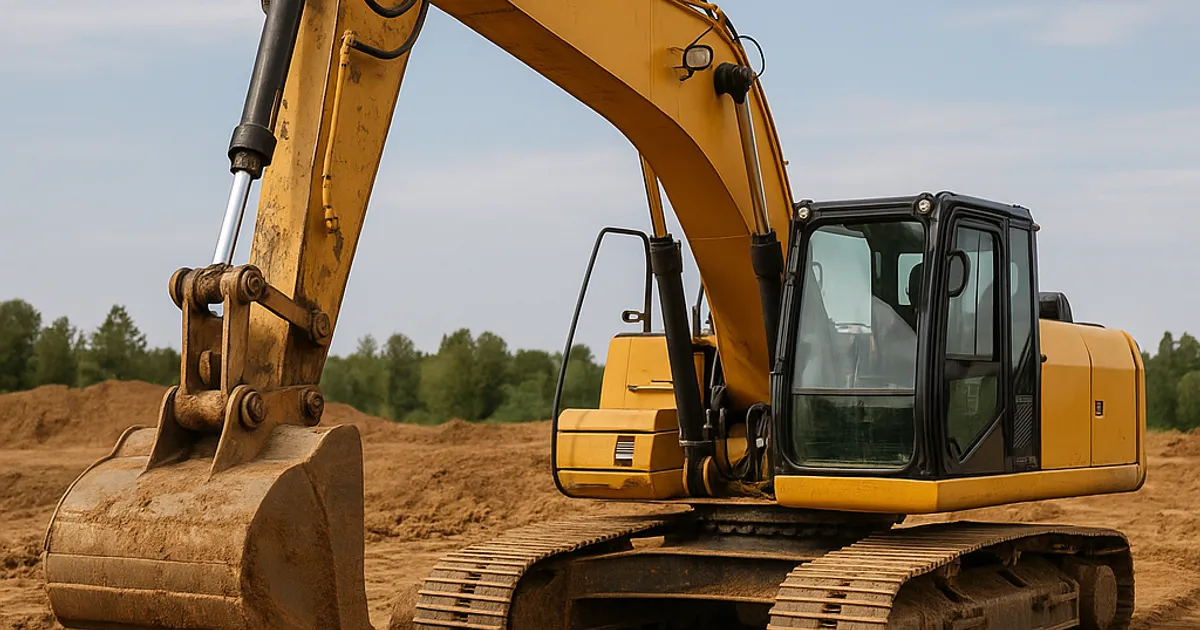

Every seasoned dirt hauler has a story. A GC who refused to pay for the last ten loads because the site "didn't need them anymore." A landowner who disputed tonnage after the job was done. A subcontract that said nothing about what happens when rain shuts the site down for two weeks. These situations are not rare accidents; they are predictable outcomes when hauling agreements are vague, one-sided, or missing altogether.
In 2026, the earthwork and bulk materials hauling industry is more competitive and more legally complex than ever. According to the Bureau of Labor Statistics, construction and extraction occupations continue to grow, and with that growth comes more subcontract work, more coordination between GCs and specialty haulers, and more opportunities for contractual disputes. Protecting your business starts before the first truck rolls. It starts with a contract that is clear, enforceable, and built around the specific risks of dirt hauling.
This guide breaks down exactly what should go into a dirt hauling contract, why each clause matters, and how to use contract language to shield your operation from the disputes that have sunk other haulers.
Why Dirt Hauling Contracts Are Different From General Trucking Agreements
A standard freight contract is built around a known commodity with a fixed weight, a defined origin, and a clear destination. Dirt hauling is fundamentally different. The material itself varies in density, moisture content, and classification. A load of wet clay weighs significantly more than a load of dry sandy fill. A site that generates 500 tons of spoil on a Monday estimate might generate 900 tons by Friday once excavation reveals unexpected rock or saturated subsoil.
These variables create disputes that a generic trucking agreement is not designed to handle. Your dirt hauling contract needs to address:
- Material characterization: What exactly is being hauled, and who bears the risk if the material turns out to be something different than expected?
- Measurement methodology: Are you paid by the load, by the ton on certified scales, by the cubic yard, or by GPS-tracked volume?
- Site conditions: What happens to your rate if the haul road deteriorates, access is blocked, or the site gets shut down?
- Disposal or placement obligations: Who is responsible for ensuring the receiving site can legally accept the material?
- Regulatory compliance: Who holds liability if the material is later found to contain contaminants?
None of these questions have obvious answers. They need to be answered explicitly in your contract before the job starts, because once a dispute arises, whoever has the clearer contract language wins.
The Essential Clauses Every Dirt Hauling Contract Must Include
Think of your hauling agreement as a map. Its job is to eliminate ambiguity at every point in the job. Below are the clauses that every dirt hauling contract should contain, along with notes on why each one matters.
Scope of Work and Material Description
This section defines exactly what you are being hired to do and what you are hauling. It should specify the material type (clean fill, topsoil, clay, rock, construction debris, recycled aggregate), the estimated quantity, the origin location, and the destination. Use specific language: "approximately 2,000 cubic yards of clean imported fill, as classified per ASTM D2487, to be placed at the grade-staked fill area on the east side of the project site."
If the material classification changes during the job (for example, rock is encountered that requires blasting before hauling), your contract should specify that a change order is required before you continue work at the original rate.
Pricing, Rate Structure, and Billing Terms
This is where most hauling contracts fail. Vague pricing leads to payment disputes. Be explicit about:
- Your rate structure (per load, per ton, per hour, or per cubic yard)
- Whether rates include fuel surcharges or whether fuel is billed separately
- What happens to your rate if haul distances increase beyond an agreed-upon radius
- Your invoicing schedule (weekly, biweekly, or per milestone)
- Your payment terms (Net 15 is common in earthwork; anything beyond Net 30 should require a higher rate)
- Late payment penalties (typically 1.5% per month on unpaid balances)
Do not leave your rate subject to retroactive adjustment. Lock it in with clear language: "The rate of $X per ton is fixed for the duration of the work described in this agreement, subject only to written change orders executed by both parties."
Measurement and Load Verification
How you measure the work is how you get paid. Your contract should specify the agreed measurement method before work begins. Options include:
- Certified weight tickets: Loads are weighed at a licensed scale, and the ticket serves as the billing record. This is the most defensible method.
- Truck capacity estimates: Payment is based on struck-level cubic yard capacity of each truck body. Simpler, but easier to dispute.
- Survey-based volume: A licensed surveyor measures the cut or fill volume before and after. Accurate, but requires coordination and cost.
- GPS/machine data: Increasingly common on large earthwork projects using grade control technology from companies like Trimble Construction, which can generate detailed volume reports from GPS data.
Whatever method you choose, write it into the contract and specify who provides documentation. If you use weight tickets, state clearly that the client will be billed based on tickets submitted with each invoice, and that disputed tickets must be raised within five business days of invoice receipt.
Site Access and Haul Road Conditions
Poor site conditions destroy equipment and productivity. Your contract should address who is responsible for maintaining the haul road, what constitutes an unacceptable site condition, and what your right is to stop work if conditions become unsafe or cause excessive wear on your equipment.
Include a clause that allows you to suspend operations, without penalty, if the haul road is impassable or if gate access is denied. Also specify who bears the cost if site conditions require you to use a longer alternate route.
Regulatory Compliance and Environmental Responsibility
This clause is increasingly important in 2026 as environmental enforcement has tightened on construction sites across the country. Your contract should clearly delineate who is responsible for:
- Obtaining any required permits for material disposal
- Compliance with stormwater discharge requirements under the EPA's NPDES program
- Ensuring the receiving site is approved to accept the material
- Liability if material is found to be contaminated after hauling
As a hauler, you want to push environmental liability upstream to the material source and the site owner. A strong contract clause will state that the client warrants the material is free of hazardous contamination and indemnifies the hauler from any claims arising from material characterization.
Insurance and Indemnification Requirements
List the minimum insurance requirements for both parties. As a hauler, you will typically need commercial auto liability, general liability, and cargo coverage. Many GC subcontracts will also require you to carry umbrella/excess liability above a certain threshold.
Do not simply agree to the GC's standard insurance requirements without reviewing them with your insurance broker. Some GC templates require limits that are far above what small hauling operations carry, and some require endorsements that can take weeks to obtain.
Your indemnification clause should be mutual, not one-sided. A clause that requires you to indemnify the GC for everything, including their own negligence, is a red flag and should be negotiated before you sign.
Change Orders and Scope Creep
Dirt hauling projects almost always evolve. The GC discovers more material than expected, the schedule shifts, the receiving site fills up and you need to haul to a new location that adds three miles to each run. Without a change order process, these changes often go uncompensated.
Your contract should state that any change to the scope, rate, or schedule requires a written change order signed by both parties before the additional work begins. Verbal authorizations are not binding. Include this language explicitly.
Schedule and Delays
Specify the anticipated start date, the estimated project duration, and the agreed-upon daily or weekly production rate. Then define what constitutes an excusable delay (weather, permit holds, GC-caused delays) versus an inexcusable delay.
More importantly, define what compensation you receive if the GC delays your start or suspends your work mid-project. A standby rate for idle equipment is reasonable and should be spelled out. If the project is suspended for more than a defined period (for example, ten consecutive working days), you should have the right to demobilize and bill for remobilization when work resumes.
Dispute Resolution
When disputes arise, having a pre-agreed resolution process saves time and legal fees. Most hauling contracts include a tiered dispute resolution clause: first, a good-faith negotiation period (typically 15 to 30 days); then mediation if negotiation fails; then binding arbitration or litigation as a last resort.
Specify the governing state law and the venue for any legal proceedings. This matters if you are a contractor based in one state hauling to a project site in another.
Termination Rights
Both parties should have defined termination rights. You should be able to terminate the contract for non-payment (after a written cure period), persistent unsafe site conditions, or repeated violations of the agreed scope. The GC should be able to terminate for non-performance or repeated safety violations.
Your termination clause should specify what you are owed if the contract is terminated, including payment for all completed work, demobilization costs, and any materials or equipment committed specifically to the project.
Dump Truck Contract Templates: Starting Point vs. Custom Agreement
A dump truck contract template is a useful starting point, but it is never a finished product. Templates available from trade associations like AGC of America provide a solid framework, but they are designed for general subcontract situations, not the specific dynamics of dirt hauling.
When adapting a template, prioritize customizing the following sections:
- Material description and classification standards
- Payment triggers tied to load verification (not just project milestones)
- Site condition warranties from the client
- Fuel escalation provisions if the project runs longer than 60 days
- Environmental indemnification language
Invest in having an attorney who understands construction contracts review your template at least once. A one-time legal review that costs $500 to $1,000 is cheap insurance compared to a $50,000 payment dispute.
Understanding Earthwork Subcontract Terms When You Work Under a GC
When you work as a hauling subcontractor under a general contractor, you will almost always receive their contract, not yours. Understanding the standard earthwork subcontract terms that GCs use is critical to knowing where you are exposed.
Pay-When-Paid vs. Pay-If-Paid
This is the most important clause distinction in any subcontract. A pay-when-paid clause means the GC must pay you within a reasonable time after they receive payment from the owner, even if that payment is delayed. A pay-if-paid clause means the GC only has to pay you if and when they receive payment from the owner. Pay-if-paid clauses can be enforceable in many states and essentially shift the owner's credit risk onto you.
Know your state's law on this before signing. Several states have banned or heavily restricted pay-if-paid clauses, while others enforce them strictly.
Flow-Down Clauses
GC subcontracts often contain flow-down clauses that make you subject to all the terms of the prime contract between the GC and the owner. This can include notice requirements, claim deadlines, and dispute resolution procedures that you would never agree to if presented directly. Ask for a copy of the relevant prime contract sections before signing any subcontract with a flow-down clause.
Lien Rights
In most states, material haulers and subcontractors have the right to file a mechanic's lien against the project property if they are not paid. However, lien rights are procedurally strict: you must serve preliminary notices within defined timeframes, and you must file the lien within a specific window after completing work.
Do not wait until you have a payment problem to investigate your lien rights. Know the requirements in your state before you start work, and send any required preliminary notices on day one.
How to Handle Material Contamination Disputes
One of the most financially devastating situations a hauler can face is discovering, after the fact, that the material you hauled was contaminated. Under federal CERCLA law, transporters of hazardous substances can be held liable as potentially responsible parties, even if they had no knowledge of the contamination.
Your contract cannot fully eliminate this risk, but it can dramatically reduce your exposure:
- Require the client to provide a current Phase I Environmental Site Assessment for any material originating from a site with prior industrial use
- Include an explicit warranty that the material meets applicable standards for the intended receiving site
- Require written documentation from the receiving site that the material is acceptable
- Add an indemnification clause requiring the client to defend and hold you harmless from any contamination claims arising from material they characterized and directed you to haul
If you have any doubt about material quality, stop. The cost of a simple soil test is a fraction of the cost of regulatory enforcement.
Protecting Yourself With Proper Documentation Practices
A strong contract is only as good as the documentation you maintain to enforce it. Build a documentation system into your operation from day one:
- Retain all weight tickets organized by date, project, and truck
- Photograph load conditions at both origin and destination, especially if material appears inconsistent with the contract description
- Log all delays and site conditions in a contemporaneous daily field log
- Save all communications (texts, emails, voicemails) related to any scope change, dispute, or instruction
- Issue written change orders for every scope change, even minor ones
- Send weekly billing summaries that match your ticket records so disputes surface early
Contractors who maintain thorough documentation win disputes. Those who rely on memory and handshakes lose them.
Negotiating Contract Terms With General Contractors
Many haulers feel that they have no leverage to negotiate GC subcontract terms. In reality, experienced GCs respect subcontractors who understand their contracts and push back on unreasonable terms. It signals professionalism and reduces the GC's own risk of working with someone who does not understand their obligations.
Here are the terms most worth negotiating:
| Term | What GCs Typically Offer | What You Should Push For |
|---|---|---|
| Payment terms | Net 30 to Net 45 | Net 15 to Net 21 |
| Pay-if-paid clause | Standard in many GC templates | Convert to pay-when-paid with a cap |
| Insurance limits | Often $2M+ commercial auto | Match to your actual coverage, discuss excess |
| Indemnification | Broad, one-sided in GC's favor | Mutual, limited to your own negligence |
| Change order process | Oral authorization acceptable | Written only, before work begins |
| Termination for convenience | GC can terminate, owes you nothing | GC owes payment for completed work plus demob |
| Lien waiver timing | Waiver before payment | Conditional waiver, effective only upon receipt |
| Delay compensation | No standby rate | Defined standby rate for GC-caused delays |
Finding the right projects to begin with significantly reduces contract negotiation friction. DirtMatch connects haulers and earthwork contractors with vetted projects and counterparties, so you spend less time chasing bad-fit work and more time on jobs where the terms are workable from the start.
Find or Post Dirt, Rock & Aggregate
Join thousands of contractors using DirtMatch to buy, sell, and exchange earthwork materials.
Try DirtMatch FreeFuel Escalation and Rate Protection Clauses
Diesel fuel costs remain volatile, and long-duration dirt hauling contracts that do not account for fuel price swings can turn a profitable job into a money-loser halfway through. A fuel escalation clause protects your margins by tying a portion of your rate to diesel price benchmarks.
A typical fuel escalation clause works as follows: your base rate is set at a reference diesel price (for example, the U.S. Energy Information Administration weekly retail diesel price for your region at contract execution). If the price rises more than a defined threshold (commonly 10 to 15%), your rate adjusts upward by a proportional percentage. If prices fall, the rate adjusts downward. This creates a shared-risk model that is fair to both parties.
For projects expected to run more than 60 to 90 days, fuel escalation clauses are not optional; they are essential.
Using Technology to Support Contract Compliance
Modern hauling operations have access to tools that make contract compliance and documentation far more straightforward than it was even five years ago. GPS tracking on every truck creates irrefutable records of loads completed, routes traveled, and time on site. Electronic load ticketing eliminates paper ticket disputes. Telematics systems can log idle time, driving hours, and load counts automatically.
The FMCSA's electronic logging device mandate already requires ELDs on most commercial motor vehicles for hours-of-service compliance. That same data can serve as powerful documentation in a contract dispute.
Building GPS and telematics data into your billing process, and referencing it explicitly in your contract as an approved measurement source, gives you a defensible record that is very difficult for a client to challenge.
Regional Considerations for Dirt Hauling Contracts
Contract requirements and enforceability vary significantly by state and region. Lien notice deadlines, pay-when-paid laws, prevailing wage requirements, and environmental regulations all differ across jurisdictions. A hauling agreement that is perfectly protective in Texas may leave you exposed in California or Washington.
For example, haulers operating in markets like the dirt exchange in Los Angeles or the dirt exchange in San Francisco operate under California's strict contractor licensing laws, prevailing wage rules on public projects, and some of the most rigorous stormwater and air quality regulations in the country. A contract written without accounting for these specifics is missing critical protections.
Similarly, contractors working in the dirt exchange in Seattle market need to account for Washington State's Construction Lien Act notice requirements and the specific environmental permitting requirements for sites near Puget Sound waterways.
Always have your contract template reviewed by an attorney familiar with the laws of the specific state where you are working. A generic template is a starting point, not a finished product.
When to Walk Away: Red Flags in Hauling Agreements
Some contracts are not worth signing no matter how much you need the work. Recognizing red flags before you commit can save you from months of chasing payment or fighting a legal battle you cannot win.
Walk away from any hauling agreement that:
- Requires you to waive your lien rights before work begins (unconditional upfront lien waivers are often unenforceable but still create complications)
- Contains a pay-if-paid clause with no cap and no carve-out for GC insolvency
- Gives the GC the right to withhold payment indefinitely pending "owner approval" with no defined timeframe
- Requires you to indemnify the GC for their own negligence
- Has no defined measurement method, leaving billing subject to the GC's sole discretion
- Prohibits you from issuing change orders without 30 or more days' written notice (in hauling, conditions change daily)
- Contains no termination payment provision if the GC cancels the project
In a market with strong demand for hauling services, you have more leverage than you think. Use it.
Building a Standard Contract Package for Your Business
The most efficient approach is to build a small library of contract documents that you maintain and update as your business evolves and as laws change:
- Your prime hauling contract: Used when you contract directly with a landowner, developer, or project owner.
- Your subcontract rider: A one-to-three page document that you attach to any GC's subcontract, overriding or supplementing their standard terms where needed.
- Your change order form: A simple one-page document that captures scope changes with rate, quantity, and authorization fields.
- Your lien release forms: Both conditional (used when requesting payment) and unconditional (used after payment clears), tailored to your state's requirements.
- Your daily field log template: A structured form your drivers or site supervisor completes daily, capturing load counts, site conditions, delays, and notable events.
Having these documents ready before a project starts means you are never negotiating from a blank page under time pressure.
How DirtMatch Helps You Work With Better Contracts in Place
Finding quality projects with professional counterparties is the first step to working under contracts you can actually enforce. When you get started with DirtMatch, you gain access to a marketplace where project details, material specifications, and hauling requirements are defined upfront, reducing the ambiguity that leads to contract disputes.
Contractors who use DirtMatch Pro get access to enhanced project listings that include site details, material characterization, and contact information for verified project owners, giving you the information you need to write a contract that matches actual site conditions before you commit. When both parties understand the scope clearly at the outset, contracts are easier to write, easier to enforce, and far less likely to end in dispute.
Final Takeaways: The Contract Is Your First Line of Defense
A dirt hauling contract is not paperwork for paperwork's sake. It is the legal foundation of your business relationship with every client, GC, and project owner you work with. In an industry where variables are constant, payment disputes are common, and environmental liability can follow a hauler for years, a well-written contract is not optional.
Take the time to build a contract template that addresses the specific risks of dirt hauling, have it reviewed by a construction attorney, and commit to never starting a job without a signed agreement in place. Your trucks, your crew, and your bottom line depend on it.
The contractors who build sustainable, growing hauling businesses are the ones who treat contracts as a professional standard, not an obstacle. When the scope is clear, the payment terms are enforced, and the risk is allocated fairly, everyone wins.